Ålagille – Skåne’s autumn feast with a difficult question at the table
Smoked, poached and fried eel, rye bread and glasses of clear spirits are part of the tradition. But today, the story must also address the eel’s future.
A Skåne ålagille is as much a way of dining as a fish feast: small portions, many preparations and plenty of time between platters. We follow the tradition from the coast’s eel-fishing huts to today’s tables, explore the drinks – and serve a thoughtful tribute without eel.
 By Lina BergFood editor · European and Nordic cuisines – Italy, France, Spain, Greece and Swedish home cooking
Translated from Swedish with AI assistance.
Go to the recipe ↓When autumn comes to the eel-fishing hut
First comes the smoke. Then the scent of warm fish, rye bread and sizzling butter. Outside, the sea looks darker than in summer, while indoors the table holds platters that are not meant to be emptied all at once. Someone cuts a lemon; someone passes the bread. Skåne’s ålagille has a rhythm of its own: a bite, a conversation, another platter. The eel returns in different guises, and the guest’s task is not to hurry but to notice the differences between smoked, poached and freshly fried.
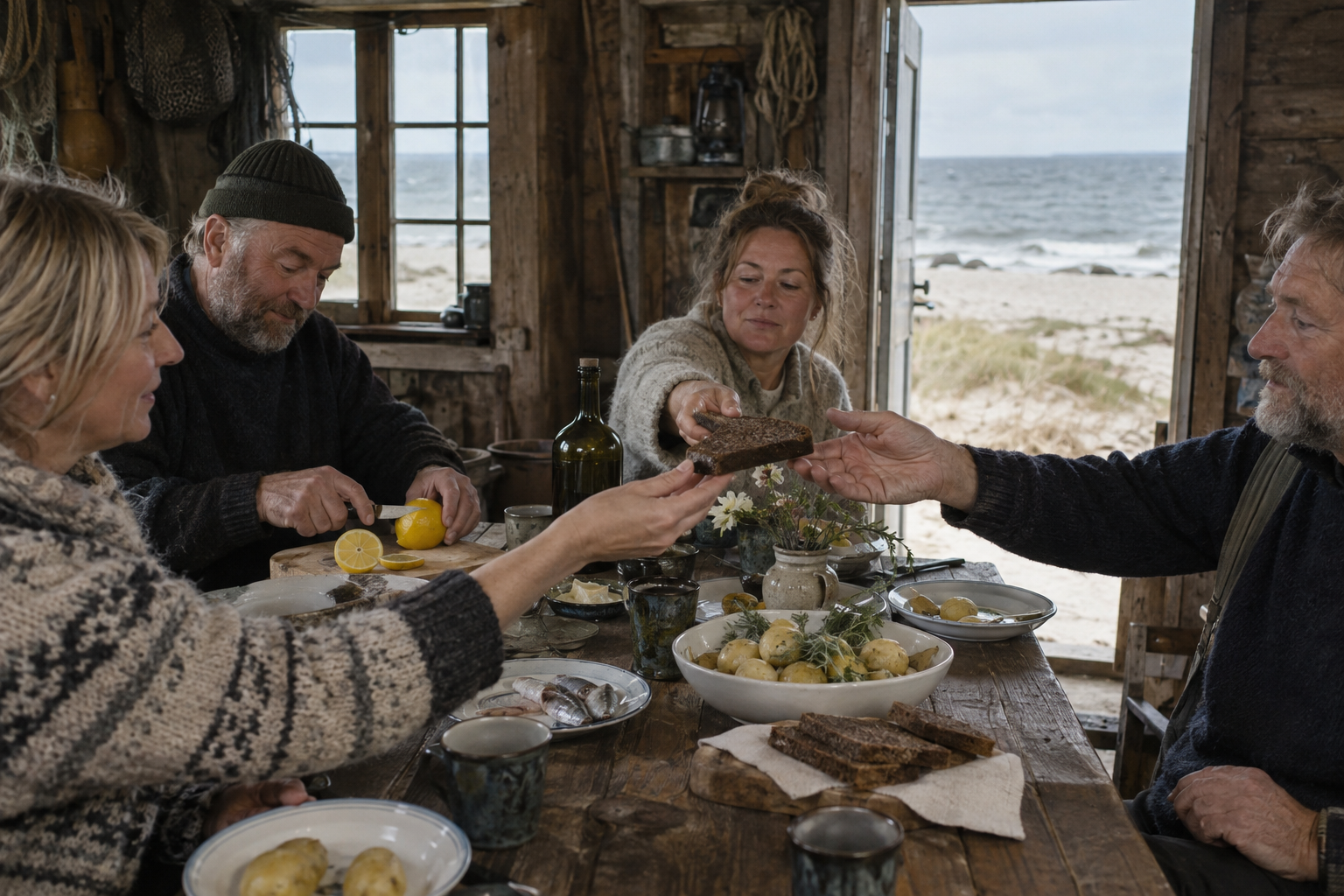
This is one way a traditional feast might unfold. There is, however, no single menu that everyone must follow. Family traditions, availability and the host’s expertise have shaped the meal. In a lavish version, several eel dishes arrive one after another; at a simpler table, just a few preparations tell the whole story. Bread, potatoes and something tangy balance the rich fish, bite after bite.
But a feature on ålagille today cannot remain inside that warm hut. The European eel is critically endangered, and WWF’s Fiskguiden seafood guide gives eel a red light: avoid it. This fundamentally changes the context of the feast. We can describe how eel has been cooked and eaten without recommending buying more. The tradition’s history deserves care; so does the living fish.
The coast, the fishing and the long migration
Ålagille is particularly associated with eastern Skåne and Ålakusten, the stretch of coast between Åhus and Stenshuvud. Here, eel-fishing huts, fishing gear and tales of autumn catches are part of an older coastal landscape. The huts were workplaces and shelters for a fishery that demanded a presence close to shore. Their associations with meals and hospitality make them more than picturesque buildings: they tell us how work and social life could share the same space.
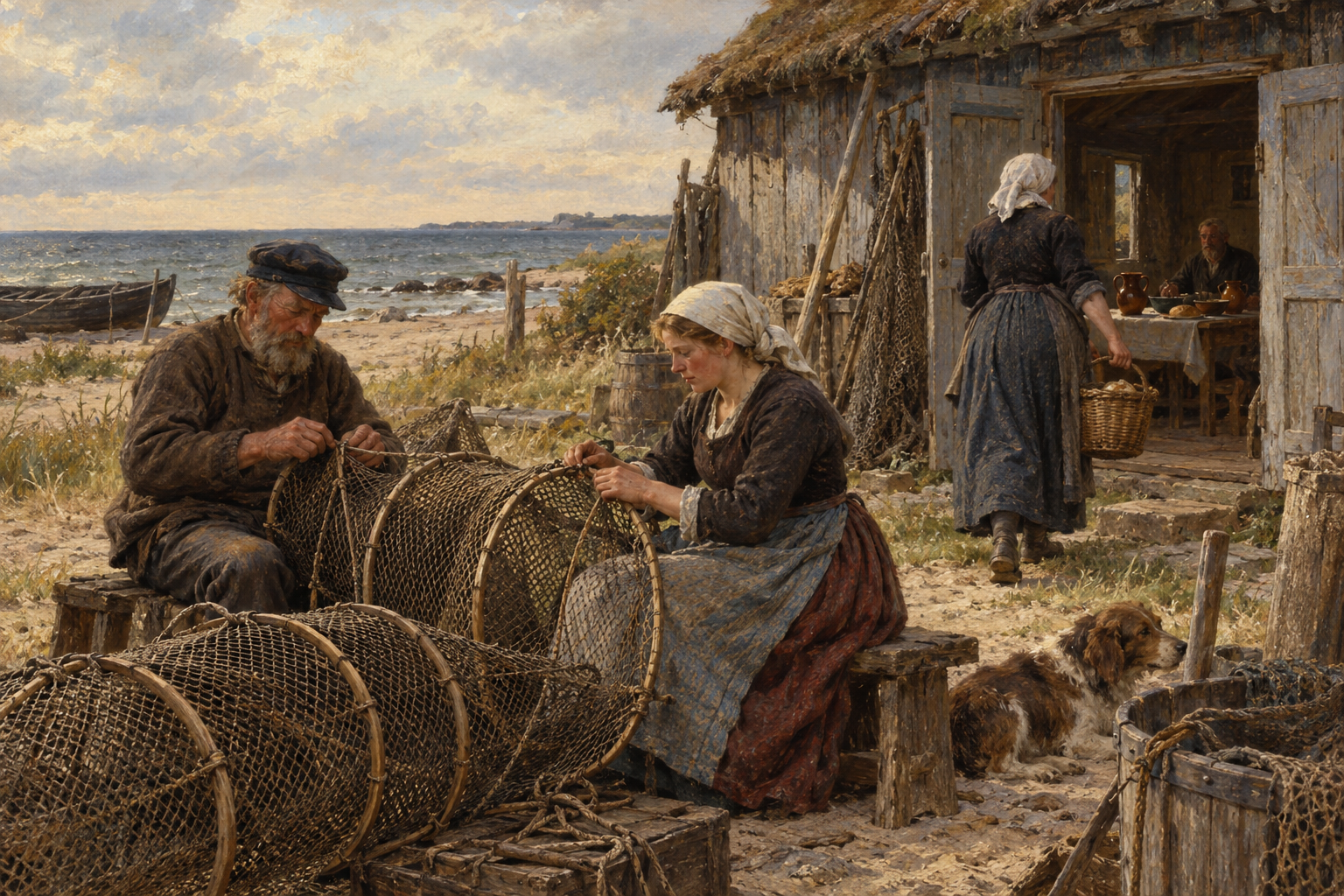
The link with autumn has a biological basis. Eels grow for many years in fresh or coastal waters. As they develop into silver eels, they prepare for the journey towards their spawning grounds in the Sargasso Sea. Migration out of our waters takes place mainly during the darker part of the year, often in late summer and autumn, although the timing varies. This movement has made eel a seasonal catch, even though its life spans so many years.
The feast itself, however, has no firmly established birth year. It is wiser to speak of a festive tradition that grew out of eel fishing and local eating habits than of a dish invented at a particular moment. Older ways of managing household resources, fishing families’ knowledge and, later, restaurant and visitor culture have all contributed to the picture we see today.
Eel has been both food and a traded commodity, but an abundance of eel dishes says more about the ambitions of a feast than about everyday eating. What we now call a classic ålagille is therefore not an unchanging menu from a single historic kitchen. It is several layers of coastal history brought together around one table.
One fish, many preparations
Much of eel’s distinctive character lies in its fat. It carries smoky aromas, keeps the flesh succulent and makes even a small portion feel remarkably rich. Hot-smoked eel is the most familiar form for many: dark, sometimes almost lacquered skin surrounding pale flesh, with an aroma that lingers on the plate. The flavour becomes more distinct when the fish is not ice-cold. At the same time, fish that needs refrigeration should not sit out throughout the feast; small platters replenished as needed are better.
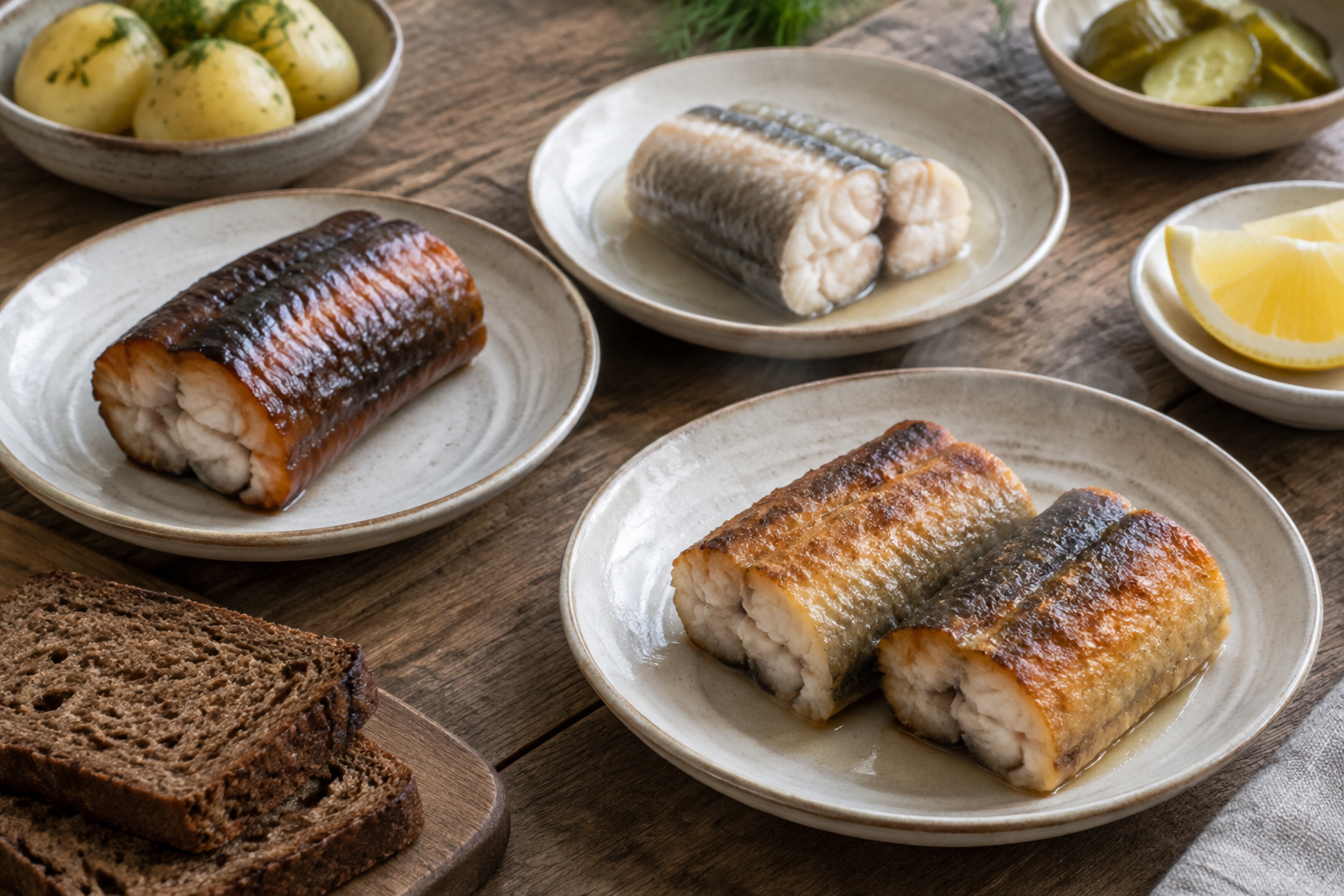
Poached eel reveals another side, milder and softer, with the seasoning of the cooking liquid and the accompaniments playing a greater role. Fried eel offers a contrast between its seared surface and succulent interior. Smoked, poached and fried eel recur in accounts of the tradition, but the versions served and their order vary. There is no reason to turn a local custom into a rule for all of Skåne.
Among the more distinctive names are luad ål and halmad ål, preparations associated with fire and burning straw respectively. Names and methods vary between accounts. Above all, they show how closely the craft was tied to its fuel, tools and setting. These are not methods you need to reproduce in an ordinary home kitchen to understand the meal.
The most common mistake with flavour is to make everything on the table equally fatty, salty and smoky. Then the differences disappear. Tangy cucumber, lemon, potatoes and rye bread with a little bite offer pauses. The accompaniments should not disguise the fish but help guests taste the next mouthful as clearly as the first.
How to eat at an ålagille
Start small. That is the most useful advice when several courses await. A piece of fish, a little bread or potato and something tangy are enough to get to know a preparation. You do not need to take a full dinner plate from every platter. If the host introduces dishes as they arrive, comparison is often precisely the point: milder against stronger, softer against firmer, smoke against a seared crust.
Eel may be served in pieces with the skin and backbone still in place. Gently ease the flesh away with a knife and fork, and check for bones before taking a bite. The skin of smoked eel is often left behind; in other preparations, it may be part of the intended experience. Do ask the host. That is better table manners than struggling with something when you do not know how it is meant to be eaten.
An ålagille is also a social occasion. Conversations, fishing stories and sometimes snaps songs fill the spaces between courses. But neither a large number of dishes nor alcohol is necessary for hospitality. Anyone declining a dish or a glass of snaps should be able to do so without explanation. Small portions and drinks chosen to suit each guest make the table more welcoming.
Today, you can also visit these coastal settings and take an interest in the tools, buildings and people’s knowledge without eating eel. That is no small distinction. Cultural heritage can be passed on through storytelling and preserved workplaces, not only by repeating a meal exactly as it once was.
Beer, snaps – and equally thoughtful alcohol-free drinks
Beer is a natural companion to smoked and fried fish. A crisp lager with moderate bitterness provides a cool contrast to salt and fat without clashing with the smoke. A lighter, maltier lager can work too, especially when rye bread and a browned crust are part of the plate. Very pronounced bitterness or heavy roasted flavours, on the other hand, risk overwhelming an already intense meal.
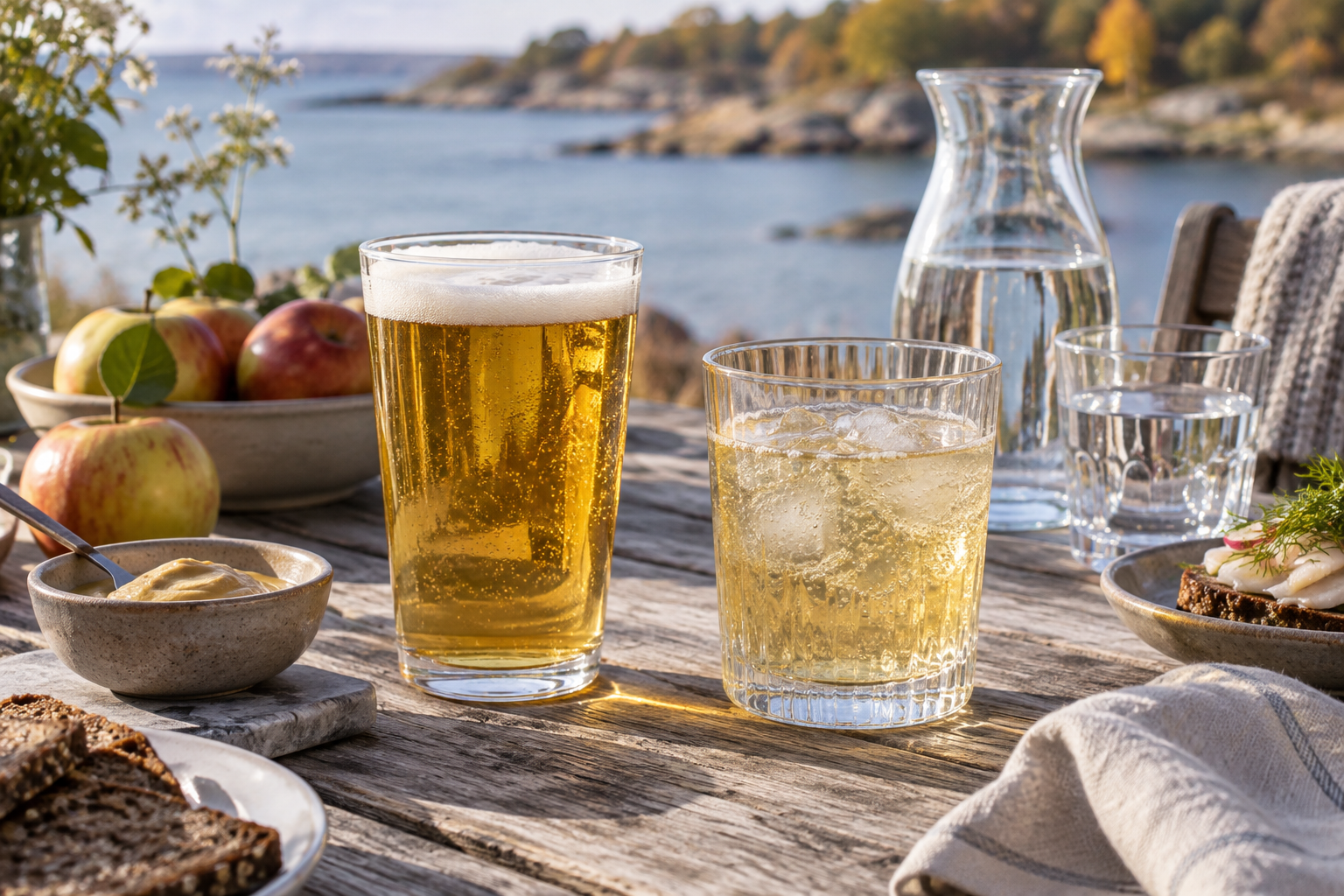
Snaps is part of the image of the Swedish festive table and also appears at ålagille feasts. Caraway, dill or fennel flavourings can echo the bread and accompaniments. If serving it, pour a small measure and keep water just as readily available. Spirits are not needed to “dissolve the fat” or aid digestion; their role is sensory and social, not medicinal. Nor do beer and snaps need to be combined simply because tradition offers both.
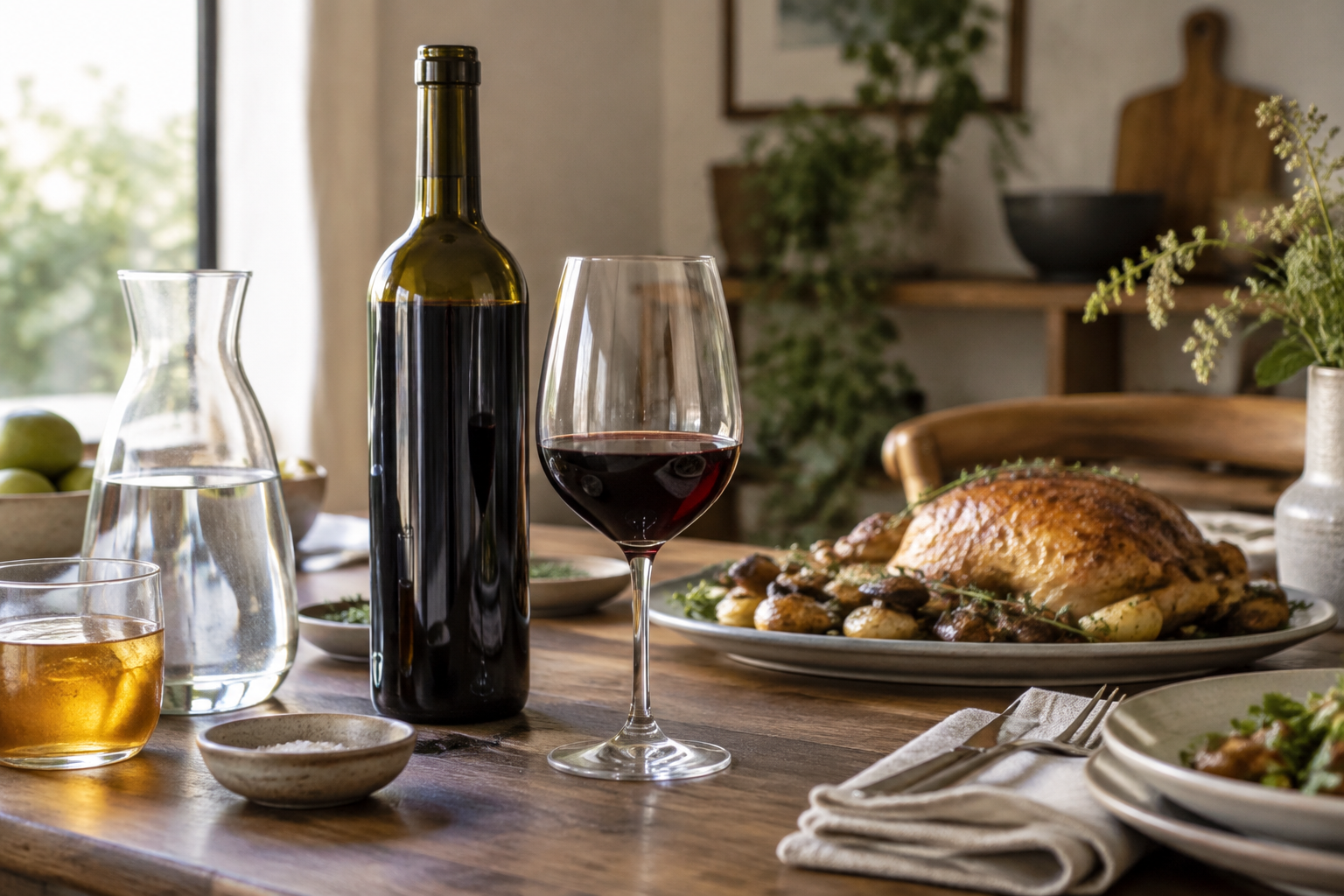
Wine works, even if it is not the most obvious traditional choice. A dry white with bright acidity and restrained oak, such as riesling, can provide a lovely contrast. Choose above all for the plate as a whole: plenty of smoke calls for a little more intensity of flavour, while sweet-and-sour cucumber can make a very austere wine seem harsher.
Alcohol-free lager is a worthy first choice, not a fallback. Another is a tangy apple drink, diluted with sparkling water if it is sweet. Apple’s freshness suits both smoked fish and mustard. Serve it well chilled in a proper glass, with the same care as the other drinks.
An autumn table that leaves eel in peace
The great difficulty with carrying the feast forward unchanged is the eel’s precarious situation. Threats include barriers to migration, impacts on habitats and fishing. Fishing is regulated, but legally available eel is not therefore a sustainable choice. Nor is farmed eel a simple way out: commercial eel farming relies on raising wild-caught young eels, not on a closed production cycle independent of the wild population.
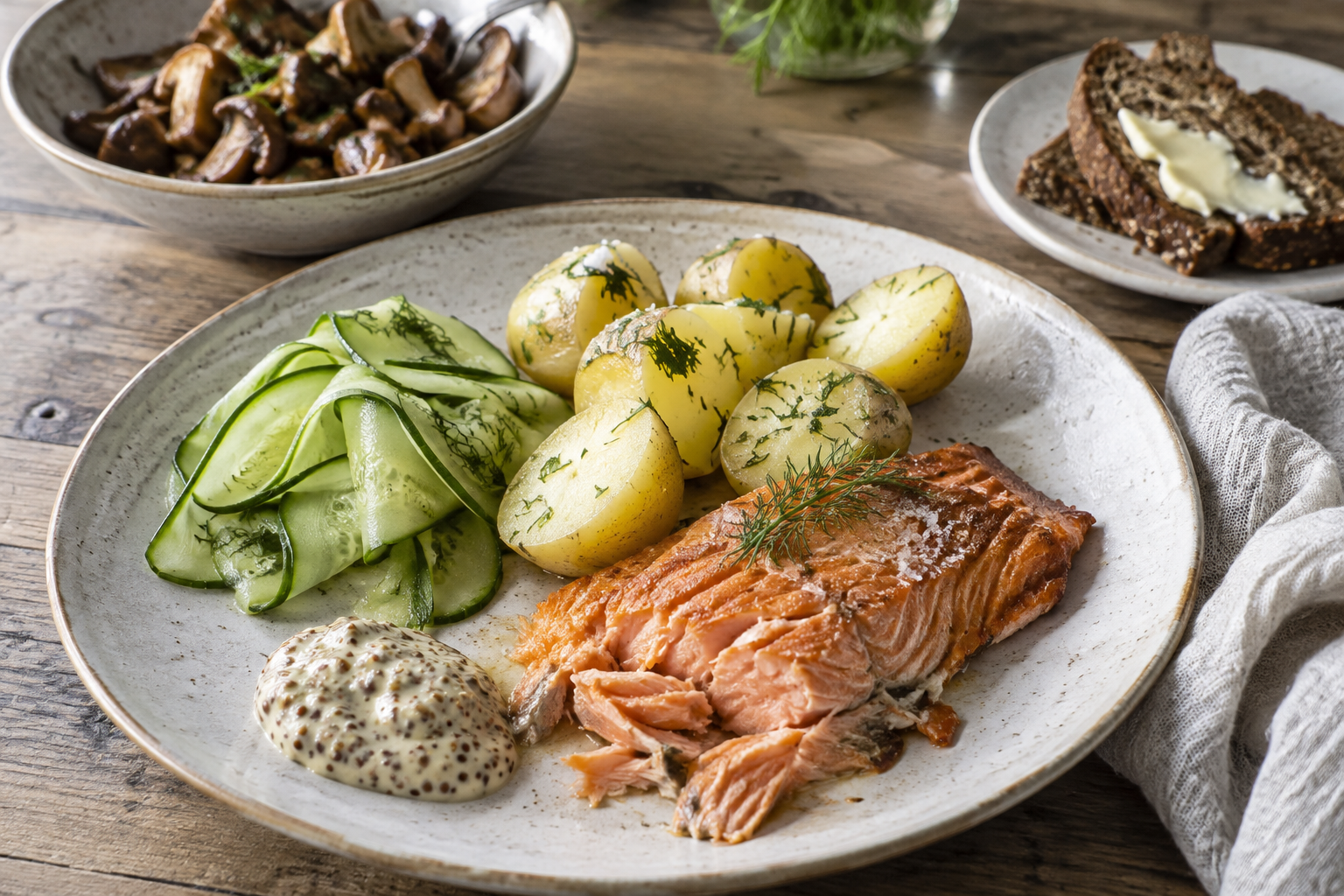
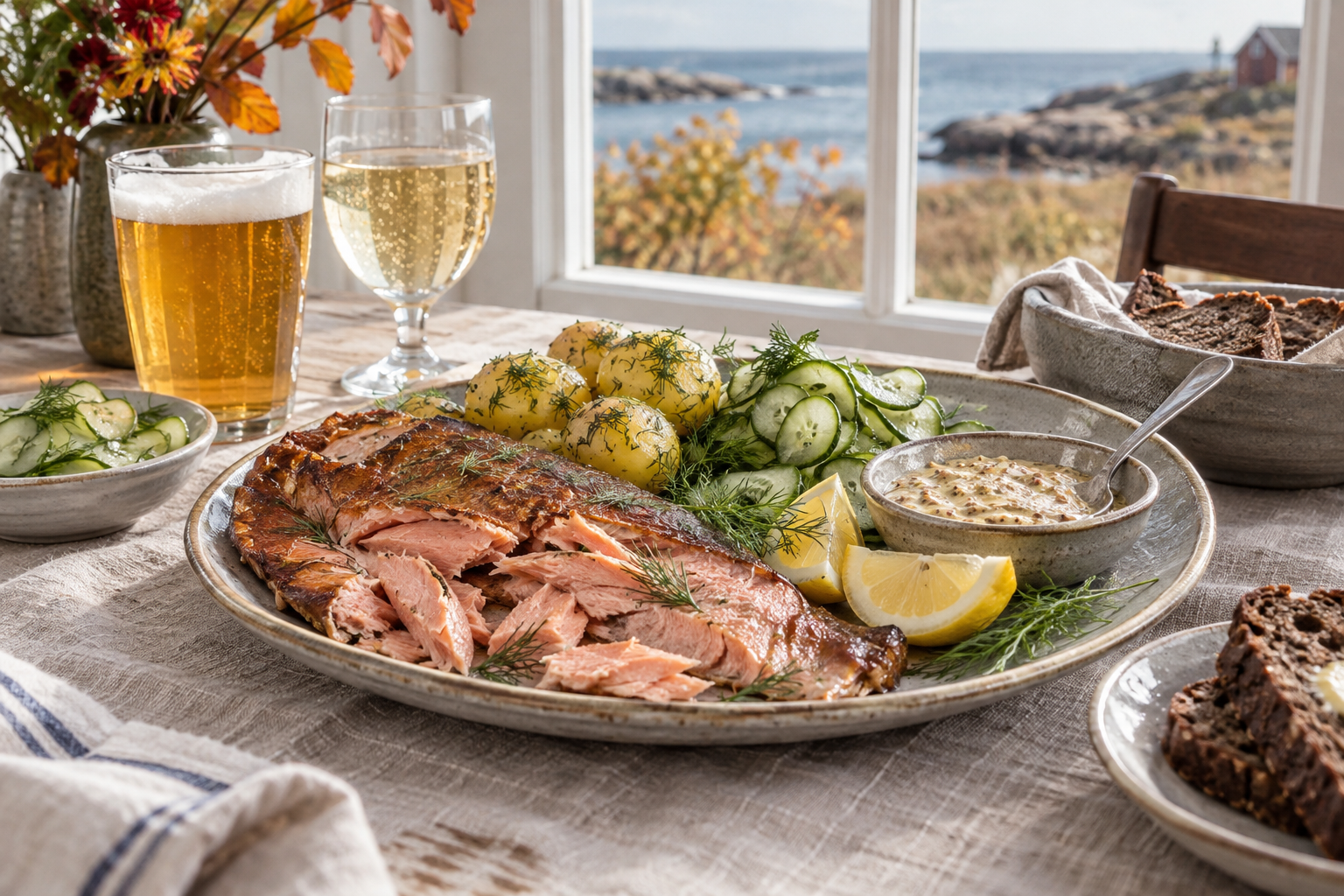
For the home cook, the clearest advice is therefore to avoid eel. The recipe here is neither a historical reconstruction nor an exact substitute in flavour. It is a modern autumn plate of hot-smoked fish, warm potatoes, mustard cream and tangy cucumber. It borrows the meal’s contrasts and generous style of serving, not its endangered main ingredient.
Hot-smoked rainbow trout offers succulent flesh and a pronounced smoky flavour, and is easy to find in Sweden. Check the current advice in Fiskguiden on farming origin and certification when you shop; the replacement fish also needs to be chosen with care. Anyone wishing to eat entirely without fish can pair browned mushrooms or roasted celeriac with the same accompaniments instead, as a different dish rather than an imitation.
At home, the best results come from keeping the flavours separate until serving. Let the potatoes be warm, the cream cool and the cucumber crisp. Put out the fish in small batches and serve the bread separately. Then smoke, acidity, salt and a quiet autumn calm all have a place at the table. And the story of the eel can continue without another eel needing to be caught.
Autumn plate with hot-smoked rainbow trout, mustard cream and tangy cucumber
A modern tribute to the smoky, tangy flavours of ålagille, not a reconstruction of a traditional eel dish. Choose rainbow trout with a farming origin and certification recommended in the current seafood guide. This recipe contains no eel.
Ingredients
Method
- 1Stir together the spirit vinegar, sugar, water and salt until the sugar has dissolved. Shave the cucumber into thin slices, toss in the liquid and refrigerate for at least 20 minutes. Toss again once or twice.
- 2Scrub or peel the potatoes. Cut any large potatoes so the pieces are evenly sized. Place in a saucepan, cover with water and salt lightly.
- 3Bring to the boil, then cover and simmer for 15–25 minutes, depending on size. Test with a skewer; the potatoes should be tender but not falling apart.
- 4Meanwhile, stir together the crème fraiche, both mustards, lemon juice and black pepper. Season to taste with salt and refrigerate.
- 5Take the fish out of the fridge just before serving. Remove the skin and any visible bones if this has not already been done. Gently break into large pieces without crushing the flesh.
- 6Drain the potatoes and let them steam dry in the uncovered saucepan for about 2 minutes. Gently toss with the butter and dill.
- 7Lightly drain the cucumber. Arrange the fish and warm potatoes on plates or small serving platters, with the cucumber and mustard cream alongside.
- 8Serve immediately with rye bread and lemon wedges. For a longer meal, keep most of the fish in the fridge and replenish the platters as needed.
- The cucumber and mustard cream can be made the day before and kept covered in the fridge.
- If Skåne mustard is unavailable, another wholegrain mustard will work. Taste before adding more Dijon mustard; heat and sweetness vary.
- For a vegetarian plate: replace the fish with 800 g celeriac cut into wedges about 2 cm thick. Toss with 2 tbsp rapeseed oil, a little salt and 1 tsp smoked paprika, then roast at 225 °C for about 30–40 minutes until tender and browned.
- Keep the fish refrigerated according to the instructions on the packaging, and follow the guidance on how long to keep it after opening.
What goes in the glass
- BeerPale lager with moderate bitternessFreshness and carbonation contrast with the richness of the fish, while gentle maltiness complements the rye bread. Avoid excessive bitterness, which can dominate the smoky flavour.
- SpiritsA small measure of caraway- or dill-flavoured snapsThe flavourings echo the bread, dill and mustard. An optional touch of tradition in a small measure, with water alongside – not a digestive aid.
- Alcohol-freeAlcohol-free pale lagerOffers the same light maltiness and lively carbonation that suit smoked fish, potatoes and tangy cucumber, without the alcohol.
- Alcohol-freeTangy pressed apple juice with sparkling waterThe apple’s acidity and fruitiness complement smoke and mustard. Dilute according to the juice’s sweetness and serve well chilled, so the drink feels refreshing rather than heavy.
Enjoy alcohol in moderation. Alcohol-free options go just as well with the food.
Sources
- Världsnaturfonden WWF, Fiskguiden: Ål
- SLU Artdatabanken, Artfakta: Anguilla anguilla – ål
- Havs- och vattenmyndigheten, Ål
- Ålakustens kulturarvsförening, Ålakusten
- Nils-Arvid Bringéus, Skånsk mat och skånska seder (2009)
- Patrik Svensson, Ålevangeliet: berättelsen om världens mest gåtfulla fisk (2019)
Ask questions about "Ålagille – Skåne’s autumn feast with a difficult question at the table". Answers are based on the magazine's own articles.