Invite friends over for porter-braised beef
A generous three-course dinner where the pot does most of the work
A small toast skagen, tender porter-braised beef with a creamy sauce, and a refreshing lemon cream for dessert. This is a dinner that smells of care and attention—without keeping you at the stove all evening.
 By Lina BergFood editor · European and Nordic cuisines – Italy, France, Spain, Greece and Swedish home cooking
Translated from Swedish with AI assistance.
Go to the recipes (2) ↓Let the pot welcome your guests
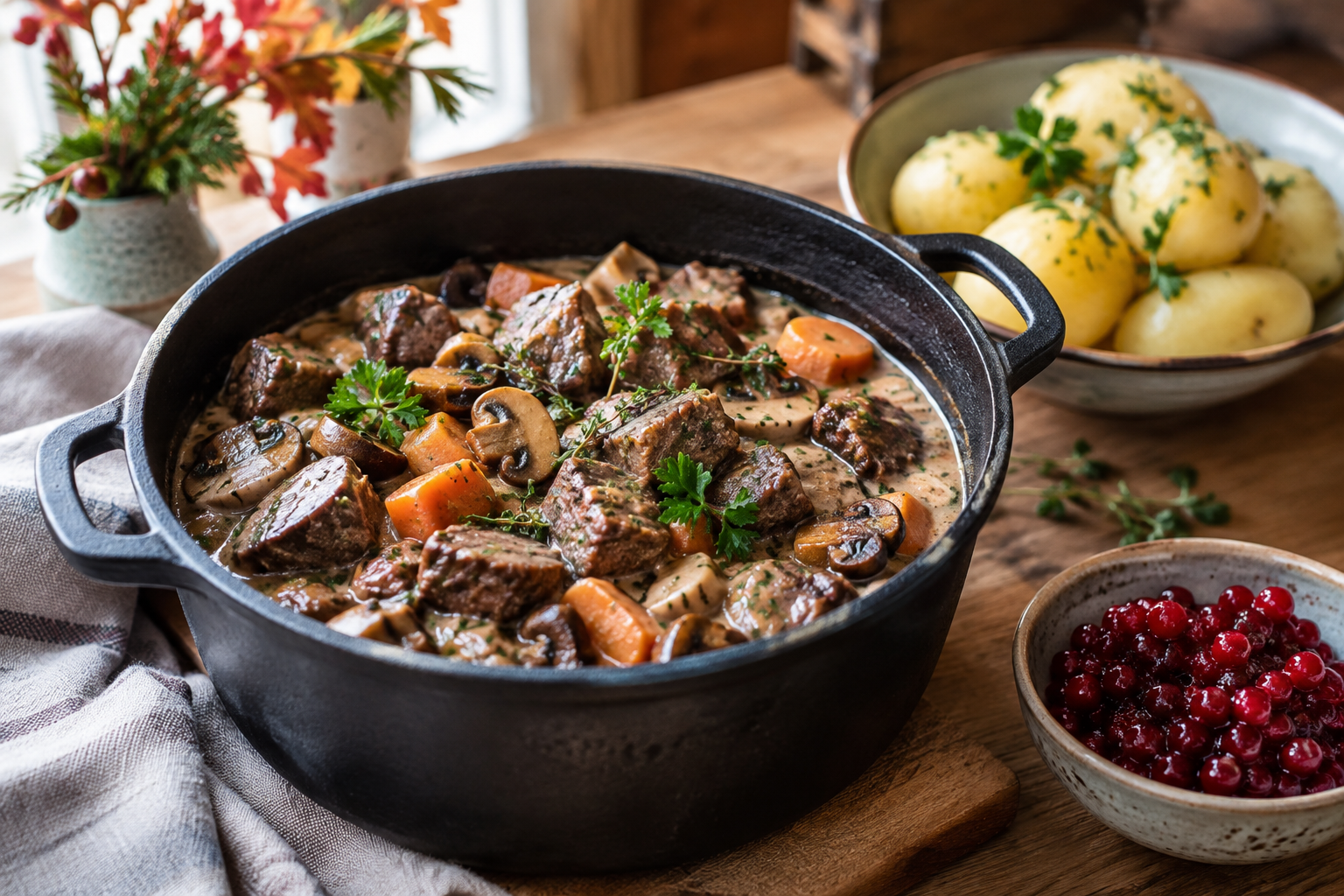
There is a gentle bubbling beneath the lid. In the pot, the beef sits surrounded by dark beer, onions and blackcurrants, and when you lift the lid, the steam carries aromas of malt, thyme and sweet-tart fruit. The potatoes are waiting on the kitchen counter. The dessert glasses are already in the fridge. This is just how a dinner party should begin: with something delicious on its way and enough headspace left for the people who will soon be ringing the doorbell.
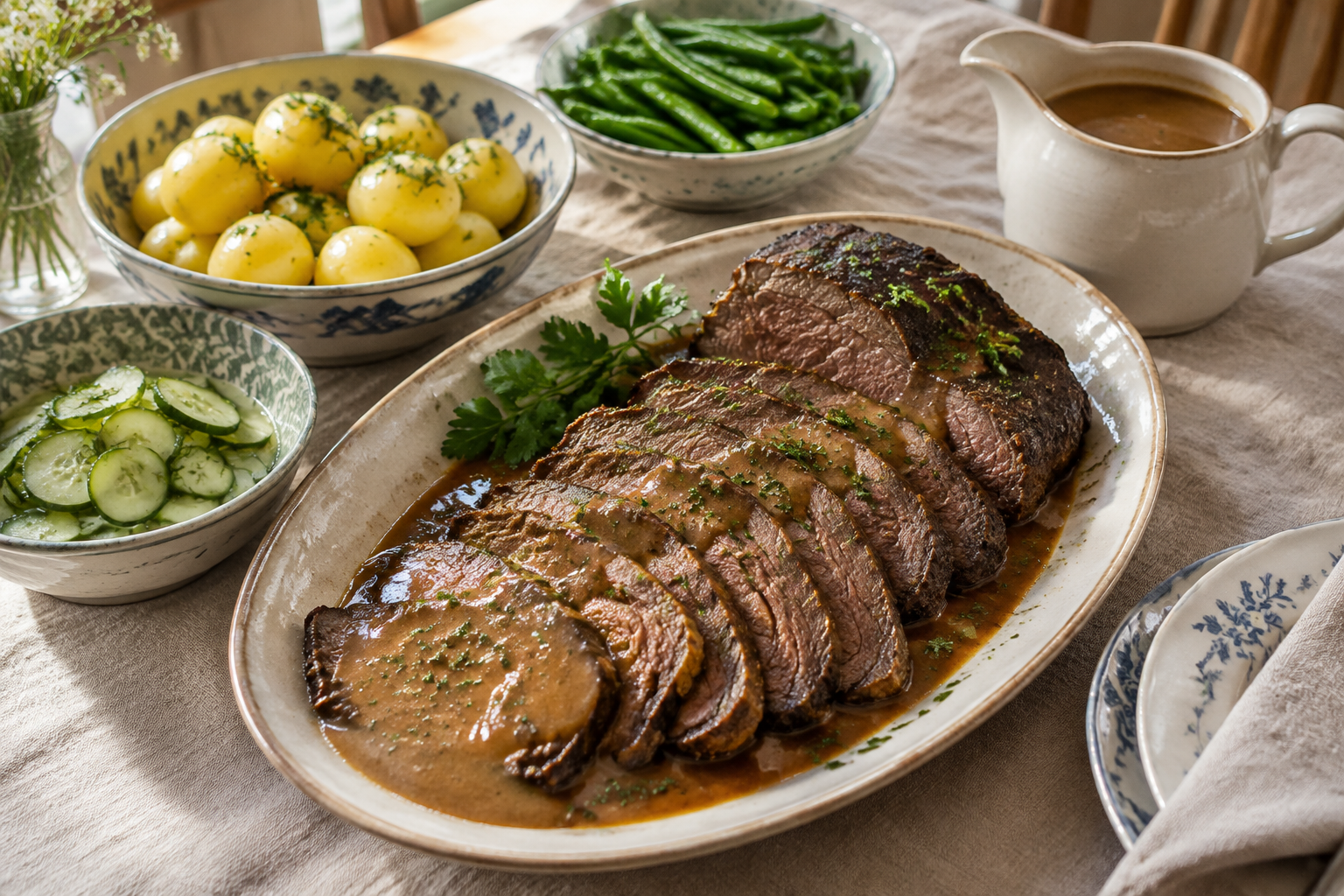
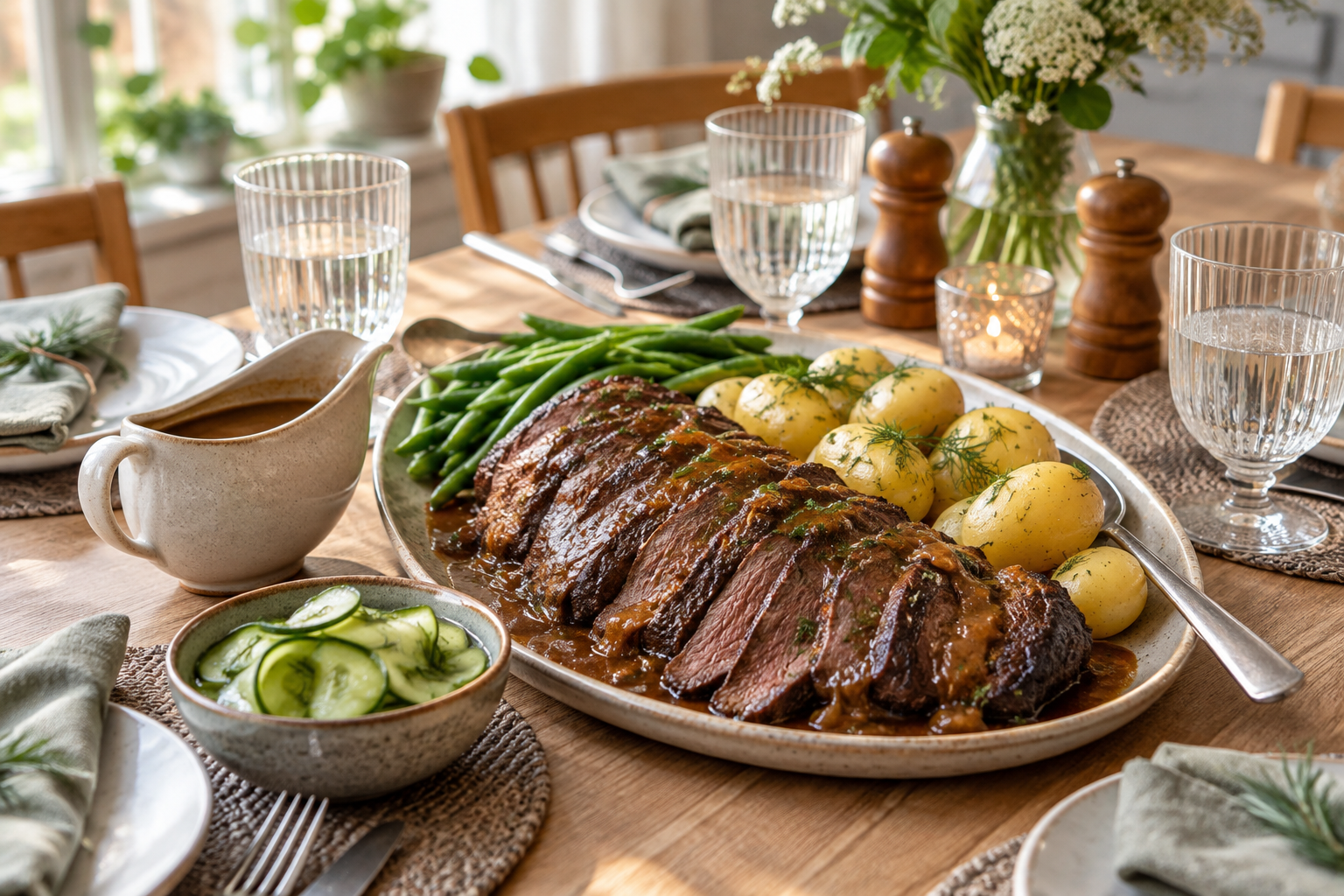
Porter-braised beef is an accommodating dish to serve to friends. It looks generous on a large platter, produces a sauce worth making room for, and calls for more forward planning than culinary dexterity. The division of labour is unusually pleasant, too. The pot takes care of the cooking while you set the table, tidy up and perhaps even sit down for a moment before your guests arrive. Towards the end, the main tasks are to check the seasoning and make sure everything is hot at the same time.
Tonight’s menu stays close to Swedish cooking: a small toast skagen with lemon and dill, porter-braised beef with boiled potatoes, green beans and pressed cucumber salad, followed by lemon cream with raspberries and crunchy biscuit crumbs. The starter can be a well-chosen purchase from the fish counter; you make the main course and dessert yourself. This is not a competition to see how many things you can make from scratch. What a good dinner needs is a clear star and a few well-chosen supporting players.
Think about portion sizes from the outset. A small toast is enough when beef and dessert are still to come. Choose a modest dessert glass rather than a large bowl. That way, the menu feels generous without being heavy, while the bright notes of lemon, cucumber and berries keep appetites keen throughout the meal.
British beer in a Swedish Sunday pot
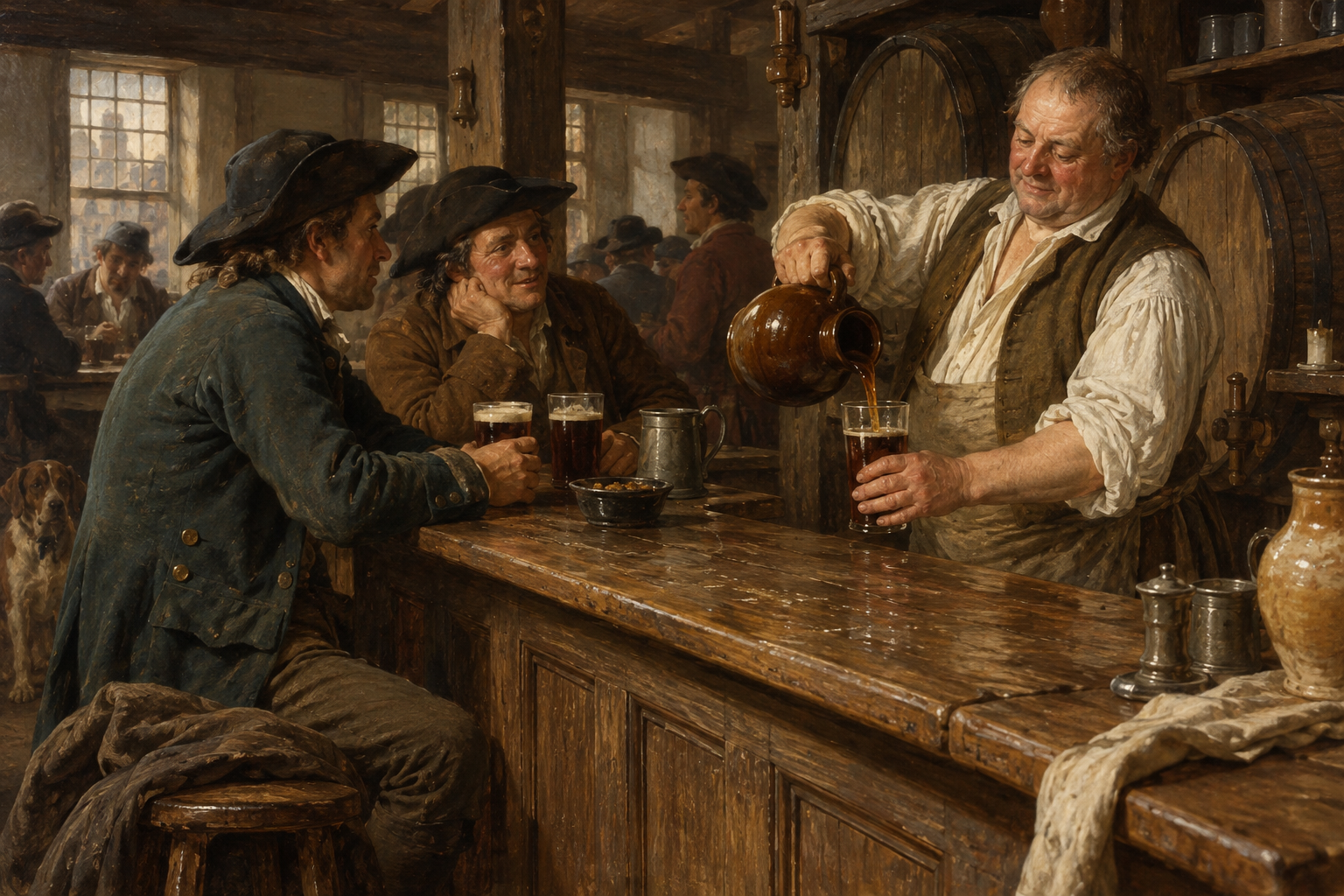
Porter’s story does not begin in the Swedish home kitchen. The beer style developed in London during the 18th century and became an important part of British beer culture. Dark beer also gained a strong foothold in Sweden. Carnegie porter, for example, has been brewed here since 1836. That is a useful historical reference point for the drink, but not a birth date for the dish: the history of porter in Sweden and the history of porter-braised beef are two different things.
Who first put a joint of beef into porter, or exactly when the combination with blackcurrant cordial and soy sauce became established, is harder to pin down. It is wiser, then, to describe porter-braised beef as a familiar Swedish home-style dish than to assign it an inventor or an imaginary old manor-house address. Today’s usual recipes bring together a traditional joint of beef and seasonings that pack plenty of flavour into a single pot.
The beauty lies in how the ingredients work together. Porter brings maltiness and roasted notes, the cordial adds sweetness and fruit, and soy sauce supplies salt and umami. Cream rounds out the cooking liquor into a sauce that tastes far more complex than the effort involved would suggest. You do not need an expensive beer to make it work, but it should be pleasant and balanced rather than intensely bitter or flavoured.
Unlike many other braised meat dishes, porter-braised beef often starts with the meat going straight into the cooking liquid, without browning. This is not an oversight. Much of the colour and roasted flavour comes from the beer and soy sauce. The recipe below follows that principle. It means one less pan to wash and fewer frying fumes in the kitchen, but above all it lets the character of the dish guide the technique.
Tender beef and a well-balanced sauce
Choose a joint of beef with a fairly even thickness, preferably thick flank. Shape matters: a compact, very thick piece takes longer than an elongated one. Ask for advice at the butcher’s counter and explain that the beef will be gently braised in a pot, then thinly sliced. A joint that holds together is easier to serve neatly than a piece that falls apart before the knife has passed through it.
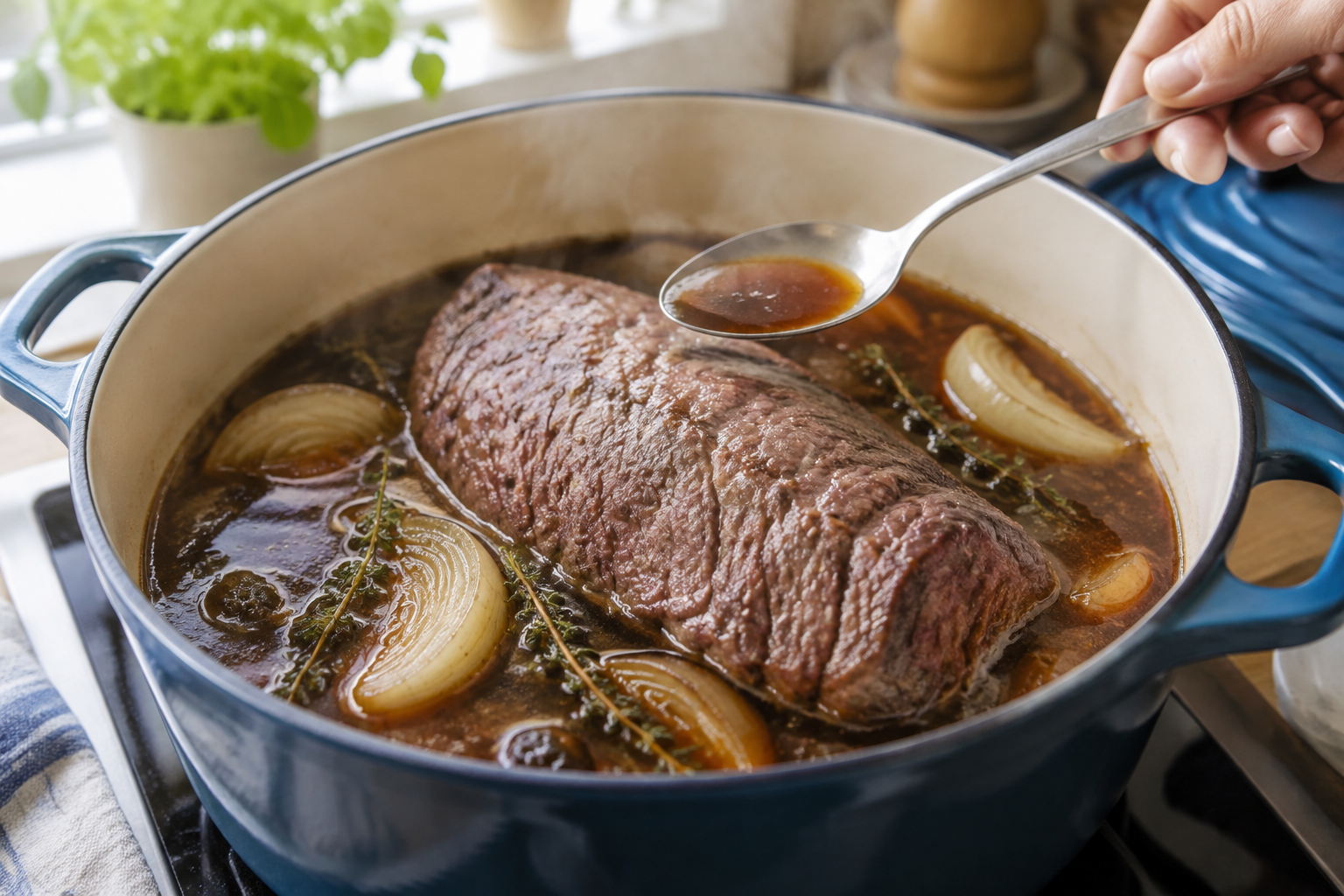
Ideally, the pot should fit the beef fairly snugly. An overly wide pot needs more liquid than necessary, which risks diluting the flavours. The meat does not, however, have to be fully submerged. A lid, gentle heat and a few turns during cooking help the exposed part cook evenly. You should see small, gentle bubbles around the edge, not a fierce boil across the whole surface.
The most common mistake is trying to save time by turning up the heat. This can dry out the meat while reducing the cooking liquor too much. A thermometer is a better guide than the clock, since both the shape of the meat and its starting temperature affect the cooking time. In our recipe, the beef is cooked through to about 75°C, then left to rest. Slicing is just as important: thin slices cut across the grain make a real difference to tenderness.
The sauce needs attention at the end. Taste the strained cooking liquor before deciding how much to use. The saltiness of soy sauce varies between brands, and evaporation also has an effect. If the liquor is very salty, dilute it with water and use less of it. Once the cream is added, you should still be able to taste both malt and blackcurrant. A little vinegar can bring it to life, but should not make it noticeably sharp.
Three courses that belong together
Toast skagen opens the dinner with prawns, dill and lemon: creamy and fresh, with a little crunch from the toasted bread. The dish is usually credited to restaurateur Tore Wretman and associated with the 1950s. The more colourful stories about exactly how it came about should, however, be treated with caution. For this dinner, a ready-made skagen prawn mixture with a clear prawn flavour works beautifully. Ask for a taste if possible, and choose one that is not heavy with mayonnaise.
Keep the starter simple on the plate, too. A small toast, a generous but not mountainous spoonful of prawn mixture and a wedge of lemon alongside feel more inviting than an arrangement that needs building with tweezers. Anyone avoiding shellfish can have a toast with a mushroom topping instead. Check allergies in advance; both the skagen mixture and the rest of the menu may contain ingredients that guests need to avoid.
The beef needs accompaniments that soak up the sauce and cut through its richness. Boiled potatoes do the first job, pressed cucumber salad the second. Green beans add colour and a little bite, and are easy to cook just before serving. Shop-bought pressed cucumber salad is a perfectly reasonable choice. If you want to spend your time somewhere, give the sauce a few extra minutes of care rather than feeling duty-bound to make everything on the table yourself.
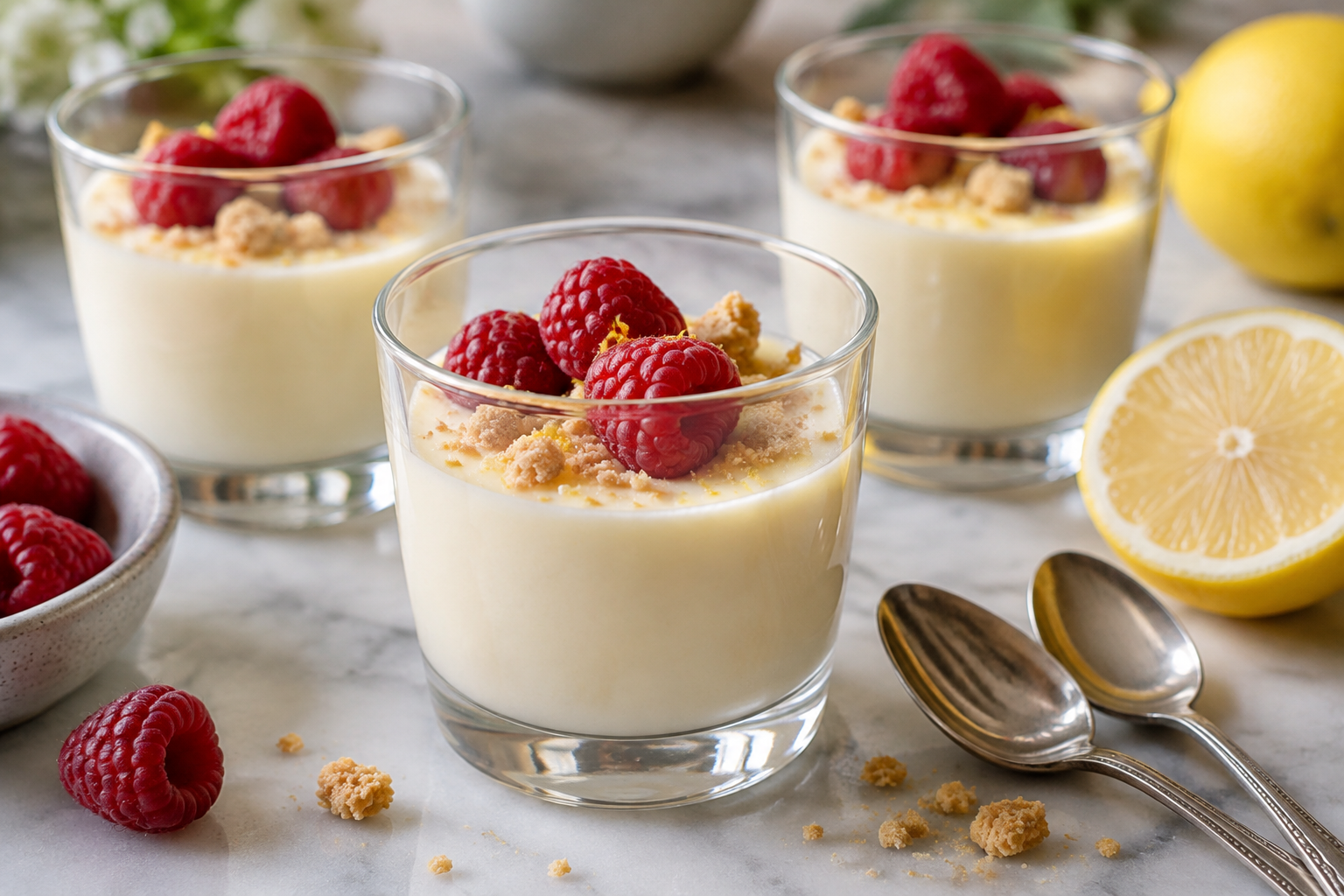
The dessert is a posset-style lemon cream: cream, sugar and lemon left to set in the fridge without gelatine. It has British connections, but should not be confused with the hot posset drinks of earlier centuries, which were quite different from today’s dessert. Here, the cream is topped with raspberries and biscuit crumbs. Its tang ends the meal on a bright note, while the small serving is just right after a substantial main course.
Drinks should complement, not dominate
A balanced porter is a natural choice with porter-braised beef. The roasted malt notes echo the sauce, while the carbonation contrasts with its creaminess. Look for a moderately strong version without pronounced additions of coffee, vanilla or liquorice. Red wine can work too, particularly a fruity wine with soft tannins. The sweetness of the sauce can make a very tannic or oaky wine feel harsher than expected.
The alcohol-free option deserves just as much thought. A dark alcohol-free beer with moderate bitterness goes well with the main course. With the starter, a dry alcohol-free apple cider or sparkling apple drink provides a refreshing contrast to the prawns. Serve water throughout the meal and let guests choose without comment. If dinner needs to be entirely alcohol-free, the beef must also be cooked with beer labelled 0.0%; ordinary beer does not reliably become alcohol-free simply because it is boiled.
Prepare for an evening at the table
Make the lemon cream the day before. It will have plenty of time to set, and dessert will already be taken care of when the day of the dinner arrives. Set the table ahead of time too, if you can, and make sure there is a warm serving platter for the beef. On the day itself, start the beef with plenty of time to spare. It copes better with being ready early than guests do with a long wait between starter and main course.
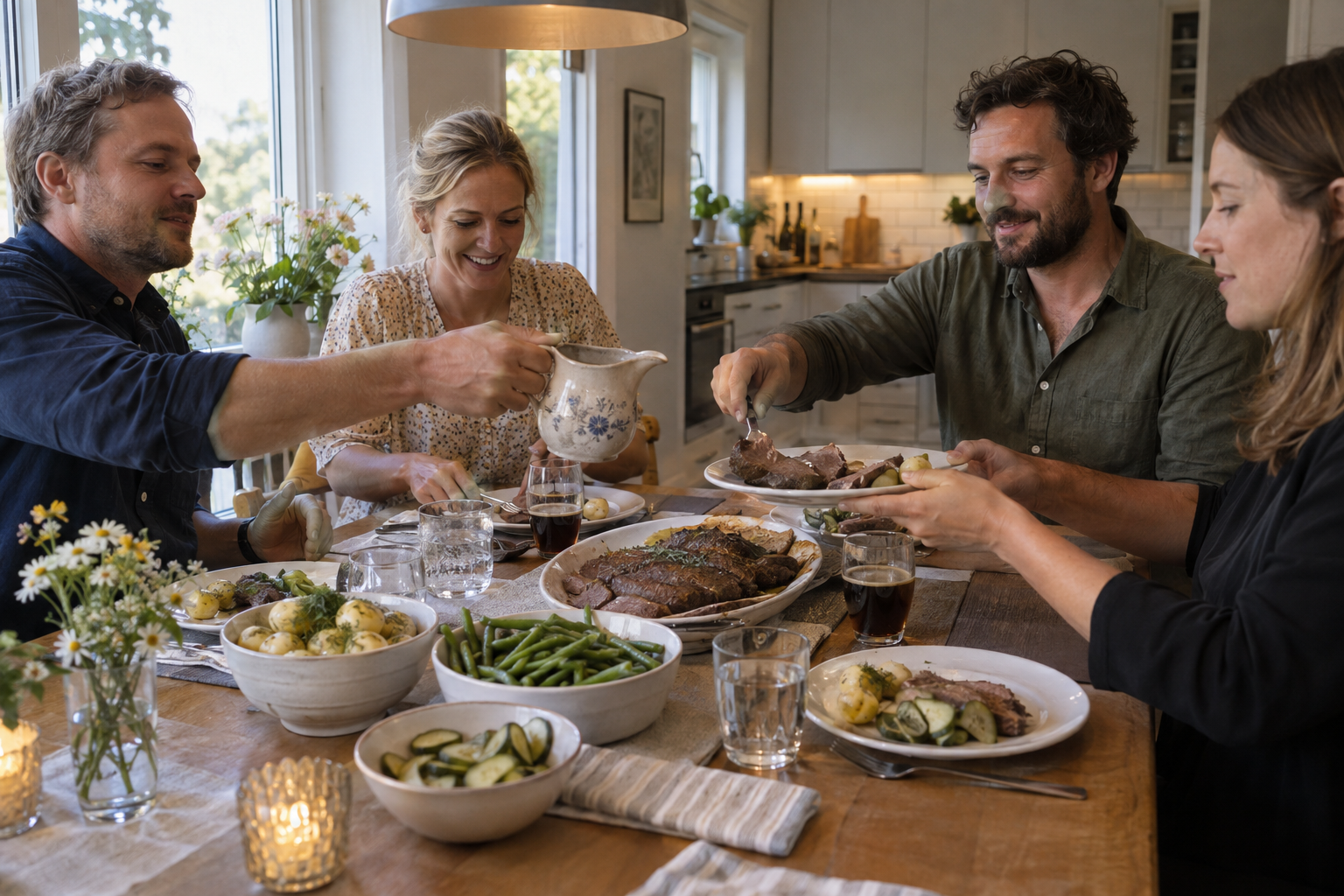
Let the meat rest while the potatoes finish cooking and you give the sauce its final seasoning. Then slice the beef thinly and keep the slices warm, covered, with a little hot cooking liquor, without letting them cook any further. The beans come last. Put the sauce in an easy-to-pass jug and serve the beef on a platter. More work in the kitchen will not make dinner any better now. It is time to sit down.
Porter-braised beef with cream sauce, potatoes and green beans
A Swedish dinner-party classic in which porter, blackcurrant cordial and soy sauce give depth to the cooking liquor. Cooking time varies with the thickness of the joint; use a thermometer and allow plenty of time.
Ingredients
Method
- 1Peel the onion and cut into wedges. Peel and lightly crush the garlic. Choose a pot that fits the beef fairly snugly, ideally with a capacity of around 3 litres.
- 2Pour the porter, cordial, soy sauce and water into the pot. Add the onion, garlic, thyme, juniper berries and peppercorns. Bring to the boil.
- 3Add the beef and turn down the heat. The liquid should come roughly halfway up the meat; add a little water if necessary. Cover and simmer very gently.
- 4Turn the beef about every 25 minutes. Begin checking the internal temperature after 75 minutes. Aim for about 75°C in the centre; allow 90–120 minutes in total, sometimes longer for a thick joint. Top up with a little hot water if the level drops significantly.
- 5Lift out the meat and leave to rest under a lid or loosely covered with foil for about 20 minutes. Strain and reserve the cooking liquor.
- 6Peel the potatoes and boil in lightly salted water for about 20 minutes, until tender. You can start this as the meat approaches the right temperature.
- 7Taste the cooking liquor. Measure out 4 dl for the sauce; if it is very salty, replace some of it with water. Combine with the cream in a saucepan and simmer for 5 minutes.
- 8Mix the cornflour with 2 tbsp cold water. Whisk it into the sauce a little at a time and simmer for 2–3 minutes until you have the desired consistency. Season with vinegar, pepper and salt only if needed.
- 9Cook the beans in lightly salted boiling water for 3–5 minutes, or according to the packet instructions. Drain and toss with the butter.
- 10Slice the beef thinly across the grain. Arrange on a warm platter and spoon over a little warm cooking liquor or sauce. Serve with the potatoes, beans, pressed cucumber salad and the remaining sauce on the side.
- To cook the day before: slice the rested beef, place in a shallow container with some cooking liquor and cool quickly, preferably in a cold-water bath before refrigerating. Store at about 4°C. Reheat, covered, in the cooking liquor until hot all the way through, without prolonged boiling.
- Use beer labelled 0.0% if the food needs to be alcohol-free. Boiling ordinary porter does not guarantee that all the alcohol will evaporate.
- For a vegetarian guest, serve separately fried mushrooms and oven-roasted celeriac with the same accompaniments. Make a separate sauce with vegetable stock, a little dark alcohol-free beer, blackcurrant cordial, soy sauce and cream; the beef cooking liquor is not vegetarian.
Lemon cream with raspberries and biscuit crumbs
A small, refreshing posset-style cream dessert that can be made entirely ahead. The acidity of the lemon thickens the cream. Allow at least 4 hours of chilling in addition to the preparation time.
Ingredients
Method
- 1Wash the lemon thoroughly. Finely grate the zest and squeeze the juice. Measure out both before you start boiling the cream.
- 2Pour the cream and sugar into a roomy saucepan. Bring to the boil, stirring to dissolve the sugar.
- 3Simmer uncovered for 3 minutes. Stir occasionally and watch carefully to prevent the cream boiling over.
- 4Remove the saucepan from the heat. Stir in the lemon juice and zest and leave to stand for 10 minutes.
- 5Divide between four small dessert glasses suitable for hot liquids. Leave to cool slightly, then refrigerate for at least 4 hours, preferably overnight. Cover once the cream has cooled.
- 6Just before serving, top with fresh raspberries and roughly crumbled biscuits so the crumbs stay crunchy.
- Use whipping cream with a high fat content; lighter creams will not set as reliably.
- The cream can be made up to two days before dinner and kept covered in the fridge.
- Use gluten-free biscuits if needed. If using imported frozen raspberries, boil them for at least 1 minute and leave to cool before serving.
What goes in the glass
- BeerModerately bitter porterWith the main course: roasted malt notes echo the sauce, while the carbonation provides a contrast to the cream and beef. Choose balance over high strength and sweetness.
- WineFruity Merlot with soft tanninsWith the main course: gentle tannins and generous fruit work better with the sweetness of the sauce than firm tannins and pronounced oak.
- Alcohol-freeDark beer labelled 0.0%With the porter-braised beef: the maltiness echoes the cooking liquor, while moderate bitterness balances the rich sauce.
- Alcohol-freeDry alcohol-free apple cider or a refreshing sparkling apple drinkWith toast skagen: the apple’s acidity and the bubbles lighten the creamy topping without masking the prawns and dill.
Enjoy alcohol in moderation. Alcohol-free options go just as well with the food.
Sources
- Garrett Oliver, red., The Oxford Companion to Beer (2011)
- Carlsberg Sverige, Carnegie Porter
- ICA, Porterstek
- Tore Wretman, Svensk husmanskost (1967)
- Alan Davidson; Tom Jaine, red., The Oxford Companion to Food (2014)
- Systembolaget, Mat och dryck i kombination
- Livsmedelsverket, Bär
Ask questions about "Invite friends over for porter-braised beef". Answers are based on the magazine's own articles.