The ugly fish – monkfish’s delicious comeback
Behind those jaws lies firm, mild flesh that shines with brown butter, leeks and a squeeze of lemon.
Monkfish wins no beauty contests at the fish counter. But in the frying pan it comes into its own: succulent, firm and delicately sweet, with a natural affinity for both butter and acidity. We follow this bottom-dwelling fish from the depths to a French-inspired dinner table – and explain how to make it delicious, not rubbery.
 By Lina BergFood editor · European and Nordic cuisines – Italy, France, Spain, Greece and Swedish home cooking
Translated from Swedish with AI assistance.
Go to the recipe ↓A face only a fishmonger could love
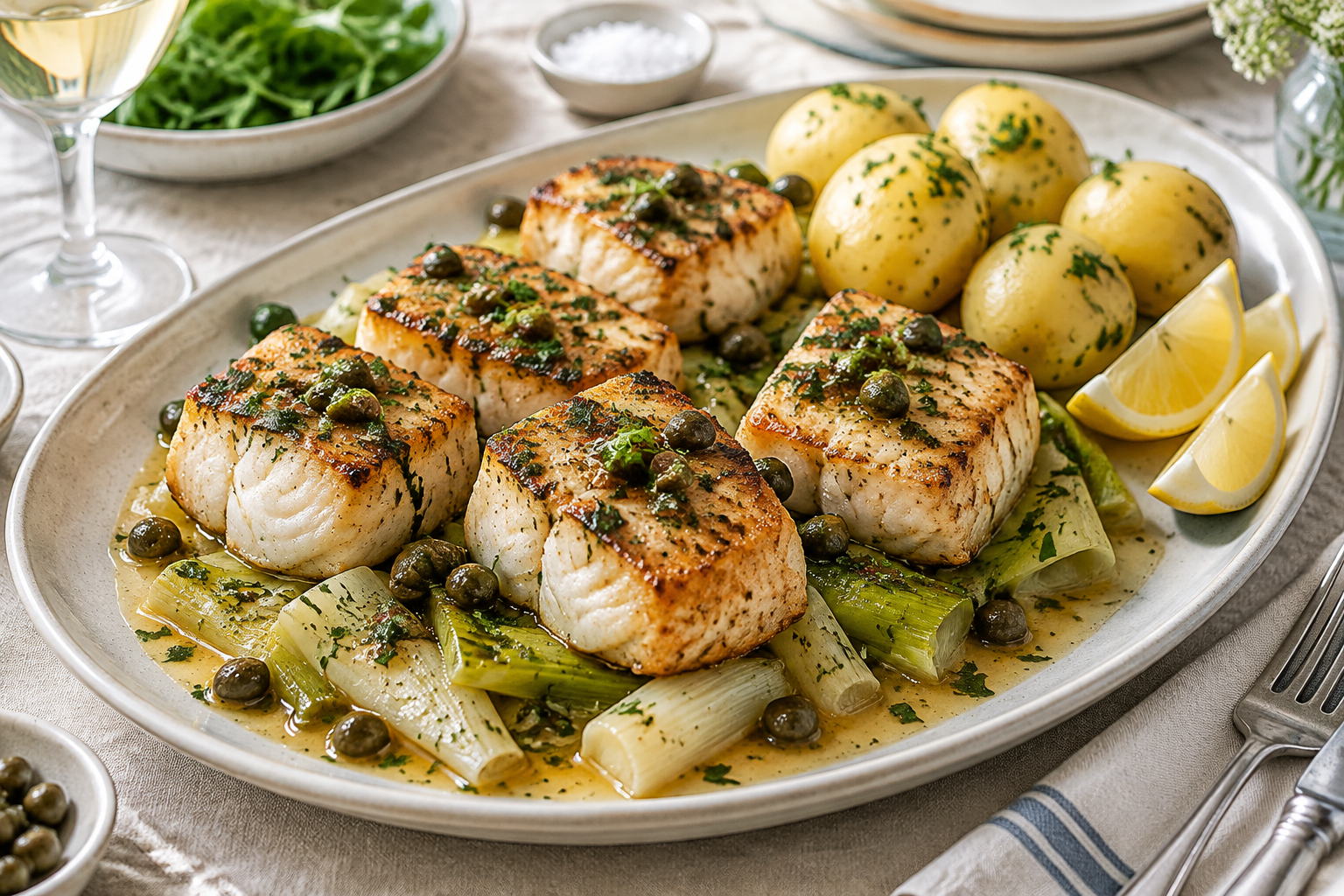
The butter falls quiet for a moment as the fish goes into the pan. Then the sizzle returns, more insistent now, as golden patches slowly appear on the pale flesh. The aroma is toasty and sweet. Alongside are leeks that have softened in their own juices, while lemon, parsley and a spoonful of capers wait on the chopping board. Dinner looks almost unassuming. Its star certainly did not before it became a fillet.
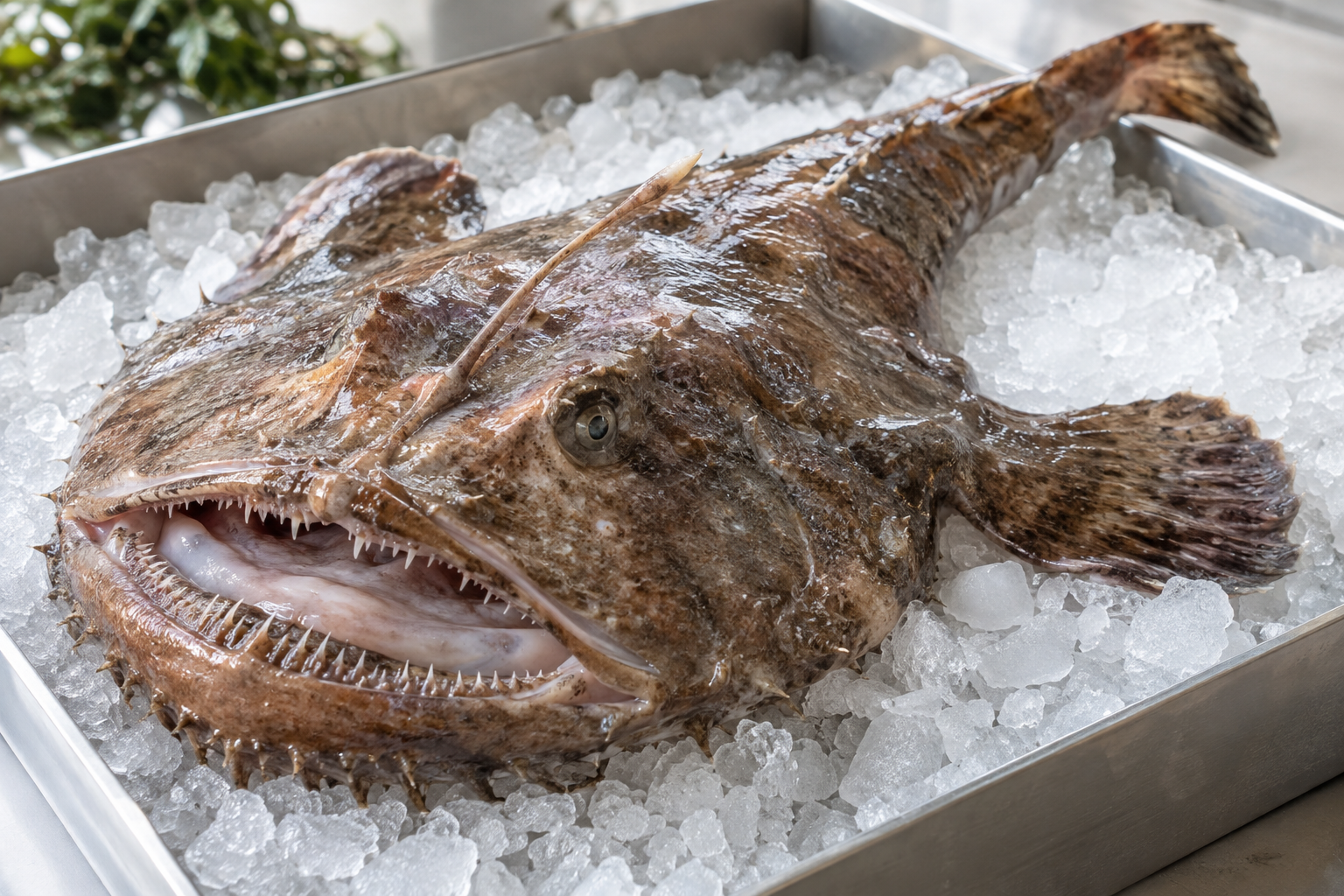
A whole monkfish introduces you to a very different ideal of beauty. Its head is enormous, its body flattened at the front and its mouth full of long, pointed teeth. Small flaps of skin help it blend into the seabed. Above the jaws sits a modified fin ray used like a fishing rod: a movable lure for prey that ventures too close. This is a well-equipped ambush predator, not a fish designed to impress us.
But behind the head is the tail, and that is the part most often found in Swedish kitchens. The flesh is pale and dense, its flavour mild with a subtle sweetness. Monkfish does not separate into large flakes like cod, nor is it oily like salmon. It holds together, has a little bite and takes an unusually good sear.
Calling it the lobster of the sea is tempting, but a little unfair to both. The resemblance is mainly in the springy texture and how well the flesh goes with butter. Monkfish has a subtle flavour of its own that deserves more than to stand in for something else.
From the seabed to French stews
Monkfish, Lophius piscatorius, is found in the north-east Atlantic and also in the Mediterranean. Black-bellied anglerfish, Lophius budegassa, is also sold in Europe. The name at the fish counter therefore does not always tell the whole story. Species, catch area and fishing gear are more useful details than an appetising market name, especially when you want to make an informed purchase.
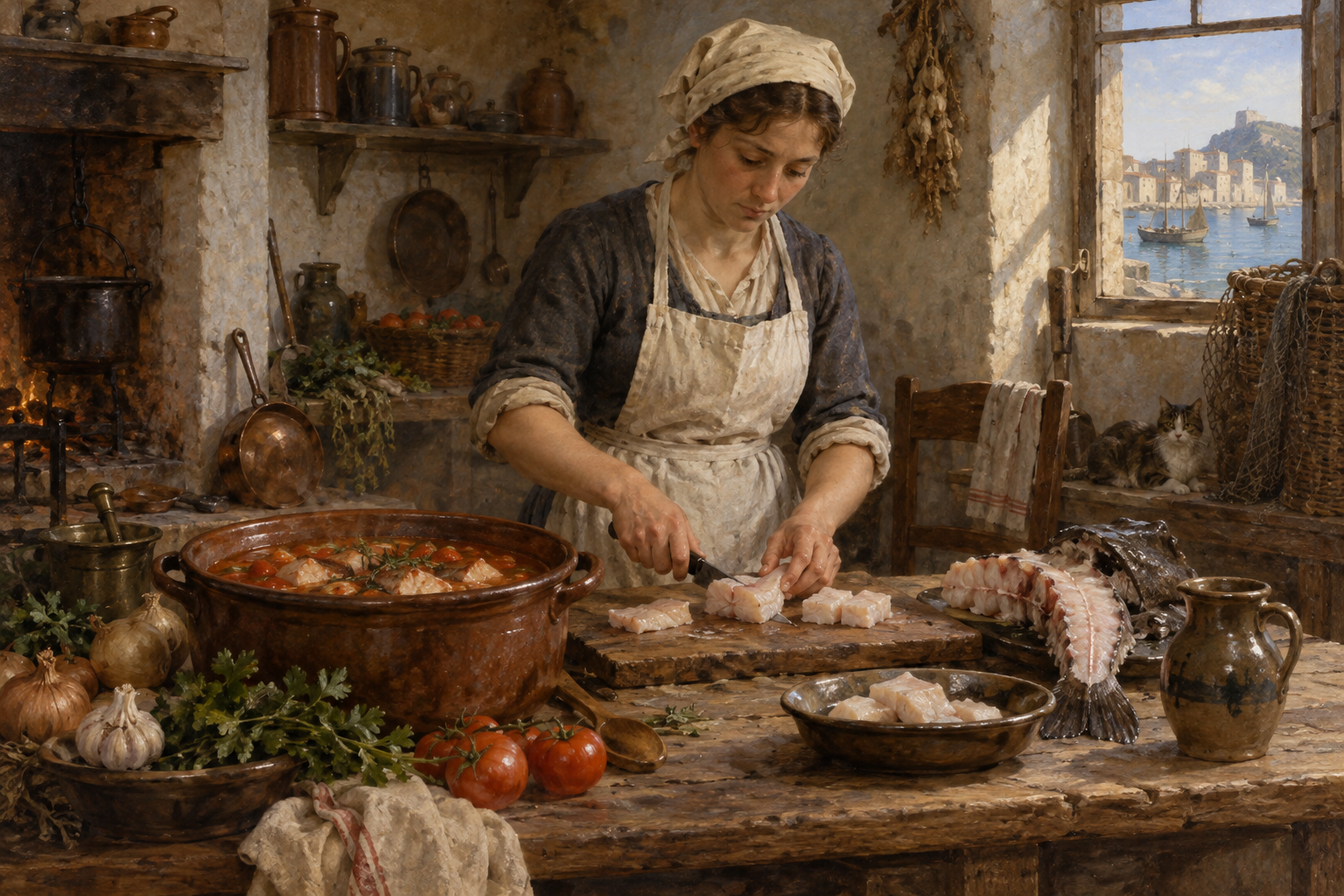
The fish belongs to several European coastal cuisines. In France, the tail is sold as queue de lotte, in Spain monkfish is known as rape, and in Britain as monkfish. The French name needs a little explanation: lotte can also refer to the freshwater fish burbot. For the sea fish, the name baudroie is used too. These words have different lives in the fish trade, biology and the kitchen, which can make older recipes and menus confusing.
There is no single well-documented moment when someone discovered that this fearsome-looking fish tasted good. Nor should the story of a despised scrap fish suddenly becoming a luxury food be treated as a shared European history. Appreciation, availability and price have varied across places and periods. What we can say with more confidence is that monkfish has an established place in the cooking of several coastal countries and is now often sold as a relatively expensive fish.
In French cooking, its firm flesh works well in stews with tomato, wine and aromatic vegetables, as well as in more buttery preparations. It can stand up to a robust sauce without falling apart. Our version borrows French cooking’s fondness for butter, leeks and carefully judged acidity. It is a modern home recipe, not a recreation of any particular regional classic.
The possibilities of firm flesh
Monkfish’s greatest asset is also its most common pitfall. Because the flesh feels sturdy, it is easy to assume it can take almost any amount of heat. It cannot. Cooked for too long, it contracts, loses moisture and can turn tough. The aim is flesh that is still juicy but no longer raw or translucent in the centre.
The tail has a central backbone and none of the row of small pin bones that need removing from many other fish fillets. It may be sold on the bone or as two boneless fillets. A bone-in piece can make a lovely oven-baked dish, but boneless fillet is easiest for pan-frying in portions. Even thickness matters more than perfect shape: the thin end will be ready long before the thick end if both are treated alike.
Ask the fishmonger to remove the tough membranes too. This is not just about the outer skin. A tight, partly translucent membrane may surround the flesh and shrink in the heat. It can make the pieces curl and give them an unpleasantly chewy texture. A sharp knife and a little patience help, but this is an excellent job to have done at the counter.
There is plenty of room to play with flavour. In Spanish kitchens, monkfish may be paired with paprika, garlic and shellfish stock; in French cooking, with saffron, tomato or cream too. Such combinations show the ingredient’s versatility, not that there is only one right way to season it. At home, a small selection of well-chosen flavours goes a long way. The sweetness of leeks, the saltiness of capers and the bright edge of lemon leave room for the fish itself.
Shop with your nose – and a little thought
A good monkfish fillet should smell fresh and mild, without a sharp whiff of ammonia or any sourness. The flesh should feel firm and be well chilled. Do not judge quality solely by how snowy-white it looks, though. Appearance varies with handling and trimming, and knowledgeable staff at the fish counter are worth more than the prettiest display.
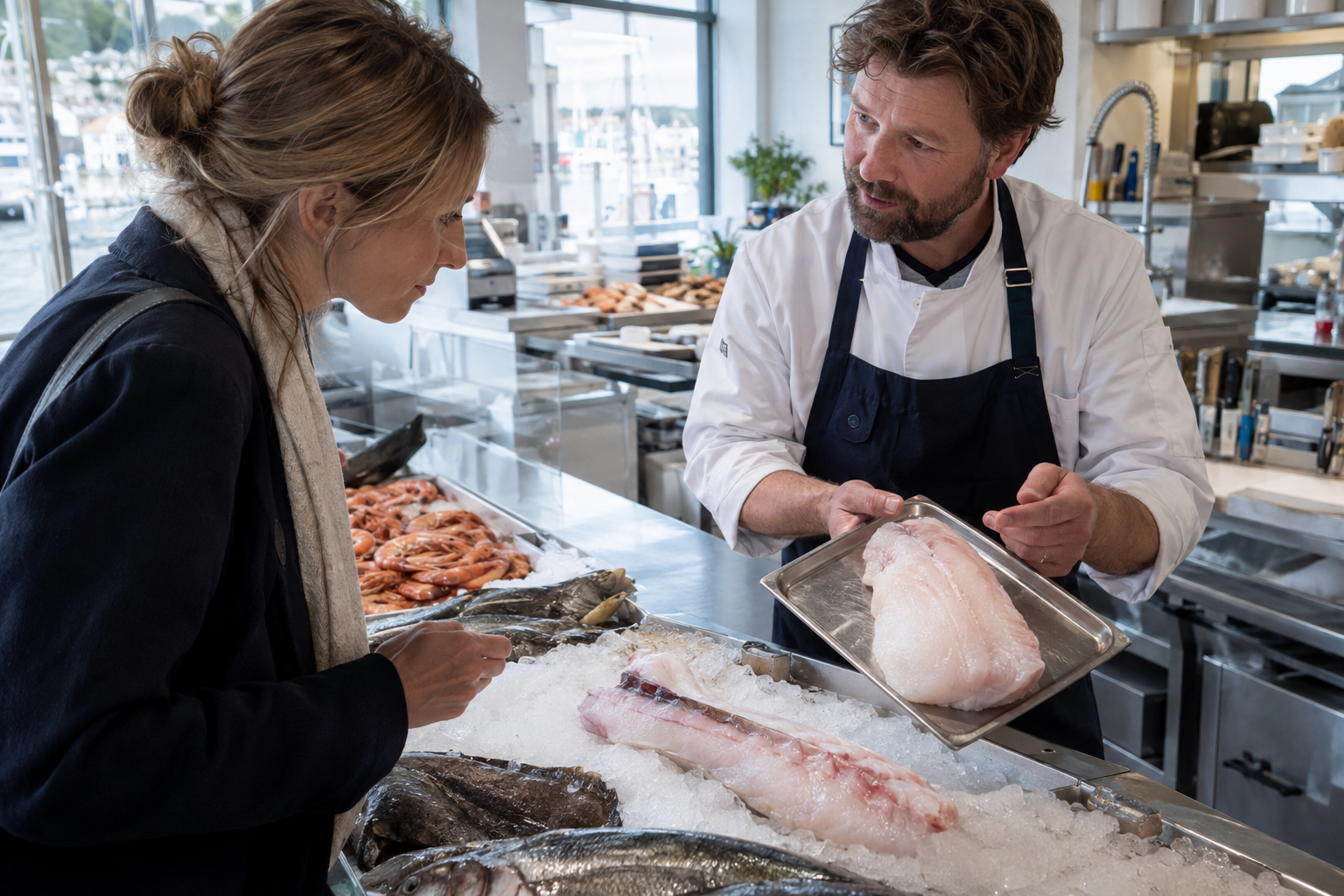
Ask when the fish arrived and how to store it until dinner. Keep it cold on the journey home, put it in the coldest part of the fridge and ideally plan to cook it soon after buying. Frozen monkfish can work well too. Defrost it in the fridge, preferably on a rack over a dish so that it does not sit in the thawing liquid. Then dry the surface thoroughly.
Environmental questions call for the same curiosity. Monkfish is not an ingredient that can be given a permanent green or red light on the strength of its name alone. Stocks, catch area and fishing method all matter, and recommendations can change. Ask for the information on the label and check current guidance, such as WWF’s Fiskguiden seafood guide. Bottom trawling can affect seabed habitats and result in bycatch; other fishing methods also need to be assessed in context.
The price makes it wise to ask what the weight includes, too. A tail with its bone and membranes yields less food per kilo than a trimmed fillet. Our recipe uses fully trimmed fish, so the portion size is clear. Served with potatoes and plenty of vegetables, monkfish need not fill the whole plate to feel like the undisputed centrepiece of dinner.
A table without fuss
Monkfish is a good choice when dinner should feel a little special but the kitchen should still feel like home. Its firm flesh makes portioning easy, and the accompaniments can be everyday ones. Boiled potatoes soak up the butter better than many elaborate garnishes. Leeks, so often relegated to a supporting role in soup, make a soft, sweet companion here.
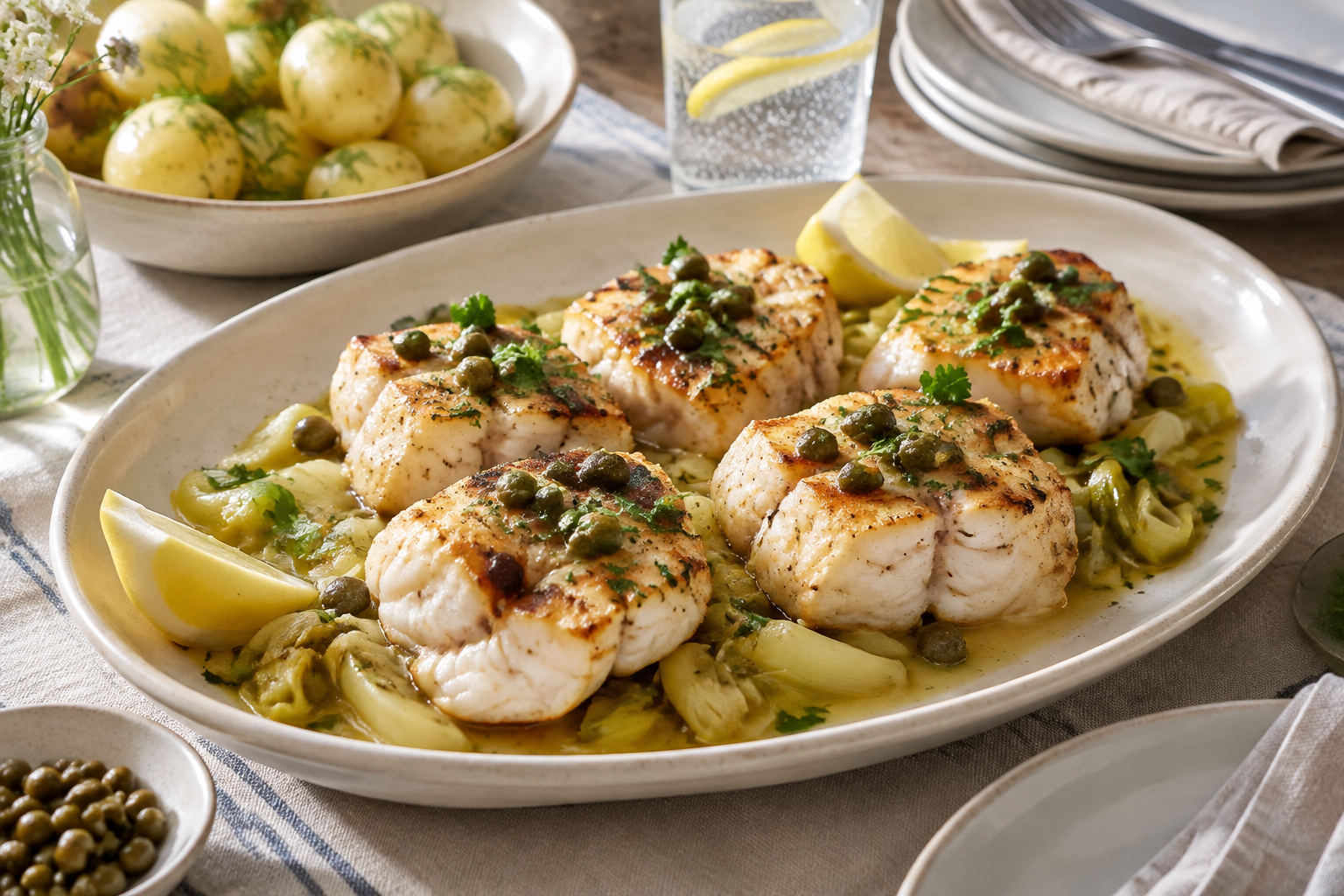
This is also a fish that lends itself to a sharing platter. Arrange the leeks underneath, the fish on top, and spoon over the warm caper butter just before serving. Lemon wedges on the side let everyone adjust the acidity. Warm the platter first if you can; small pieces of fish lose heat quickly, and the butter is at its best while still flowing freely.
For those who would like wine, a crisp, dry white without pronounced oak works well. An alcohol-free white with bright acidity suits the same flavours. Lightly sparkling water with a thin strip of lemon zest is another good choice. Avoid making the drink too sweet: the mild fish and the leeks’ natural sweetness call for freshness rather than extra roundness.
Getting it right at the stove
The most important work happens before the fish reaches the pan. Trim away the membranes, cut into pieces of even thickness and dry thoroughly. A wet surface must first lose its water before it can brown. If the pieces are packed too closely together, the temperature drops and dinner starts simmering when you meant to fry it. Use a roomy pan or work in batches.
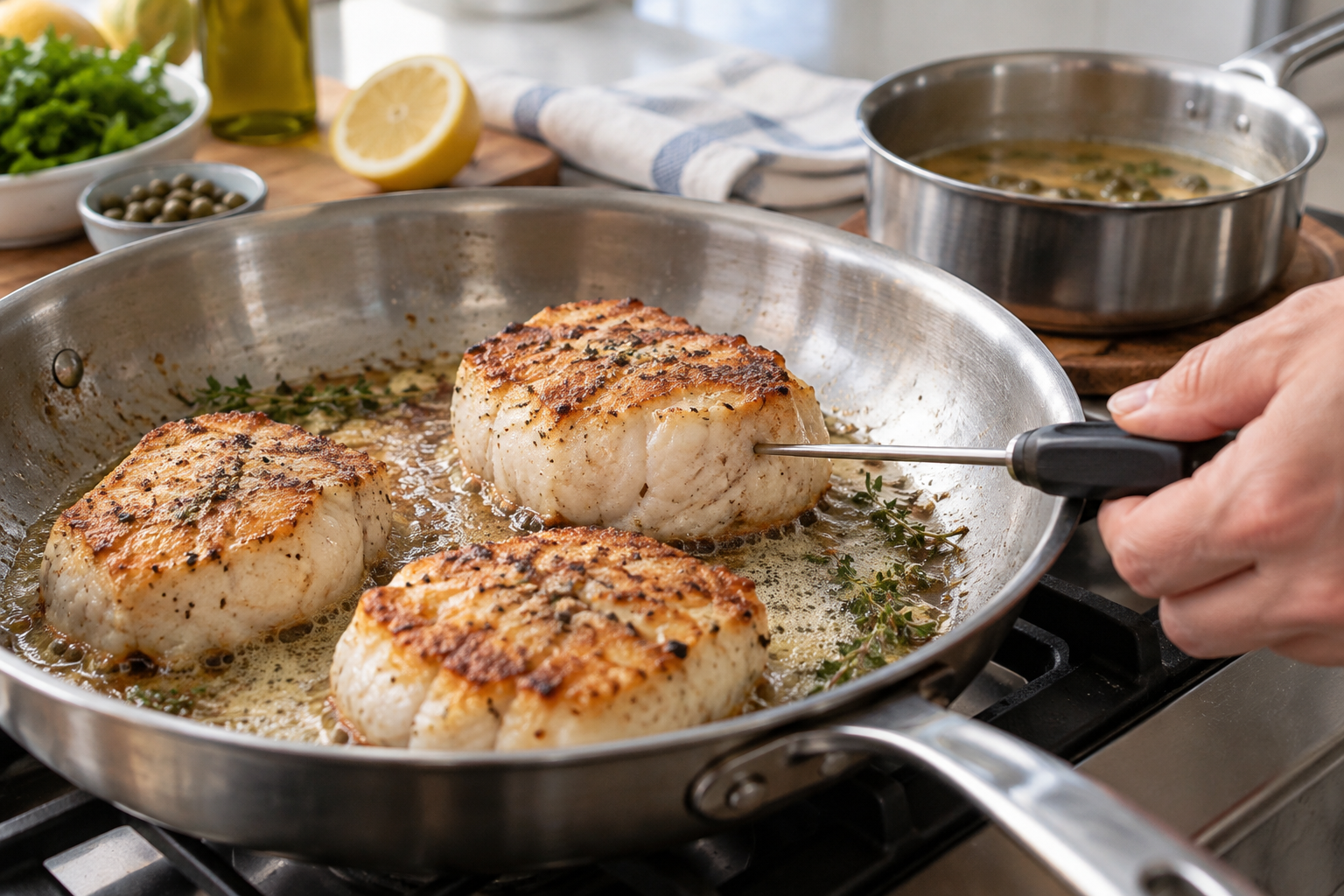
Start with a little oil and add butter once the fish has browned. That gives you both a golden crust and buttery flavour without exposing the milk solids to the hottest stage of cooking. Make the caper butter separately for better control over the browning. When it smells nutty and the solids at the bottom are light brown, take the saucepan off the heat; it is a short step from there to burnt.
A slim-probe thermometer is inexpensive insurance for an expensive ingredient. Monitor the temperature in the thickest piece rather than relying on cooking time alone. Have the potatoes, leeks and table ready first. Monkfish should not be kept warm while everything else catches up. That is the whole secret of this ugly fish’s comeback: a little care at the counter, precision in the pan and then straight to the table.
Pan-fried monkfish with brown caper butter and tender leeks
A modern, French-inspired recipe pairing monkfish’s firm flesh with nutty butter and fresh lemon. The weight is for boneless fillet with all tough membranes removed.
Ingredients
Method
- 1Check that all tough membranes have been removed from the fish. Cut into 8 pieces of even thickness, about 3–4 cm thick. Do not fold thin pieces over; cook them for less time instead. Pat the fish dry with kitchen paper and keep chilled while you prepare the accompaniments.
- 2Wash or peel the potatoes. Boil in lightly salted water until tender, about 15–25 minutes depending on size. Drain and leave to steam dry with the lid slightly ajar.
- 3Trim the roots and the coarsest dark-green leaves from the leeks. Halve lengthways, rinse thoroughly between the layers and cut into 5–6 cm lengths.
- 4Melt 20 g butter in a wide saucepan over a medium heat. Add the leeks, 1 dl water and 0.5 tsp salt. Cover and simmer over a low heat for 12–15 minutes until the leeks are tender. Remove the lid and let any excess liquid cook off for 2–3 minutes. Keep warm over a very low heat.
- 5Brown 60 g butter in a small saucepan over a medium heat, about 3–5 minutes. Stir or swirl the pan, keeping an eye on the solids at the bottom. Remove from the heat immediately when they are light hazelnut-brown and smell nutty.
- 6Let the brown butter cool for a minute or so. Add the capers and carefully add 1 tbsp freshly squeezed lemon juice; it may sizzle and spit. Taste and add more lemon if you like. Cut the rest of the lemon into wedges.
- 7Season the fish with salt and pepper. Heat the rapeseed oil in a large frying pan over a medium-high heat. Fry the fish for about 2–3 minutes on the first side without moving it around. Work in batches if the pan is crowded.
- 8Turn the fish, reduce the heat to medium and add 15 g butter. Fry for another 3–5 minutes or so, basting with the butter. Insert a thermometer from the side into the thickest piece: aim for 63 °C at the centre. The flesh should be opaque but still juicy. Cooking time varies with the thickness of the pieces; remove thinner pieces first.
- 9Arrange the leeks on a warm platter and place the fish on top. Gently reheat the caper butter if needed, stir in the parsley and spoon over. Serve immediately with the potatoes and lemon wedges.
- Ask the fishmonger to remove every membrane. If you buy the tail on the bone, you will need more than the 650 g specified in the recipe.
- Defrost frozen monkfish in the fridge and dry thoroughly. Moisture on the surface makes the fish poach rather than brown.
- The leeks can be cooked ahead and gently reheated with a splash of water. Fry the fish just before serving, however.
- If suitably sourced monkfish is unavailable, use thick cod fillet from a recommended fishery. Handle it more gently and adjust the frying time to its thickness.
What goes in the glass
- WineDry Chenin Blanc from the LoireFresh acidity cuts through the brown butter, while the wine’s fruit complements the sweetness of the leeks. Choose a style without pronounced oak.
- BeerPale Helles-style lagerGentle maltiness complements the seared crust and the butter’s toasted notes. Moderate bitterness lets the fish’s mild flavour shine through.
- Alcohol-freeAlcohol-free white wine with fresh acidityThe acidity balances the butter and echoes the lemon. Choose a less sweet style so that the leeks and fish do not have an overly sweet companion.
Enjoy alcohol in moderation. Alcohol-free options go just as well with the food.
Sources
- Alan Davidson, North Atlantic Seafood (1979)
- Harold McGee, On Food and Cooking: The Science and Lore of the Kitchen (2004)
- FishBase, Lophius piscatorius – species summary
- FishBase, Lophius budegassa – species summary
- Världsnaturfonden WWF, Fiskguiden
- FoodSafety.gov, Safe Minimum Internal Temperatures
Ask questions about "The ugly fish – monkfish’s delicious comeback". Answers are based on the magazine's own articles.