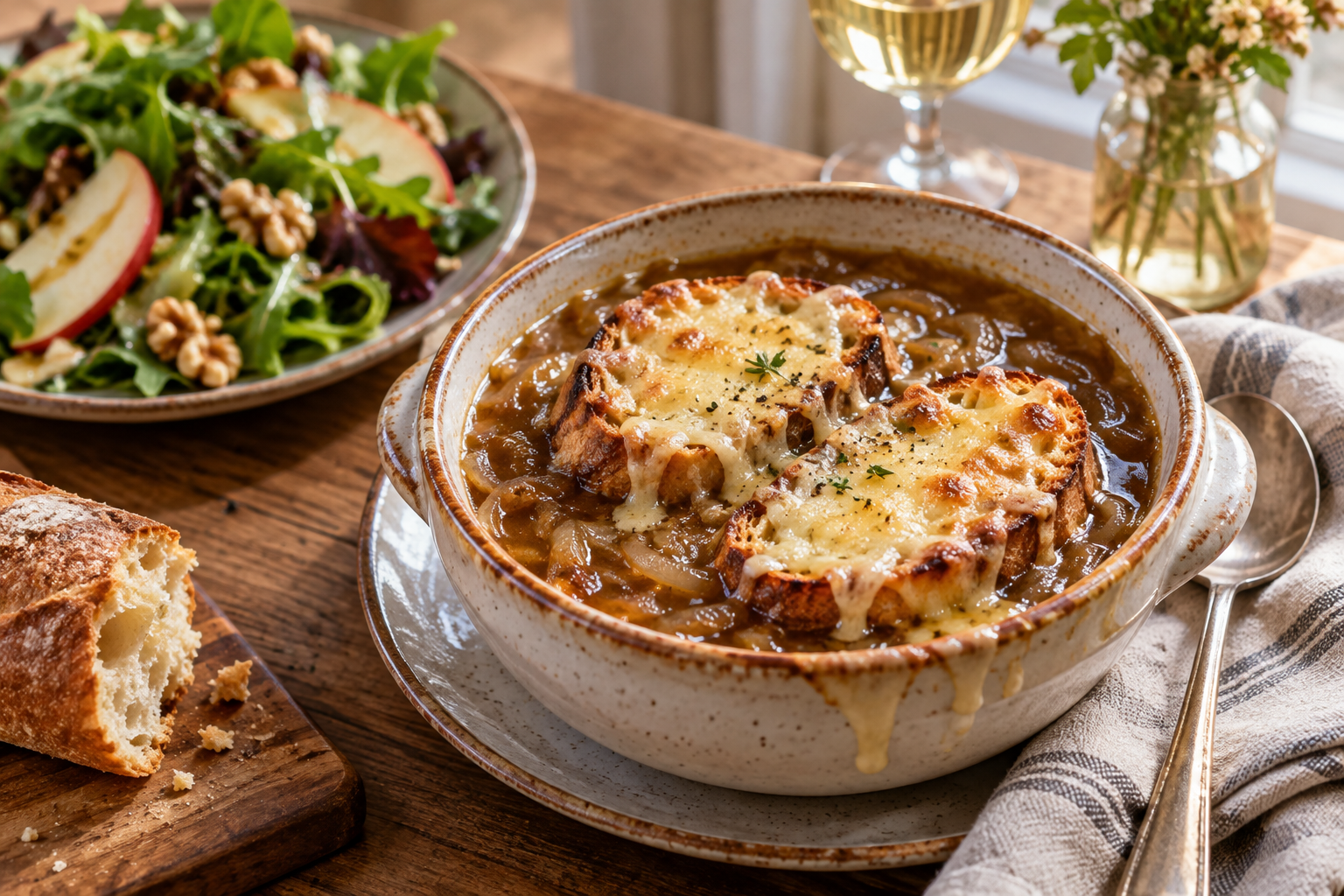
Autumn comfort, French-style: onion soup beneath a golden cheese crust
Slowly browned onions, hot stock and crisp bread take the edge off dark evenings.
As the autumn rain sets in, give the onions time on the stove. We trace French onion soup from humble home cooking to the late-night tables of Paris—and make a richly flavoured version with cheese-topped toast and a fresh apple salad.
 By Lina BergFood editor · European and Nordic cuisines – Italy, France, Spain, Greece and Swedish home cooking
Translated from Swedish with AI assistance.
Go to the recipes (2) ↓When the kitchen becomes the warmest room of the evening
At first, the onions make quite a noise. The pale slices sizzle as they meet the butter, and a sharp aroma rises from the pot. Then something quieter happens. The onions collapse, release their moisture and begin to smell sweet. Outside the window, leaves cling to the pavement. Inside, a wooden spoon scrapes across the bottom of the pot, where little amber patches have begun to gather. Those are what we want—but not too quickly.
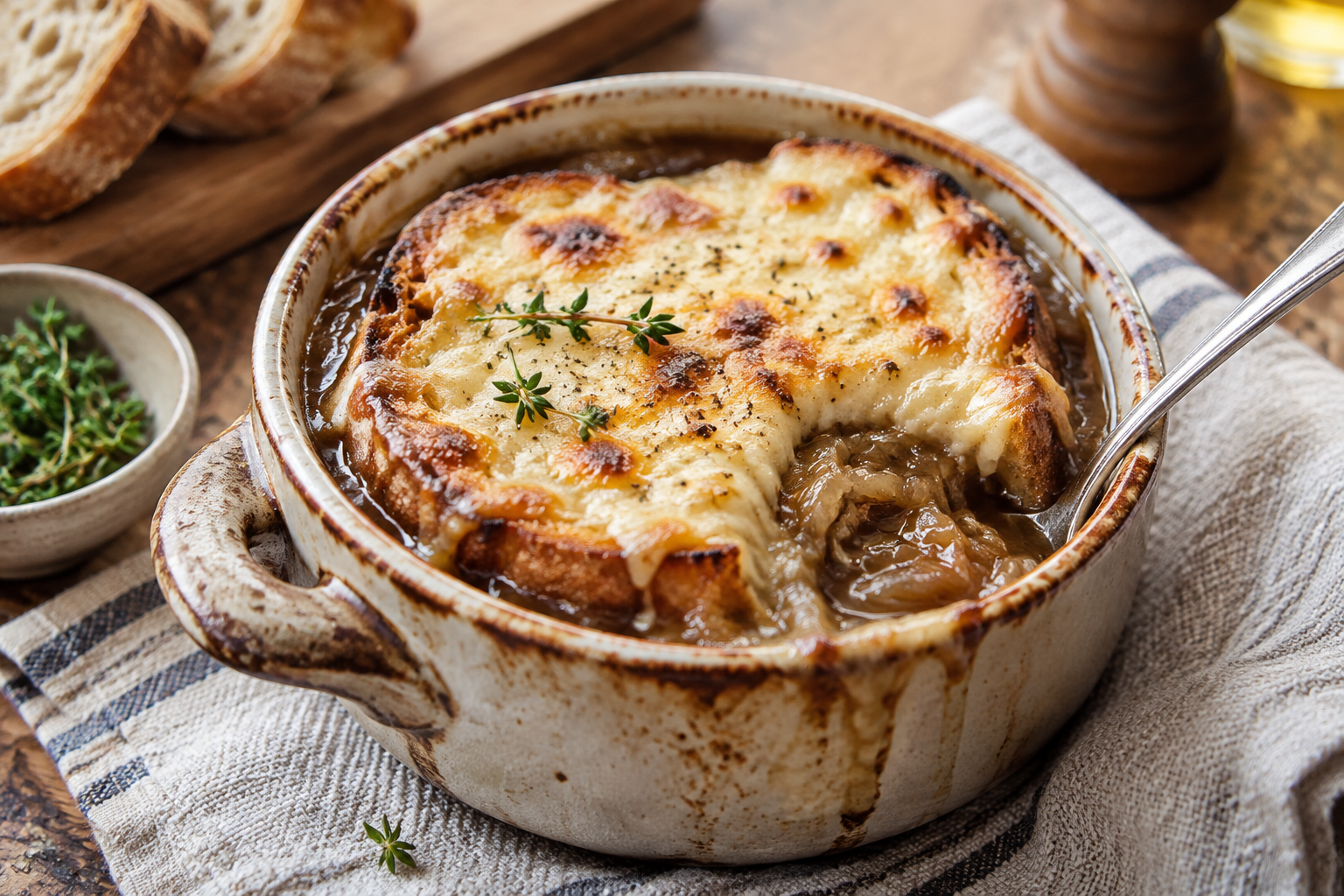
French onion soup is autumn food with an unusually short shopping list. Brown onions, butter, stock and bread form the foundation. The cheese bubbles over the edges of the bread until its surface is mottled gold and the air smells toasty, nutty and warm. As the spoon breaks through the topping, it meets crunch first, then soft bread and finally the hot, dark soup.
The beauty of this dish is that it needs no expensive ingredients. It does, however, need attention, especially while the onions are browning. You can lay the table, grate cheese and rinse salad leaves as you go, but you cannot abandon the stove. Trying to save half an hour by turning up the heat can easily leave you with burnt edges and bitter soup. So the autumn comfort begins right at the pot: a gentle task, a warm kitchen and a dinner allowed to take its time.
A simple soup with a long Parisian life
Onion soup is older than the dish we now order as soupe à l’oignon gratinée. Onions have long been an accessible ingredient that keeps well in European kitchens, and onion soups cannot be traced to a single inventor. It is important to distinguish the broad family of onion soups from the distinctly French preparation with stock, bread and a grilled cheese topping.
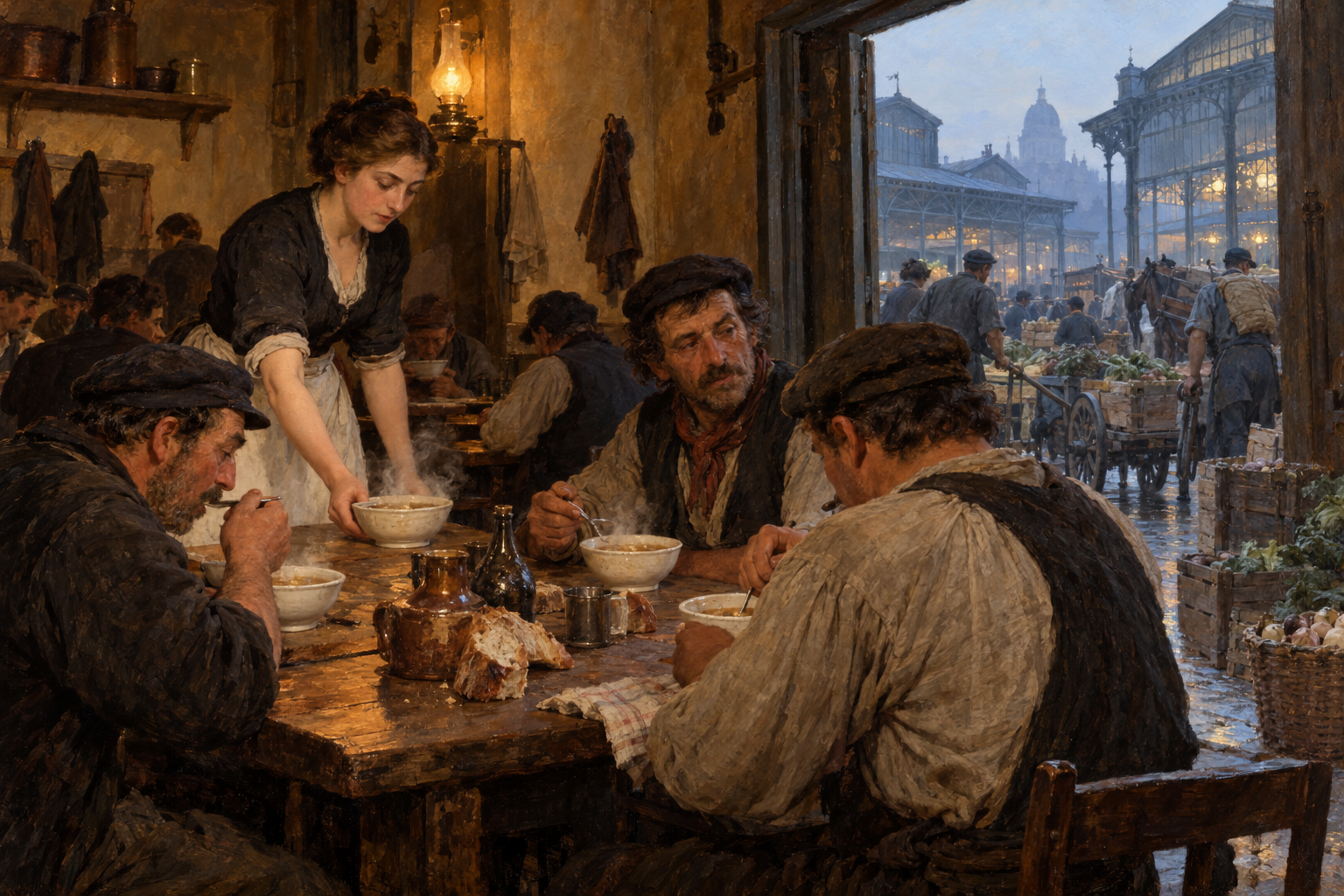
French food writing includes several forms of onion soup, differing in their liquid, thickening and finishing touches. What defines the modern classic most clearly is not a secret spice but the combination of thoroughly browned onions and bread supporting a layer of cheese. Stories of kings supposedly inventing the soup during improvised midnight meals are entertaining, but they offer no reliable birth certificate. It makes more sense to speak of a dish that evolved than of a single stroke of genius.
Paris's old central market, Les Halles, holds a strong place in the cultural history of onion soup. Work at the market continued while much of the city slept, and the neighbourhood's eateries were associated with meals served late at night and early in the morning. Onion soup belonged to that world: warm, substantial and ready to eat as a working day began or a long evening ended. The connection with Les Halles describes an important setting in which the soup was served, not proof that it was invented there.
During the 20th century, cheese-topped onion soup also became an international restaurant classic. English-language cookbooks, including Julia Child, Louisette Bertholle and Simone Beck's Mastering the Art of French Cooking from 1961, brought it within reach of more home cooks. Today it appears on menus far beyond France. It can feel both everyday and celebratory: inexpensive onions underneath, generous care on top.
Flavour builds at the bottom of the pot
Ordinary brown onions from a Swedish supermarket work beautifully. What matters is slicing them reasonably evenly. Very thin slivers can burn before thicker pieces have softened, while large wedges give a different, more stew-like texture. When the pot is first filled, the quantity may look unreasonable. Before long, it will have shrunk dramatically. So resist the temptation to start with too little.
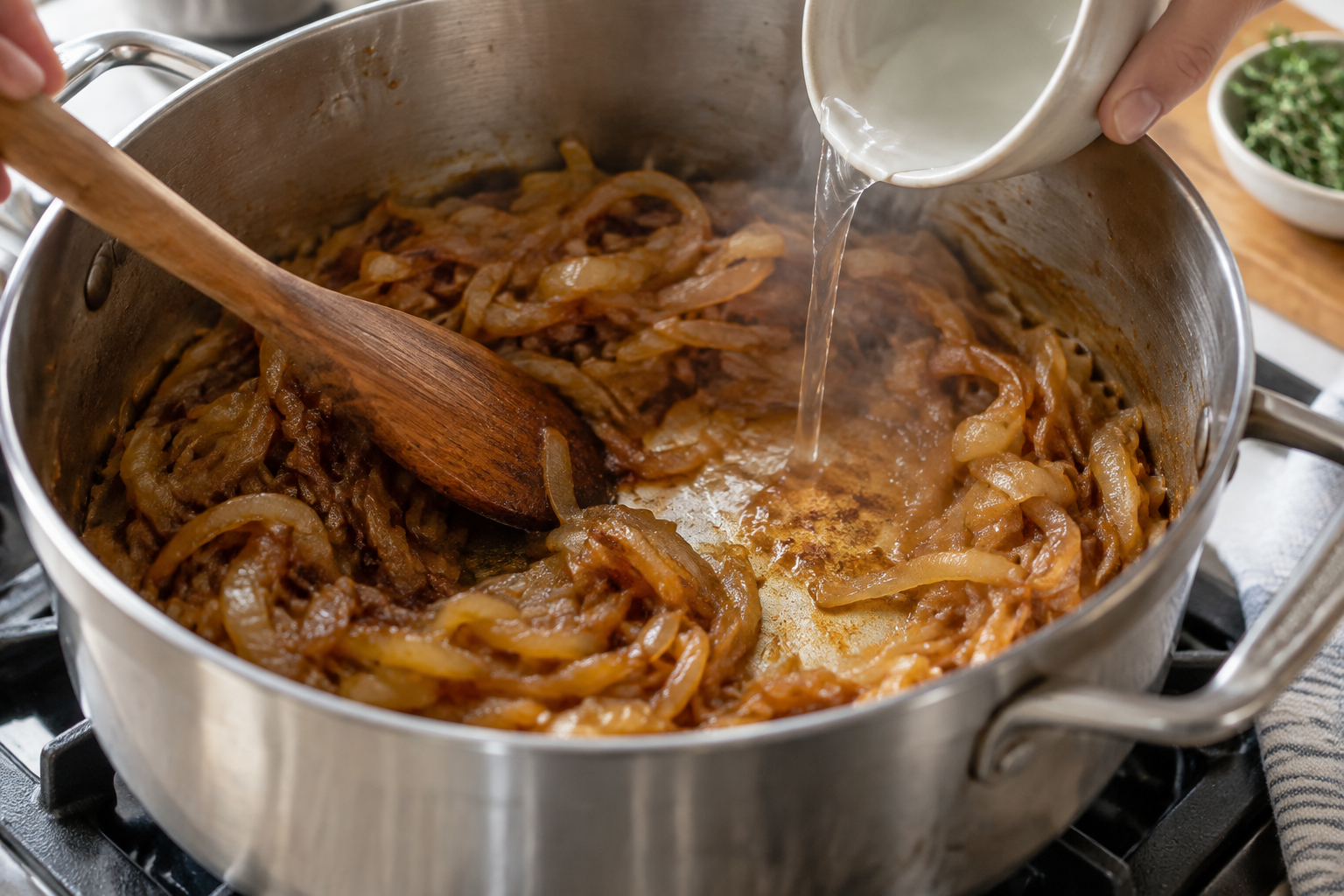
A wide, heavy-based pot helps moisture evaporate and distributes the heat more evenly. First the onions need to soften, then take on colour. What cooks generally call caramelisation involves several browning reactions; for the home cook, aroma and colour matter more than terminology. Aim for deep golden brown, not blackish brown. The sweetness should be rounded and balanced, with a roasted note that holds its own once the stock goes in.
Allow about 45 minutes to an hour for the onions alone, sometimes longer. Your stove, pot and the onions' water content matter more than an exact number of minutes. Stir more often towards the end. If the bottom darkens before the onions are ready, add a small splash of water and work it with the spoon. The browned deposits loosen and mix back into the onions. Black, burnt residue, however, should not be scraped into the soup.
Stock is the next big flavour decision. Beef stock gives the dark, meaty character many associate with the restaurant version. Chicken stock makes a lighter soup, while a good vegetable stock makes a lovely meat-free one. Choose a lower-salt stock if possible and adjust the seasoning late in cooking. Both reducing stock and mature cheese can otherwise push the saltiness too far. Stock concentrate is perfectly usable, but too strong a dose makes everything taste of stock cube rather than onion.
A splash of dry white wine can add acidity and help release the flavour from the bottom of the pot. Here we make the basic recipe without alcohol, using a little apple cider vinegar instead. It should not make the soup tart, just lift the slow-cooked sweetness. Thyme and bay leaves stay in the background. Onion should still be the first flavour you notice.
Bread, cheese and company at the table
The bread is not decoration. It is part of the dish's structure: a toasted slice that holds the cheese above the liquid while its underside soaks up the broth. Day-old country bread or baguette works well. Fresh, soft bread placed straight into the soup can quickly fall apart. Toasting it first gives both structure and a flavour that complements the browned onions.
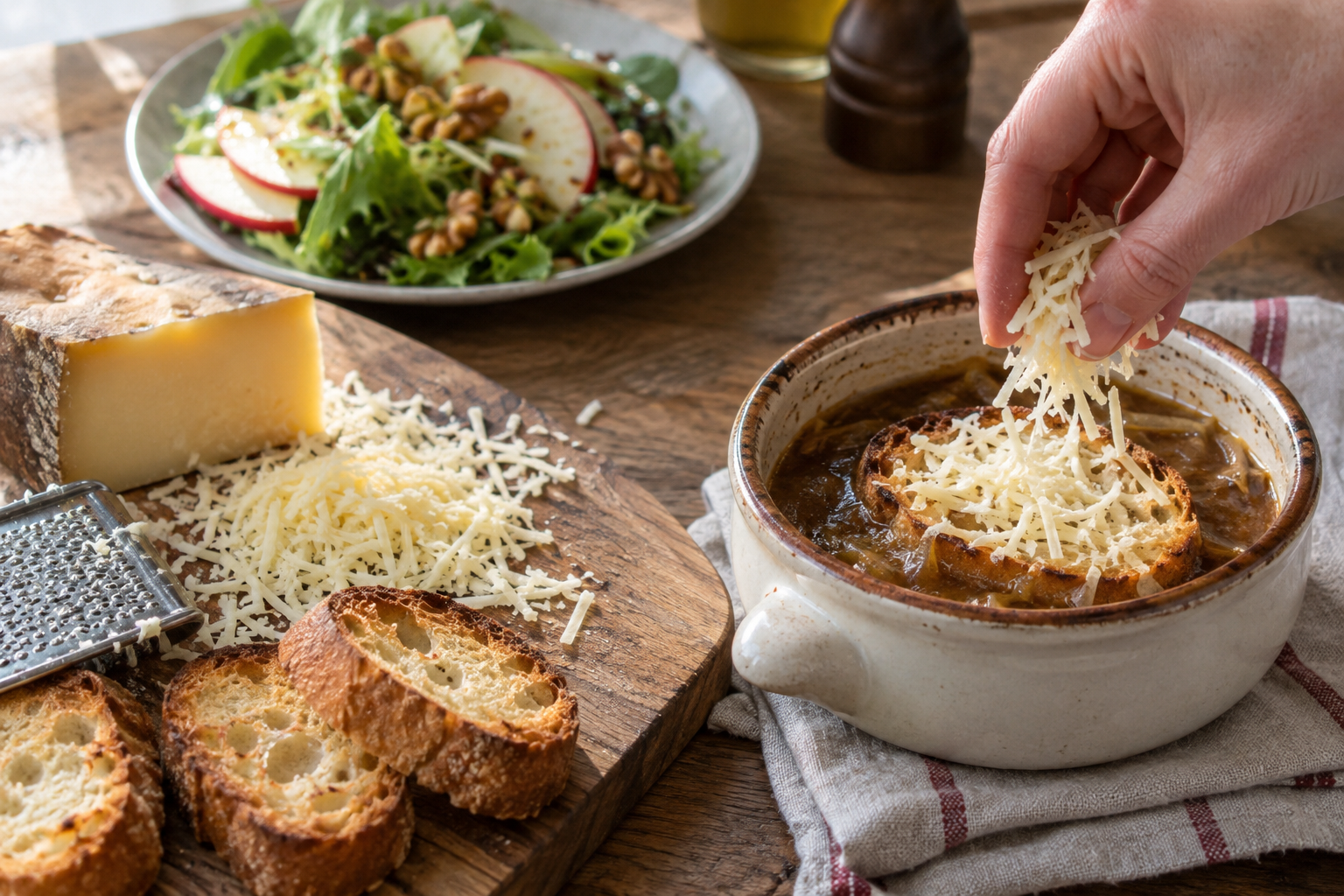
Gruyère is a familiar choice, and comté works beautifully too. Both can provide nuttiness, saltiness and a cohesive cheese topping. In a Swedish kitchen, a mature hard cheese that melts well is a practical alternative. The flavour will not be exactly the same, but the soup will be delicious. Grate the cheese yourself if you can, and spread it across the bread rather than piling it thickly in the middle. That way it will brown more evenly.
There is no single French onion soup. Recipes differ in their choice of stock, wine and cheese, and some are thickened with flour while others are left clear. Your own house version need not make grand claims to being the only authentic one. Here we let the generous quantity of onions provide body without flour and rely on the bread to make it satisfying.
At the table, something contrasting is needed. A small salad of tart apple, crisp leaves and mustard vinaigrette makes the next spoonful of soup as tempting as the first. Walnuts echo the cheese's toasted flavour but are easily replaced with pumpkin seeds. Serve the salad on the side, not on top of the soup, where the leaves would wilt immediately.
Onion soup makes a substantial starter in smaller portions, but with generous cheese toast and salad it becomes a full dinner. Put out a little extra bread, too. And warn everyone about the bowls: beneath that seemingly innocent cheese crust, the soup can be very hot. Let the freshly grilled portions stand for a minute before everyone starts eating.
Making this autumn dinner work at home
The smartest preparation is to make the soup itself the day before. Then all that remains at mealtime is reheating, preparing the bread and grilling the cheese. Cool the soup quickly, ideally by placing the pot in a cold-water bath, then refrigerate. Store the bread and cheese separately. Once cheese toast is soaked through, reheating will not restore it.
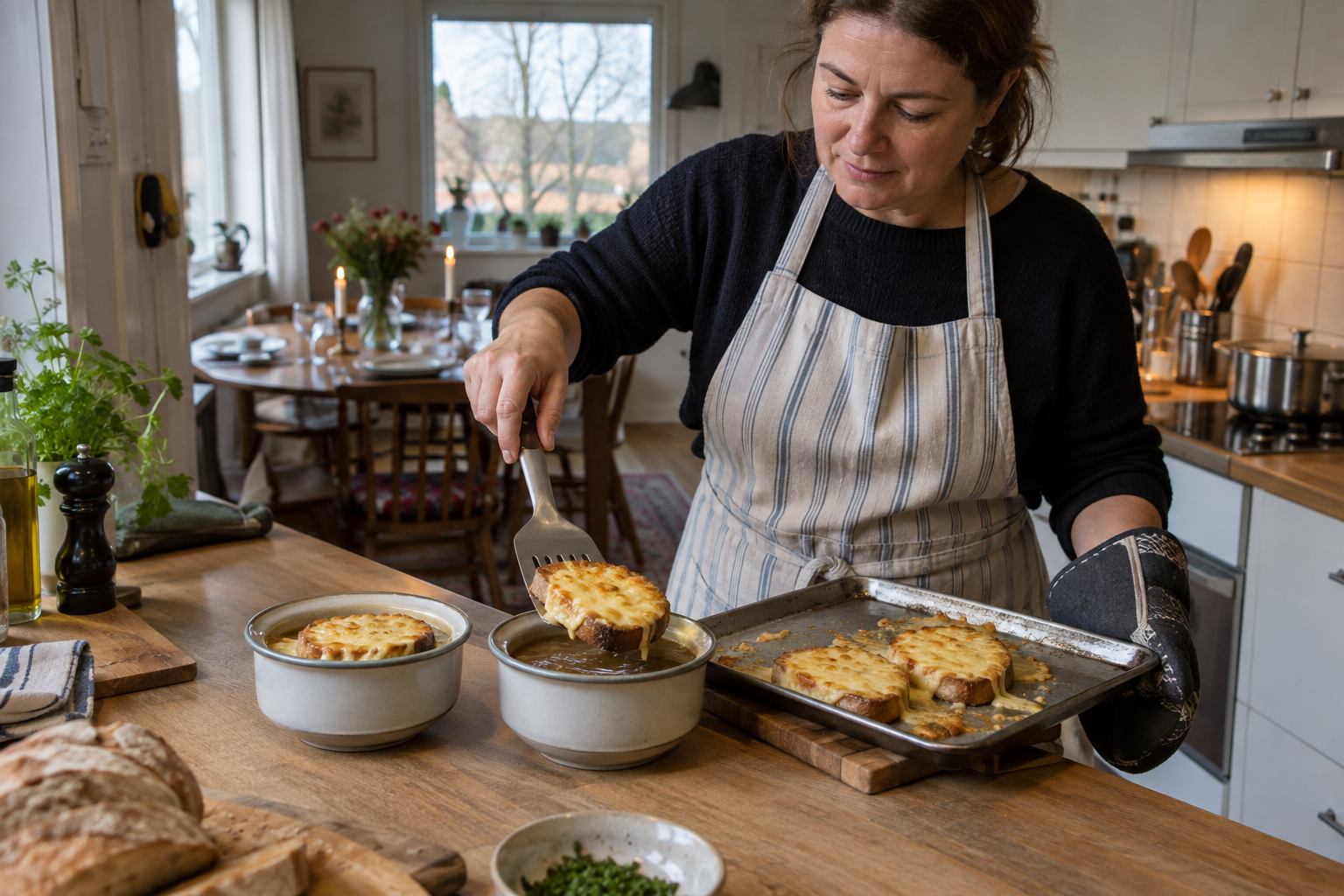
If your bowls are not explicitly safe for both oven and grill use, do not take a chance with ordinary crockery. Instead, grill the cheese toast on a baking tray and place it on the hot soup just before serving. It is simple, safe and gives a crisper result. Keep the tray in sight throughout; golden cheese can become a burnt crust in moments.
Finally, taste only once the soup has finished cooking. Does it need salt, a little more acidity or simply a few turns of black pepper? With that balance in place, nothing more elaborate is needed. Warm the bowls with hot water, dry them and ladle in the soup. Autumn dinner is ready when the bread crackles and the first spoonful smells of sweet onion, thyme and browned butter.
French onion soup with cheese toast
A modern home-cooked version of the French classic, without flour to thicken it. The basic recipe is alcohol-free, and the cheese toast is grilled on a baking tray, so you need no ovenproof soup bowls.
Ingredients
Method
- 1Peel and halve the onions, then cut into even slices about 3 mm thick. Heat the butter and oil in a wide, heavy-based pot over a medium heat.
- 2Add the onions and cook for 15–20 minutes until softened and reduced in volume. Stir regularly and adjust the heat so the onions do not burn.
- 3Continue cooking uncovered over a medium to medium-low heat for another 30–45 minutes, until the onions are deep golden brown. Stir increasingly often towards the end. Add 1–2 tbsp extra water at a time if browned deposits begin to stick, and gently scrape them loose.
- 4Pour in 2 dl water and stir along the bottom of the pot to release the browned flavour. Add the stock, bay leaves and thyme.
- 5Bring to the boil, then simmer gently, uncovered, for 25–30 minutes. Add a little water if the soup becomes too concentrated.
- 6Meanwhile, heat the oven to 225 °C conventional heat. Place the bread slices on a baking tray and toast for 6–8 minutes, turning halfway through. Grate the cheese.
- 7Remove the bay leaves. Season the soup with apple cider vinegar, black pepper and salt if needed. Keep warm over a low heat.
- 8Spread the cheese over the bread slices. Switch the oven to the grill setting, about 250 °C, and grill near the top for 2–4 minutes until the cheese bubbles and browns. Watch it constantly.
- 9Ladle the hot soup into four bowls and place two cheese toasts on each portion. Serve immediately with the apple salad on the side.
- Let the onions set the pace: if they are still pale after an hour, keep browning rather than moving on to the stock.
- The soup can be made up to two days before serving. Cool quickly, store at about 4 °C and reheat until piping hot. Grill the cheese toast just before serving.
- For a vegetarian soup, use vegetable stock and cheese made with vegetable or microbial rennet.
- If you would like to use wine, replace 1 dl of the water with dry white wine and let it cook as you loosen the browned bits from the bottom of the pot. Use the basic recipe when the soup needs to be alcohol-free.
Crisp apple salad with walnuts and Dijon dressing
A fresh side dish to contrast with the soup's sweet onions and rich cheese. Toss just before serving so the leaves stay crisp.
Ingredients
Method
- 1Toast the walnuts in a dry frying pan over a medium heat for 3–5 minutes. Stir often and remove from the heat when they smell nutty. Leave to cool, then break into coarse pieces.
- 2Rinse the salad leaves and dry thoroughly, ideally in a salad spinner. Tear large leaves into smaller pieces.
- 3Whisk together the vinegar, Dijon mustard, salt and pepper in a large bowl. Whisk in the oil in a thin stream.
- 4Core the apples and slice thinly, leaving the skins on. Toss them immediately in the dressing.
- 5Just before serving, toss in the salad leaves and arrange on a platter. Scatter over the walnuts and serve alongside the hot soup.
- Replace the walnuts with toasted pumpkin seeds if you want to avoid nuts.
- The dressing can be made the day before. Refrigerate and whisk again before using.
What goes in the glass
- WineDry chenin blanc with fresh acidityThe acidity refreshes the palate after cheese and butter, while the wine's apple notes complement the sweetness of the browned onions. Choose a style without pronounced oak.
- BeerAmber lager with moderate bitternessBready, lightly toasted malt notes suit the cheese toast and browned onions. Moderate bitterness leaves room for the soup's gentle sweetness.
- Alcohol-freePressed apple juice diluted with sparkling waterMix roughly equal parts, preferably using juice made from tart apples. The fruit complements the onions and salad, while the water tempers the sweetness and gives a refreshing finish.
Enjoy alcohol in moderation. Alcohol-free options go just as well with the food.
Sources
- Alan Davidson; tredje upplagan redigerad av Tom Jaine, The Oxford Companion to Food (2014)
- Larousse, Larousse Gastronomique (2009)
- Julia Child, Louisette Bertholle och Simone Beck, Mastering the Art of French Cooking, Volume One (1961)
- Harold McGee, On Food and Cooking: The Science and Lore of the Kitchen (2004)
Ask questions about "Autumn comfort, French-style: onion soup beneath a golden cheese crust". Answers are based on the magazine's own articles.