Hunting season – bring moose to the table
From roasts and thinly shaved cuts to hearty stews: make the most of the forest’s finest meat.
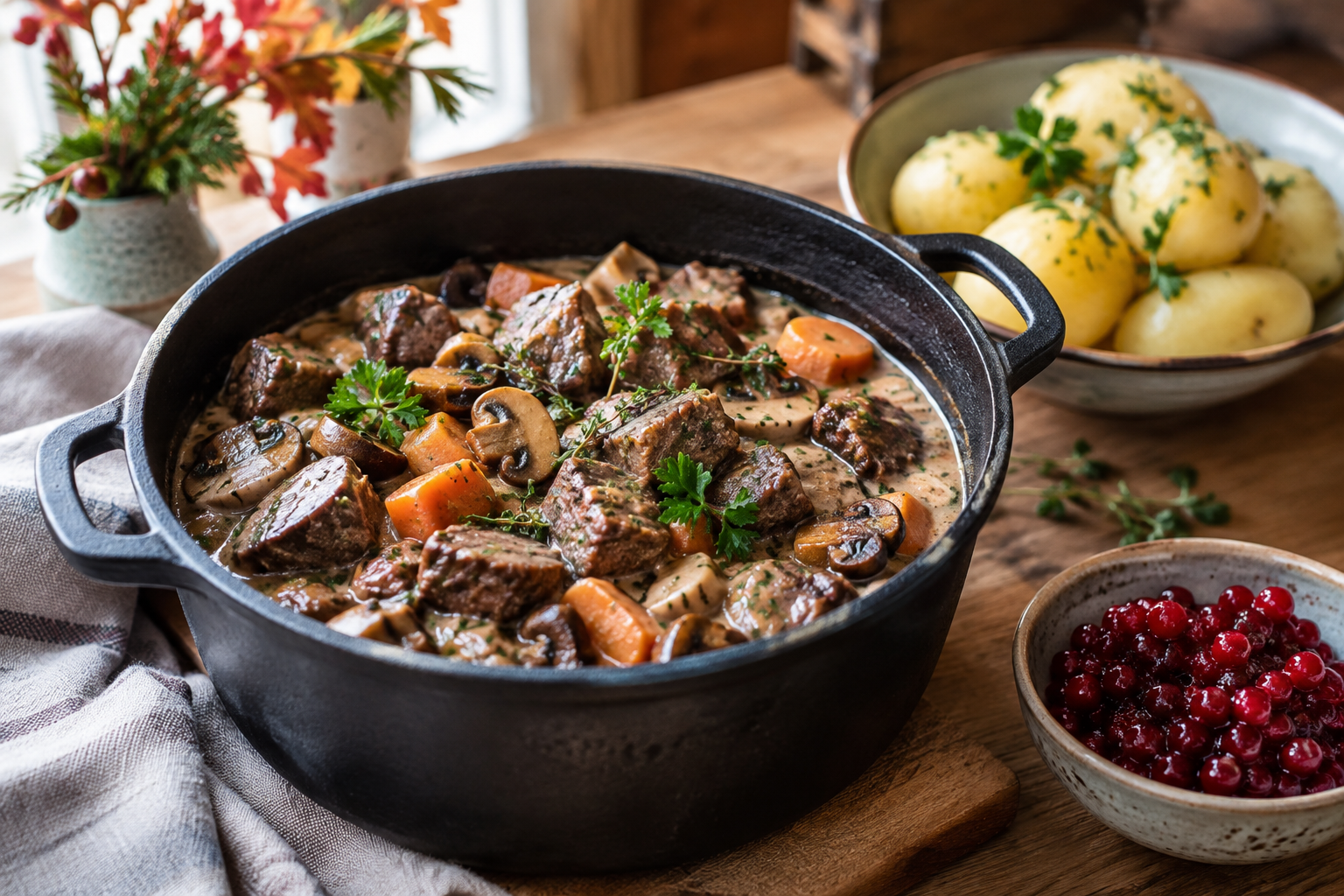
Moose meat does not taste of the forest all on its own. Its flavour develops through careful handling, choosing the right cut and gentle cooking. We follow moose from the autumn hunt to the dinner table and make a tender stew with mushrooms, juniper and tart lingonberries.
 By Lina BergFood editor · European and Nordic cuisines – Italy, France, Spain, Greece and Swedish home cooking
Translated from Swedish with AI assistance.
Go to the recipe ↓When the pot begins to speak
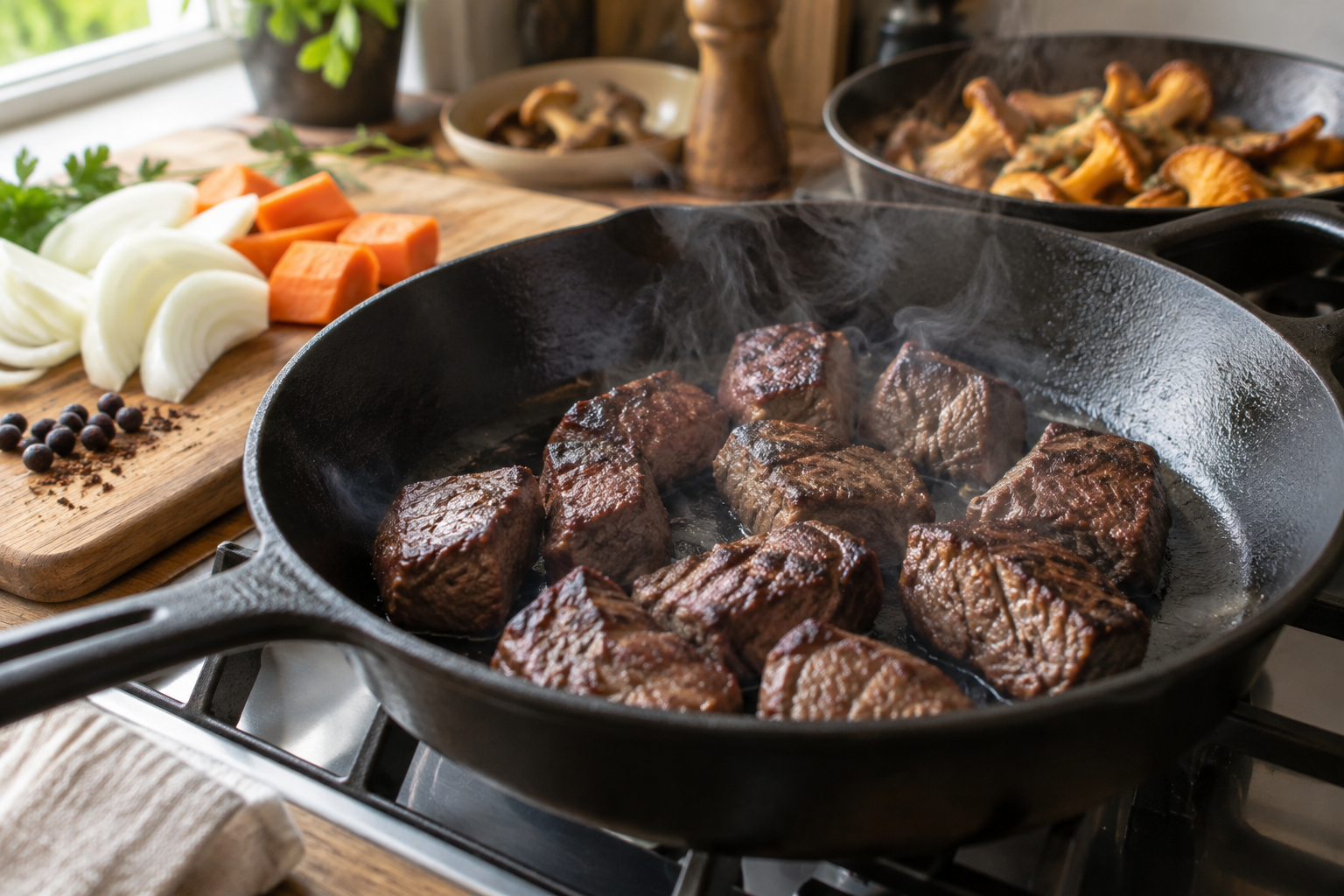
There is a sizzle as the first batch of moose meat hits the cast iron. Then it grows quieter, and that is precisely when you need to leave the pieces alone. A brown crust needs time and space. On the chopping board, onions, carrots and a few lightly crushed juniper berries are waiting. The mushrooms get a pan of their own; their moisture must evaporate before the butter can turn their edges golden. Outside the kitchen window, the autumn light slants low. In here, dinner begins with a sound, not with a clock.
Moose has a natural place in many Swedish hunting households, but can be an unfamiliar guest in other kitchens. It might arrive as a frozen parcel from a relative, neatly labelled with the year but rather less helpfully described as “stewing meat”. Or as an expensive roasting joint at a game counter, where expectations almost make the cooking harder. What do you do with meat that is lean, full of flavour and not particularly forgiving when treated like pork shoulder?
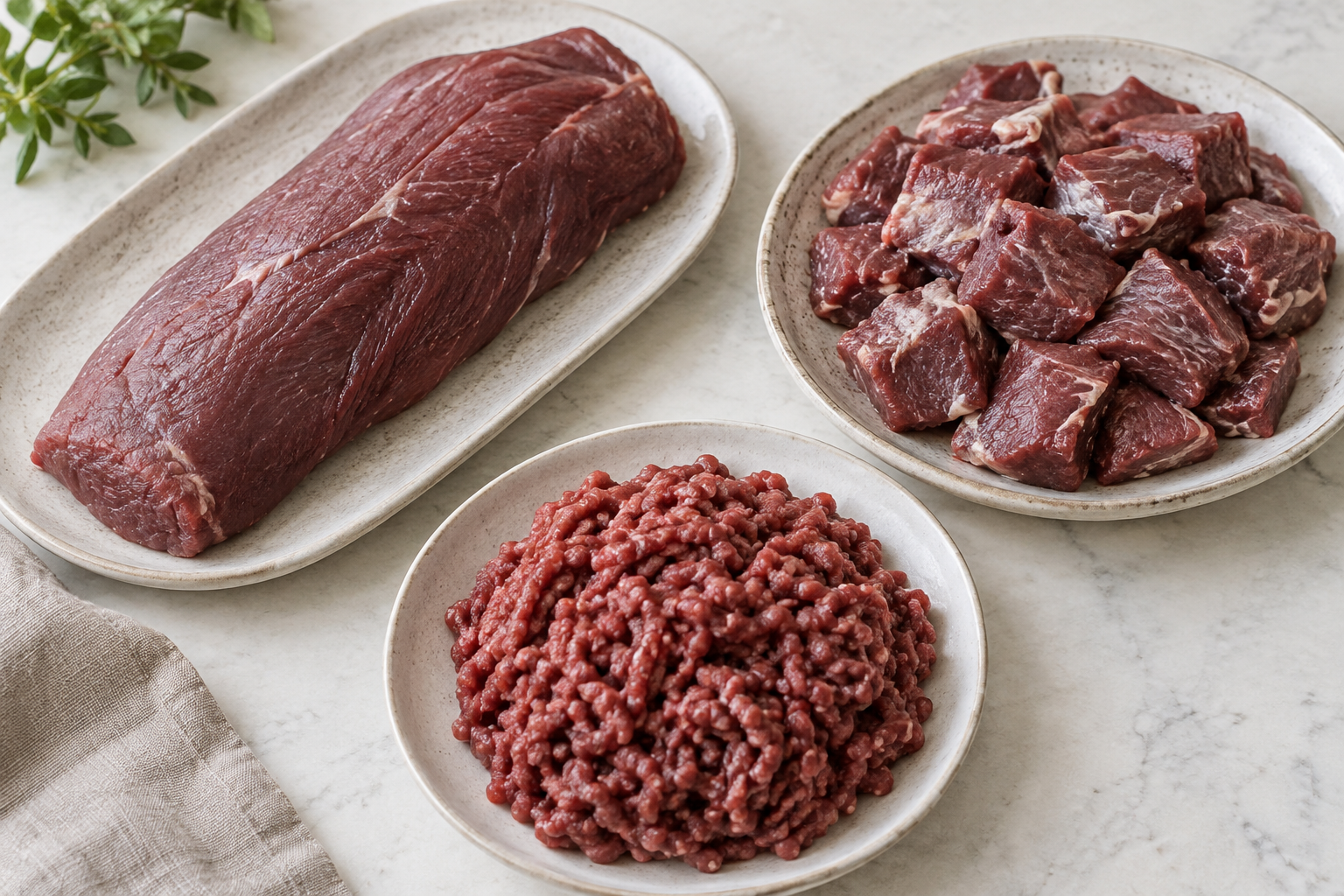
The answer begins with distinguishing between muscles. A sirloin needs something quite different from a shoulder. Mince offers different possibilities from shank. Making the most of a moose therefore means more than filling the freezer: it means giving each cut a suitable role, rather than judging the whole animal by its prime cuts.
At the table, potatoes, lingonberries and something crisp make welcome companions for the stew. But the accompaniments should not have to rescue the meat. Above all, a well-made moose stew should taste deliciously of moose: rich and meaty, without a wall of spices standing in front of the main ingredient.
From hunting quarry to freezer parcel
Moose have been hunted in Scandinavia since prehistoric times. Archaeological finds and trapping sites show how important large wild animals were as resources, although an individual pitfall trap cannot always be linked conclusively to moose. Meat was only part of the yield. Hides, bones and antlers could also provide useful materials. That does not mean, however, that we can draw an unbroken line from a prehistoric meal to today’s creamy game stew with fruit jelly.
Moose numbers have fluctuated dramatically. During the 19th century, Sweden’s population was severely depleted. Hunting regulations and changes in management later helped it recover; during the 20th century, changes in forestry also affected the availability of food. Today’s moose hunt is therefore not simply a remnant of an older way of subsisting. It is also a regulated activity that must balance game populations, forest damage and other interests.
Hunting seasons and conditions vary between areas and can change. For hunters, current official rulings apply, not a date that has become a family tradition. For those buying the meat, other questions are more useful: what cut is it, how has it been handled, and when was it frozen? A clear answer tells you more about the prospects for dinner than a romantic tale of the forest.
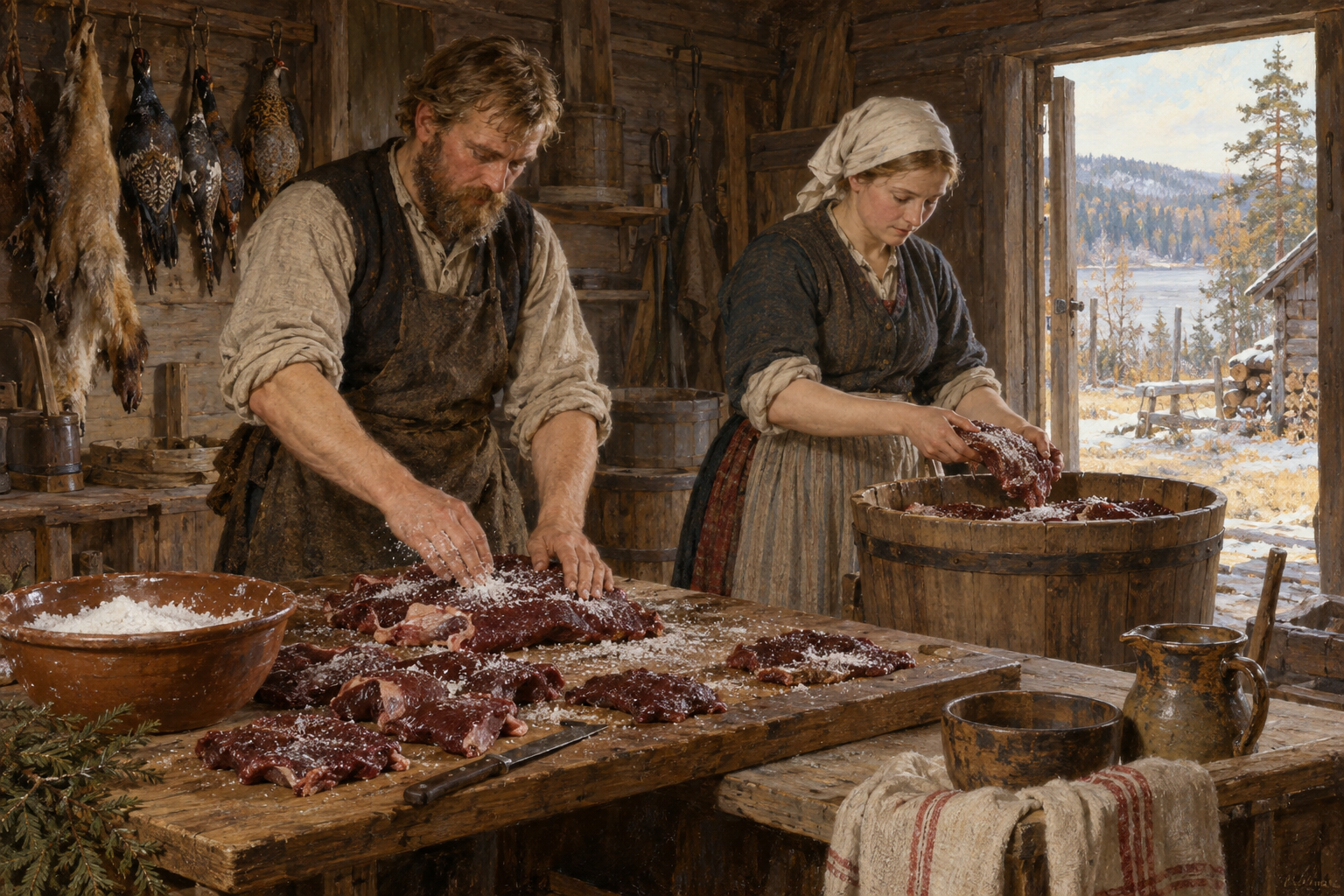
Before home freezers became widespread, meat had to be preserved in other ways, including salting, drying and smoking, depending on location and tradition. The freezer transformed the possibilities for spreading a large animal’s meat across the year. It made room for Sunday roasts and everyday mince from the same animal, but also created a new problem: parcels left sitting there with no plan for using them. Good kitchen management therefore begins with labelling, long before the pot goes on the stove.
Every cut has its role
Moose meat is generally lean, but that does not mean every cut should be cooked in the same way. Tender muscles from the back and certain parts of the hind leg lend themselves to quick frying or gentle cooking as whole joints. Harder-working muscles, such as shoulder and shank, contain more connective tissue and benefit from long, moist cooking. This allows collagen to turn into gelatin, producing both softer meat and a richer sauce.
It is therefore misleading to talk about a single perfect internal temperature for moose. A sirloin and a stew have different goals. In a stew, resistance to a fork is what matters: the meat should yield, not spring back. A thermometer, on the other hand, is an excellent aid when cooking a whole joint. Food safety must also be assessed according to factors including the cut, whether it has been minced and how it has been handled; mince should not be treated like an intact piece of meat.
Cuts from the hindquarters also need to be distinguished. Thick flank can work beautifully as a roast or thinly sliced meat, whereas a lean, coarse-grained cut such as eye of round can easily prove troublesome if simply cut into thick slices and fried. Ask the butcher how to use it. For skav, it is practical to shave the meat thinly while it is still slightly frozen. Trim away tough membranes first to avoid chewy strands in the pan.
Mince is no second-rate ingredient. It can become järpar, kålpudding or a rich meat sauce. Since moose mince is often lean, a mixture may need help from cream, soaked breadcrumbs or a little fattier mince. Clean trimmings can be minced, while suitable bones and pieces rich in connective tissue can make stock. Tongue and heart have culinary uses too, but offal requires knowledge of both handling and current consumption advice. Making use of everything never means ignoring safety.
Flavour comes from care, too
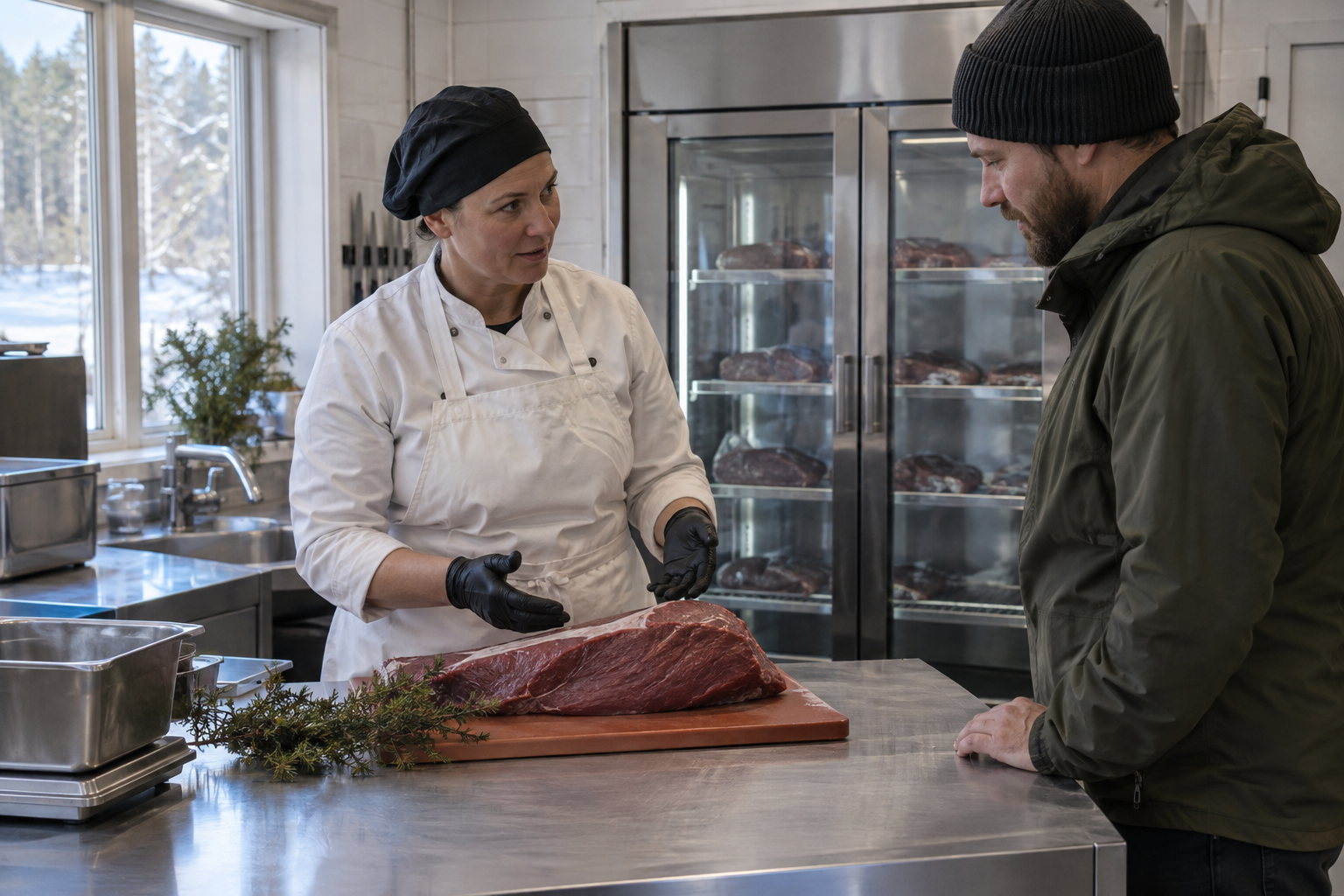
Quality is largely determined before the meat reaches the kitchen. Hygienic field dressing, appropriate chilling and controlled handling are fundamental. Ageing is not the same as leaving meat to hang for an arbitrary number of days at fluctuating temperatures. Home cooks should source meat from someone who can explain how it has been handled. Do not try to recreate professional ageing conditions by leaving a thawed joint in the fridge for a long time.
One particular concern is game shot with lead ammunition. Lead fragments can be present in and around the wound channel, and cooking does not remove them. The Swedish Food Agency provides advice on trimming around the wound channel and on consuming this meat, with particular consideration for children and people who are or may become pregnant. Ask the supplier how the meat has been trimmed and what ammunition was used. Mince deserves extra attention because it may contain trimmings from several parts of the animal. Follow the agency’s current advice, rather than relying solely on what you can see.
In the kitchen, the most common mistake is far more ordinary: too much meat in the pan. The temperature drops, liquid collects and the pieces boil rather than brown. Dry the surface and work in batches. The brown crust develops roasted aromas; it does not, however, seal the meat or prevent juices from escaping. After browning, the stew needs only a gentle simmer. A rolling boil makes neither the process gentler nor the result better.
Seasoning benefits from restraint, too. Juniper adds a resinous note, but too much can make the sauce bitter and perfumed. Thyme, bay leaves and black pepper go a long way. Mushrooms contribute depth, while a little acidity towards the end can lift a heavy sauce. Cream rounds things out, but should not be used to disguise overly salty stock. Choose a mild stock, then concentrate the flavour before the final seasoning.
A generous table, a well-planned freezer
A moose dinner can be a special occasion, but it need not be. In many households, game is as much everyday fare as celebration food: meatballs on Tuesday, skav when time is short and slow-cooked dishes at the weekend. There is no single correct Swedish way to serve it. Potatoes and lingonberries are familiar companions, but root vegetables, cabbage and tart apple can offer the same useful contrast of substance, freshness and sweetness.
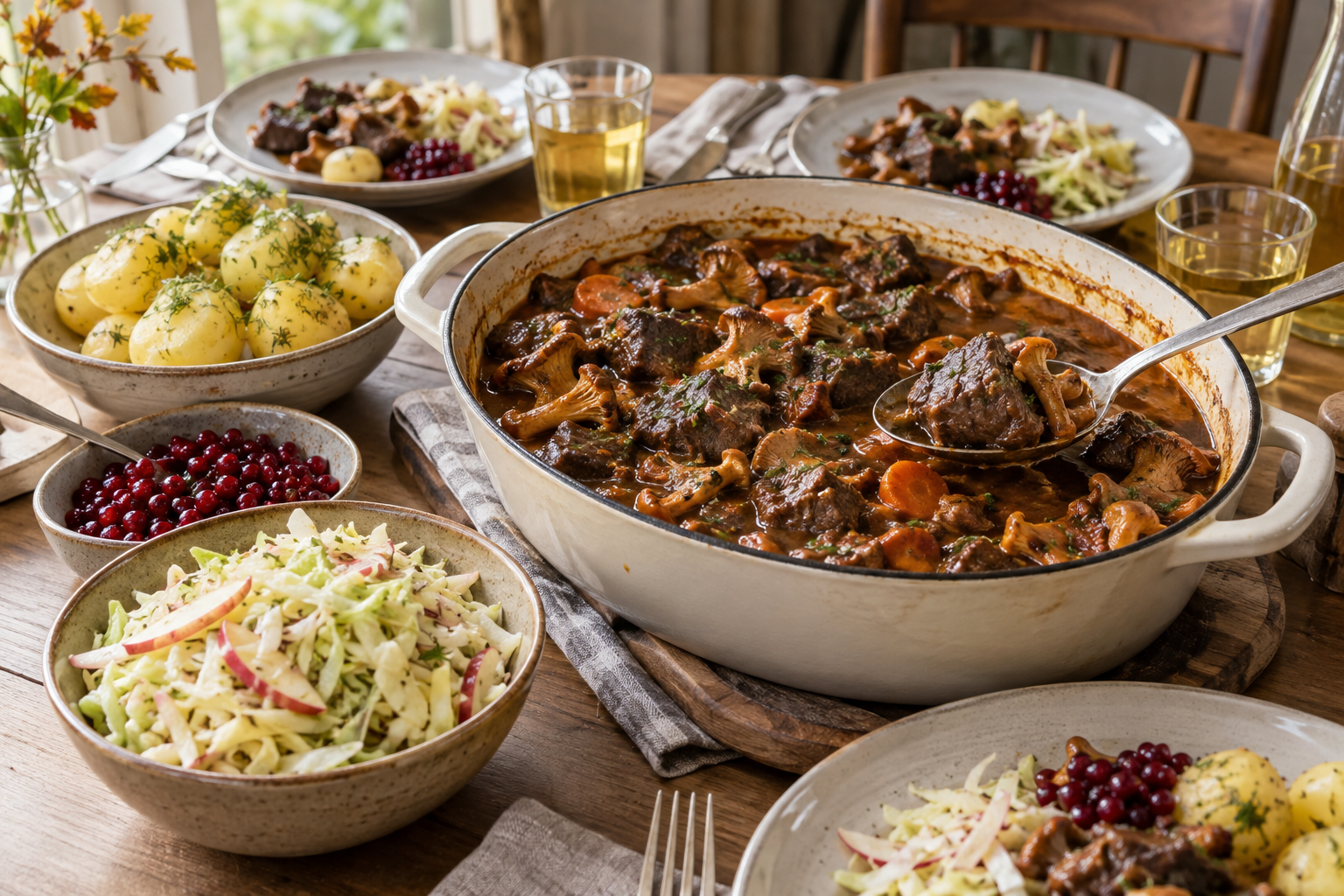
Hospitality often lies in setting the pot on the table and letting everyone help themselves. Keep the lingonberries on the side so that anyone who wishes can preserve the sauce’s clean, savoury flavour. Something refreshing to drink lightens the meal: a moderately tannic red wine for those who want alcohol, or a dry, crisp alcohol-free apple drink. The drink needs to complement the sauce and accompaniments as much as the meat itself.
Here in Sweden, frozen moose is often the most realistic purchase. Thaw it in the fridge in a dish that catches the meat juices, and keep raw meat separate from ready-to-eat food. Divide large purchases into meal-sized packs and label them with the cut, weight and date. Wrap tightly and use the oldest parcels first. Mince and fatty mixtures are more prone to losing quality than well-wrapped, lean whole cuts.
The recipe here calls for shoulder, rather than an anonymous bag containing a mixture of tender and tough cuts. The stew is given time to soften, the mushrooms are browned separately and the lingonberries are added only at the table. Feel free to cook it the day before, cool it quickly in smaller containers and refrigerate. The next day, you can lift off any solidified fat and reheat gently until piping hot throughout. It is an unhurried way to make the most of moose: the right cut, enough time and a dinner that tastes just as good as leftovers.
Moose stew with mushrooms, juniper and lingonberries
A hearty autumn stew in which moose shoulder simmers slowly until fork-tender. Cooking time varies with the meat, so start in plenty of time. Serve with boiled potatoes and lingonberries on the side.
Ingredients
Method
- 1Cut the meat into roughly 4 cm pieces and pat dry with kitchen paper. Peel the onions and carrots, cut the onions into wedges and the carrots into pieces about 2 cm thick. Chop the garlic.
- 2Heat the oil and half the butter in a heavy-based casserole over a medium-high to high heat. Brown the meat in 3–4 batches, allowing about 3–4 minutes per batch. Let the pieces colour before turning them. Transfer to a plate.
- 3Reduce the heat to medium. Cook the onions and carrots in the casserole for about 5 minutes. Add the garlic and tomato purée and cook for another 1 minute, stirring.
- 4Pour in a little of the stock and scrape up the browned bits from the bottom. Return the meat and any juices to the casserole. Add the remaining stock, juniper berries, bay leaves, thyme and black pepper. The liquid should almost cover the meat; add a little water if the shape of the casserole requires it.
- 5Bring to the boil, then immediately reduce the heat. Cover and simmer for about 2–3 hours, sometimes longer. Stir gently occasionally and check the liquid level. Start testing the meat after 1.5 hours; it is ready when a fork slides in easily and the pieces yield.
- 6Clean and cut up the mushrooms. Cook them in a separate dry frying pan over a medium heat until they have released their moisture and it has evaporated, about 5–10 minutes. Add the remaining butter and fry for another 3–5 minutes until browned.
- 7When the meat is beginning to turn tender, boil the potatoes in lightly salted water for about 20–25 minutes, depending on their size.
- 8Remove the casserole lid when the meat is tender. If there is a lot of very thin stock, lift out the meat with a slotted spoon and reduce the liquid, uncovered, for 5–15 minutes. Return the meat to the casserole.
- 9Fold in the mushrooms and cream. Simmer uncovered for about 10 minutes. Stir in the jelly and vinegar, remove the bay leaves and season to taste with salt and a little more vinegar if needed. Serve with potatoes and lingonberries.
- Use shoulder or boneless shank. Shank may need longer; sirloin and fillet are unnecessarily expensive and unsuitable for this particular slow-cooked dish.
- The stew should bubble only gently. If the meat still feels tough but there is liquid left, it usually needs more time, not more heat.
- Feel free to make it the day before. Cool quickly in smaller containers, store at around 4 °C and eat within 3–4 days or freeze. Reheat leftovers until piping hot throughout.
- If you cannot get moose, beef shoulder works well. Do not substitute a lean, tender roasting cut and expect the same result.
What goes in the glass
- WineA fresh, moderately tannic pinot noirThe acidity lightens the creamy sauce, while restrained tannins allow the lean meat to shine. Mushrooms and gently earthy notes tend to work beautifully together.
- BeerA malty amber ale with moderate bitternessToasted malt notes echo the meat’s browned crust and the browned mushrooms, without strong bitterness overwhelming the sauce.
- Alcohol-freeDry alcohol-free apple cider, labelled 0.0%Fresh apple acidity and bubbles cut through the cream. Choose a less sweet style so the lingonberries do not have an overly sweet companion.
Enjoy alcohol in moderation. Alcohol-free options go just as well with the food.
Sources
- Livsmedelsverket, Bly
- Naturvårdsverket, Älgjakt
- Svenska Jägareförbundet, Älg
- Harold McGee, On Food and Cooking: The Science and Lore of the Kitchen (2004)
- Nils-Arvid Bringéus, Mat och dryck i Sverige: Om något att äta på 1500-talet och senare (1988)
Ask questions about "Hunting season – bring moose to the table". Answers are based on the magazine's own articles.