Beef Roulades with Creamy Gravy
Swedish entertaining, with mustard in the middle and plenty of gravy
Butter sizzles in the pan, mustard gives the filling a gentle kick, and creamy gravy gathers up all those delicious browned flavours. Beef roulades are a thoughtful dish for guests: a little preparation first, then time to set the table while the meat becomes tender.
 By Lina BergFood editor · European and Nordic cuisines – Italy, France, Spain, Greece and Swedish home cooking
Translated from Swedish with AI assistance.
Go to the recipe ↓When the kitchen smells of Sunday dinner
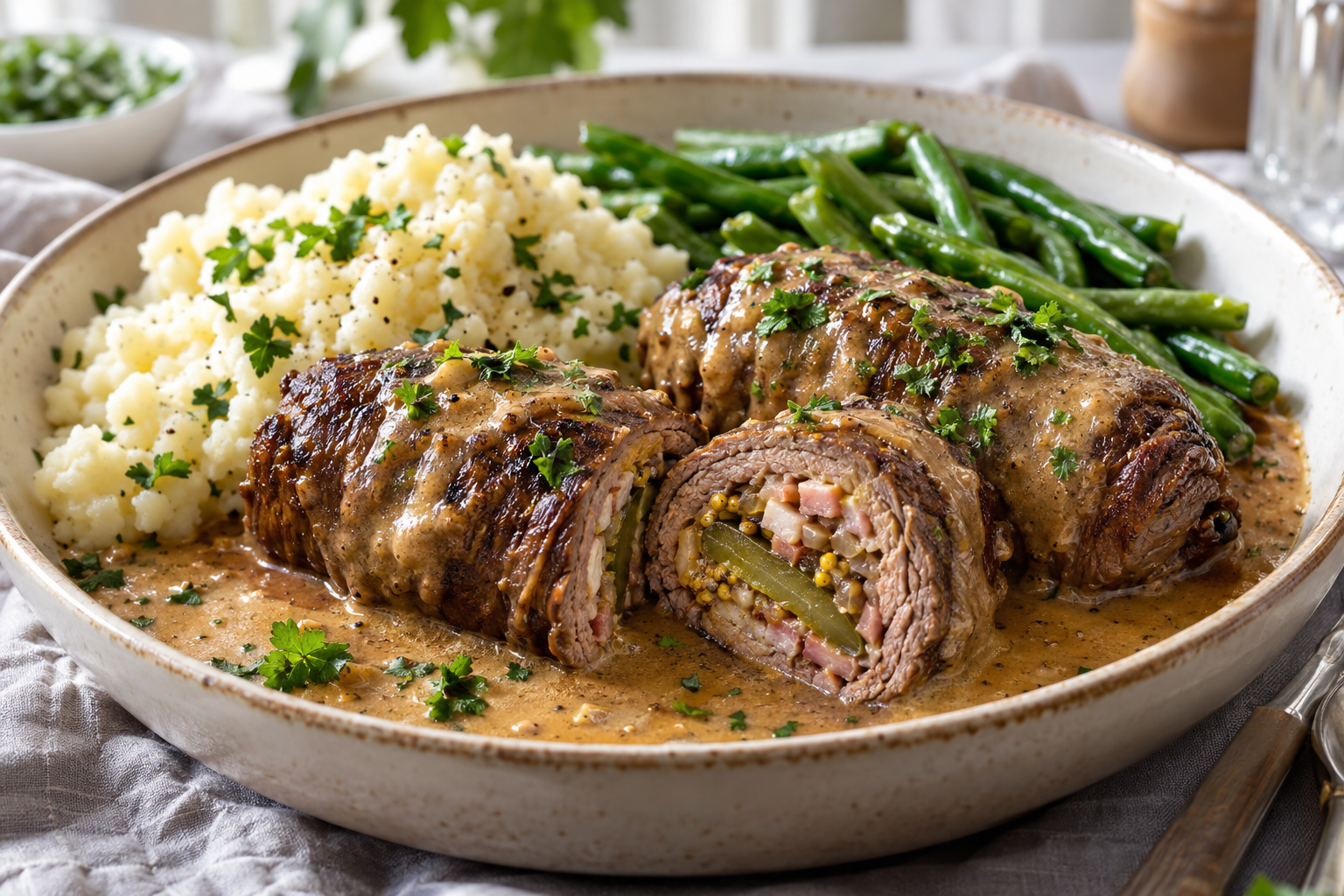
The butter has just stopped foaming as the first roulade goes into the pan. A distinct sizzle, then the aroma of browned beef and onions. On the chopping board lie the remaining thin slices of meat, spread with mustard and filled with bacon, softened onions and a slender baton of dill pickle. Lined up in rows, they look almost ceremonial, but the work is more cosy than complicated: spread, fold, roll and secure.
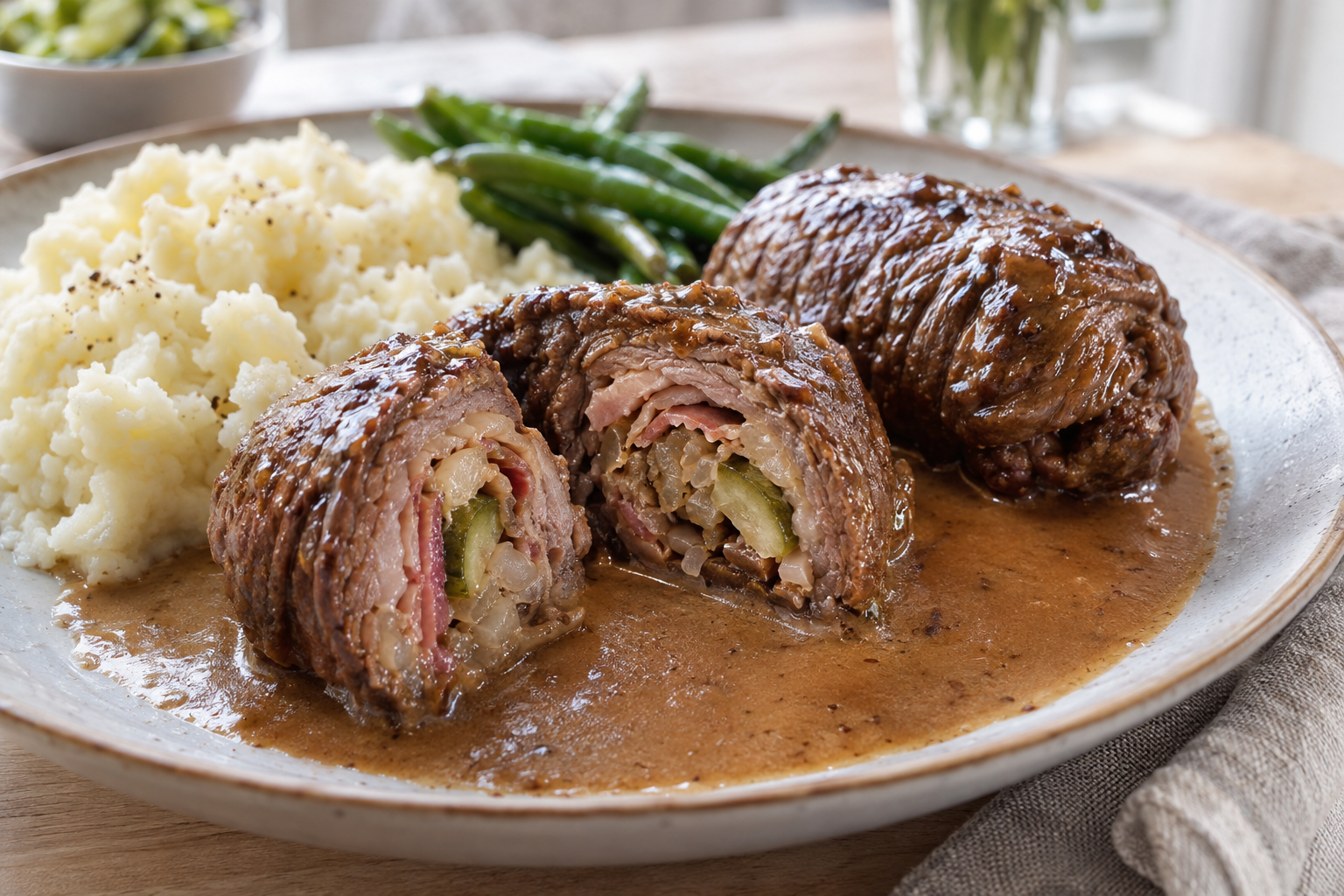
There is something special about food brought to the table in a warm casserole. No one needs to watch a meat thermometer while guests take off their coats, and no plate needs assembling with tweezers. The roulades rest in their gravy, the potatoes are ready, and the salad can wait a minute. Lift the lid and a waft of cream, meat juices and mustard rises up. It is an invitation to linger.
That makes beef roulades just as suited to Sunday dinner as to a small birthday gathering. They have the reassuring flavours of traditional home cooking, with a little surprise in the middle. Cut through a roll and the filling reveals itself in thin layers. The acidity of the pickle and the sharpness of the mustard keep the creamy gravy from feeling heavy. Here, the sense of occasion comes not from expensive ingredients, but from the care given to every element—and enough gravy for an extra potato.
A Swedish favourite with European relatives
Meat rolled around a filling belongs to no single country's cuisine. France has both roulades and paupiettes, Italy has involtini, and Germany has Rinderrouladen. Names and shapes vary, as do the cuts of meat and cooking methods. The shared idea is practical: a thin slice becomes a little parcel that holds the filling together and delivers several flavours in one bite. This is a European family resemblance, not evidence of a single, straightforward route of transmission.
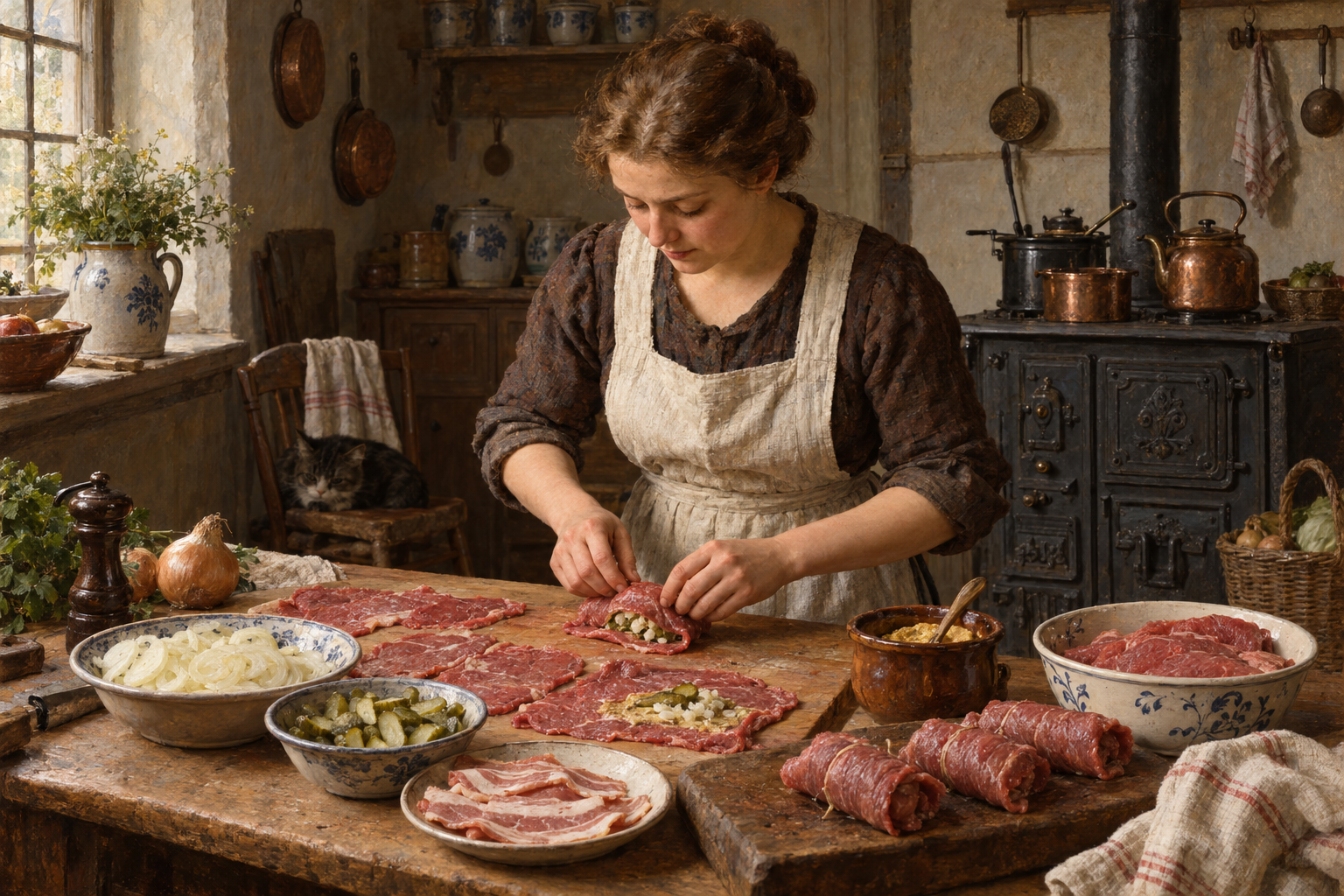
The Swedish word rullad has French origins. In classic French culinary literature, including Auguste Escoffier's Le Guide culinaire from 1903, filled meat parcels are an established part of the repertoire. That does not mean, however, that Escoffier invented them, or that Swedish beef roulades can be traced specifically to his kitchen. It would not be reasonable to name a definitive inventor or first Swedish serving here.
Our filling of mustard, bacon, onion and dill pickles has clear ties to the German tradition of beef roulades. Swedish home cooks also make roulades with ingredients such as prunes, parsley or mushrooms. The creamy gravy and boiled or riced potatoes place the meal firmly within the flavour palette of traditional Swedish home cooking. The recipe below is a contemporary home version, not a reconstruction of a particular old recipe.
Today, ready-cut thin beef steaks are a convenient way to make the dish without having to slice a larger piece of meat yourself. But that convenience can be misleading: thin meat heats through quickly, but does not necessarily become tender quickly. The roulades' most important ingredient is still a little patience.
The meat, the filling and a snug roll
Lövbiff is thinly sliced beef, often cut from the topside. It is not, in other words, the same as a thin slice of beef fillet. The meat is lean and can turn firm if cooked quickly and then given too little time in the casserole. Choose slices that are as intact and even as possible. Broad slices are easier to fill than narrow strips, and a slightly uneven slice can be gently flattened between two sheets of baking parchment.
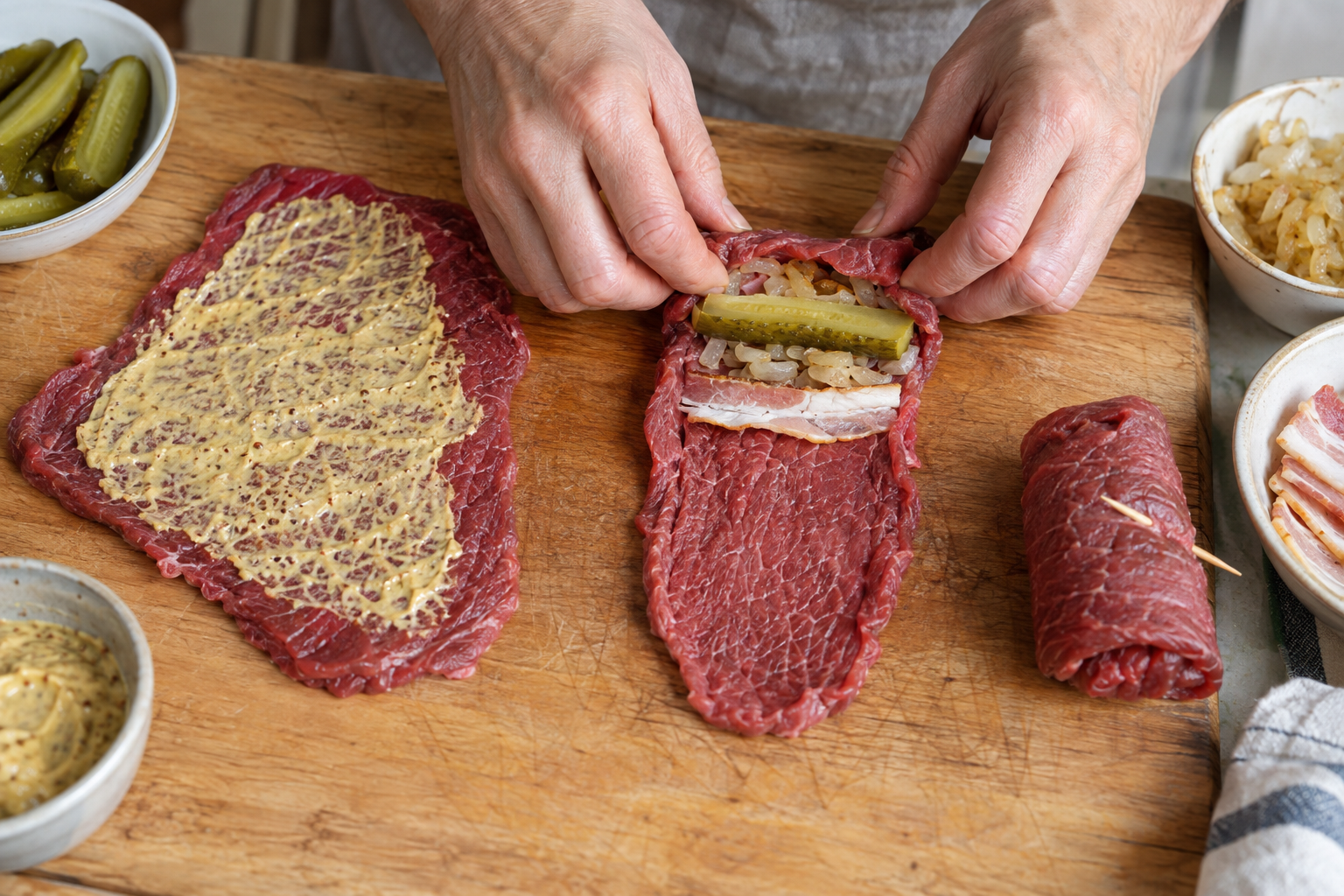
The filling should provide flavour, not bulk. A thin layer of Dijon mustard goes a long way. Bacon adds salt, fat and, if smoked, a gentle smoky note. It is worth softening the onion in the pan first; raw onion takes up more space and can make the centre unnecessarily sharp. Cut the pickle into slender batons so that it fits without forcing the roll open. Let it drain before placing it on the meat.
Too much filling is a common pitfall. It is tempting to add a little more, but an overfilled roulade is difficult to close and can easily lose its filling during browning. Leave the edges clear, fold the long sides in a little and roll up from a short end. Secure with a toothpick. The aim is to hold the parcel together, not to seal it completely.
Anyone who does not eat pork can replace the bacon with finely chopped, well-fried mushrooms. The flavour will be different, but still rich. Chestnut mushrooms are a good choice; cook off their moisture thoroughly. A wet filling makes rolling more awkward and also dilutes the flavour inside the meat.
Brown first, then let the casserole do the work
A good browned crust makes a big difference to both the meat and the gravy. Pat the beef dry before filling, and brown the prepared roulades in batches. If they are packed too closely, the temperature drops, meat juices collect in the pan, and the surface steams rather than browns. You want to hear a steady sizzle, but the butter must not blacken. A mixture of butter and neutral oil is useful here.
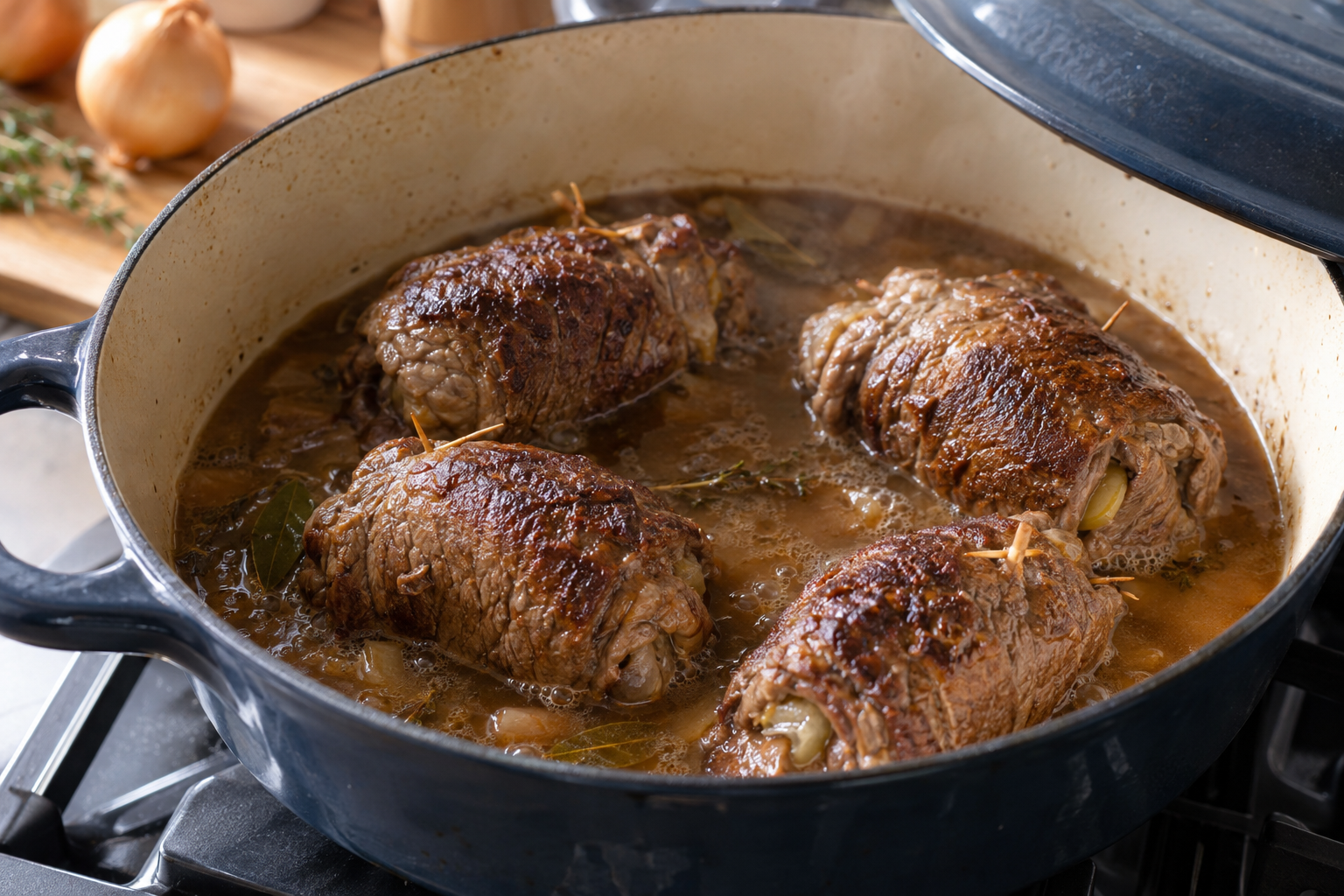
After browning, a brown coating remains on the bottom of the pan. It is precious, as long as it is not burnt. Pour in a little stock and loosen it with a wooden spoon. That is where the gravy begins. The roulades then simmer under a lid, with liquid coming partway up the meat. They do not need to swim. Turn them occasionally so they cook evenly.
The difference between a gentle simmer and a rolling boil shows on the plate. Small, quiet bubbles are the goal. Vigorous boiling drives off liquid and can leave lean meat dry before it has had time to become pleasantly tender. Test with a skewer or small knife; it should slide in with little resistance. The timing varies with the characteristics of the meat, the thickness of the slices and how tightly the rolls are packed.
The cream goes in once the meat is cooked. This makes it easier to control both consistency and saltiness. Bacon, pickles, stock and soy sauce all contribute salt, so leave the final seasoning until the end. The gravy should softly coat the roulade, not sit like a stodgy cream on the plate. Taste at the end to see whether it needs a little more mustard or a few drops of pickle brine for freshness.
A table worth lingering at
With this sort of food, potatoes are almost part of the gravy. Riced potatoes catch it in their airy strands, while boiled potatoes make for a simpler and equally delicious serving. Very buttery mash can work too, but makes the meal richer. Choose according to the rest of the menu, rather than any notion that food for guests must contain as much cream as possible.
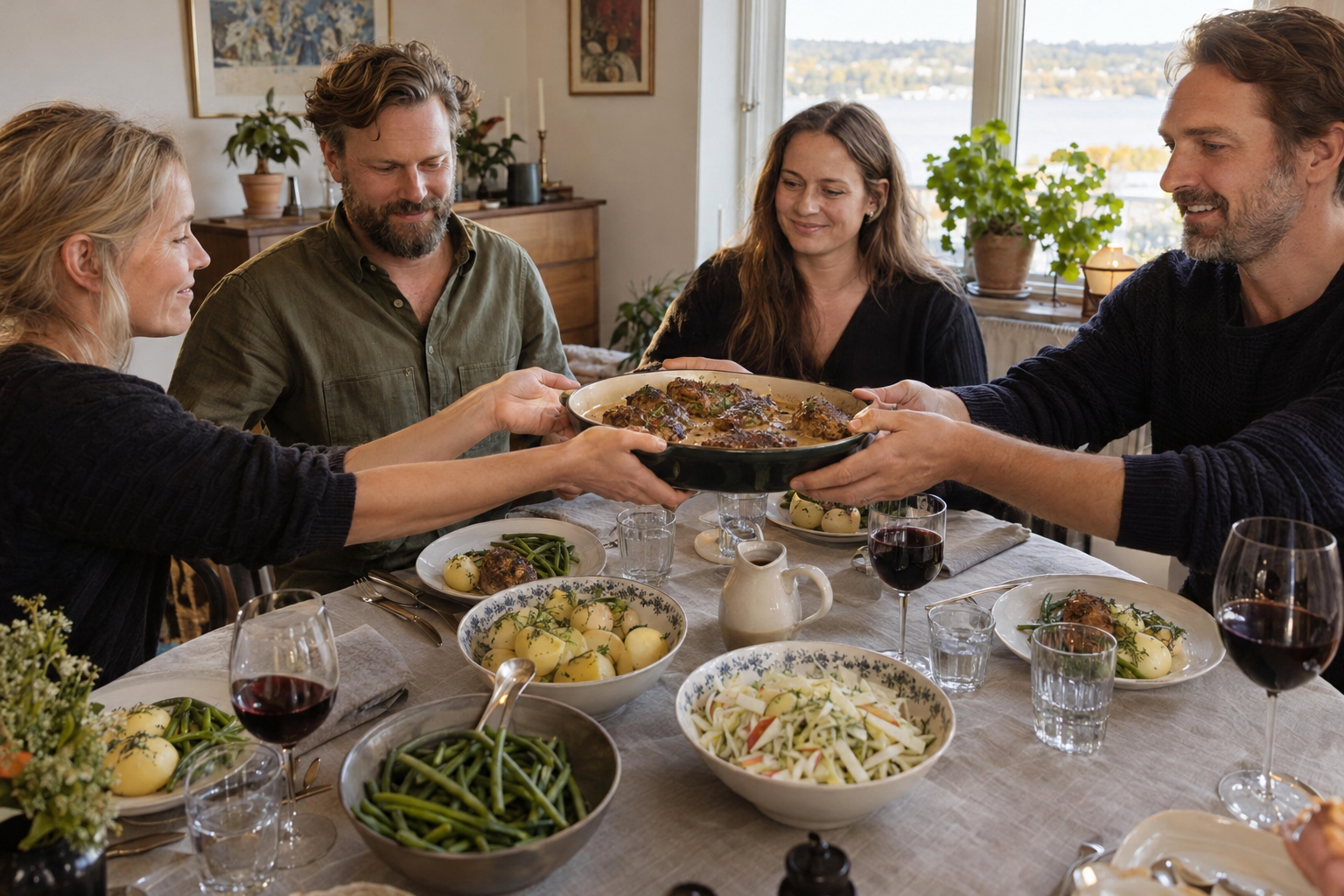
Something green and something tangy bring the plate to life. Haricots verts tossed in butter add bite, and a salad of finely sliced white cabbage and apple brings freshness. Lingonberries are delicious for those who enjoy sweetness alongside meat juices. Since the roulades already contain dill pickles, however, there is no need for several different salty pickles on the side. Let the accompaniments complement the filling rather than repeat it.
Serve in a warm, fairly deep dish. Pour gravy over the meat and offer the rest in a jug. Remember to remove the toothpicks before bringing the food to the table. It is a small detail that makes dinner considerably more relaxed, particularly when guests do not know how the roulades have been secured.
In the glass, choose a medium-bodied red wine with fresh acidity and moderate tannins, such as a pinot noir or a lighter sangiovese. An overly tannic wine can feel harsh against the mustard and pickles. Alcohol-free options work beautifully: a dark lager with little sweetness complements the browned crust, while a dry alcohol-free apple drink lightens the creaminess.
Making dinner for guests a success
The great advantage for the host is that roulades need no last-minute frying. They can be cooked the day before and cooled quickly in a shallow container. Store covered in the fridge, ideally at around four degrees Celsius. The next day, reheat them gently in the gravy until piping hot throughout. Thin with a little water if the gravy has become too thick; extra stock can make it unnecessarily salty.
If you are making everything on the day, it is wise to start with the roulades and leave the potatoes until later. There is time to set the table and make the salad while the meat simmers. For a larger dinner, brown the meat in a frying pan, then gather it in a wide casserole. Do not try to save time by browning twice as much at once. This is one stage where a measured approach pays off.
The recipe makes two roulades per person, with generous amounts of gravy. Taste the gravy with a piece of potato, not just straight from the spoon: this gives a better sense of how the whole meal will taste. When the meat is tender, the gravy glossy and the mustard a lively undertone rather than an exclamation mark, dinner is ready. Bring the casserole to the table while it is still at its most fragrant.
Beef Roulades with Mustard, Bacon and Creamy Gravy
A contemporary take on traditional home cooking, with a filling inspired by German beef roulades. Let the tenderness of the meat determine the cooking time: allow 60–90 minutes at a gentle simmer, sometimes longer.
Ingredients
Method
- 1Finely chop the onion. Fry in 1 tbsp of the butter over a medium heat for 6–8 minutes until soft. Allow to cool slightly. Cut the bacon into short strips and the dill pickles into a total of 8 slender batons. Pat the pickles dry.
- 2Lay out the beef slices and pat dry with kitchen paper. If necessary, gently flatten any thicker areas between sheets of baking parchment. Spread 2 tbsp mustard thinly over the meat and season with black pepper.
- 3Divide the onion, bacon and pickles between the slices, leaving the edges clear all around. Fold the long sides in slightly, then roll up from a short end. Secure each roulade with a toothpick.
- 4Heat the remaining butter and the oil in a large frying pan. Brown the roulades in two batches over a medium-high heat, allowing about 4–6 minutes per batch. Turn to brown all over, then transfer to a casserole in which they fit fairly snugly.
- 5Pour 1 dl of the stock into the frying pan and bring to the boil. Scrape up the browned bits and pour the pan juices over the roulades. Add the remaining stock; the liquid should come roughly halfway up the meat. Adjust with a little water if needed.
- 6Cover and simmer over a low heat for 60–90 minutes. Turn the roulades halfway through. Start checking for tenderness after 60 minutes with a small knife or skewer. Continue simmering if the meat still offers noticeable resistance, and top up with a little water if needed.
- 7Peel the potatoes when the meat is beginning to become tender. Boil in lightly salted water for about 20 minutes, depending on their size. Drain and allow to steam dry. Cook the haricots verts in lightly salted water for 3–5 minutes, then drain.
- 8Lift out the tender roulades and keep warm, covered. Stir the cream, soy sauce and 1 tsp mustard into the cooking juices. Boil uncovered for 5–8 minutes. Mix the cornflour with the cold water and add a little at a time until the gravy reaches the desired consistency. Simmer for another 2 minutes.
- 9Season the gravy with pepper, salt if needed, and a few drops of pickle brine if you would like more acidity. Remove every toothpick. Return the roulades to the gravy and heat gently for 3–5 minutes.
- 10Pass the potatoes through a ricer just before serving. Scatter parsley over the roulades and serve with the potatoes, haricots verts and plenty of gravy.
- Let tenderness determine the cooking time. If the meat is tough after the stated time, it usually needs to simmer longer, not boil harder.
- For a pork-free version, replace the bacon with 200 g finely chopped mushrooms, fried until their moisture has evaporated. Season the filling with a little salt.
- This is a good dish to make the day before. Cool quickly in a shallow container, store covered in the fridge at around 4 °C and eat within 3–4 days. Reheat until piping hot throughout.
- If you do not have a suitable casserole, simmer the roulades in a deep frying pan with a lid. Check the liquid level regularly.
What goes in the glass
- WinePinot noir with fresh acidity and subtle oakThe acidity balances the creamy gravy, while moderate tannins work well with lean beef, mustard and tangy pickles.
- BeerMärzen or another malty amber lagerBready, lightly toasted malt notes complement the browned meat and bacon. Choose moderate bitterness so the mustard does not seem too sharp.
- Alcohol-freeAlcohol-free dark lager with little sweetnessRoasted malt suits browned meat and creamy gravy, while carbonation provides a refreshing contrast to the creamy texture.
Enjoy alcohol in moderation. Alcohol-free options go just as well with the food.
Sources
- Svenska Akademien, Svenska Akademiens ordbok, uppslagsord rullad
- Auguste Escoffier, Le Guide culinaire (1903)
- Kooperativa förbundets provkök, Vår kokbok (1951 (första upplagan))
- Systembolaget, Mat och dryck i kombination
- Livsmedelsverket, Förvara maten rätt
Ask questions about "Beef Roulades with Creamy Gravy". Answers are based on the magazine's own articles.