Grandma’s hålkaka – the aroma that fills the whole house
Soft rye bread, a little syrup and a hole at the heart of a memory
First comes the warmth, then the scent of rye, butter and freshly baked crust. Hålkaka is one of the most familiar shapes in Swedish everyday bread baking. We trace its journey from the bread stores of the past to today’s kitchen tables – and bake a soft version best left to cool under a tea towel.
 By Lina BergFood editor · European and Nordic cuisines – Italy, France, Spain, Greece and Swedish home cooking
Translated from Swedish with AI assistance.
Go to the recipe ↓When the kitchen fills with fragrance
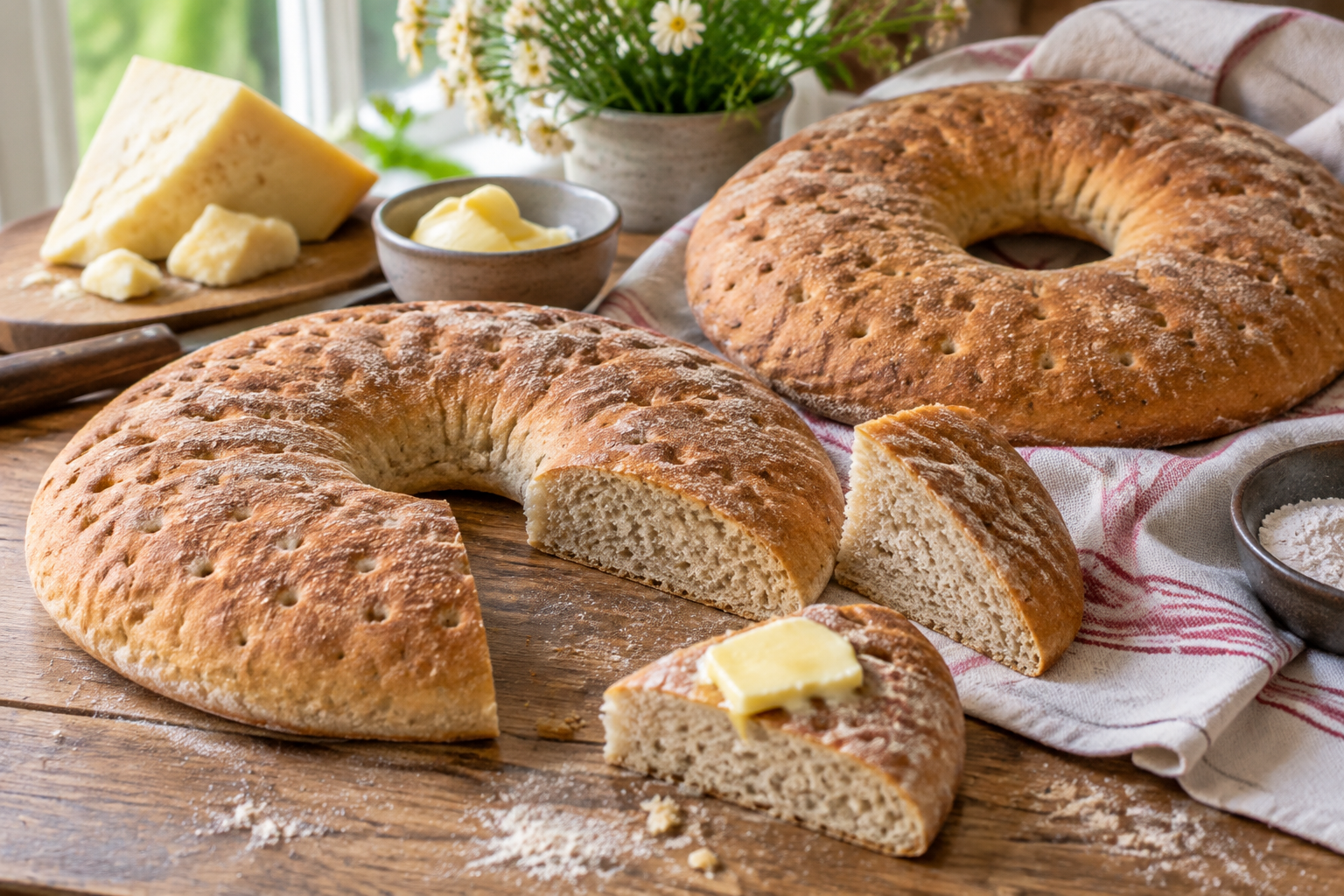
It begins almost imperceptibly. Milk warms in a saucepan, butter softens on a plate and a fine dusting of flour settles on the worktop. At first the dough feels sticky and unyielding, then supple beneath your hands. By the time the round loaves come out of the oven, the kitchen has changed: it smells of toasted grain, warm milk and a gentle sweetness that lingers long after the baking tray has been set down.
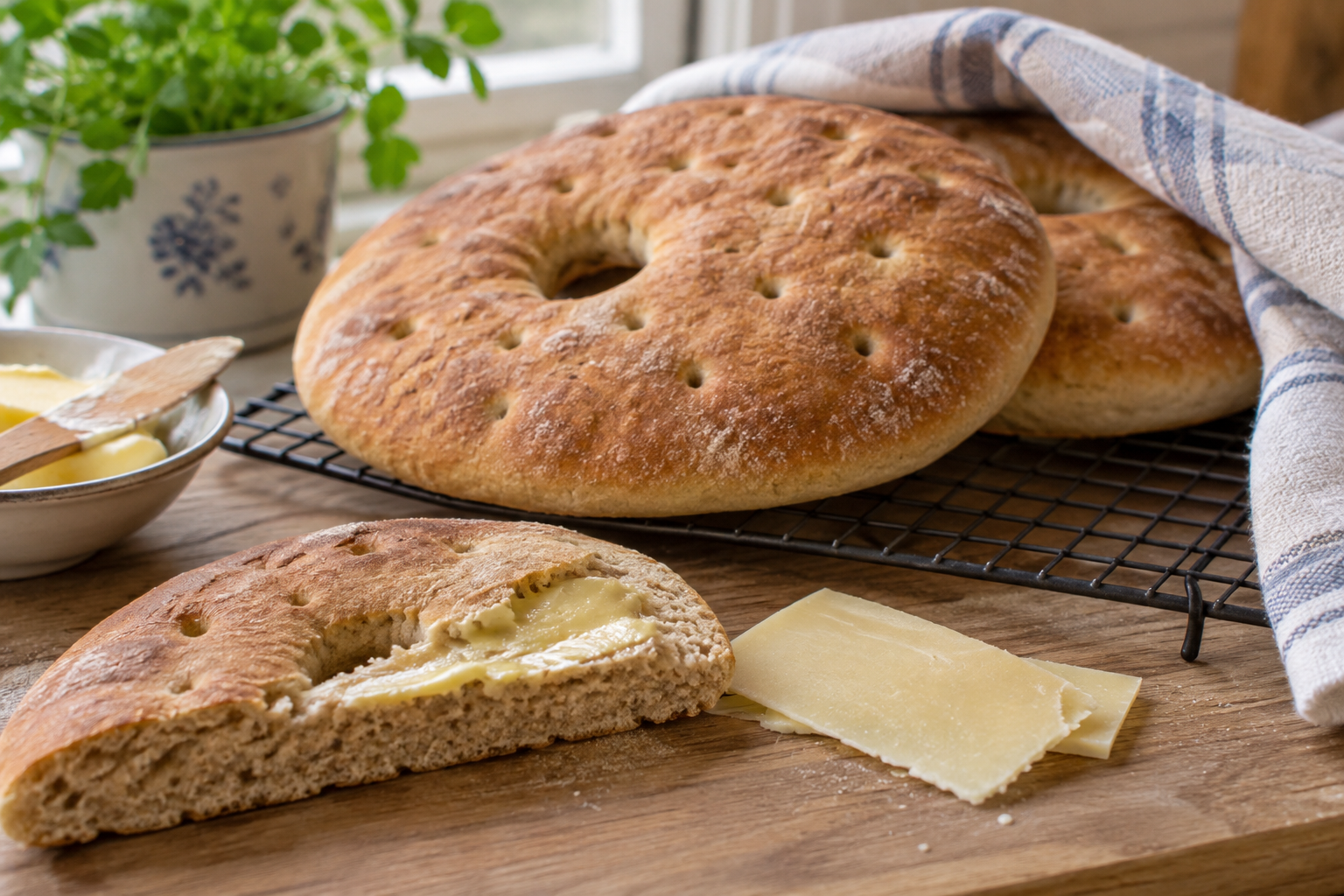
A tea towel is spread over the loaves. Beneath it, the crust softens as the warmth slowly leaves the crumb. Cut too soon and you will have a sticky knife and a squashed slice, but the temptation is understandable. A warm piece, a little butter melting into its pores, perhaps a slice of mature cheese. That is all it takes to make baking day feel like a small celebration.
Grandma’s hålkaka is not one definitive recipe. In one family it is light and fairly sweet; in another, darker with rye, thinner and flavoured with aniseed or fennel. Some remember milk in the dough, others water. Here, the word grandma conveys above all a sense of closeness: bread baked for people you know, whose flavour has become the benchmark for every similar loaf.
That is also why hålkaka deserves more than a nostalgic sigh. It is practical, everyday know-how in a round package. A flat loaf bakes relatively quickly, can be shared at the table and freezes easily. The hole makes it instantly recognisable. But the story of that hole calls for a distinction between old-fashioned bread made for storage and soft bread served at the coffee table.
A hole with a history – but more than one story
Round breads with holes feature in several Nordic bread traditions. In Sweden, the shape is associated, among other things, with bread that could be threaded onto poles and stored with plenty of air circulating around it after baking. For dried bread, this was a useful solution: baking could be done in large batches, and the finished bread kept rather than having to bake afresh each day.
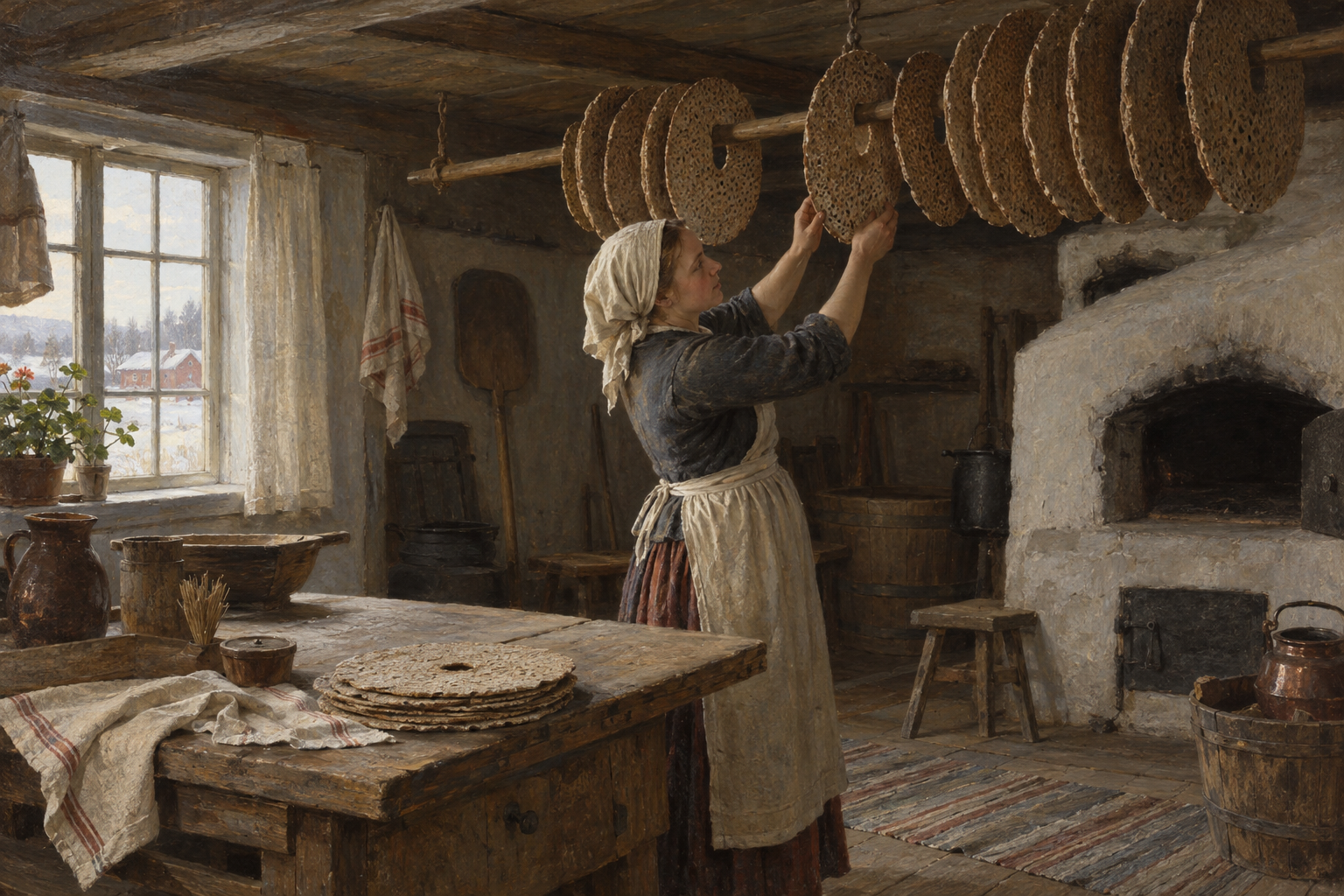
That does not mean, however, that every soft hålkaka we bake today once hung beneath the ceiling. Soft, milk-based rye bread and dry storage bread have different characteristics and keeping qualities. Their shape connects them, but a hole is not in itself proof of an unbroken recipe lineage. Nor is there a single reliably documented inventor or one particular year when Swedish hålkaka came into being.
Bread has long been shaped by what people could grow, mill, use for fuel and store. Rye became important in many parts of Sweden, while the balance of rye, barley, oats and wheat varied. A light, soft bread containing wheat was not an everyday staple everywhere. Access to finely milled flour, bought ingredients and working bread ovens influenced what reached the table.
Fresh compressed yeast, domestic ovens and more standardised flour made it easier to bake reliably soft bread at home. Cookbooks and recipes printed on flour bags helped variations spread from kitchen to kitchen. This is also where we find the hålkaka many people recognise: a sifted rye-and-wheat flour blend and wheat flour, a little fat, sometimes milk, often syrup. A family recipe can have a long history in a household without having remained unchanged for hundreds of years.
That does not make the memory any less valuable. On the contrary, the variations tell us about people who adapted their baking to their budgets, tastes and the ovens they had to hand. The most credible traditions rarely stand completely still.
Rye brings flavour, wheat brings structure
Hålkaka strikes a delicious balance between rye’s full-bodied grain flavour and wheat’s ability to create an elastic dough. The soft version we are baking here uses rågsikt, which in Swedish shops is usually a blend of sifted rye flour and wheat flour. Read the bag: the proportions can vary. Rågsikt should not be confused with pure, fine rye flour, even though both names suggest something very finely milled.
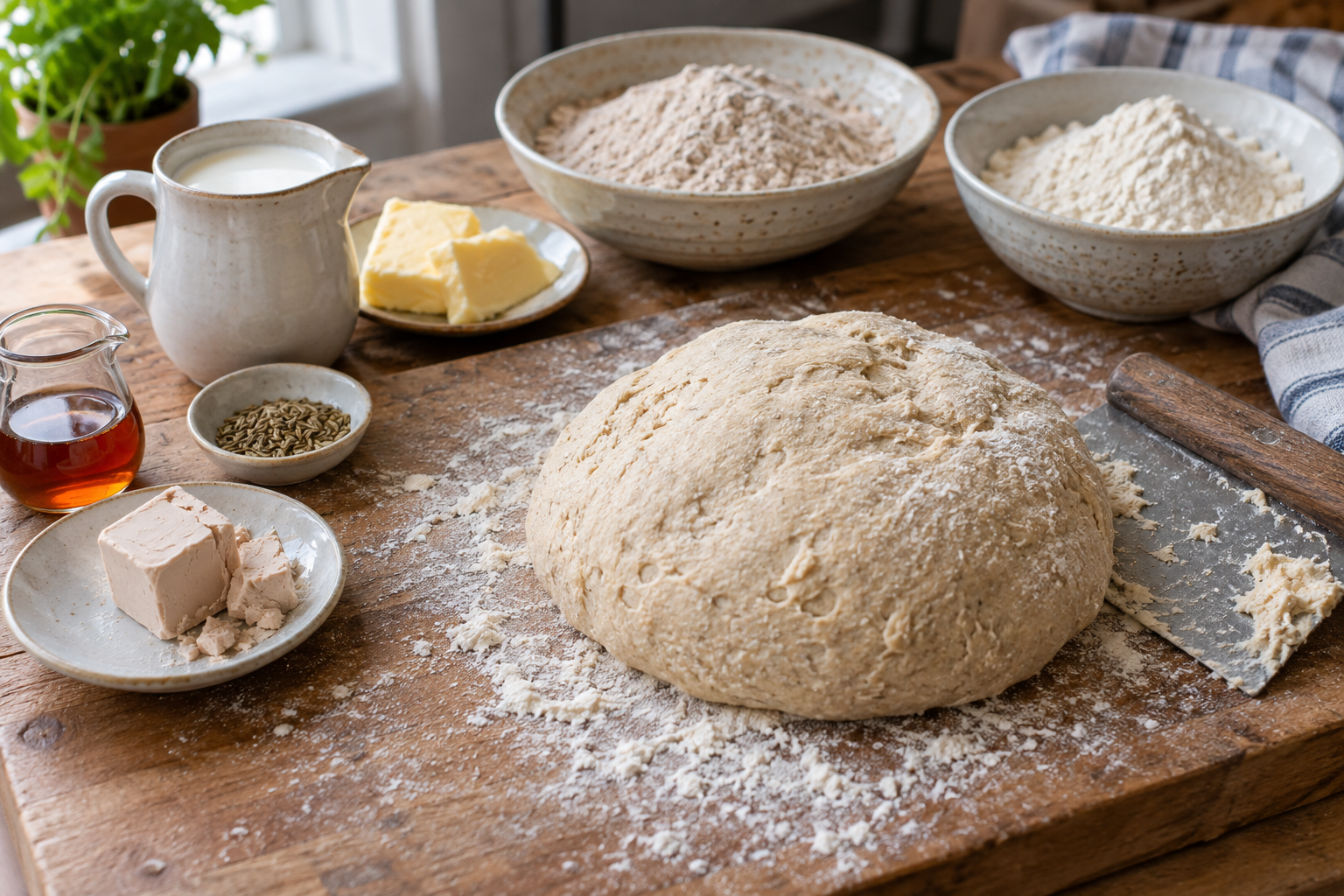
The difference matters at the worktop. Replacing rågsikt directly with rye flour changes both the way the dough behaves and the structure of the bread. Rye does not build the same elastic gluten network as wheat. A rye-rich dough therefore feels different, and trying to knead it to exactly the same springiness as a white bread dough will not improve it.
Milk contributes flavour and colour, butter softness. Syrup adds a rounded sweetness and helps the surface colour in the oven. It should not dominate. The aim is a bread equally at home with cheese or a slice of cold potato, not a sweet bun that happens to have turned out flat. If you remember a more pronounced spice note, you can add lightly crushed fennel seeds or aniseed.
The most common mistake is working in too much flour. A dough that feels pleasantly dry from the outset can produce dense loaves once the flour has had time to absorb the liquid. Keep the dough soft and a little sticky. A dough scraper is more helpful than another handful of flour, especially when lifting and dividing the dough.
The second mistake is rushing. Rising times are a guide, not a timetable. In a cool kitchen, the dough needs longer. Watch its volume and feel the risen loaf: a light press of a finger should leave an indentation that slowly springs back, rather than disappearing immediately.
The hole, the fork and the tea towel
The shaping is simple, but every movement affects the result. The rounds need to be an even thickness so the edges do not dry out before the centre is done. A small glass or cutter makes easy work of the hole. Make it a generous one from the start; a very small hole can almost close up as the dough rises. The little centre cut-outs make lovely taster rolls, but need less time in the oven.
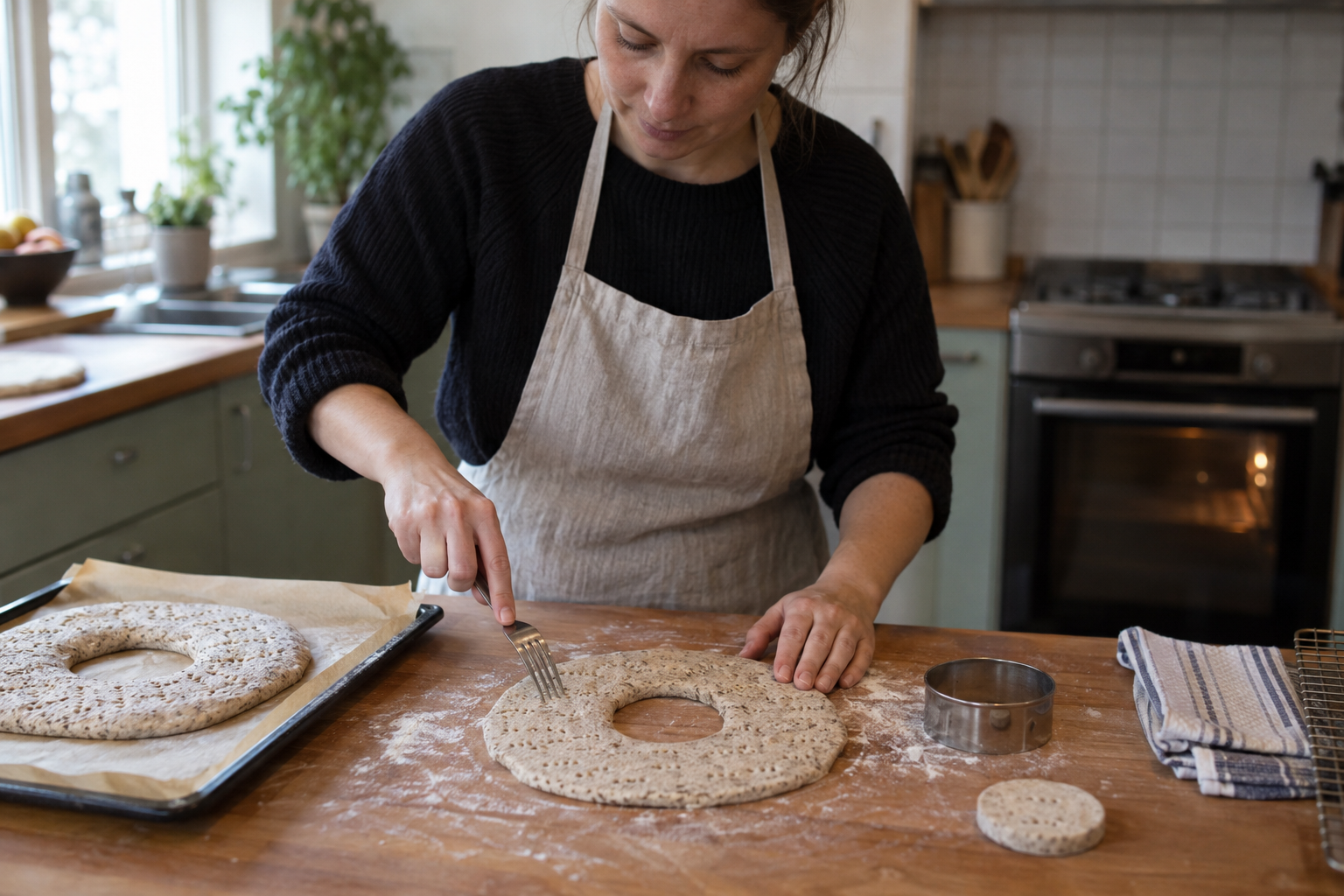
Pricking the dough is more than decoration. Small holes through its surface help limit large air pockets, giving the bread a more even shape. Use a fork if you do not have a dough docker in the drawer. Prick firmly without pressing the whole round flat. Here we want a soft, fairly even crumb rather than large, open holes.
The oven needs to be thoroughly hot when the bread goes in. In a standard domestic oven, baking one tray at a time is often the easiest route to success: the colour is more even and the baking easier to monitor. Let the next batch rise somewhere a little cooler if the first is still in the oven. Overproved rounds can collapse and will not rise as well during baking.
The colour should be a warm golden brown, but syrup and milk can make the surface darken sooner than expected. Keep an eye on the loaves towards the end. Lift them carefully and check the underside too. It should have taken on some colour and feel baked, not pale and damp. A thermometer can provide extra reassurance if you are unsure.
Once the bread is out of the oven, resting makes a big difference to its texture. A wire rack prevents damp undersides. A clean tea towel softens the crust, which suits this kind of hålkaka. Let the loaves cool until at least lukewarm before cutting them. This gives the crumb time to set and the flavour a chance to come through more clearly.
An everyday bread to make your own
Hålkaka needs no special occasion. It is just right for breakfast, alongside a bowl of soup or as a substantial sandwich when dinner is still some way off. Cut the round into wedges and split them horizontally if you prefer thinner sandwiches. With butter and mature hard cheese, the interplay is particularly clear: salt and the cheese’s tang meet the rye and its subtle sweetness.
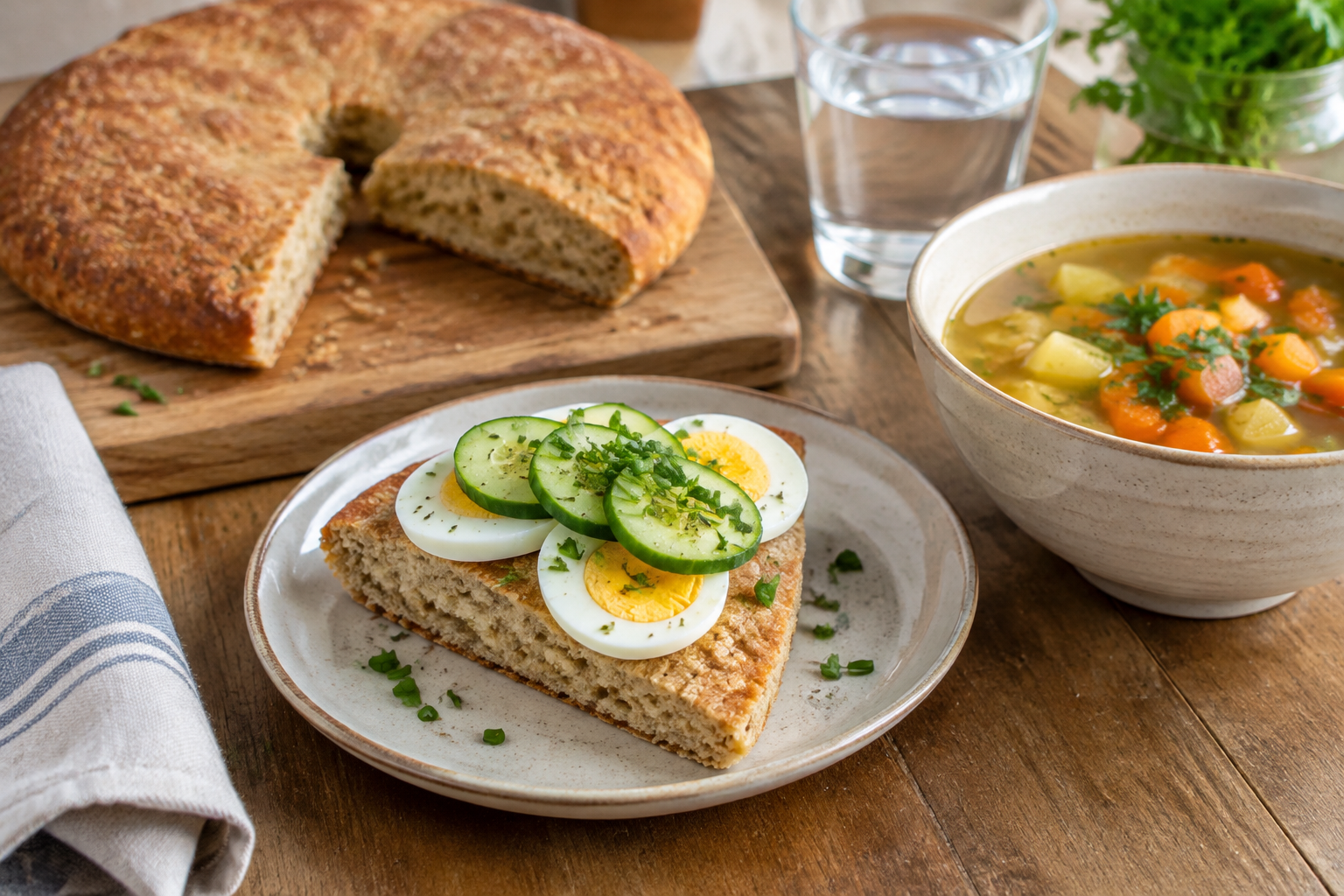
For a light lunch, serve the bread with boiled egg, cucumber and chives. Alongside pea soup or root vegetable soup, it makes a soft, satisfying companion. For many, coffee is part of the memory, but water or a mild tea gives the bread’s own flavour more room to shine. A freshly baked loaf needs no elaborate toppings to feel generous.
At home in Sweden, the ingredients are easy to find, and there is no reason to hunt down a particular farm-milled flour before getting started. Begin with ordinary rågsikt, wheat flour and fresh yeast. Get to know the dough before changing flours or sharply reducing the sweetness. It is worth noting how much flour you actually used and how long the loaves needed in your own oven.
The recipe below is a contemporary homemade hålkaka in a familiar Swedish style, not a reconstruction of any particular grandmother’s written recipe. It makes four rounds, enough to eat one fresh and save the rest. Freeze whatever will not be eaten soon, preferably cut into individual portions. When the bread is gently warmed later, something of baking day’s aroma returns. And next time, a pinch of fennel, a little less syrup or a thinner round might make the recipe your own.
Soft hålkakor with rye-and-wheat flour and syrup
A modern hålkaka in the Swedish home-baking tradition, with a soft crumb and gentle rye flavour. Makes 4 rounds, approximately 16 servings. Allow about 2–2.5 hours including rising and baking in batches; hands-on time is around 30 minutes.
Ingredients
Method
- 1Warm the milk to approximately 30–35 °C. Crumble the yeast into a bowl and stir in a little of the milk to dissolve. Add the remaining milk, the butter in small pieces, syrup, salt and fennel, if using.
- 2Add the rye-and-wheat flour blend and an initial 80 g of the wheat flour. Knead for about 8 minutes in a mixer on low speed or 10–12 minutes by hand. Add the remaining wheat flour a little at a time, only if needed. The dough should be soft and slightly sticky, but hold together.
- 3Cover the bowl and leave to rise at room temperature for about 45–60 minutes, until the dough has visibly expanded to roughly twice its original size. Allow longer if the kitchen is cool.
- 4Turn the dough out onto a lightly floured worktop. Divide into four equal pieces and gently shape into balls. Leave to rest under a tea towel for 5 minutes to make them easier to roll out.
- 5Roll or pat into rounds approximately 18–20 cm in diameter and 1.5–2 cm thick. Cut a hole about 4 cm across in the centre. Place two rounds on each of two trays lined with baking paper. Keep the centre cut-outs to bake as small rolls.
- 6Prick the rounds with a fork. Cover with a tea towel and leave to rise for about 25–35 minutes, until they feel airy. Ideally, keep the second tray somewhere slightly cooler. Meanwhile, preheat the oven to 225 °C, conventional top and bottom heat.
- 7Bake one tray at a time in the centre of the oven for about 12–15 minutes. The bread should have a good colour underneath too. The internal temperature can be used as a guide and should be approximately 96 °C. The small centre cut-outs usually need only 7–9 minutes.
- 8Transfer the loaves to a wire rack and cover with a clean tea towel for a soft crust. Leave to cool for at least 25–30 minutes before cutting. Bake the next tray, checking the colour early as the oven may bake a little differently the second time round.
- Rågsikt is normally a blend of rye and wheat flour. Do not replace it with the same weight of pure rye flour; the recipe would need to be reworked.
- For dairy-free bread, use unsweetened oat drink and dairy-free baking margarine. The flavour and colour will be slightly different.
- Freeze the bread once completely cool, preferably cut into individual portions. Keep any bread for the following day well sealed at room temperature.
- Weigh the flour and add it sparingly towards the end. Too much flour is a common cause of dry, dense hålkakor.
What goes in the glass
- CoffeeMedium-roast filter coffeeRoasted notes echo the bread’s baked crust, while the coffee’s gentle bitterness balances the syrup’s sweetness. Especially good with a slice topped with mature cheese.
- TeaMild black teaA lightly brewed black tea brings freshness to butter and cheese without overwhelming the rye’s gentle flavour.
- Alcohol-freeLightly sparkling waterA fresh, neutral accompaniment to the newly baked bread. The bubbles cut through buttery toppings and let the grain flavour take centre stage.
Enjoy alcohol in moderation. Alcohol-free options go just as well with the food.
Sources
- KF:s provkök, Vår kokbok
- ICA provkök, Rutiga kokboken
- Jan-Öjvind Swahn, Matens historia
Ask questions about "Grandma’s hålkaka – the aroma that fills the whole house". Answers are based on the magazine's own articles.