Harvest time – make your fruit last longer
Make cordials and jam, dry and freeze your garden’s apples, pears and plums.
First comes a handful, then a whole basket. When the garden’s fruit ripens, the trick is to make the most of the glut without turning the kitchen into a preserving factory. Start by sorting, choose a few simple methods and let the rest wait in the freezer.
 By Lina BergFood editor · European and Nordic cuisines – Italy, France, Spain, Greece and Swedish home cooking
Translated from Swedish with AI assistance.
Go to the recipe ↓When the tree gives us more than we can eat
An apple lands with a dull thud in the grass. Beneath the plum tree lie a few fruits with split skins, while on the kitchen table a colander is full of pears that smell of honey around their stalks. It is that week when the garden stops offering one snack at a time and starts handing out entire jobs. The fruit needs picking, carrying indoors and somewhere to go.
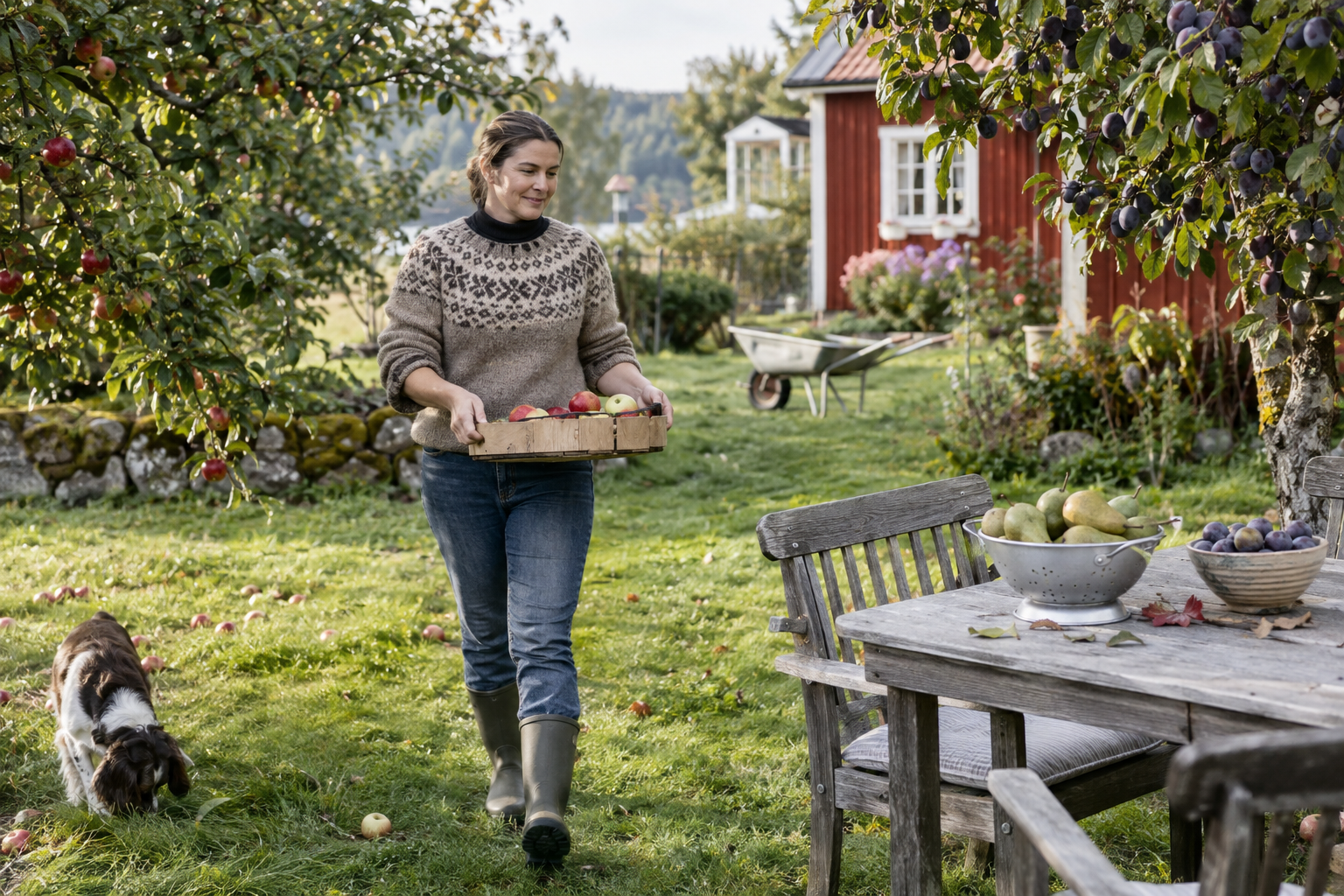
But not everything has to end up in a jar that same afternoon. The most important tool at harvest time is not really the steam juicer or the preserving pan, but a clear tabletop where the fruit can be sorted. Firm, undamaged fruit goes to one side. Ripe, fragrant fruit gets its own pile. Bruised specimens need attention first, while mouldy or rotten fruit is discarded.
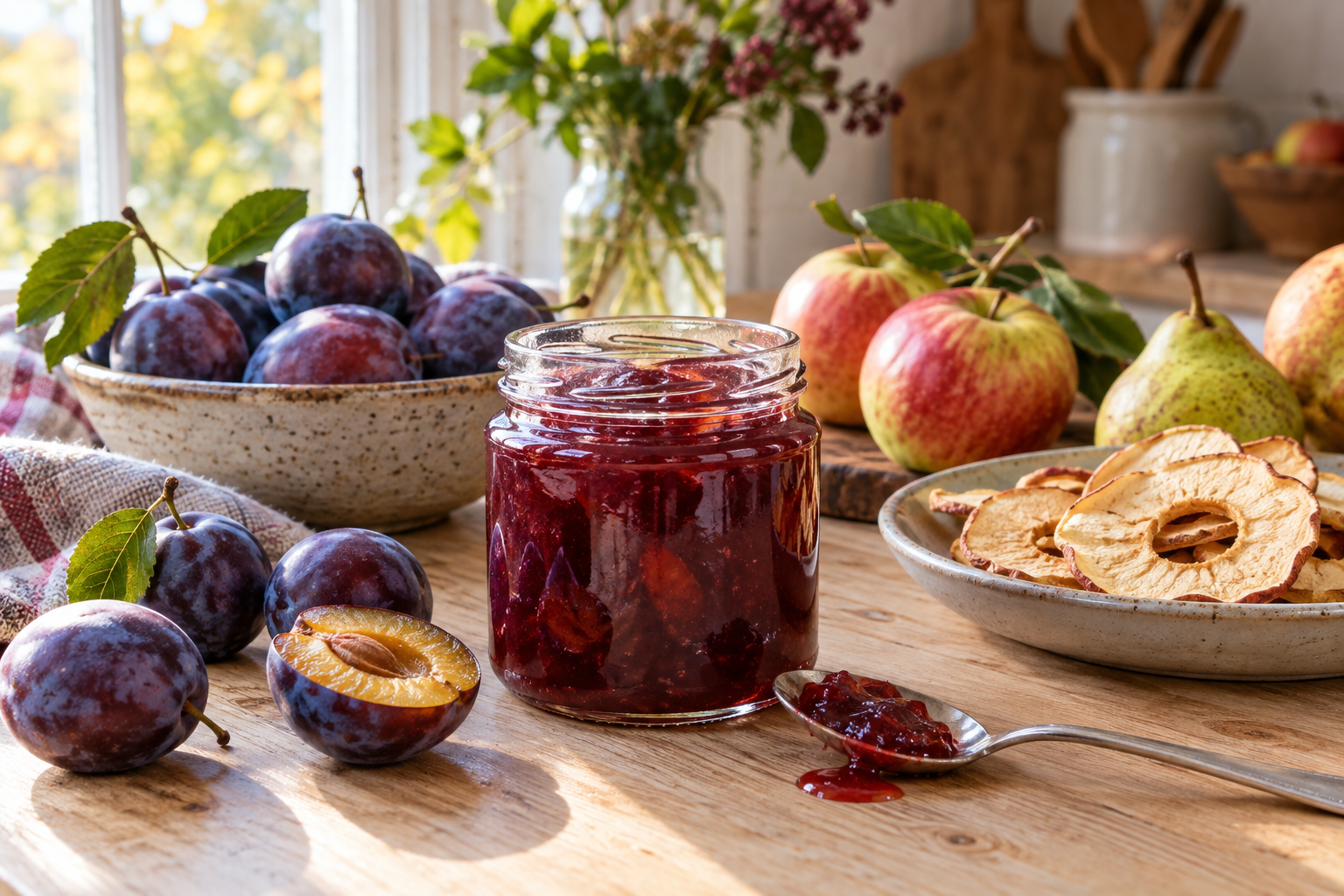
From there, the work can follow both your tastes and your daily routine. Apples become sauce for porridge, thin rings to snack on or juice from a local pressing service. Pears can be frozen in wedges for future pies. The plums’ brief peak season can be captured in a deep-red jam with a bright tang and soft pieces of skin.
The point is not to fill the most shelves. It is to make things that will actually get eaten. Two small jars of good jam and a few bags of fruit in the freezer can be a better harvest than twenty large jars left untouched. Start with the family’s breakfasts, baking and dinners, not an image of the perfect pantry.
From winter stores to everyday luxury
Extending the life of fruit goes back much further than Sweden’s suburban gardens. Drying has been used in many parts of the world, and in Swedish households, storing, drying and various forms of bottling became ways to bridge the months when the trees stood bare. The methods depended on access to fuel, sugar, containers and suitable storage space.
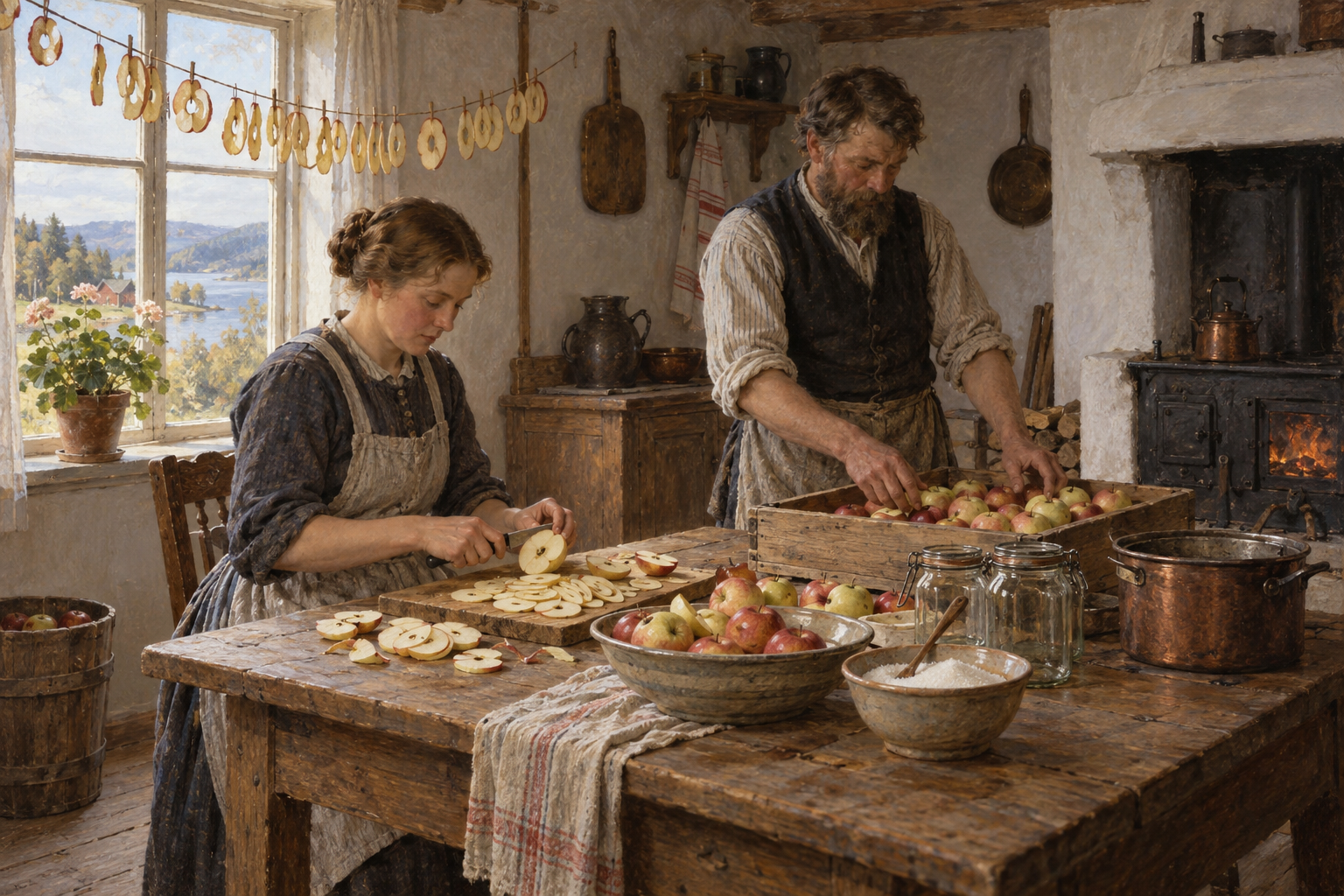
For a long time, sugar was an expensive commodity. During the 19th century it became more widely available, partly through the growing beet sugar industry. Sweet preserves consequently found a larger place beyond the wealthiest households. Charles Emil Hagdahl’s Kok-konsten som vetenskap och konst, published in 1879, includes fruit preparations and preserving as part of a broad body of household knowledge. The book shows that these methods were established, not that they were invented then.
Nor were the stores of the past simply a row of jam jars. Apples suited to storage could be kept whole, while more delicate fruit needed processing. Much depended on the variety: a firm winter apple and a soft summer apple called for quite different approaches. That knowledge is still useful when several trees ripen at once.
During the 20th century, the household freezer changed the rules. Fruit no longer had to be turned into finished cordial or jam straight after picking. Today we can combine methods: store what will keep, cook a little of the ripe fruit and freeze the rest. This is no less thoughtful a way of managing the harvest. It is a way to make tradition work in a kitchen where dinner needs cooking too.
Sort by ripeness, not by beauty
An irregularly shaped apple can be delicious. Surface blemishes and scab are not the same as rot, and a freshly bruised patch can be cut away generously if the rest of the fruit is sound. Windfalls therefore need not automatically be discarded, but they should be examined carefully and used promptly. Wash the fruit and do not use any that has been contaminated by animal droppings.
Mould is another matter. Do not use mouldy or rotten apples for sauce, cordial or pressed juice. Harmful mould toxins, including patulin, may be present in affected fruit and are not reliably destroyed by ordinary heating. Long cooking will not turn poor ingredients into good ones. A musty smell or visible mould is not a cue to rescue the fruit with extra sugar.
Next, taste the sound fruit. Is the apple sharp enough to make your cheeks pucker, or sweet and almost floral? Is the pear still firm or already soft around the core? Tart apples bring life to apple sauce and mixed-fruit cordials. Sweet varieties are excellent for drying. Soft pears are better suited to purée than to neat wedges.
Pectin, which occurs naturally in fruit, helps jams and jellies set when combined with the right amount of acid and sugar. Levels vary with the variety of fruit and its ripeness. Very ripe fruit may therefore produce a softer set. For the home cook, jam sugar is a practical way to achieve a more consistent texture, but follow the proportions and cooking instructions on the packet: different products are designed for different amounts of sugar.
Cordials and jam – two ways to capture the flavour
Fruit cordial and pressed juice are not quite the same thing. Apple juice is pressed from the fruit, whereas homemade cordial is often made by heating fruit so that its juice can be strained off and then sweetened. A fruit-pressing service is an excellent solution for anyone with lots of apples. Ask about minimum quantities, which fruits they accept, and how the finished juice has been treated and should be stored.
At home, cooked cordials offer scope for mixing fruits. Apple makes a good base for a modest addition of plums, while pears often need something tart alongside them to keep the flavour from falling flat. Let the fruit juice drip through on its own if you want it clearer. Pressing hard through the straining cloth forces more pulp through; this mainly affects appearance and mouthfeel.
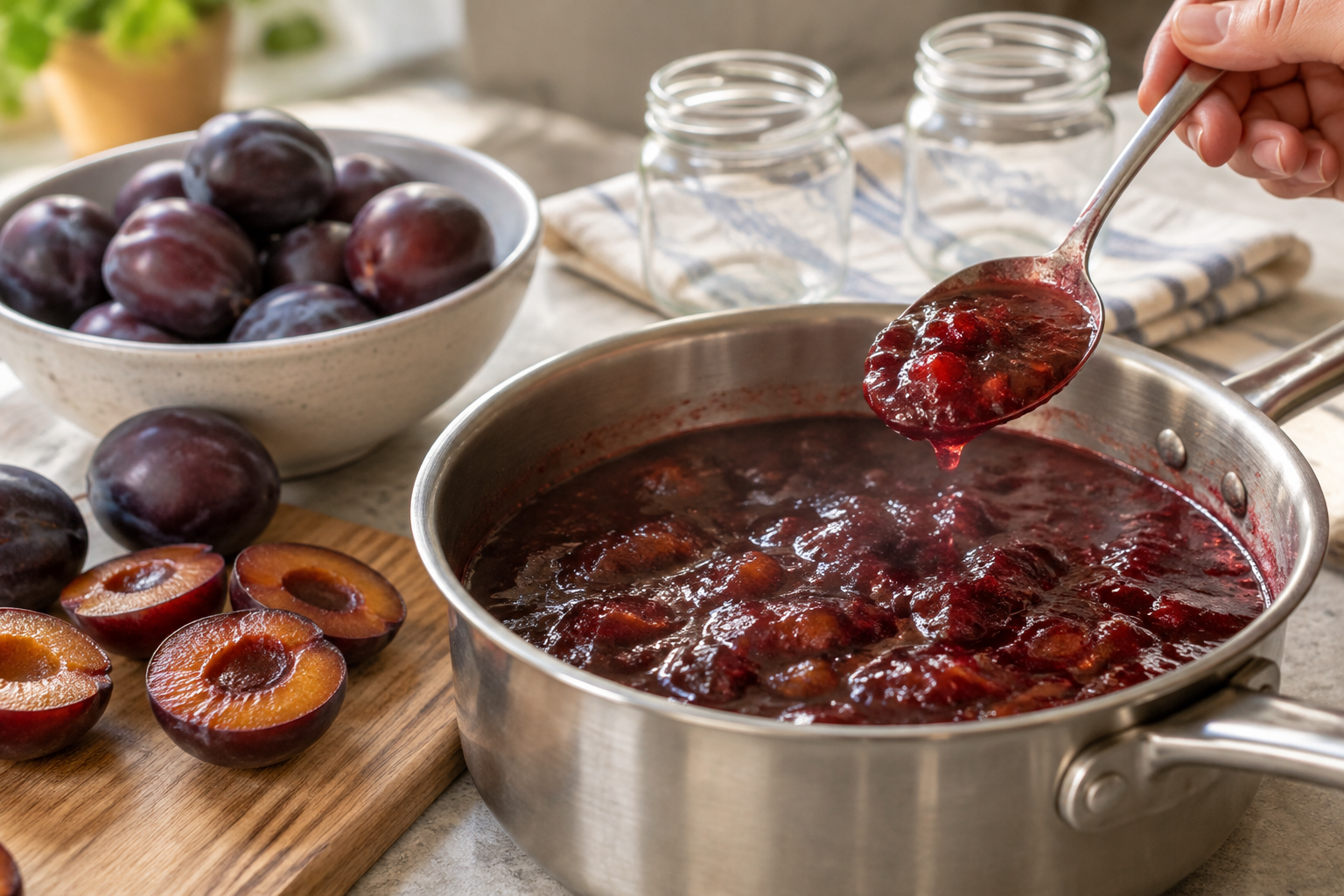
In jam, the fruit pulp stays in. Plum skins contribute colour and a pleasantly yielding texture, and rarely need removing. A wide pan allows good evaporation. Overly large batches, however, often need longer cooking, which can result in a darker colour and less fresh fruit flavour. Better to cook two manageable batches than one pan filled to the brim.
Sugar provides flavour and also plays a part in preserving. Reducing the amount therefore affects more than sweetness. Acidity, heat treatment, hygiene and storage matter too; a jar is not automatically safe to store at room temperature just because its lid has formed a vacuum seal. For lower-sugar homemade preserves, the fridge or freezer is a safe everyday choice. Use clean, heatproof jars, clean utensils and small containers. Discard the entire contents if the jam develops mould.
Dry, freeze and let the best fruit rest
Dried apple rings smell almost like a warm wooden floor in autumn sunshine: sweet, gentle and a little floral. As water evaporates, the flavour concentrates and the fruit takes up less space. Thin, even slices dry more evenly than thick wedges. Well-washed fruit can be left unpeeled, and a little lemon water can slow browning, though it is not necessary for flavour.
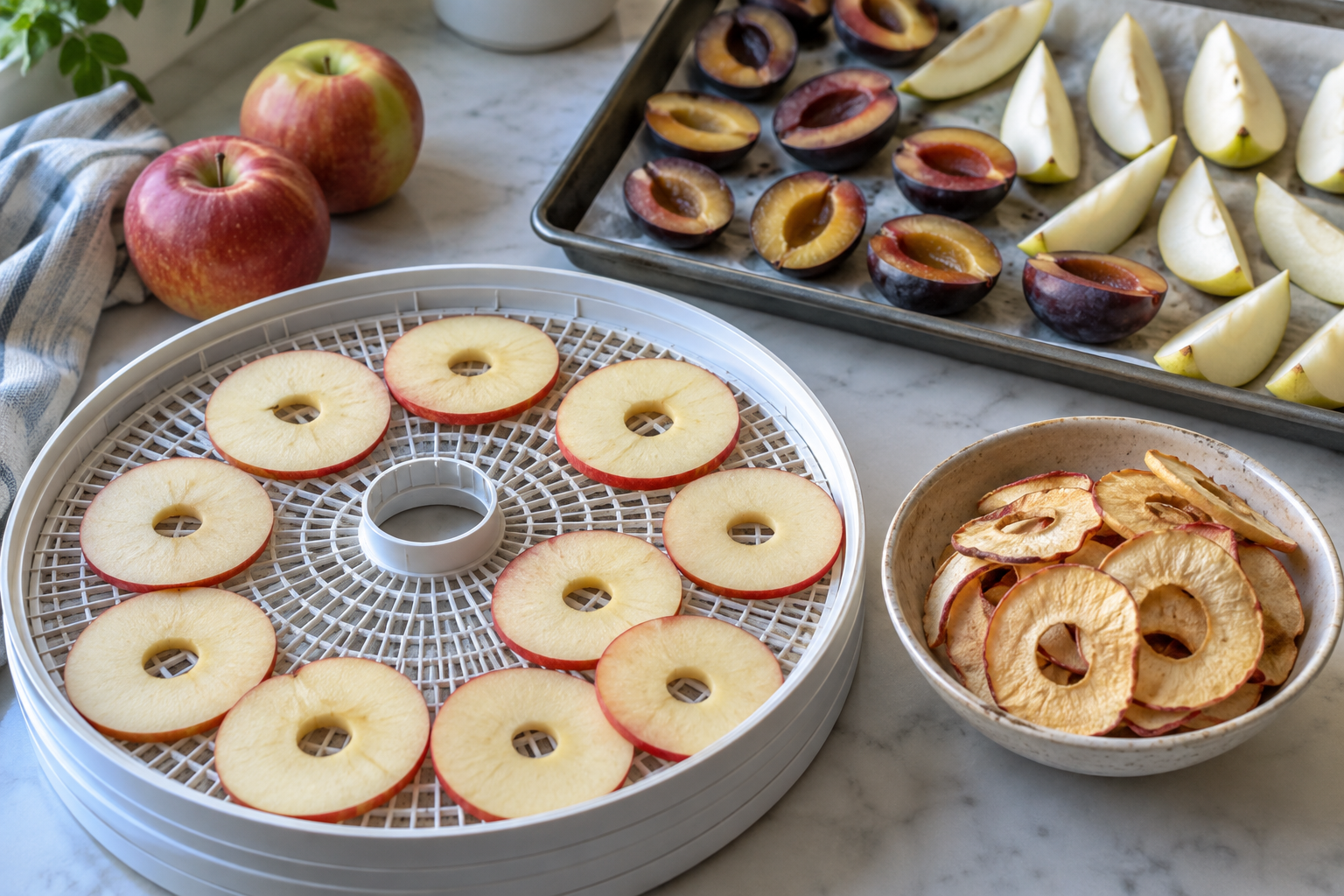
A food dehydrator provides controlled heat and airflow. An oven works too, preferably on its fan setting and following the manufacturer’s drying instructions. Think hours rather than minutes; the variety, thickness of the slices and equipment determine the time. No damp patches should remain in the fruit. Let it cool completely before packing, otherwise condensation may form. Soft-dried fruit with uncertain residual moisture is better kept chilled or frozen than stored for a long time in a warm pantry.
The freezer is the simplest temporary store. Stoned plum halves, apple wedges and pieces of pear can be frozen spread out on a tray, then transferred to bags. This lets you take out a small amount without thawing a whole block. The fruit will be softer after thawing but works well in compotes, baking and cooked preparations. Freeze it in quantities that suit your usual recipe.
Whole apples intended for storage need to be undamaged and of a variety that keeps well. Store them somewhere cool and frost-free, ideally with high humidity but without condensation on the fruit. Check regularly and remove any that are starting to deteriorate. Not all autumn apples will keep until Christmas, and a cool store cannot turn a short-lived variety into a winter apple.
A harvest that fits into everyday life
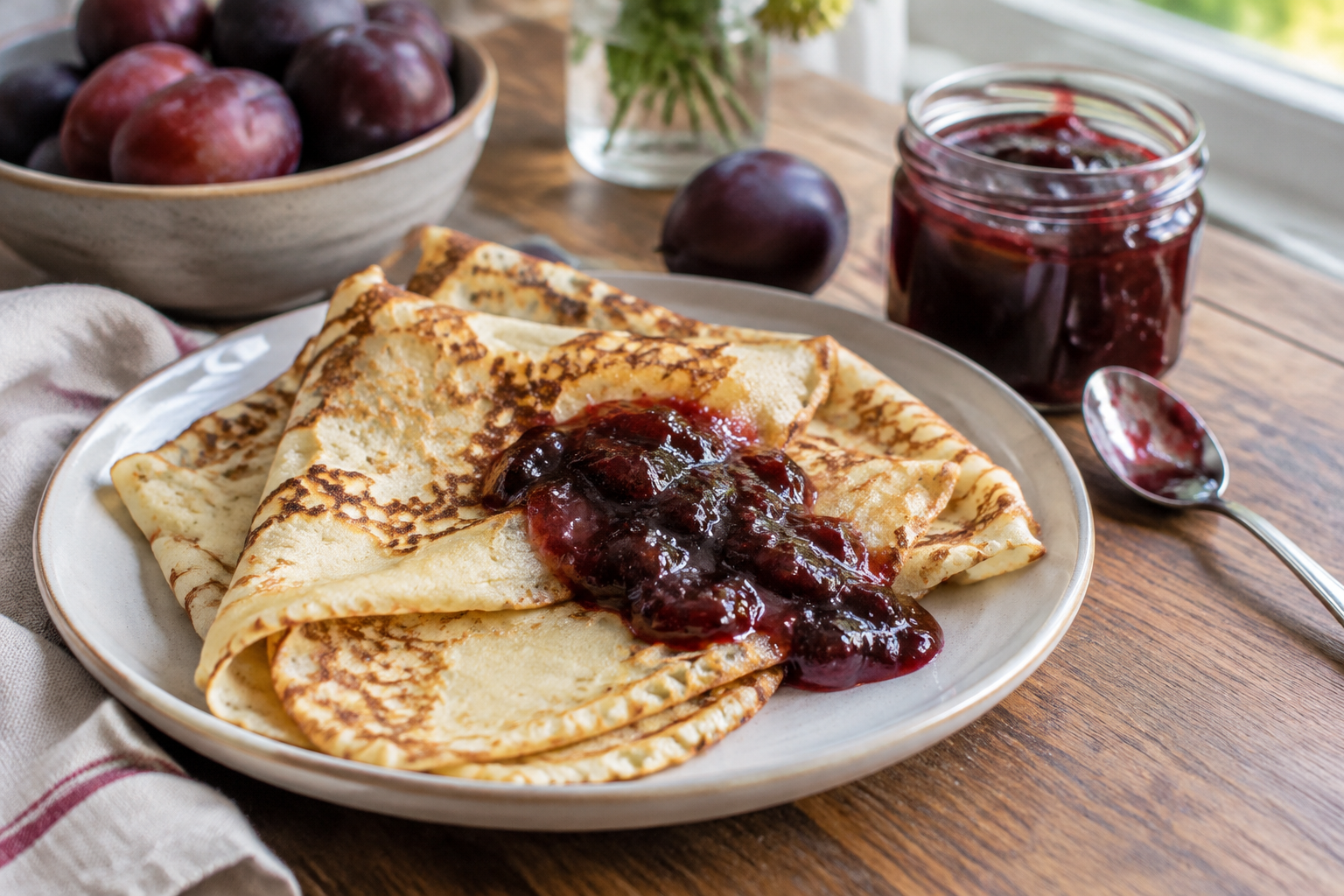
At the table, the work reveals itself in small ways. A spoonful of plum jam beside a pancake, a few dried apple pieces in a snack tub for an outing, warm pear compote for a simple dessert. Fruit need not take centre stage every time. It often comes into its own as a tart, sweet or soft accompaniment.
Share the harvest before it becomes a burden. A bag of fruit for a neighbour or a jar of jam for someone who helped with the picking turns the garden into something shared. Explain what the jar contains and how it should be stored. Homemade preserves are a gift, but the recipient should not have to guess how long they will keep.
For your first day of preserving, a pan, a set of scales, a ladle and a few thoroughly cleaned small jars are enough. Label everything with the contents and date, and consider noting which fruit you used. Next year, it will be useful to know which blend was particularly good.
Start with the plum jam below. The small batch is easy to manage, the lemon brightens the fruit’s acidity and the vanilla sits gently in the background. While the jars cool, the remaining plums can be stoned and frozen. That is quite enough for a successful harvest day.
Plum jam with lemon and a hint of vanilla
A small batch that lets the plum skins provide both colour and texture. Makes about 7–8 dl, equivalent to roughly 25 small accompaniment portions. This recipe uses standard jam sugar intended for a ratio of 1 kg fruit to 500 g jam sugar for a less sweet jam; check your packet.
Ingredients
Method
- 1Thoroughly wash small, heatproof jars and undamaged lids. Keep the jars warm before filling so the temperature difference is not too great. Put a small plate in the fridge for testing the set.
- 2Wash and stone the plums. Discard any fruit with mould or rot. Weigh out 750 g of stoned fruit and cut into small pieces.
- 3Put the fruit in a roomy stainless-steel pan. Add the jam sugar and lemon juice. If using vanilla, split the pod lengthways and add both seeds and pod.
- 4Heat gently, stirring, until the fruit starts to release its juices and the sugar dissolves. This takes about 3–5 minutes. Make sure nothing sticks to the bottom.
- 5Bring to the boil and boil rapidly according to the instructions on the jam sugar packet, usually around 5–10 minutes for fruit jam. Stir gently from time to time and protect your hands from splashes.
- 6Remove the pan from the heat. Put a small spoonful on the cold plate and let it cool for a minute or so. The jam should be soft and spoonable, not firmly set like marmalade; it will set further as it cools. Follow the packet’s advice if longer cooking is needed.
- 7Skim off any foam with a clean spoon if necessary and remove the vanilla pod. Pour the jam into the warm jars, leaving a little space at the top. Wipe the rims with clean kitchen paper and fit the lids.
- 8Leave to cool, then refrigerate. Label with the date. Aim to use the jam within 2–3 weeks and always use a clean spoon. For longer storage, let the jam cool and freeze in small freezer-safe containers, leaving room for expansion.
- The vanilla can be left out. For a different flavour, add a small cinnamon stick during cooking, then remove it.
- Frozen, stoned plums work well. Thaw them in the fridge and add all their juices to the pan.
- Do not replace the jam sugar with the same amount of ordinary sugar and expect an identical texture or shelf life.
- The refrigerated storage time is a cautious guideline, not a guarantee. Discard the entire contents of the jar if there is mould or any sign of fermentation.
What goes in the glass
- Alcohol-freePressed apple juice diluted with sparkling waterFresh apple acidity and bubbles lighten pancakes or an open-faced cheese sandwich with plum jam. Dilute to taste so the drink is not too sweet.
- TeaBlack tea, such as CeylonThe tea’s gentle astringency balances the sweetness of the jam and works particularly well with toast, butter and plum jam.
- CiderDry apple ciderWith a cheeseboard and a small spoonful of jam, the cider’s fruitiness complements the plums, while its acidity cuts through the richness of the cheese. Alcohol-free dry cider makes a good alternative.
Enjoy alcohol in moderation. Alcohol-free options go just as well with the food.
Sources
- Charles Emil Hagdahl, Kok-konsten som vetenskap och konst (1879)
- Coop, Vår kokbok
- Livsmedelsverket, Mögel och mögelgifter
- Nationalencyklopedin, Konservering
- United States Department of Agriculture, Complete Guide to Home Canning (2015)
Ask questions about "Harvest time – make your fruit last longer". Answers are based on the magazine's own articles.