Batch cooking for better everyday meals
Fill your freezer with food you actually look forward to eating.
A pot simmering on Sunday can become the week's best shortcut. With the right ingredients, rapid cooling and a little flexibility in your planning, you'll have ready-made meals that taste freshly cooked—not left over.
 By Lina BergFood editor · European and Nordic cuisines – Italy, France, Spain, Greece and Swedish home cooking
Translated from Swedish with AI assistance.
Go to the recipe ↓Onions sizzle gently at the bottom of the pot. As the tomato purée goes in, the aroma shifts from sweet onion to something deeper, almost roasted. Chopped carrots sit on the chopping board, the sink is almost empty and a row of lidless containers waits on the kitchen counter. This isn't dinner for a crowd in the making. It's dinner for a future, slightly more tired version of yourself.
That is the real luxury of batch cooking: coming home hungry without having to start from scratch. A well-made stew in the freezer means the hardest work is already done. The onions have had their time, the spices have bloomed in the oil and someone has thought about what will make a satisfying meal. That person happens to be you, a few days earlier.
But many prepared meals fall down for the same reasons. Everything tastes alike, the portions are the wrong size, or the food only gets frozen once nobody wants to eat it any more. Good batch cooking doesn't begin with the biggest possible pot. It begins with a plan for flavour, storage and variety.
From household thrift to everyday readiness
Batch cooking has no single inventor or birthplace. Cooking plenty at once goes hand in hand with large households, communal meals and the need to use fuel and working time wisely. Soups, porridge and slow-cooked dishes could feed many people from a single pot. But the great cooking pots of the past shouldn't be confused with today's individual meal containers: without fridges and freezers, the options for keeping cooked food were quite different.
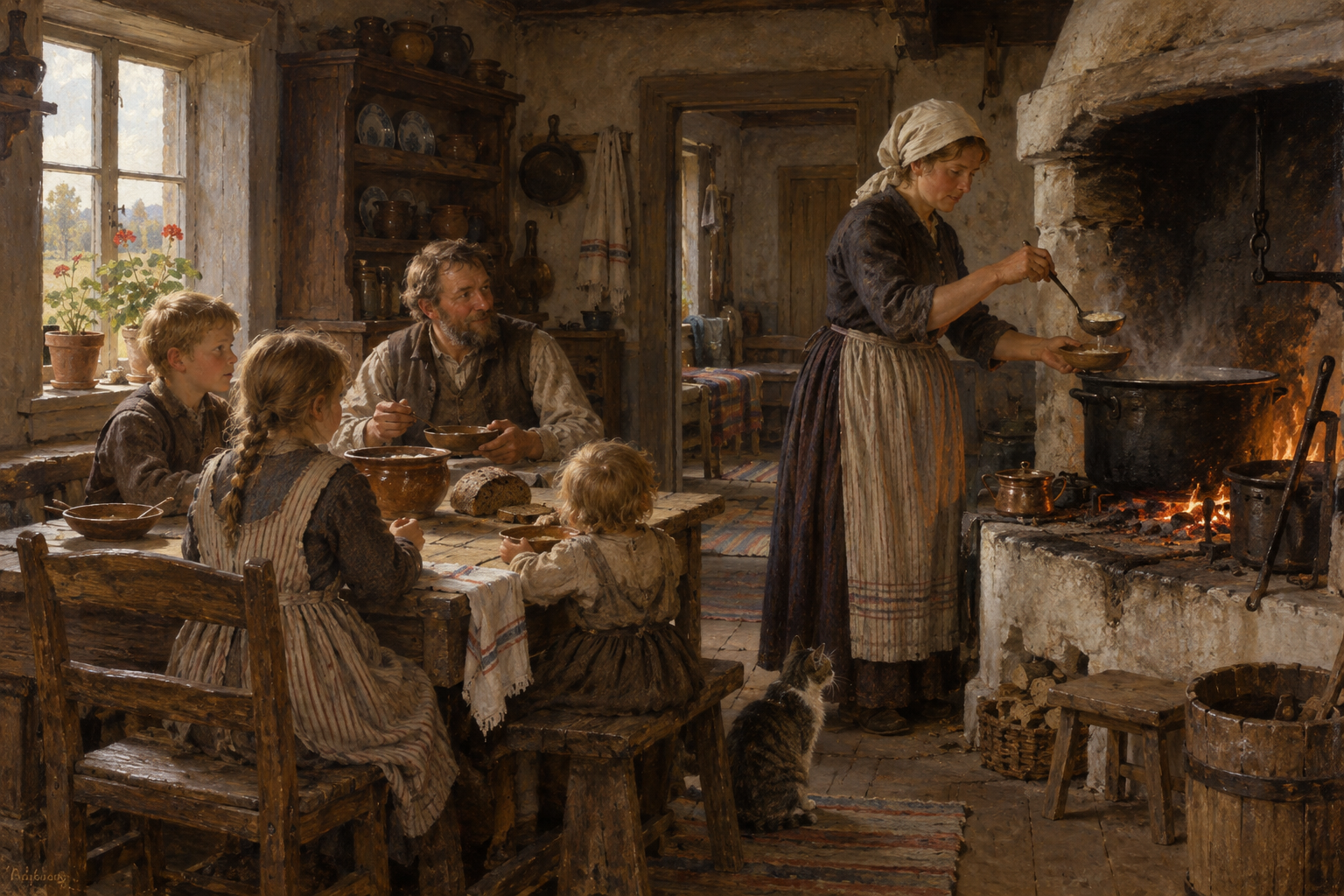
In Sweden, winter stores long relied on methods including drying, salting and fermenting, along with cool storage spaces. As domestic fridges and freezers became more common during the 20th century, the possibilities changed. Cooked food could be kept more flexibly, and the freezer became both a larder and a bank of saved time. The modern packed lunch is part of that development, alongside workplace facilities for storing and reheating food.
Today's talk of meal prep sometimes makes it sound like a new method. At heart, it is familiar household management, now often organised into individual containers. The difference lies more in the rhythm of daily life than in the pot: single-person households, different working hours and families who don't always eat together make ready-portioned meals particularly useful.
There is an important caveat, too. Batch cooking doesn't automatically save money or reduce waste. It only does so if the food actually gets eaten. Eight portions of a favourite dish are often a better investment than twenty portions of something you feel you ought to eat. Start with one pot and get a feel for how much you really use.
Choose food that freezes well
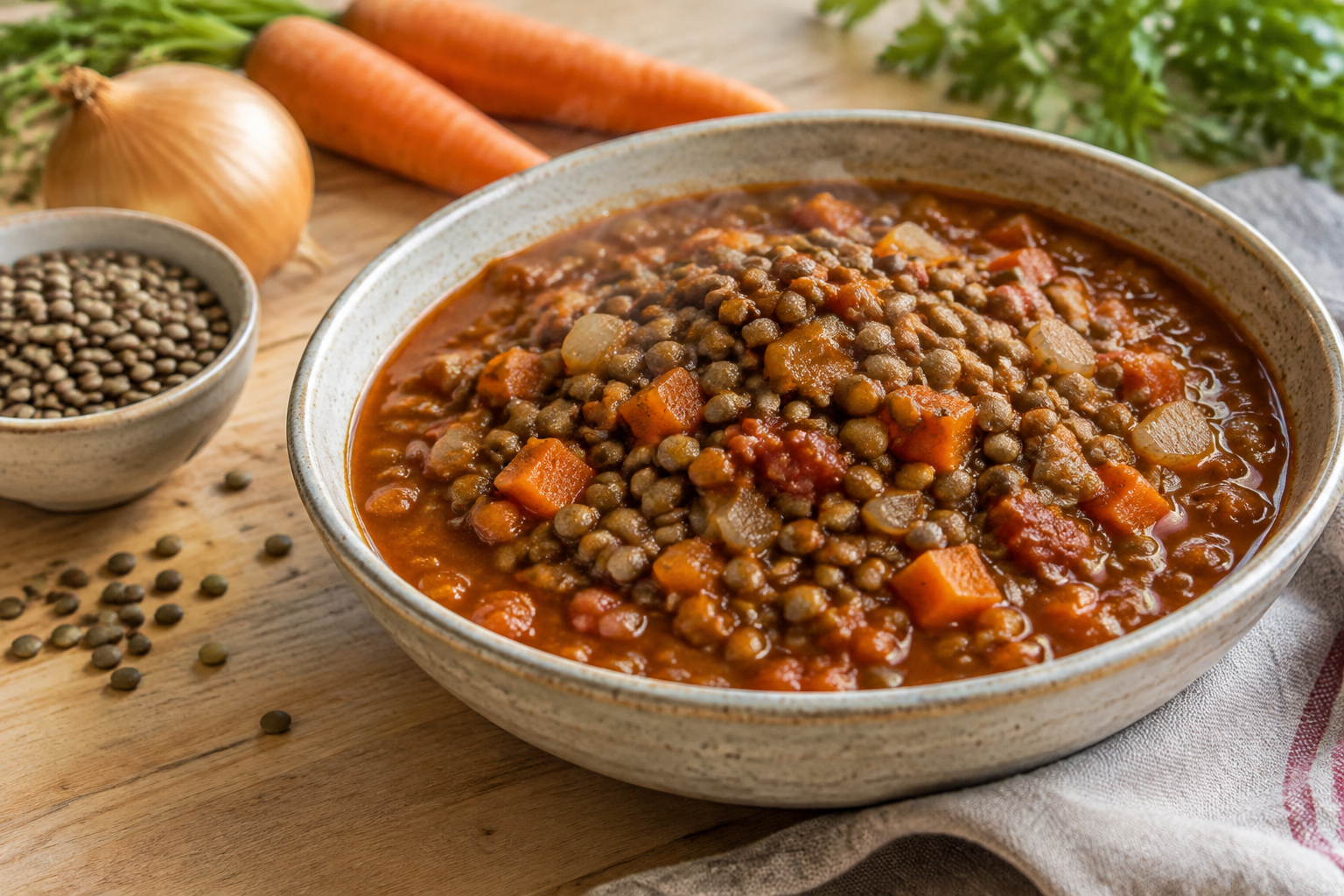
Stews, soups and sauces are forgiving choices because their liquid protects the ingredients during storage and reheating. Tomatoes, onions, root vegetables and pulses also provide a flavour base that is easy to vary. A lentil stew can be rich without being heavy, and it needs neither expensive ingredients nor a long shopping list to feel like a proper dinner.
Freezing still leaves its mark. As water freezes, it forms ice crystals that can damage the structure of ingredients. That is why salad leaves turn limp and cucumber becomes watery after thawing. Chunks of cooked potato can become grainy, while mashed potato or potato blended into a soup often fares better. This is mainly a question of texture, not a blanket ban on freezing particular ingredients.
Cream and other dairy products can cause sauces to split after thawing. Sometimes stirring and gentle heat are enough to bring them back together. In other cases, the result is better if you freeze the stew base and add cream when serving. The same thinking applies to fresh herbs, lemon and crunchy accompaniments: bring them in late, when they can do the most good.
Side dishes deserve a plan of their own. Pasta that is already soft can easily soften further when reheated in sauce. Ideally, cook it separately when you're ready to eat. Bread can be frozen in slices and toasted straight from the freezer. Cabbage and carrots keep well in the fridge and can provide a quick, fresh contrast to the week's hot meals.
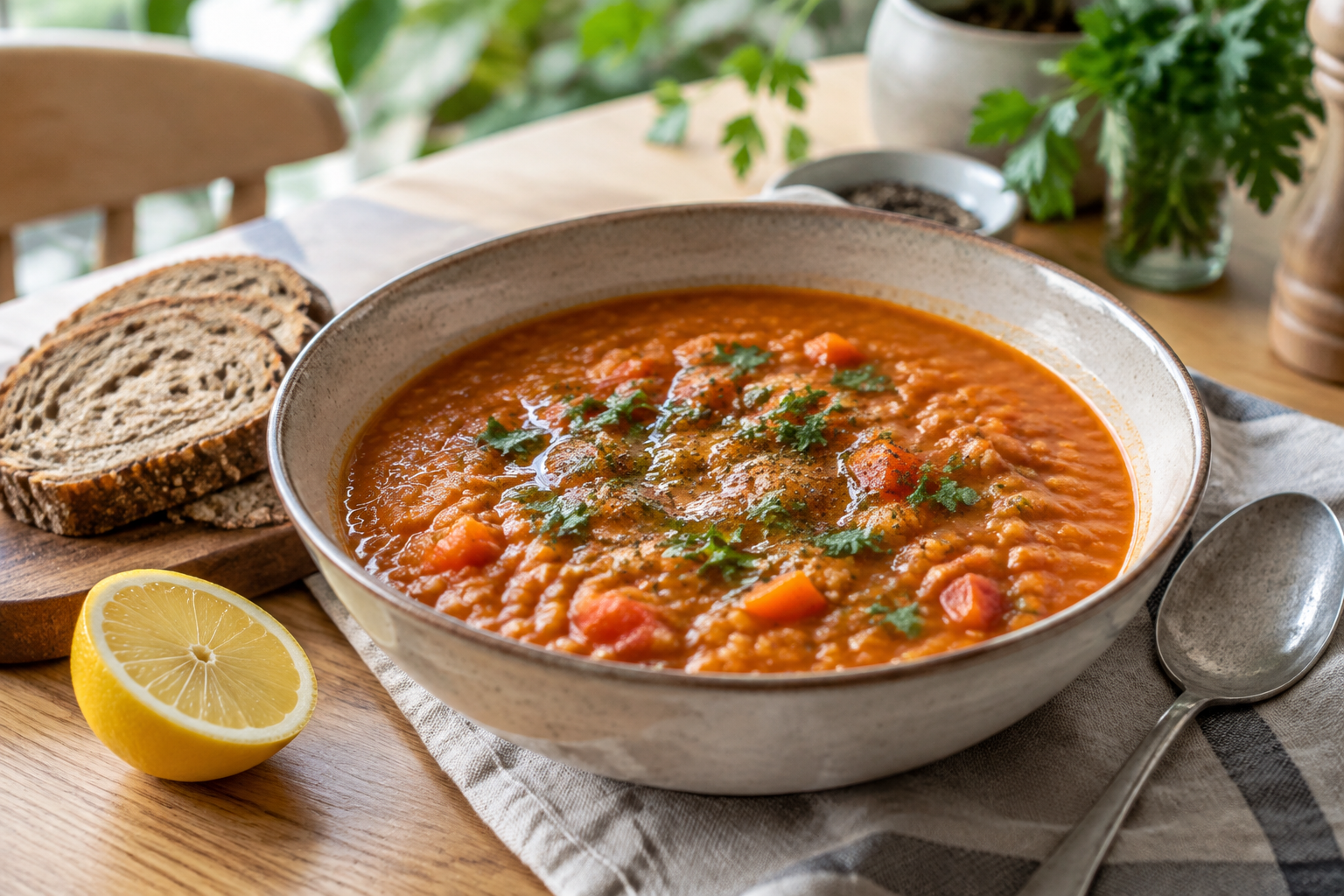
The green or brown lentils in this recipe are chosen because they hold some of their shape. Red lentils can be delicious too, but they break down more readily, giving a different, more uniform texture. The swap is possible, but it won't go unnoticed. Small ingredient choices like these determine whether the food still feels thoughtfully made after a month in the freezer.
A bigger pot, the same care
The most common flavour mistake is to treat batch cooking like an ordinary dinner, simply doubling everything without changing the method. A crowded frying pan loses heat. Mushrooms and mince can then start to stew in their own juices rather than brown. Work in batches when browning matters; a bigger pot doesn't always mean a bigger cooking surface.
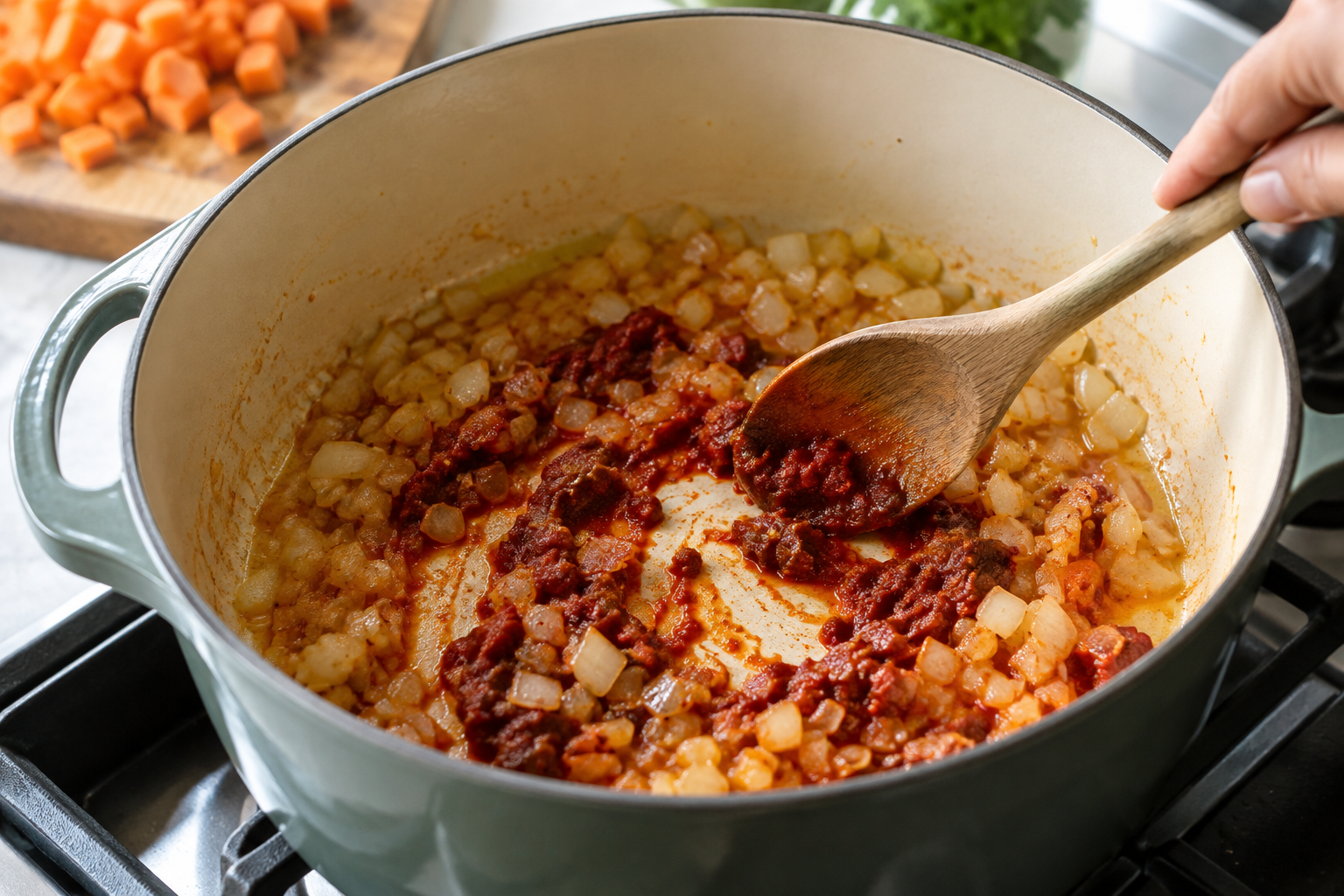
Onions need space and time, too. They should soften without burning on the bottom while the top layer is still raw. Stir thoroughly, adjust the heat and use a pot with plenty of room to spare. A heavy pot helps distribute the heat, but it still needs attention, especially when lentils or a thick tomato sauce start to settle on the bottom.
Not every quantity needs to increase quite so mechanically. Evaporation depends on the width of the pot, the lid and the cooking time. A double batch won't necessarily need twice as much extra water as a smaller one. Chilli and salt also benefit from a thoughtful approach. Taste once the ingredients are fully cooked and the sauce has reached its final consistency.
For a vegetarian stew, properly cooked onions, toasted tomato purée and a little soy sauce do a great deal to build depth. Acidity matters just as much. A splash of vinegar or a little lemon can lift a dish that tastes flat, without the need for more salt. Leave a final seasoning adjustment for reheating if you can, as serving temperature and accompaniments also affect the overall flavour.
Cool quickly—and give your food a home
Once the food is cooked, the work changes. Now it is less about slow, attentive cooking and more about bringing the temperature down. A large pot can stay lukewarm for a long time, even if the outside feels cool. Don't leave it sitting on the hob for hours while you wait for it to become completely cold.
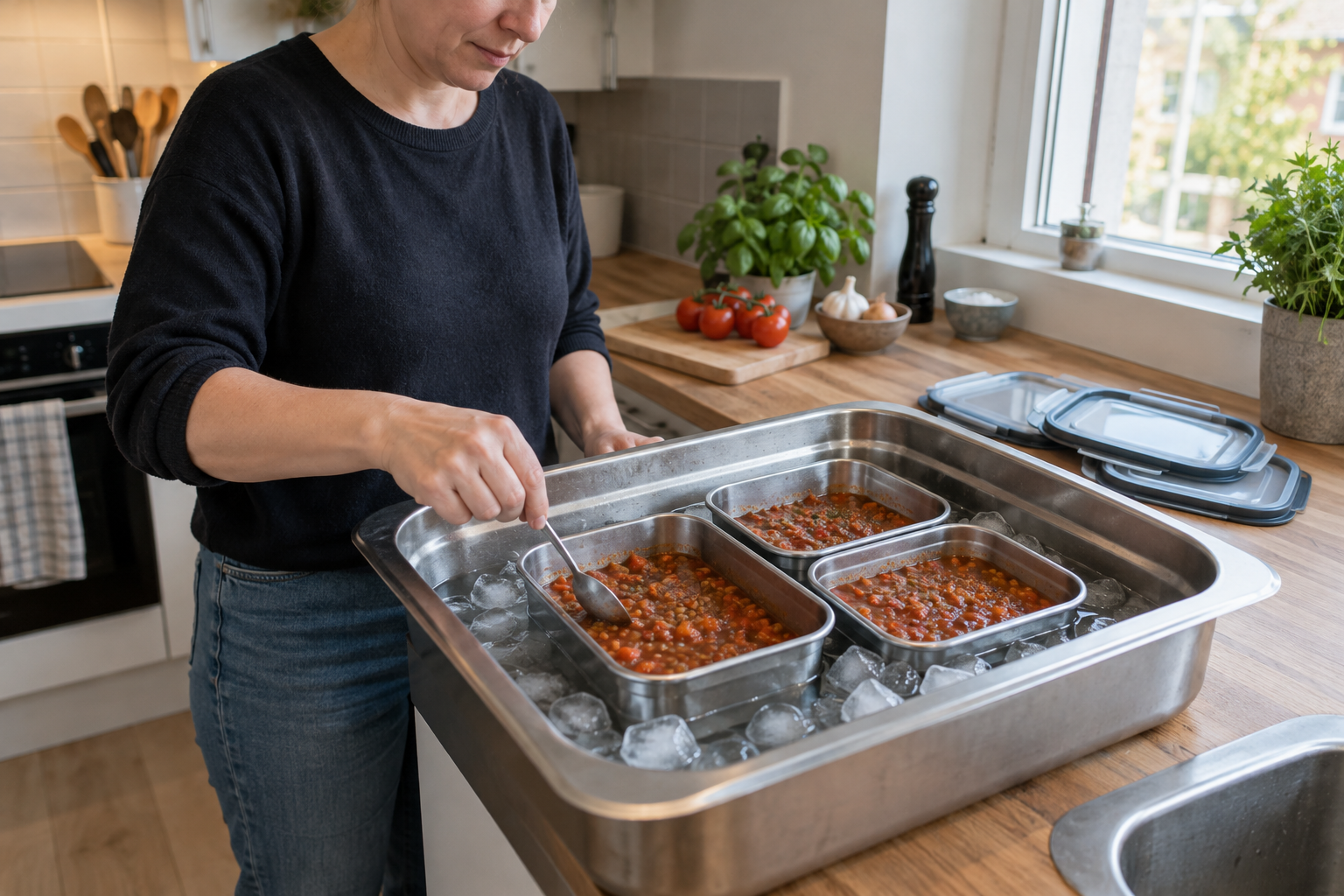
Instead, divide the food between smaller, shallow containers. Setting the pot in a cold-water bath, stirring and changing the water as it warms up, can also speed up cooling. Small amounts of slightly warm food can go into the fridge; avoid putting in a large, hot pot that will warm up the other food. Aim for around +4 °C in the fridge and −18 °C in the freezer.
Freeze the food once it has cooled, ideally on the same day if it is intended for the weeks ahead. Freezing cannot put right food that has been handled poorly. Many microorganisms can survive freezing, so it is never a substitute for good hygiene or rapid cooling. Take particular care with cooked rice and pasta, too—not just meat and fish.
Use tightly sealed, freezer-safe packaging and leave a little room for soups and sauces to expand. Label with the dish's name, the date and, ideally, the number of portions. Two to three months is a practical quality target for many home-cooked stews, not a universal safety cut-off. Fat content, packaging and a steady freezer temperature all affect how well the flavour keeps.
Ideally, thaw in the fridge, or use the microwave's defrost setting and reheat immediately afterwards. Stir during reheating so that the centre gets thoroughly hot too. Food taken to work still needs to be kept chilled; use a cool bag with an ice pack if the journey is long or there is no fridge when you arrive.
One base, several delicious dinners
A prepared meal doesn't have to be complete and unchangeable. Freeze the stew on its own and decide what to serve alongside it later. One day, pair it with cooked wheat grains and parsley; the next, with toast and a spoonful of yoghurt. For a third serving, finely sliced cabbage with lemon is enough to give the same warm base a different character.
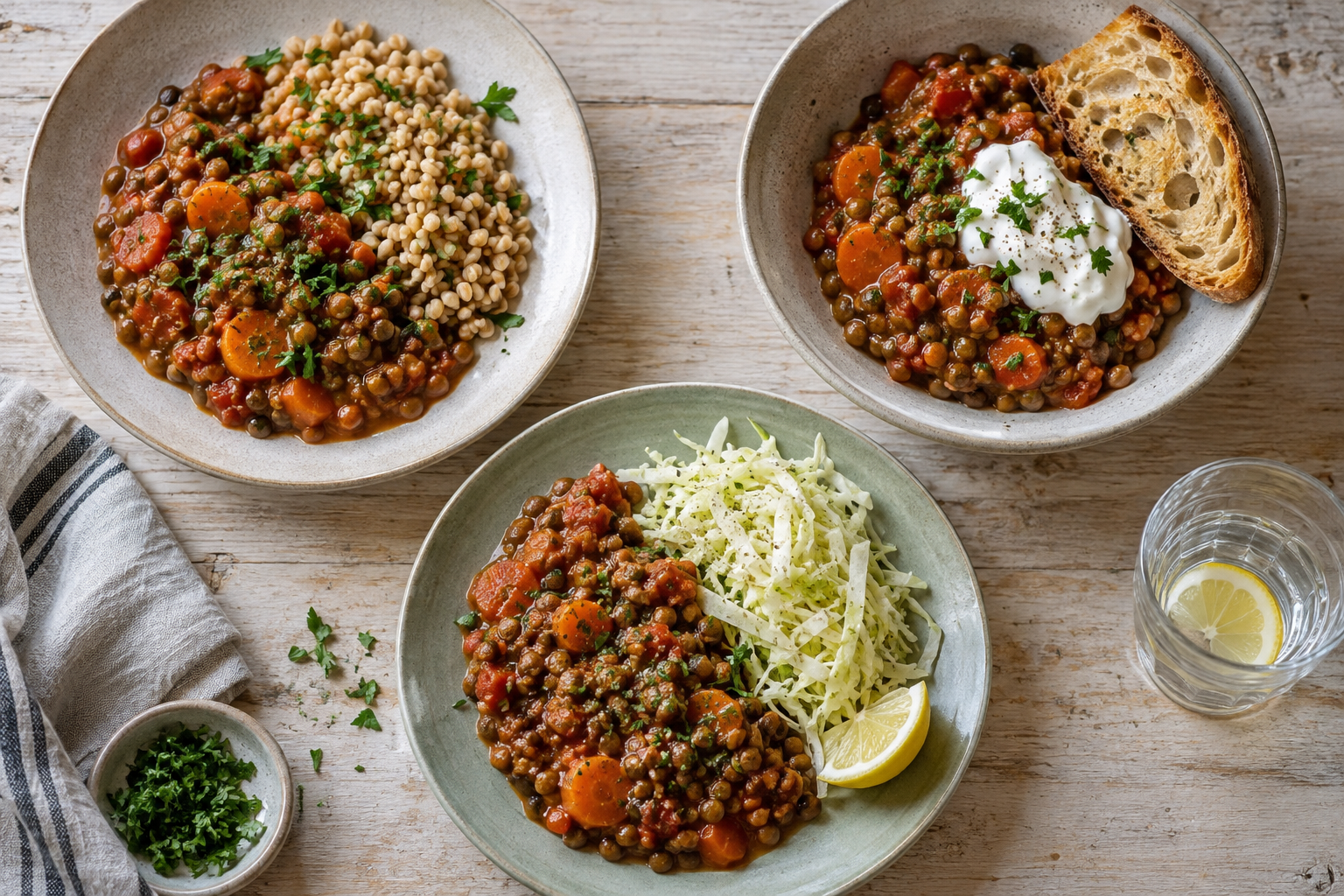
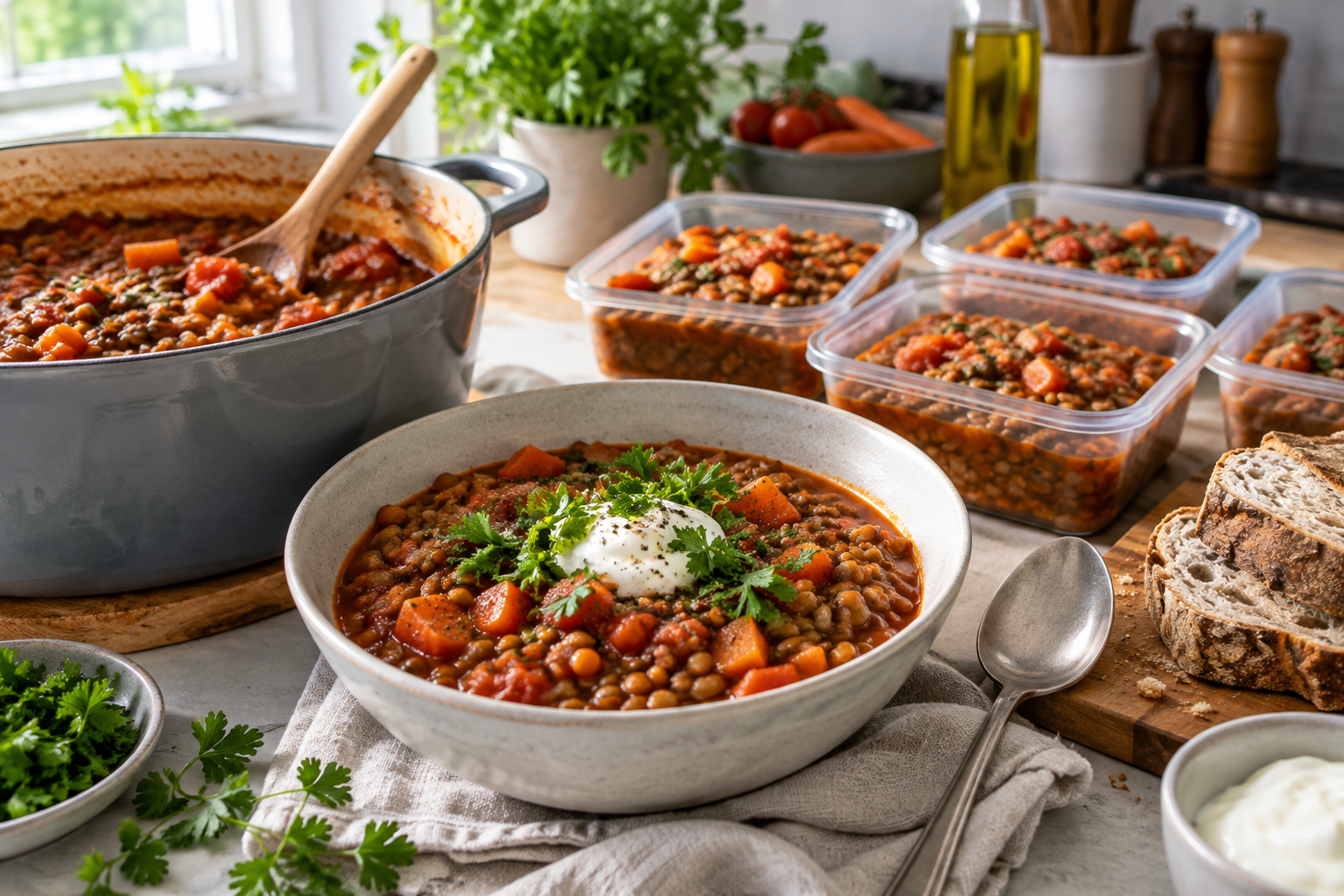
Size your portions for real life, too. One person needs a substantial lunch, another wants a small dinner, and sometimes two containers are needed for a shared meal. Flat packs take up less room and often thaw more quickly than deep containers. A simple list on the freezer door makes it easier to use the oldest food first.
This lentil stew is built for exactly that kind of everyday life: full tomato flavour, tender carrots and lentils with a little bite. Serve some straight away and cool the rest while you're still busy in the kitchen. That way, batch cooking doesn't end with a mountain of washing-up and a vague promise to be more organised, but with something tangible: delicious dinners already well on their way.
Hearty lentil stew with tomato, carrot and thyme
A freezer-friendly everyday stew with full tomato flavour and lentils that retain a little bite. The recipe makes eight generous portions to serve with bread, cooked wheat grains or potatoes. These accompaniments are not included in the quantities.
Ingredients
Method
- 1Peel and chop the onions. Peel the carrots and cut into roughly 1 cm dice. Finely chop the garlic. Rinse the lentils in a sieve and check the cooking instructions on the packet.
- 2Heat the oil in a pot with a capacity of at least 6 litres. Sauté the onions and carrots over a medium heat for 10–12 minutes. Stir frequently; the onions should soften and colour lightly, not burn.
- 3Add the garlic and tomato purée. Cook, stirring, for 2 minutes. Stir in the thyme and paprika and cook for another 30 seconds.
- 4Add the lentils, crushed tomatoes, water, crumbled stock cubes and bay leaves. Bring to the boil, stirring.
- 5Reduce the heat and simmer with the lid ajar for 30–40 minutes, or until the lentils are fully tender but ideally still holding their shape. Stir from the bottom about every five minutes. Add a little water if the stew becomes too thick. Some lentils need longer, particularly in the acidic tomato sauce.
- 6Stir in the soy sauce and vinegar. Season with black pepper, then taste before adding salt, as the stock and soy sauce already provide saltiness. Remove the bay leaves.
- 7Serve the portion you plan to eat straight away with your choice of accompaniment, yoghurt and parsley. Keep the toppings separate from the stew that will be frozen.
- 8Divide the rest between shallow portion-sized containers and cool quickly, ideally using a cold-water bath. Refrigerate, then freeze once the food is chilled. Seal and label with the name, date and number of portions.
- 9Ideally, thaw in the fridge. Reheat in a saucepan over a medium heat with a splash of water, usually for 8–12 minutes for one thawed portion. Stir frequently and check that the entire portion is thoroughly hot. Taste and adjust the seasoning again before serving.
- Freeze a few small portions and a few larger ones. This makes it easier to cater for both lunches and shared dinners.
- Lentil cooking times vary with variety and age. If they still have a hard centre, continue simmering with extra water.
- Aim to use the frozen portions within 2–3 months for good quality. Keep the freezer at −18 °C.
- Vary the flavour when serving with lemon, chilli flakes or a dollop of yoghurt, rather than making the whole batch spicy.
What goes in the glass
- Alcohol-freeSparkling water with lemonThe fresh aroma of lemon and the bubbles lighten the rich stew without adding sweetness.
- BeerPale lager, ideally alcohol-freeGentle maltiness complements the sweetness of the carrots and the toasted tomato purée. Choose moderate bitterness so the acidity of the tomatoes doesn't come across as harsh.
- WineSangiovese with bright acidity and moderate tanninsThe acidity matches the tomatoes, while herbal notes complement the thyme. A lighter style works better than a heavily oaked wine.
Enjoy alcohol in moderation. Alcohol-free options go just as well with the food.
Sources
- Livsmedelsverket, Förvara maten rätt
- Livsmedelsverket, Matsvinn
- USDA Food Safety and Inspection Service, Leftovers and Food Safety
- USDA Food Safety and Inspection Service, Freezing and Food Safety
- Nils-Arvid Bringéus, Mat och måltid (1988)
Ask questions about "Batch cooking for better everyday meals". Answers are based on the magazine's own articles.