A tight budget, a warming bowl
Red lentil soup with carrot, tomato and lemon
Budget food needn't be bland. With red lentils, everyday vegetables and a few well-chosen spices, dinner can be both satisfying and full of flavour – in around half an hour.
 By Lina BergFood editor · European and Nordic cuisines – Italy, France, Spain, Greece and Swedish home cooking
Translated from Swedish with AI assistance.
Go to the recipe ↓Dinner starts with a sizzle
The onion hits the hot oil with a gentle sizzle. On the chopping board lies a carrot, a little crooked and perfectly usable, beside two garlic cloves. In the pan, the tomato purée darkens from bright red to brick red. When the cumin goes in, a warm, nutty aroma fills the kitchen. This is no dinner that calls for deep pockets. It does, however, reward a little attention in those first few minutes.
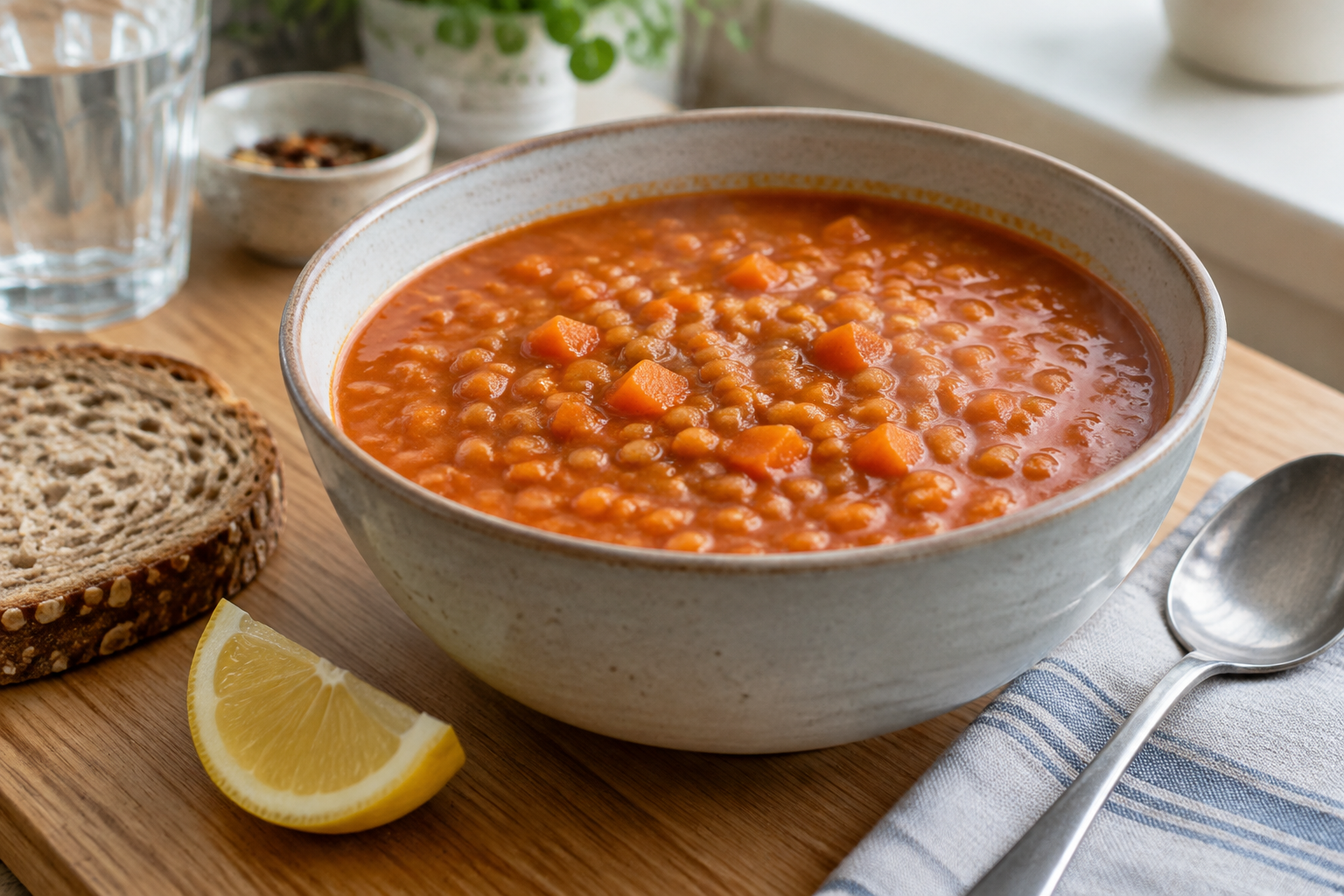
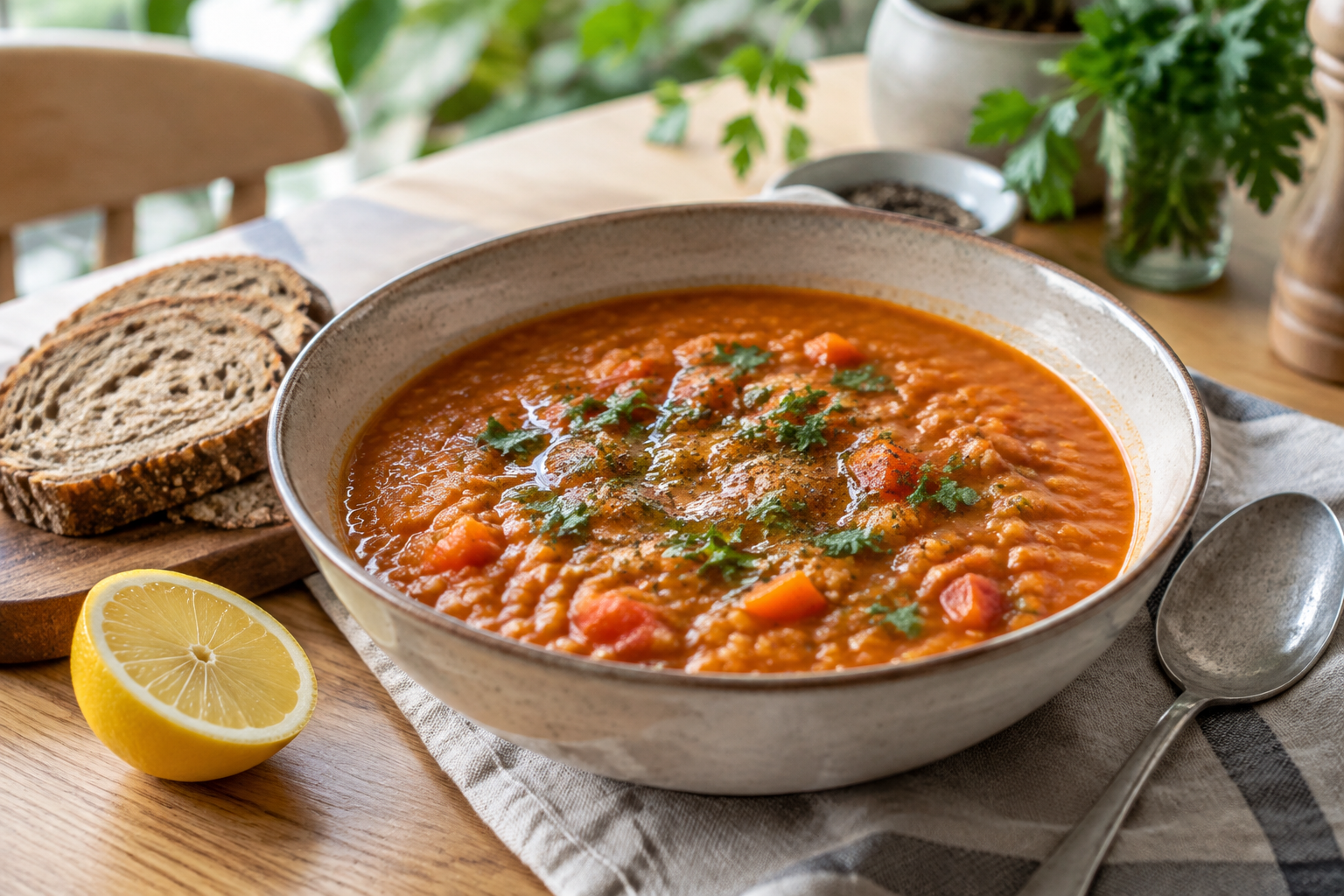
Red lentil soup is one of those reliable everyday dishes: easy to make, simple to vary and kind to both the food budget and the weary cook. The lentils need no soaking, and while the soup simmers there is time to clear the chopping board and lay the table. The result is rich without cream, with sweetness from the carrot, acidity from the tomato and a fresh finish of lemon. Some bread for dipping is often all it needs alongside.
Eating well on a small budget isn't just about finding the cheapest ingredient. The food also needs to get eaten, keep you full and be something you can make again on Thursday when your energy is flagging. That's why this dinner is built around ingredients that will keep in the cupboard and fridge. No delicate garnishes are necessary. No specialist products need to be bought for the sake of a single tablespoon. The flavour should come from the foundations.
An ancient ingredient in today's everyday kitchen
The lentil has a history far older than our modern everyday recipes. It was among the earliest crops cultivated in south-western Asia and is associated with the emergence of farming there. But an ancient ingredient does not mean a particular soup has a single identifiable origin. Lentils have been cooked and seasoned in many ways, in many places, and there is no reason to name a sole inventor of lentil soup.

In Turkey, red lentil soups such as mercimek çorbası have a firmly established place. In South Asia, red lentils, often called masoor dal, feature in a wide variety of dishes. Middle Eastern and European cuisines also have many lentil soups and stews. The seasoning, texture and accompaniments vary. In some kitchens, the soup is passed through a sieve until smooth; in others, the pulses retain more texture. Lemon, chilli, mint or a spiced fat may provide the finishing touch.
This soup is not a reconstruction of any of those traditions. It is a modern everyday version made for ingredients found in Swedish supermarkets, with flavour connections in several directions: red lentils, carrot, tomato, cumin and lemon. It should not be called authentically Turkish or Indian. The point, instead, is to use a tried-and-tested combination of pulses, vegetables and spices, and be clear about what it is.
In Sweden, it fits into an everyday cooking culture where soup is already familiar, from pea soup to vegetable and potato soups. What is newer is the way red lentils have become a practical staple in many homes. They are sold in ordinary supermarkets, stored dry and need no lengthy planning. Their short cooking time makes them especially useful when inexpensive food also needs to be quick. After all, an ingredient that never leaves the cupboard is no bargain.
Flavour comes from getting the order right
The red lentils we usually buy are hulled and often split. This means they cook relatively quickly and readily break down to a soft, thick consistency. Green and brown lentils behave differently: they tend to hold their shape better and usually take longer to cook. They can be used in soup, but are not a straight swap if dinner needs to be on the table just as quickly. Always use the cooking time on the packet as a guide.
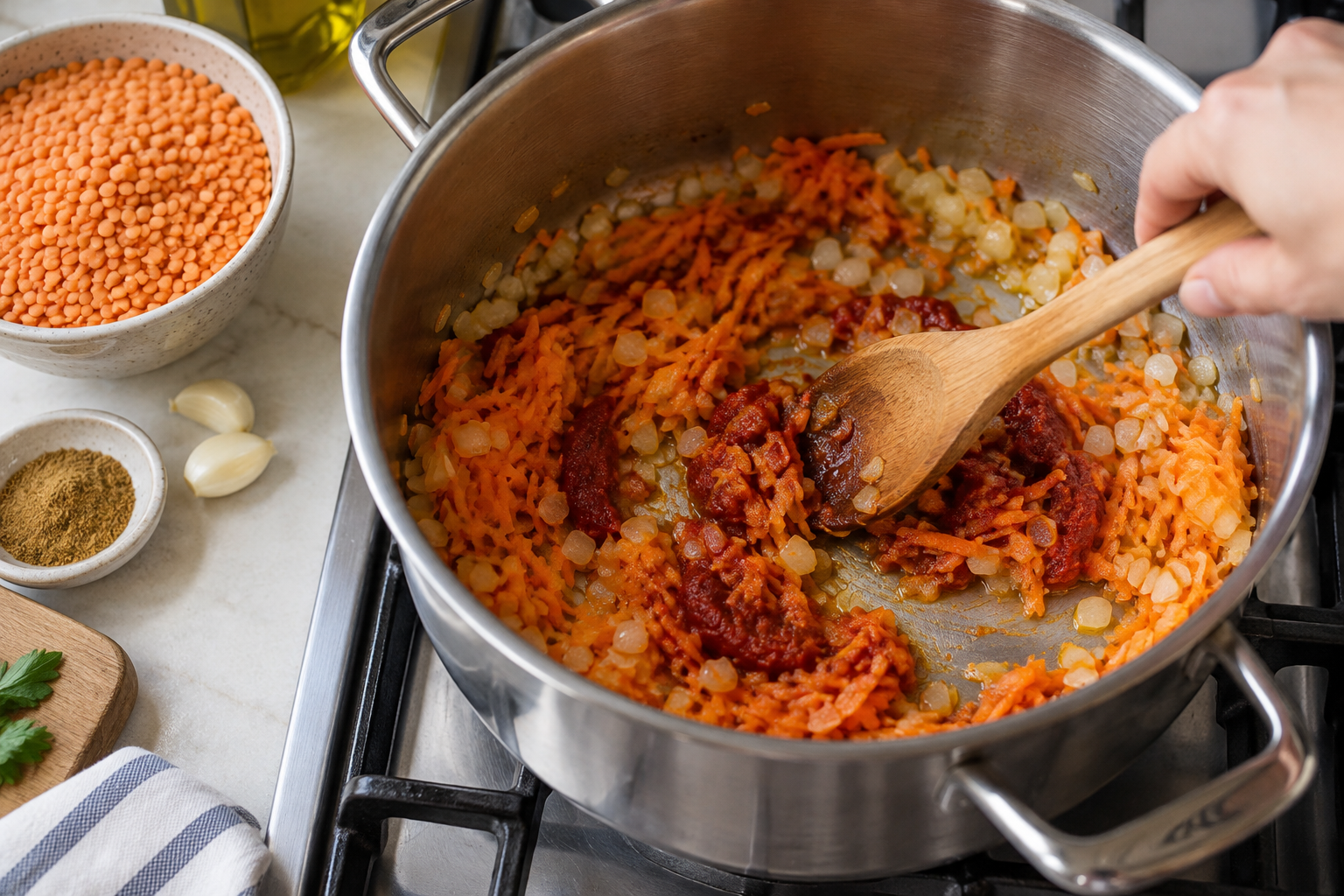
Start with the onion and carrot. The onion should soften and sweeten, not burn at the edges while the rest is still raw. Finely grate the carrot if time is short; it will soften quickly and almost melt into the soup. The tomato purée then gets a brief spell in the hot oil. This gives a rounder, more cooked tomato flavour than simply tipping everything straight into the water. Garlic and ground spices, on the other hand, need very little time in the hot pan.
Here is a common everyday mistake: trying to build flavour simply by adding more stock. That can result in saltiness rather than depth. Instead, let the vegetables, tomato purée and spices do their work first. Stock cubes also vary in saltiness and strength. Start cautiously and taste once the soup is ready. The cumin should bring warmth, not dominate every spoonful; if you dislike it, use a little thyme instead.
Tomato and lemon add acidity, but they needn't go in at the same time as the lentils. Acidic ingredients can slow the softening of pulses. In this recipe, the lentils therefore simmer first in stock with the small amount of tomato purée, while the crushed tomatoes are added later. The lemon is saved until the end. This also makes it easier to get the balance right: taste first, then squeeze in a little at a time. The aim is freshness, not a soup that tastes like a lemon drink.
Texture matters just as much as seasoning. Lentil soup thickens as it stands, because the lentils continue to absorb liquid. So leave the soup a little looser than you initially intended, especially if half of it is destined for packed lunches. A hand blender is convenient but not essential. A few turns of a whisk, or mashing some of the lentils against the side of the pan, will also bring the soup together while leaving a little texture.
More food for your money, less in the bin
Pulses provide protein, fibre and several minerals. They are an important part of a varied diet, but no single soup needs to carry the entire responsibility for how we eat. Serve with wholegrain bread and vary your vegetables throughout the week. The Swedish Food Agency's dietary guidelines highlight pulses as something to eat often, preferably every day. Here they are dinner itself, not a token spoonful on the side.
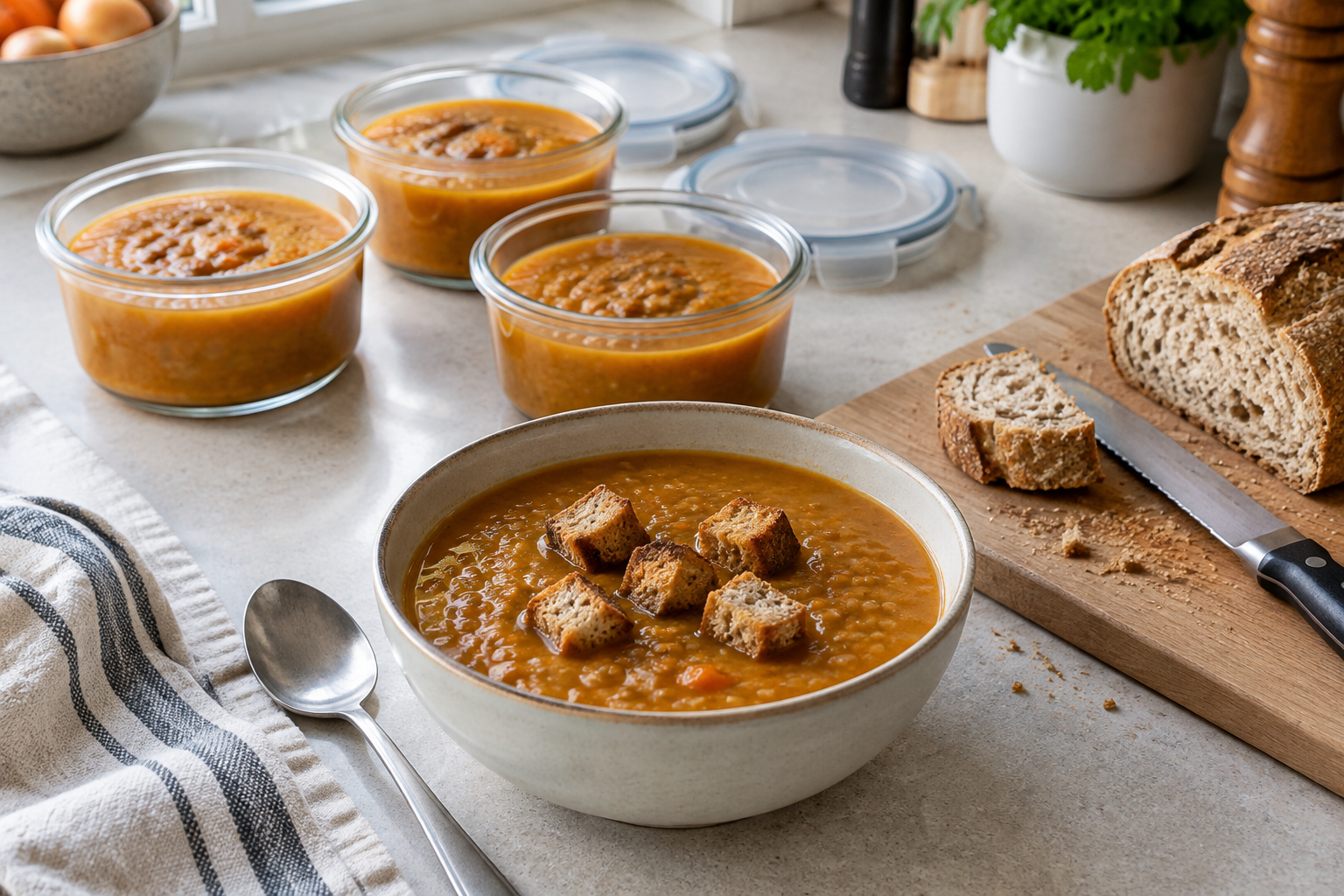
When money is tight, the price per kilo is useful, but only alongside the question of how much cooked food an ingredient will yield. Dried lentils absorb water as they cook. Ready-cooked pulses are convenient, but compare prices by drained weight and number of portions. Buying in bulk can make sense if you actually use the contents. A smaller bag that gets eaten is better than a large stockpile bought on the off chance and then forgotten.
Let the soup's other ingredients reflect what is already at home. A piece of celeriac can replace some of the carrot. A little frozen leaf spinach can be stirred in towards the end and simmered until hot throughout. If you have no lemon, a small splash of vinegar can provide the finishing acidity, though the flavour will be different. Fresh herbs are lovely but not essential. Don't buy a whole pot just for the photograph.
Leftovers can find a new role without becoming an entirely new dish. A thick lentil soup can be thinned for the next day's lunch or served as a loose stew with barley or rice. Bread that has gone stale can be toasted in pieces for a crunchy contrast. Cool leftover soup quickly, ideally divided between smaller containers, and keep refrigerated. Freeze anything you don't expect to eat over the next few days. Label the container so it doesn't become an anonymous red lump.
A pot to gather around
Soup has a particular kind of hospitality. The pot can sit in the middle of the table, the bread can be passed around and everyone can decide whether their bowl needs more lemon or a little heat. For a family with different tastes, the base soup can stay mild with chilli flakes served alongside. Anyone who wants yoghurt can offer it separately. That way, the base stays entirely plant-based and nobody has their dinner dictated by the biggest chilli lover at the table.
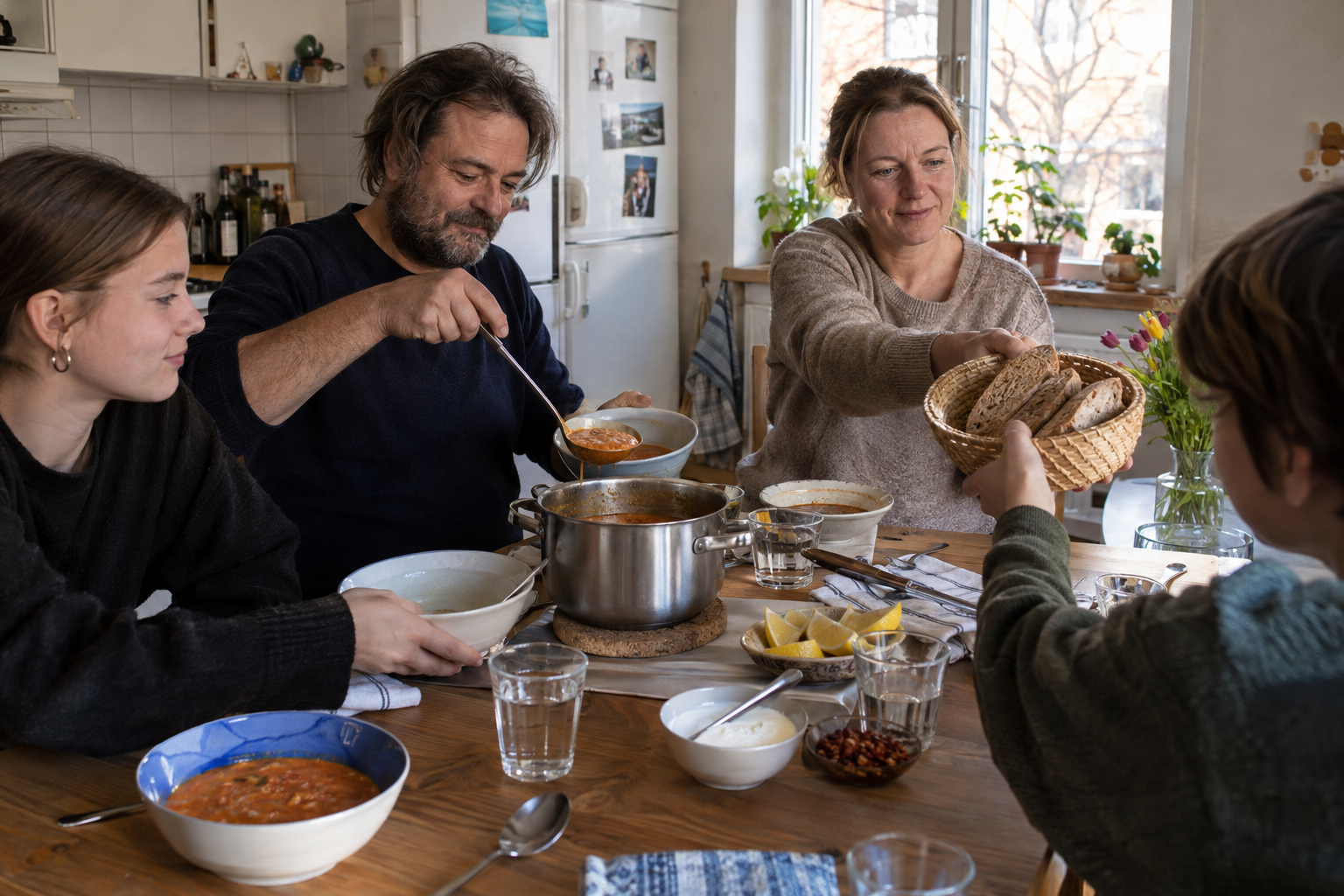
For home cooks in Sweden, the most useful trick is to choose a simple foundation and get to know it. Use the same pan a few times, notice how much water evaporates and taste before adding salt. The recipe below makes four generous portions and needs neither a blender nor advanced techniques. Sauté properly, let the lentils become really soft and adjust the acidity last. When your spoon meets the warm, tomato-red soup, thrift should not feel like a compromise.
Quick red lentil soup with carrot and lemon
A hearty, plant-based everyday soup made with simple cupboard ingredients. Grating the carrot shortens the cooking time, and the tomatoes go in once the lentils have begun to soften. Makes four generous portions served with bread.
Ingredients
Method
- 1Peel and finely chop the onion. Scrub or peel the carrots and coarsely grate them. Peel and finely chop the garlic. Rinse the lentils in a fine-mesh sieve.
- 2Heat the oil in a large saucepan over a medium heat. Sauté the onion and carrot for 5 minutes, stirring, until the onion has softened without browning.
- 3Stir in the tomato purée and cook for 1 minute. Add the garlic and cumin and stir for another 30 seconds or so. Lower the heat if anything starts to stick.
- 4Add the lentils, water and stock cube. Bring to the boil, then simmer with the lid slightly ajar for 10–12 minutes. Stir along the bottom of the pan a couple of times.
- 5Once the lentils have begun to soften, add the crushed tomatoes. Simmer for another 7–10 minutes, until the lentils are completely soft. Older lentils or other varieties may need a few extra minutes.
- 6Whisk the soup lightly if you would like the lentils to be less distinct, or blend part of it with a hand blender. Thin with a little extra water if it is too thick, then bring back up to temperature.
- 7Season to taste with lemon juice, black pepper and salt if needed. Start with the stated amount of lemon juice and add more if the soup needs a little freshness.
- 8Serve straight away in deep bowls with the wholegrain bread. Put out extra lemon and chilli flakes if you have them.
- No cumin in the cupboard? Use 1 tsp dried thyme, or let the tomato, garlic and lemon provide the flavour.
- Replace the lemon with a little cider vinegar or white wine vinegar. Start with 1 tsp and adjust to taste.
- Cool leftovers quickly in smaller containers and refrigerate, ideally at 4 °C. Freeze in individual portions if you like; the soup keeps well in the freezer for around 2–3 months.
- The soup thickens during storage. Add water when reheating and stir until piping hot throughout.
What goes in the glass
- Alcohol-freeCold tap water, perhaps with a slice of lemonThe most budget-friendly choice lets the cumin and tomato shine. Lemon is an optional touch of extra freshness, not something you need to buy specially.
- Alcohol-freeAlcohol-free pale lagerGentle maltiness complements the carrot's sweetness, while the bubbles offer a refreshing contrast to the hearty soup. Choose one with moderate bitterness.
- WineDry, crisp roséFor those who would like wine, bright acidity matches the tomato and lemon, while a light fruitiness complements the warm spices. Keep any chilli mild.
Enjoy alcohol in moderation. Alcohol-free options go just as well with the food.
Sources
- Livsmedelsverket, Kostråd för vuxna (2025)
- Harold McGee, On Food and Cooking: The Science and Lore of the Kitchen (2004)
- Alan Davidson; tredje upplagan redigerad av Tom Jaine, The Oxford Companion to Food (2014)
- Food and Agriculture Organization of the United Nations, Pulses: Nutritious Seeds for a Sustainable Future (2016)
Ask questions about "A tight budget, a warming bowl". Answers are based on the magazine's own articles.