Wild boar – the forest’s pig takes its place at the table
Its return to Sweden, the flavour of game and the path to a wonderfully succulent stew.
Wild boar does not automatically smell of the forest or always taste strongly gamey. Age, cut and handling matter more than many people think. We follow a rediscovered Swedish game meat from the broadleaf woods to the kitchen – with a look at hunting seasons, Trichinella testing and why a stew needs time rather than a rolling boil.
 By Lina BergFood editor · European and Nordic cuisines – Italy, France, Spain, Greece and Swedish home cooking
Translated from Swedish with AI assistance.
Go to the recipe ↓When the kitchen smells of browned meat and apple
There is a sizzle as the first batch of wild boar hits the pot. The butter foams, the edges of the meat take on colour and a roasted aroma rises towards the extractor hood. On the chopping board, onions, thyme and a firm, tart apple wait their turn. A few juniper berries are crushed with the flat of a knife. Not a handful: the meat should speak through the seasoning, not disappear behind the scent of a pine forest.
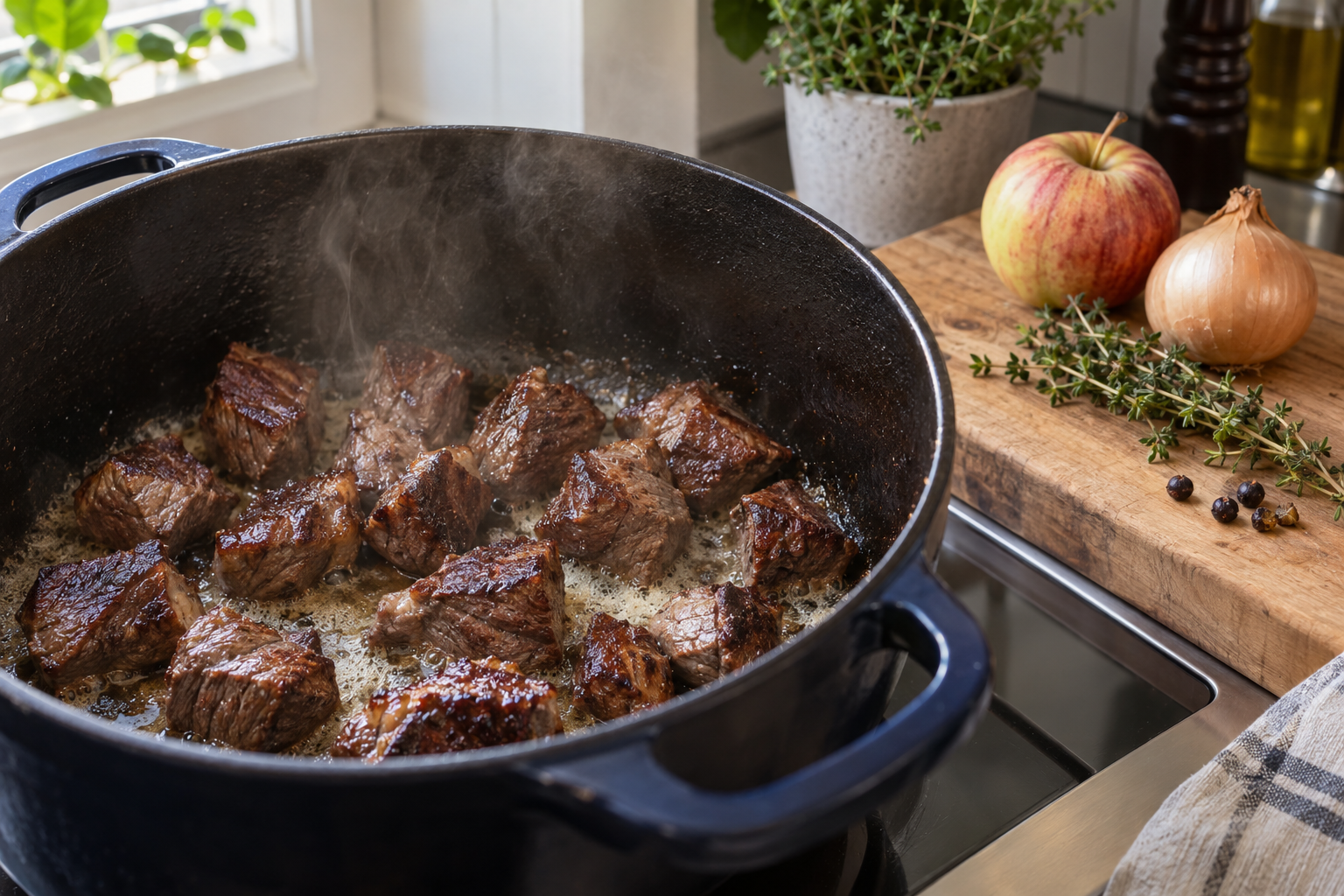
Wild boar is particularly at home in this kind of kitchen, where familiar Swedish home cooking meets an ingredient that still feels unfamiliar to many. We recognise its kinship with pork, but the meat is often darker and leaner than the well-marbled cuts we choose from domestic pigs. It can have a more pronounced, deeper flavour without being overpowering or pungent.
Yet a good meal begins long before the browning. What animal did the meat come from? Is it shoulder or a tender cut from the loin? Has it been handled hygienically and tested for Trichinella? With wild boar, these questions matter at least as much as the choice between cream and stock.
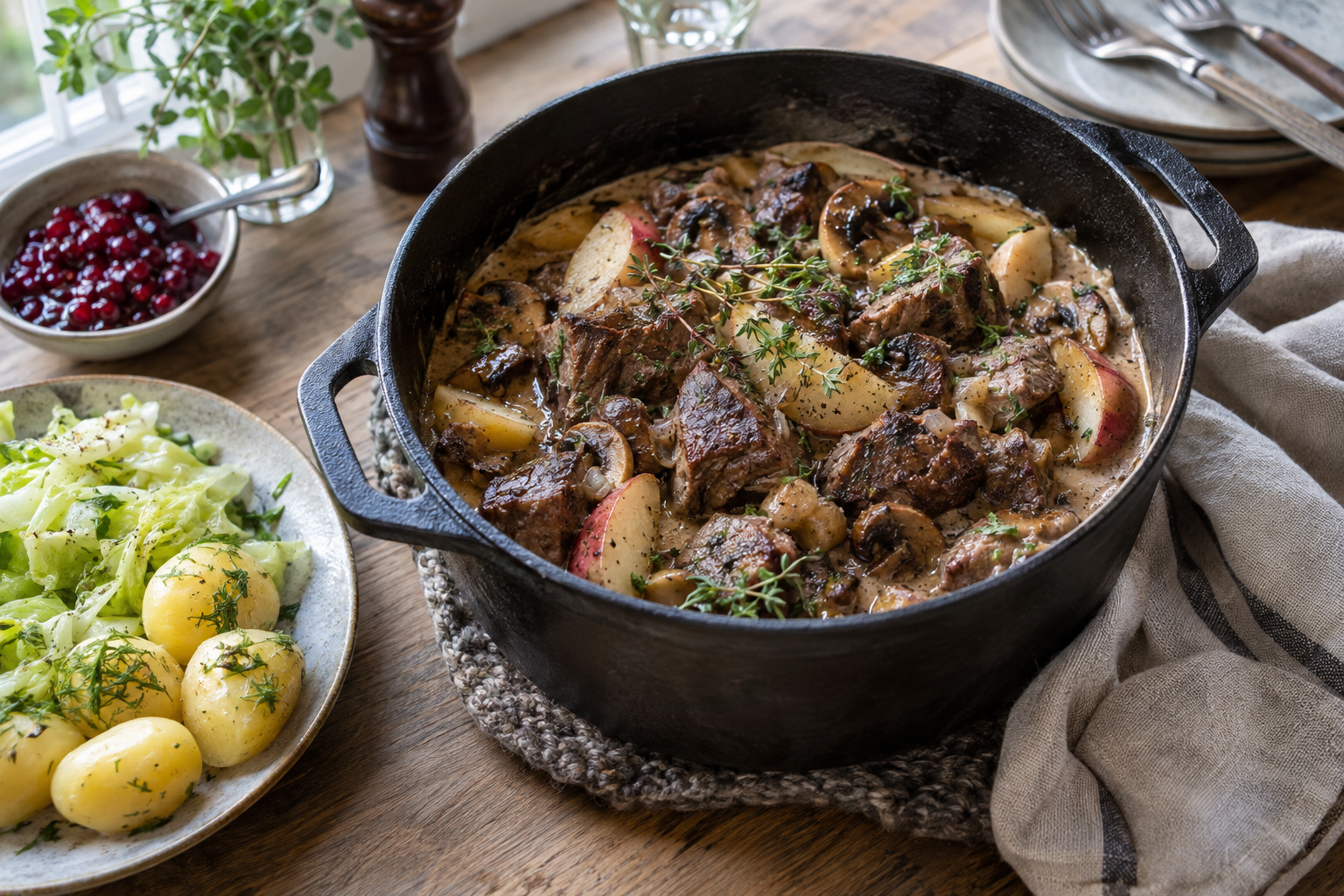
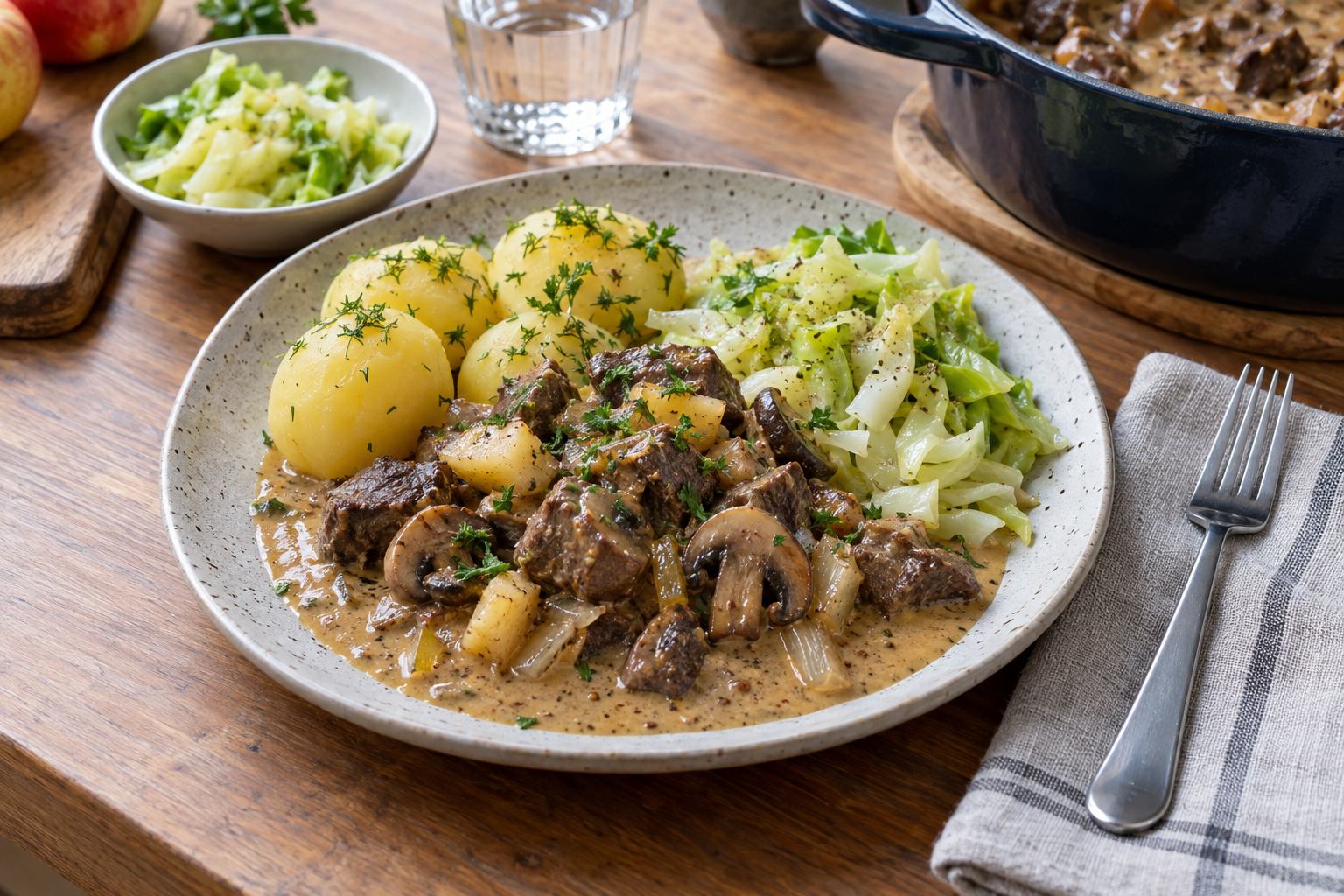
Here, we make a stew with shoulder or neck, mushrooms, apple and mustard. This is not a reconstruction of an ancient dish, but modern comfort food made with an animal whose roots in the Swedish landscape run very deep. Keep the accompaniments simple: boiled potatoes, cabbage and something refreshing in the glass.
An ancient animal with a new Swedish story
Wild boar is no recent introduction to Europe’s wildlife. The species, Sus scrofa, has a natural range across much of Europe, Asia and North Africa. Human movement has also brought wild boar and feral pigs far beyond that range. The map is therefore misleading if every population is described as native.
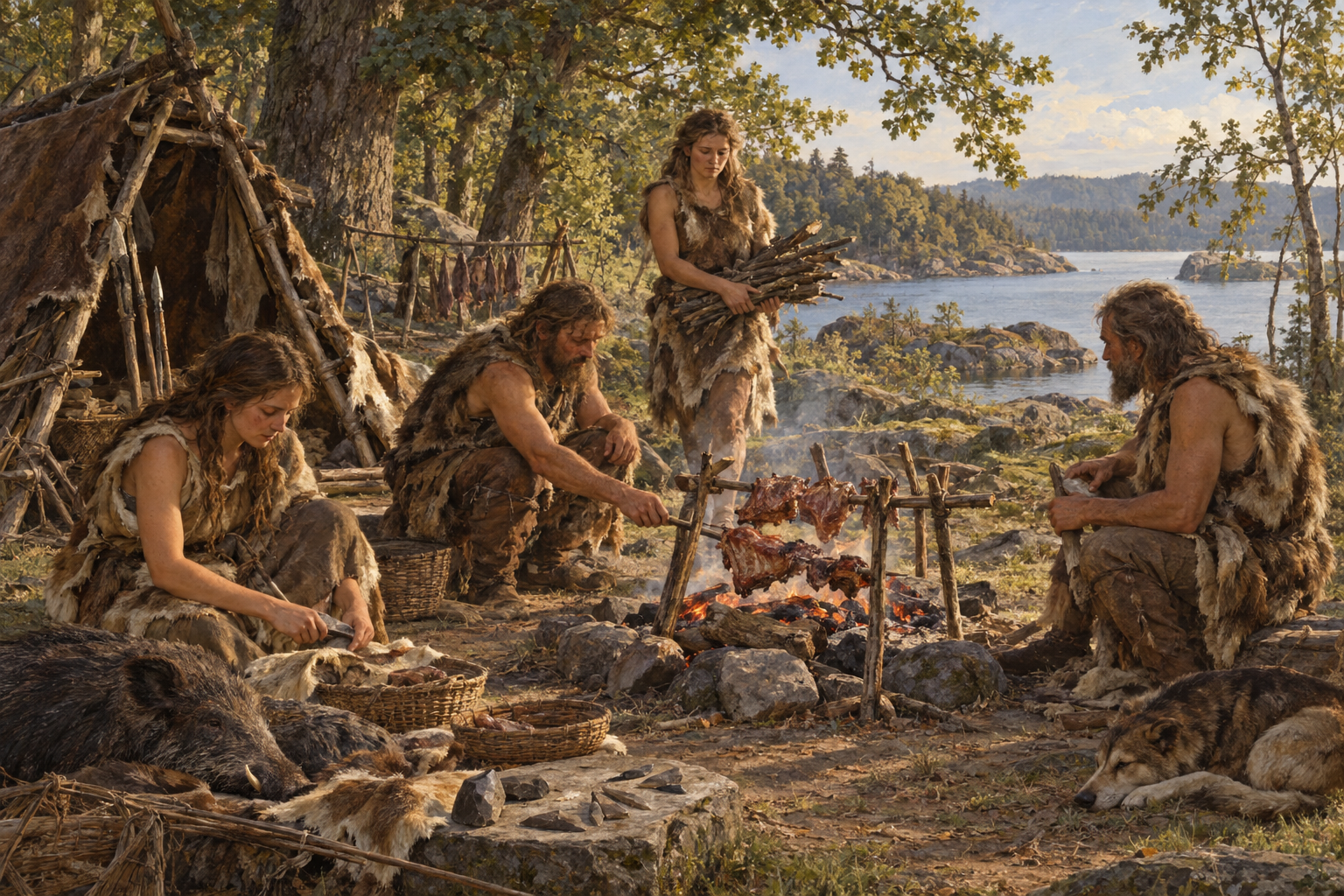
Wild boar became established in Sweden after the last ice age. They belonged to landscapes rich in broadleaf woodland, where they could find shelter and energy-rich food. Archaeological finds show that people hunted and ate wild boar in prehistoric times. The animal is also closely bound up with the history of the domestic pig: our farmed pigs descend from wild boar, although domestication and later crossbreeding make for a more complicated story than a single, straight family line.
Sweden’s wild population disappeared in historical times and is generally considered to have been wiped out by around the end of the 17th century. Later attempts to reintroduce the animals did not establish a continuous population lasting into our own time. Instead, today’s comeback gathered pace with wild boar that escaped from enclosures in the latter part of the 20th century, particularly during the 1970s and 1980s.
In 1987, the Swedish parliament decided that wild boar should once again be regarded as part of Sweden’s fauna. Since then, the population has grown and spread, though not evenly in every place or every year. Hunting, food availability, disease and local conditions all affect numbers. An up-to-date local picture therefore often tells us more than a single figure for the whole country.
Among oak-covered hills, fields and hunting parties
Today, Swedish wild boar are found mainly in Götaland and Svealand. Their distribution is uneven, with sparser populations further north. The animals thrive where sheltered woodland meets farmland. An oak-covered hillside can provide acorns, a dense plantation a daytime resting place, and a field a tempting meal. Wild boar are omnivores, eating roots, acorns, crops and animal matter, among other things.
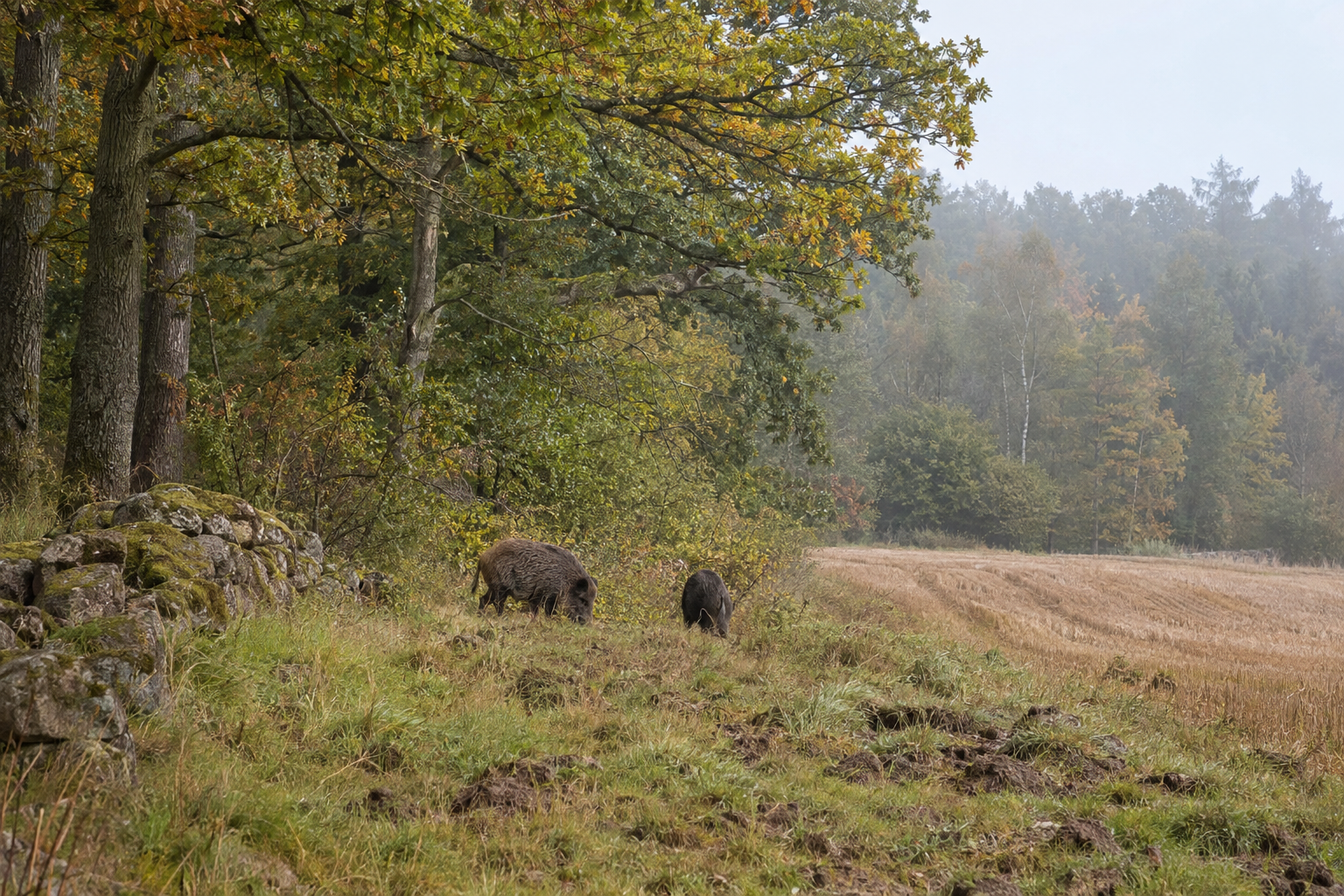
That same knack for finding food makes them troublesome for farmers. Their rooting can damage both crops and land, and wild boar are also involved in road accidents. Making use of the meat is therefore part of a wider wildlife management issue, not simply a chance to put something exciting on a restaurant menu. At the same time, hunting needs to respect the animals and their social lives.
Sweden’s general hunting season runs from 1 April to 31 January for wild boar over a year old. Animals under a year old may be hunted year-round. Sows accompanied by piglets are protected throughout the year. The young-animal category refers to age, not simply a small animal; judging this requires knowledge and care. The rules are set out in the Hunting Ordinance and should always be checked before a hunt, along with any local decisions and restrictions.
Nor do dates on a calendar give just anyone the right to hunt. Hunting rights, a hunting permit and other requirements apply, and special rules may come into play for activities such as protective hunting. For the home cook, the practical conclusion is simpler: buy the meat through an established retailer or from a hunter who meets the rules for direct supply. Ask for clear information about the cut, handling and Trichinella test.
The flavour: more than pork with a hint of game
The difference from domestic pork often shows first in the colour and texture. Wild boar meat is generally darker, and many cuts have less intramuscular fat than the equivalent meat from fatty domestic pig breeds. But there is considerable variation. A young animal can yield mild, delicate meat, while an older one often has a stronger flavour and muscles richer in connective tissue.
Diet can affect the composition of the fat and the meat’s sensory qualities, but that does not mean you can reliably taste which roots or acorns an animal has eaten. The idea that all game tastes directly of its woodland is more appealing than accurate. Sex, age, condition, chilling and storage also play a part. Sexually mature males can develop boar taint, just like uncastrated domestic pigs.
Good wild boar should not need marinating to make it palatable. An acidic marinade can flavour the surface, but it cannot replace good meat or proper cooking. Meat with an unusual, unpleasant smell should not be rescued with juniper and wine. Ask the seller if something seems wrong.
Above all, match the cooking method to the cut. Shoulder, neck and shank contain connective tissue that softens with long, moist cooking. Loin and fillet are tender to begin with and can easily dry out in the same slow-cooked dish. Mince works well in patties and meatballs, ideally with a little extra fat if it is lean. Treating all wild boar alike is a surer route to failure than choosing the wrong spice.
Safe meat and gentle heat
Wild boar can carry Trichinella parasites. The meat should therefore have been tested for Trichinella with a negative result before it is eaten. Do not rely on looking at the meat, smoking it at home or letting the freezer do the job: some Trichinella can survive freezing. Testing is a basic safety measure, not a quality stamp that makes all other hygiene unnecessary.
Bacteria and other pathogens also need to be taken seriously. Keep raw meat separate from ready-to-eat food, clean hands and utensils, and do not leave the meat sitting somewhere warm unnecessarily. Hepatitis E virus is another reason to be meticulous about heating it thoroughly, particularly liver and products containing liver. A Trichinella test tells you nothing about the presence of these pathogens.
Meat from animals shot with lead ammunition also requires care. The wound channel and enough of the surrounding meat must be cut away in line with Swedish Food Agency guidance. This should be done before the meat reaches the pot or mincer. Do ask how the meat has been trimmed; lead fragments do not cook away.
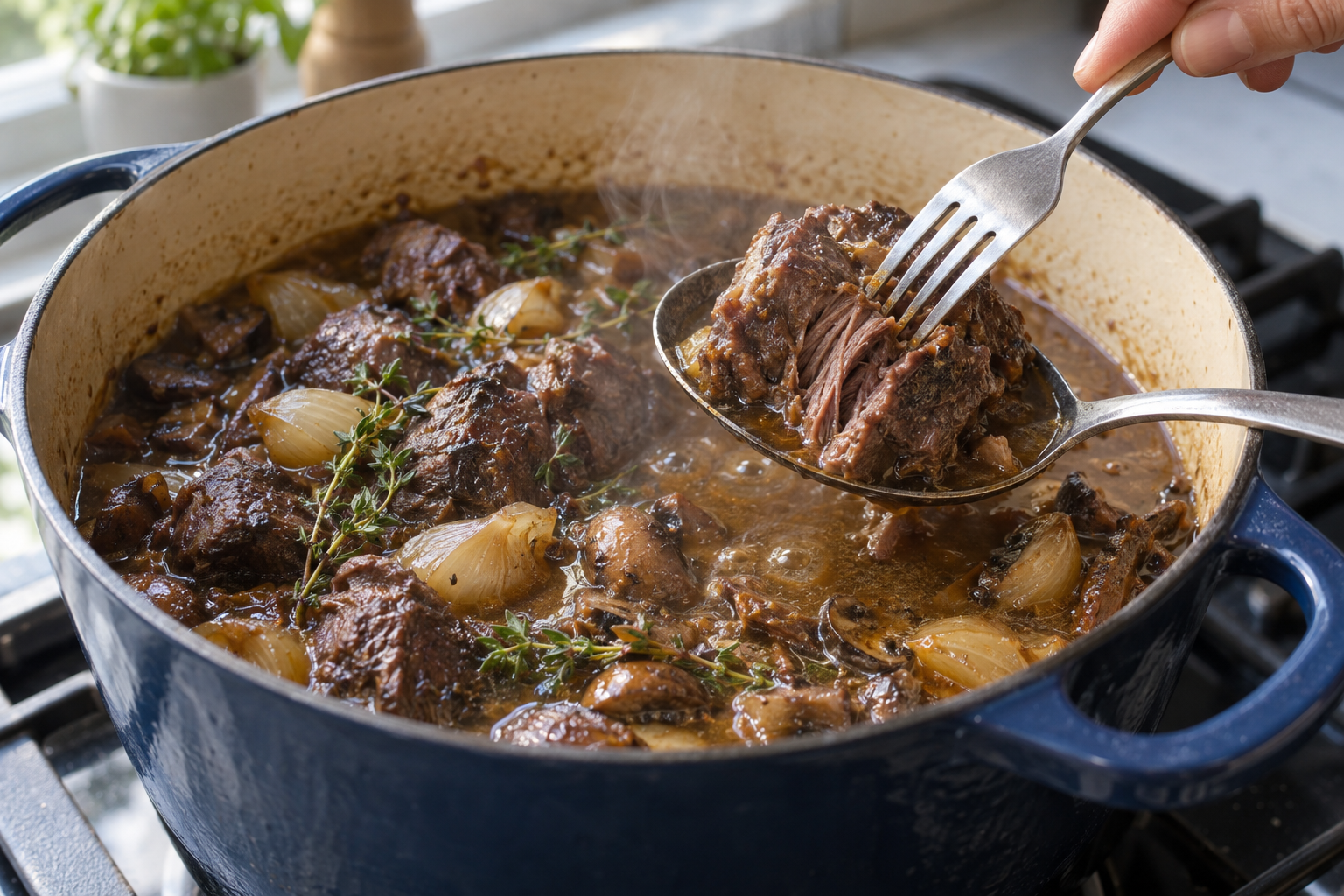
In this dish, the meat simmers for a long time and is heated through. The stew should bubble gently, not boil furiously. At first, the pieces may feel firm and unyielding; then the connective tissue gives way and a fork slides in more easily. The time varies with the animal’s age and the size of the pieces. Let tenderness, rather than the clock alone, decide when the stew is ready. More heat is rarely the answer to a tough slow-cooked stew; more time may be.
A place in everyday home cooking
Wild boar need not be reserved for hunting dinners with silver candlesticks. It is equally at home in a packed lunch, a meat sauce for pasta or a hearty Sunday stew. The mushrooms, lingonberries and cream sauces of Sweden’s game tradition work beautifully, but acidity and vegetables are needed to keep the plate from feeling heavy. Apple, mustard and lightly cooked cabbage bring both freshness and bite.
For those who do not know a hunter, frozen meat may be available from game dealers, farm shops or some food shops. Availability varies. Frozen meat is no second-best choice if it has been handled and stored properly. Thaw it slowly in the fridge on a dish that catches the juices, and pat the surface dry before browning.
At home, a few simple decisions make a big difference. Buy shoulder or neck for the recipe below, brown it in small batches and choose a stock that is not too salty. Fry the mushrooms separately so they take on colour rather than simply boiling. Add the apple towards the end if you want to keep little tart pieces in the sauce.
The stew is ideal for making a day ahead. Cool it quickly in smaller containers, refrigerate and reheat thoroughly before serving. Adjust the seasoning only once the sauce is finished: a little mustard or apple cider vinegar can lift a stew that already has enough salt. This is where wild boar finds its place at the table – not as a curiosity, but as good food, cooked with care.
Wild boar stew with apple, mushrooms and mustard
Modern Swedish comfort food, with shoulder or neck simmered in stock until tender. Use meat that has tested negative for Trichinella and has been handled and trimmed correctly. Cooking time varies with the meat; allow for older animals needing longer.
Ingredients
Method
- 1Trim any tough membranes from the meat and cut it into roughly 3 cm pieces. Pat dry with kitchen paper. Peel and cut the onions into wedges, and chop the garlic.
- 2Heat the oil and 2 tbsp butter in a heavy-based casserole over a medium-high to high heat. Brown the meat in three batches, allowing about 3–4 minutes per batch. Transfer to a plate. Lower the heat if the butter threatens to burn.
- 3Reduce the heat to medium. Cook the onions in the casserole for about 5 minutes; add a splash of water if the base becomes too dry. Add the garlic and tomato purée and cook for another 1 minute.
- 4Return the meat and its juices to the casserole. Sprinkle over the flour and stir thoroughly. Gradually pour in the stock, stirring and scraping up the browned bits from the base. Add the juniper berries, bay leaves, thyme, salt and pepper.
- 5Bring to the boil, then immediately reduce the heat. Cover and simmer very gently for 1.5–2.5 hours, until the meat is almost tender. Stir occasionally. Add a little water if the liquid reduces too much; it should come roughly level with the meat.
- 6Cut up the mushrooms and cook them in a dry frying pan over a medium-high heat until the liquid they release has evaporated. Add 1 tbsp butter and fry for another 4–5 minutes, until browned.
- 7Core the apples and cut them into chunky pieces. Add the mushrooms and apple to the casserole along with the cream and mustard. Simmer for another 15–20 minutes, until the meat is completely tender and the apple is soft. If the meat is still tough, let it simmer longer before adding the apple.
- 8Meanwhile, boil the potatoes in lightly salted water for about 20 minutes. Cut the cabbage into large pieces and boil or steam for 4–6 minutes, until tender but still with a little bite.
- 9Remove the bay leaves and any juniper berries you can find. Season the stew to taste with apple cider vinegar, salt and pepper. If the sauce is thin, simmer uncovered for a few minutes. If it is too thick, loosen with a little water. Serve with the potatoes and cabbage.
- Do not use fillet or loin for this slow-cooked stew; these lean, tender cuts can easily dry out before the sauce is ready.
- For a gluten-free stew, omit the flour, check the stock and, if needed, thicken towards the end with cornflour mixed with cold water.
- This is ideal for making a day ahead. Cool quickly in smaller containers and store at around 4 °C. Eat within 3–4 days or freeze.
- Pork shoulder works well if wild boar is unavailable, but may become tender sooner. Start checking the texture after about an hour.
What goes in the glass
- Alcohol-freeDry alcohol-free apple ciderThe apple acidity freshens up the cream sauce and echoes the fruit in the stew. Choose a less sweet version so the drink does not dominate.
- BeerAmber ale with moderate bitternessToasty malt notes complement the browned meat and mushrooms. Moderate bitterness brings balance without making the mustard and juniper taste harsh.
- WineFresh Pinot NoirBright acidity and relatively soft tannins suit the often lean meat, while the wine’s berry and earthy notes work beautifully with the mushrooms.
Enjoy alcohol in moderation. Alcohol-free options go just as well with the food.
Sources
- Naturvårdsverket, Vildsvin
- Svensk författningssamling, Jaktförordning (1987:905), bilaga 1 (1987, med senare ändringar)
- Statens veterinärmedicinska anstalt, Trikiner
- Livsmedelsverket, Bly i viltkött
- Livsmedelsverket, Hepatit E-virus
- IUCN Red List of Threatened Species, Sus scrofa
Ask questions about "Wild boar – the forest’s pig takes its place at the table". Answers are based on the magazine's own articles.