Cajsa Warg – far more than making do with what you have
Lemon, butter and kitchen know-how in wealthy 18th-century households
Her name became synonymous with Swedish homemaking, yet Cajsa Warg’s cooking was neither simple nor particularly frugal. Behind the slogan coined by posterity stands a skilled professional who taught her readers to judge ingredients, manage their stores and cook with both care and splendour. We follow her to the cooking pot – and make a modern chicken fricassee in her spirit.
 By Arvid HolmFood historian · Historic dishes, old cookbooks and eating habits through the ages
Translated from Swedish with AI assistance.
Go to the recipe ↓Lifting the lid
A lid is lifted from a pot. The steam carries the aroma of chicken stock, and on the worktable lies a lemon, soon to lend both the perfume of its zest and the sharpness of its juice. Someone is working butter and flour together; someone else tends the fire. Our imagined glimpse of a wealthy Stockholm kitchen in the mid-18th century begins here, with busy hands and heat, rather than at the dining table. This is a plausible scene, not a documented meal in Cajsa Warg’s household. But it brings us close to the world her cookbook describes.
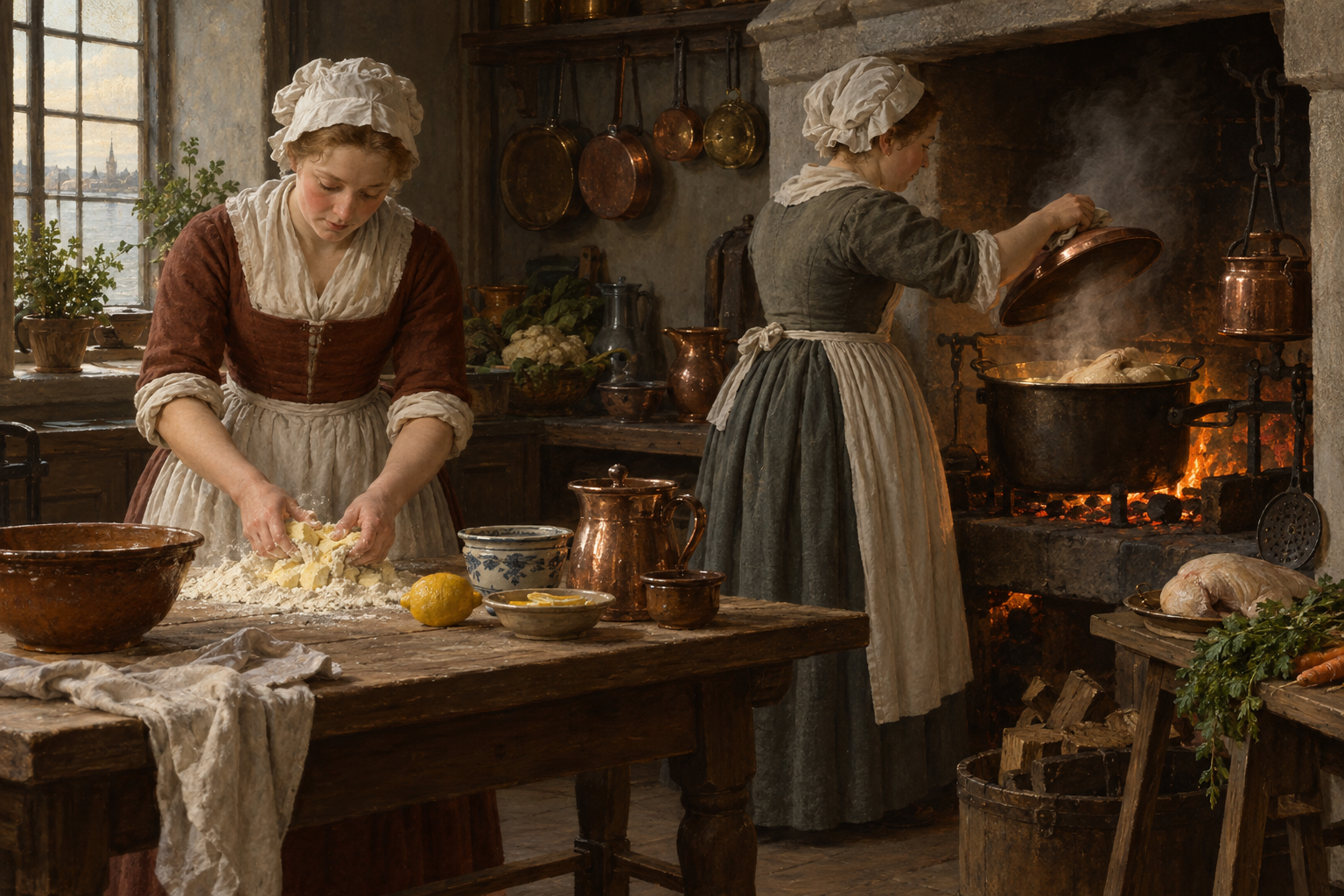
Here, cooking is work that calls for judgement. Firewood must be ready, water carried in and ingredients dealt with before they spoil. The fire has no numbered dial. A cooking pot is moved closer to the embers or further away, and the cook must understand the difference between a gentle simmer and a rolling boil without the help of a digital thermometer.
When Anna Christina Warg, known as Cajsa, published Hjelpreda I Hushållningen För Unga Fruentimber in 1755, she put much of this knowledge into words. The book covers far more than everyday dinners: baking, preserving, drinks and dishes for a table supported by both money and labour. It reveals a kitchen that is practical and lavish at once. This is also where her true appeal lies: in the combination of a sure hand, rich flavours and close attention to ingredients.
The woman behind the name
Cajsa Warg was born in Örebro in 1703 and died in Stockholm in 1769. She worked as a housekeeper in wealthy households, including that of the Klinckowström family. That background matters. Her authority came not from some romantic notion of a self-taught homemaker in a little cottage, but from experience of running a household where food was part of both everyday organisation and social display.
A housekeeper might have to oversee purchases, stores, servants and meals. The cookbook gives us a glimpse of the knowledge this required, but it is no diary. We should therefore be wary of treating every recipe as a dish she personally served on a particular occasion. It tells us more reliably about her culinary repertoire and her readers’ anticipated needs than about individual dinners.
Nor was she Sweden’s first cookbook author. Her predecessors included Susanna Eger, whose Swedish cookbook appeared in 1733. Warg was thus writing within an established tradition, but her book enjoyed an unusually long afterlife through new editions and an enduring place in Swedish food culture.
The fact that the title addresses young women tells us something about how household knowledge was distributed and passed on. Yet we should not confuse the intended reader with everyone who actually stood over the pots. In a larger household, several people might put that knowledge into practice. Behind the finished meal were hands whose owners have rarely been named in the historical record.
Famous advice she never wrote
Paradoxically, the best-known thing associated with Cajsa Warg is not a recipe but the saying “Use what you have”. It does not appear in her cookbook. Putting it in quotation marks and presenting it as her own advice makes the story simpler, but also inaccurate. Posterity has created a catchy summary and then allowed it to replace the person.
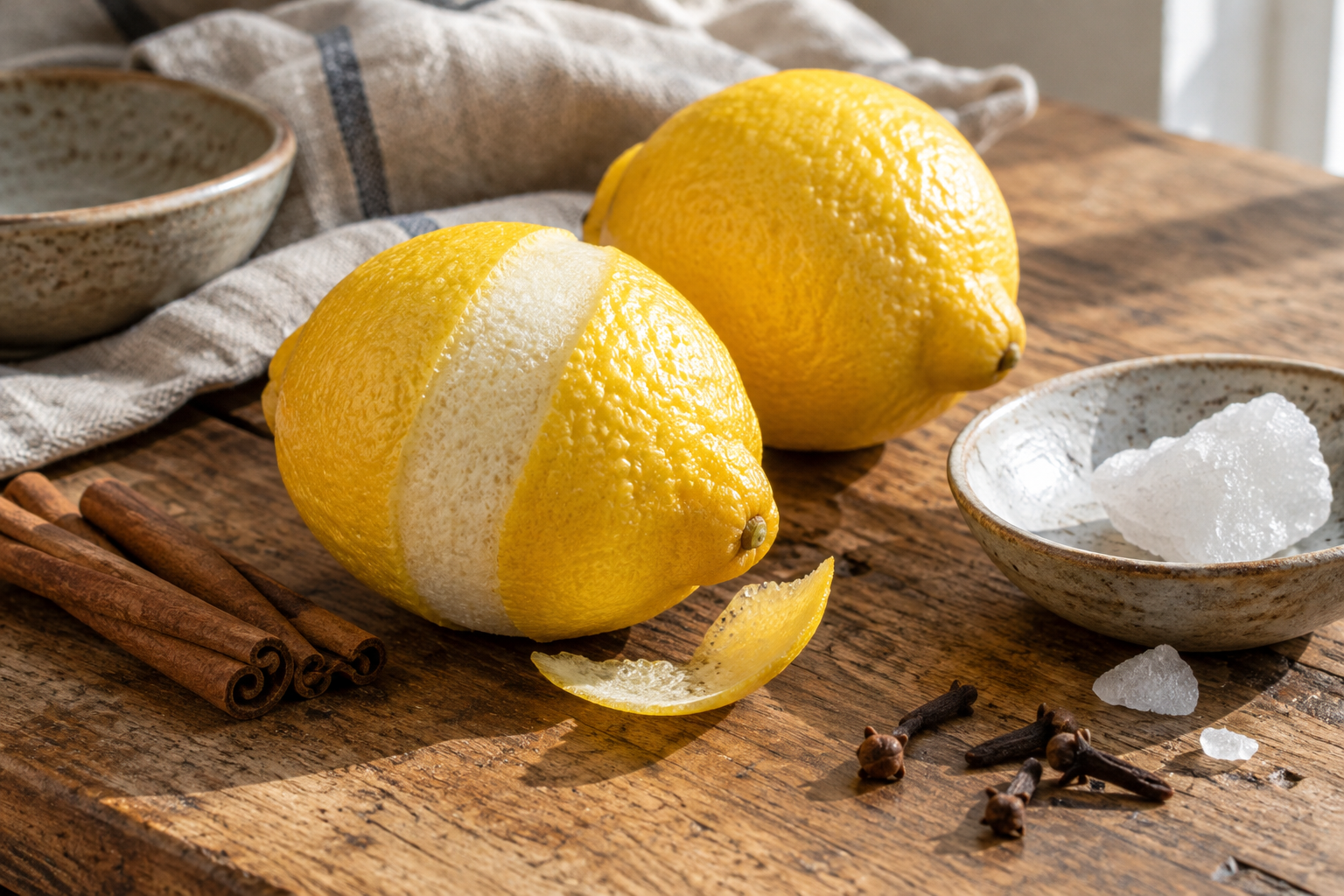
Of course, cooks adapted in the past. Season, availability and the quality of ingredients always had to shape what could be made. But Warg’s book can hardly be summed up as an invitation to substitute whatever happens to be in the pantry. Many dishes depend on specific ingredients and precise techniques. Knowledge is what makes variation possible, not indifference to the result.
Her cooking is also considerably more international than the popular image of her suggests. French culinary terms and techniques sit alongside Nordic ingredients and the household’s need to make food keep. Lemons, spices and sugar reveal trading links far beyond Sweden. That does not mean everyone could eat this way. Imported goods also testify to differences in resources and to trade routes that could be tied to colonial economies.
A cookbook, then, is no neutral picture of what an entire country ate. Warg’s work reveals above all the possibilities and ambitions of a well-resourced household. For many other people, grains, porridge, bread and simpler accompaniments were far more central than refined dishes. Her book opens a door to the 18th century, but not to every Swedish kitchen.
Fricassee: gentle flavours with a bright edge
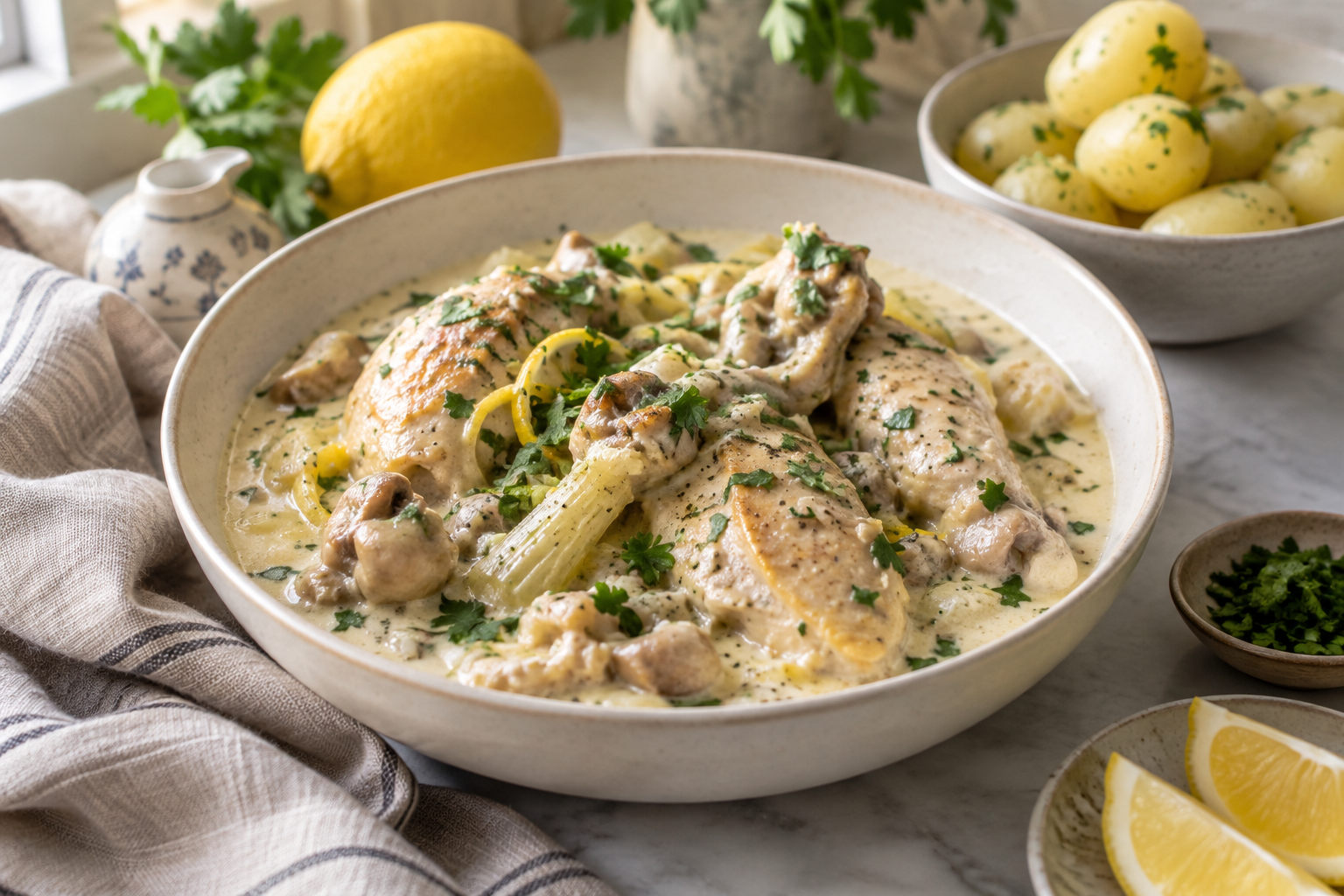
To approach that world, we have chosen a poultry fricassee in a white sauce. Fricassees belong both to the repertoire of Warg’s cookbook and to a broader European cuisine with a strong French influence. She did not, in other words, invent the dish’s basic idea. Here, meat is cooked gently and brought together with a sauce, rather than given the deeply browned surface that defines so many modern chicken dishes.
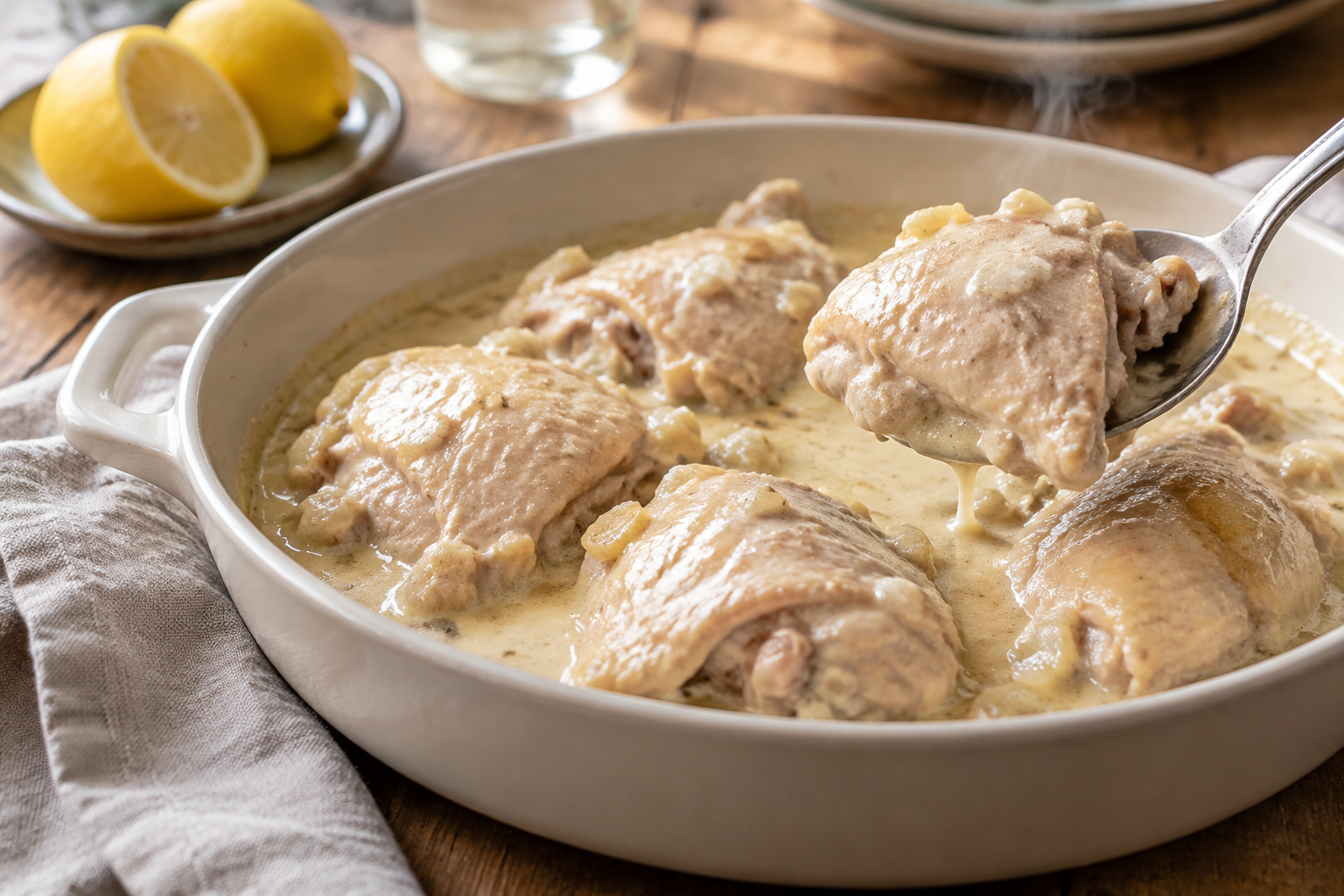
The appeal lies in the contrast. Stock gives depth, butter rounds out the flavours and lemon brings them into focus. Mild food need not be timid food. On the contrary, balance is especially noticeable when there is no deep browning, chilli or smokiness to take over. Too much flour makes the sauce heavy; too little acidity can leave it tasting flat.
The recipe card is a freely adapted modern reconstruction of this style of cooking, not a verbatim rendering of any single Warg recipe. We use chicken thighs, a readily available cut that stands up to simmering better than breast fillets. An older stewing hen produces a different, often fuller-flavoured stock but needs considerably longer to cook. The Swedish name hönsfrikassé, or hen fricassee, lives on even when home cooks choose a young chicken.
Cream and egg yolk give our sauce a velvety finish. Once the yolk has been added, the sauce must be heated gently, not brought to a rolling boil. This is a classic example of what the brief instructions in older cookbooks sometimes assume: the reader must already recognise how a sauce behaves. In today’s recipes, that knowledge needs to be spelt out, or historical cooking becomes unnecessarily difficult to get right.
At the table – and in memory
So what did dinner taste like in Cajsa Warg’s day? There is no single answer. Class, place, season and occasion all mattered greatly. In wealthy settings, several dishes might be set out within the same service, rather than following our familiar sequence of an individually portioned starter, a main course and a dessert. The table displayed the host’s resources as much as it satisfied hunger.
Even so, we should be careful not to turn every historical meal into a lavish spectacle. Cookbooks often preserve things considered worth explaining, including more labour-intensive food. They do not automatically tell us how often each dish was cooked or how large the portions were. Between book and table lies a gap that historians cannot always fill.
Today, many people encounter Cajsa Warg as a name, a saying or a symbol of old-fashioned cooking. This can obscure the fact that her book was also a tool for change: knowledge that could be read, taught and passed on beyond a single kitchen. The printed recipe made experience more accessible, even if putting it to use still required money, equipment and practice.
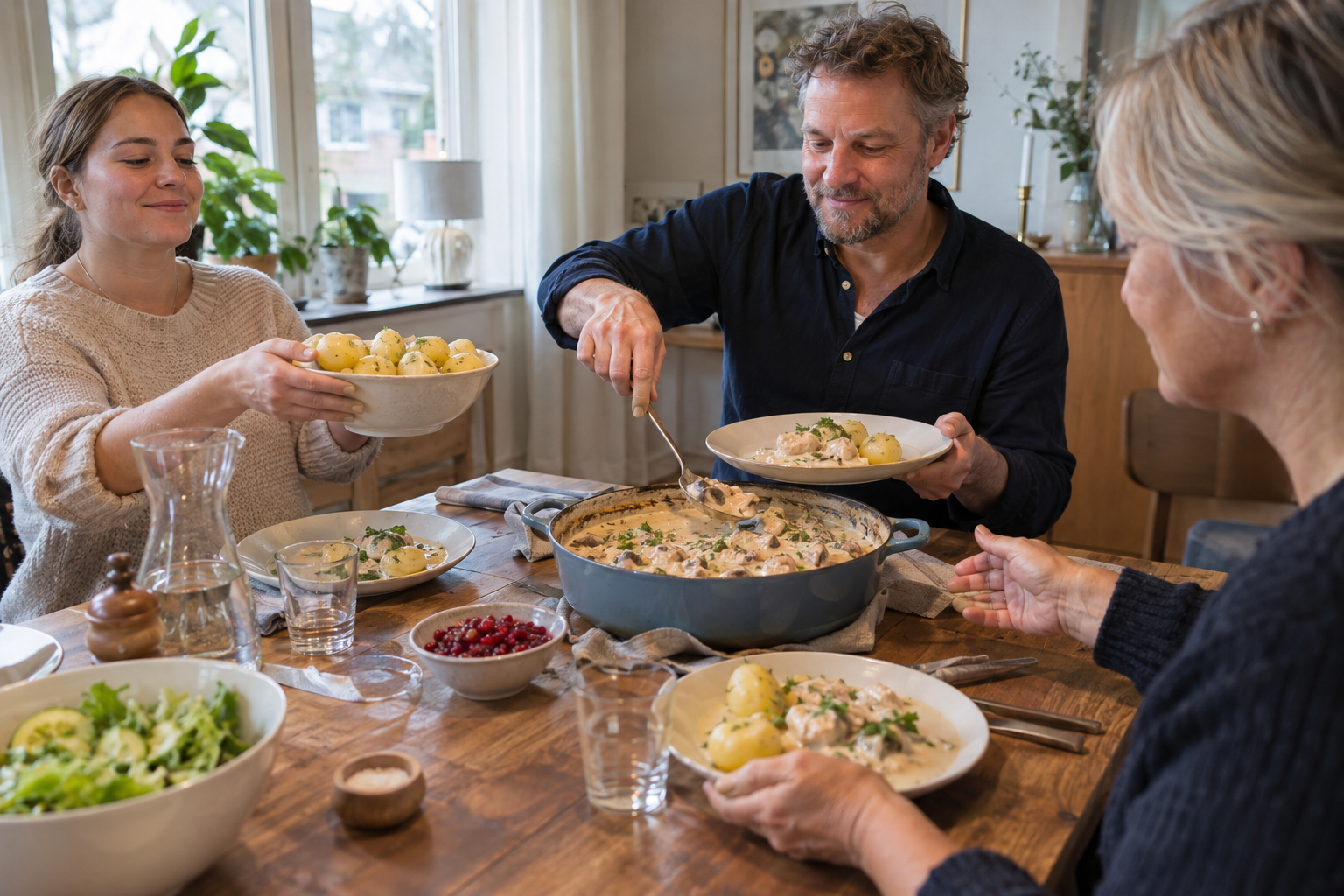
Serving the fricassee today need not mean staging a manor-house dinner. A warm pot in the middle of the table and something to soak up the sauce are enough. Boiled potatoes suit our present-day table, but are offered here as a modern serving choice, not as a documented accompaniment to Warg’s poultry dishes. Historical inspiration becomes more interesting when it is honest.
From old instructions to today’s stove
Anyone opening an old cookbook encounters both unfamiliar spelling and different ways of specifying quantities. A skålpund was equivalent to about 425 grams, but converting the weights is not always enough. Ingredients have changed, cooking vessels are different, and an instruction may be based on consistency rather than an exact quantity. Even when the figures can be translated, the method needs interpreting.
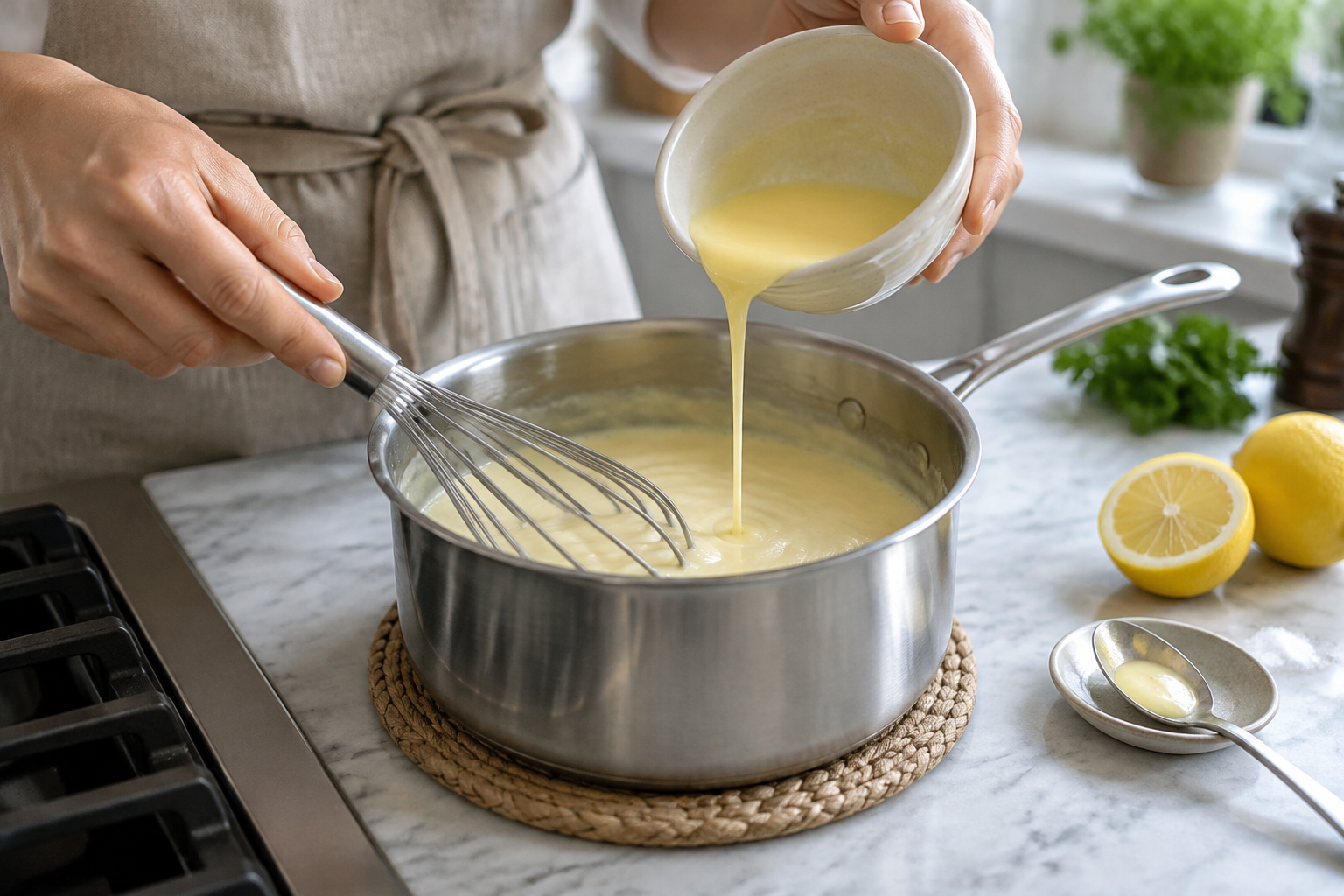
That is why our recipe uses metric measures and clear checkpoints. The chicken should simmer until cooked through and tender. The sauce must first simmer to cook out the flour, then be finished gently with cream and egg yolk. Lemon is added gradually, since both the fruit’s acidity and the stock’s saltiness vary. Taste with a clean spoon and adjust in small increments rather than with one big splash.
Cajsa Warg’s important legacy is not an invented slogan. It is respect for the knowledge involved in running a kitchen: understanding ingredients, watching the heat and knowing when the food needs something more. At our stove there is a thermometer and an extractor hood, but the moment is familiar. The lid is lifted, the lemon releases its fragrance and someone decides that the sauce is now just as it should be.
Chicken fricassee in a white sauce, in the spirit of Cajsa Warg
A freely adapted reconstruction inspired by the fricassees and pale, tangy sauces in Warg’s 1755 cookbook. This is not an exact reproduction of an original recipe: quantities, chicken cuts and method have been adapted for today’s Swedish kitchens.
Ingredients
Method
- 1Peel the onion and carrot and cut into large pieces. Place the chicken in a pot in which the pieces fit fairly snugly. Pour in enough water to just cover, approximately 10 dl.
- 2Bring slowly to the boil and skim the surface. Add the onion, carrot, salt and white peppercorns. Reduce the heat and simmer with the lid slightly ajar for 30–40 minutes. The chicken should be tender and reach at least 75 °C in the thickest part, without the thermometer touching the bone.
- 3Peel the potatoes if you wish and boil in a separate pan of lightly salted water for about 20 minutes, depending on their size.
- 4Lift out the chicken. Strain the stock and measure out 5 dl for the sauce. Allow the chicken to cool just enough to handle; remove the skin and bones and break the meat into large pieces.
- 5Melt the butter in a roomy saucepan over a medium heat. Stir in the flour and cook gently for about 1 minute without letting it colour.
- 6Gradually whisk in the measured stock. Simmer the sauce for 5–7 minutes, stirring regularly to prevent it from sticking.
- 7Add the chicken meat to the sauce and heat through thoroughly for about 3 minutes. Then turn the heat down to its lowest setting.
- 8Whisk together the cream and egg yolk in a bowl. Whisk about 1 dl of hot sauce into the mixture, then stir everything back into the saucepan. Heat gently, stirring, until the sauce thickens slightly; do not let it boil.
- 9Start by adding 1 tbsp lemon juice and 0.5 tsp finely grated lemon zest. Taste and add more lemon, salt and white pepper if needed. Serve immediately with the potatoes and parsley.
- Boneless chicken thighs work well: use about 650 g and start checking the internal temperature after 15–20 minutes of simmering.
- If using a stewing hen, it will often need to simmer for 1.5–3 hours, sometimes longer. Judge by tenderness and take the meat off the bones once cooked.
- You can cook the chicken and strain the stock the day before. Cool quickly and refrigerate; make the sauce and add the egg yolk only when ready to serve.
- Freeze leftover stock in small portions and use for soup or sauce.
What goes in the glass
- Alcohol-freeDry alcohol-free apple ciderThe apple’s crisp acidity meets the lemon and lightens the buttery sauce. Choose a less sweet style to give the gently flavoured chicken room to shine.
- WineFresh chardonnay without pronounced oakA moderately full body suits the creamy sauce, while fresh acidity picks up the lemon. Strong oak flavours could dominate.
- BeerPale lager with gentle bitternessLightly bready malt provides a mellow backdrop to the chicken, while the carbonation refreshes the palate between bites without overpowering the sauce.
Enjoy alcohol in moderation. Alcohol-free options go just as well with the food.
Sources
- Cajsa Warg, Hjelpreda I Hushållningen För Unga Fruentimber (1755)
- Svenskt kvinnobiografiskt lexikon, Anna Christina Warg
- Nationalencyklopedin, Cajsa Warg
- Susanna Eger, En nödig och nyttig hus-hålds- och kok-bok (1733)
Ask questions about "Cajsa Warg – far more than making do with what you have". Answers are based on the magazine's own articles.