Ceviche – Peru’s Tangy Taste of the Sea
Lime, chilli and the flavour of fish itself, from the Pacific coast to Swedish kitchens.
A spoonful of cool, tangy leche de tigre wakes up the whole mouth. Then come the fish, the onion and the slow warmth of chilli. Ceviche is both everyday food and a source of national pride in Peru – a dish with disputed roots, vibrant regional traditions and a very particular sense of timing.
 By Sofia HaddadReporter · Middle East, Africa and Latin America – mezze, tagine, injera, mole and much more
Translated from Swedish with AI assistance.
Go to the recipes (2) ↓A table overlooking the sea
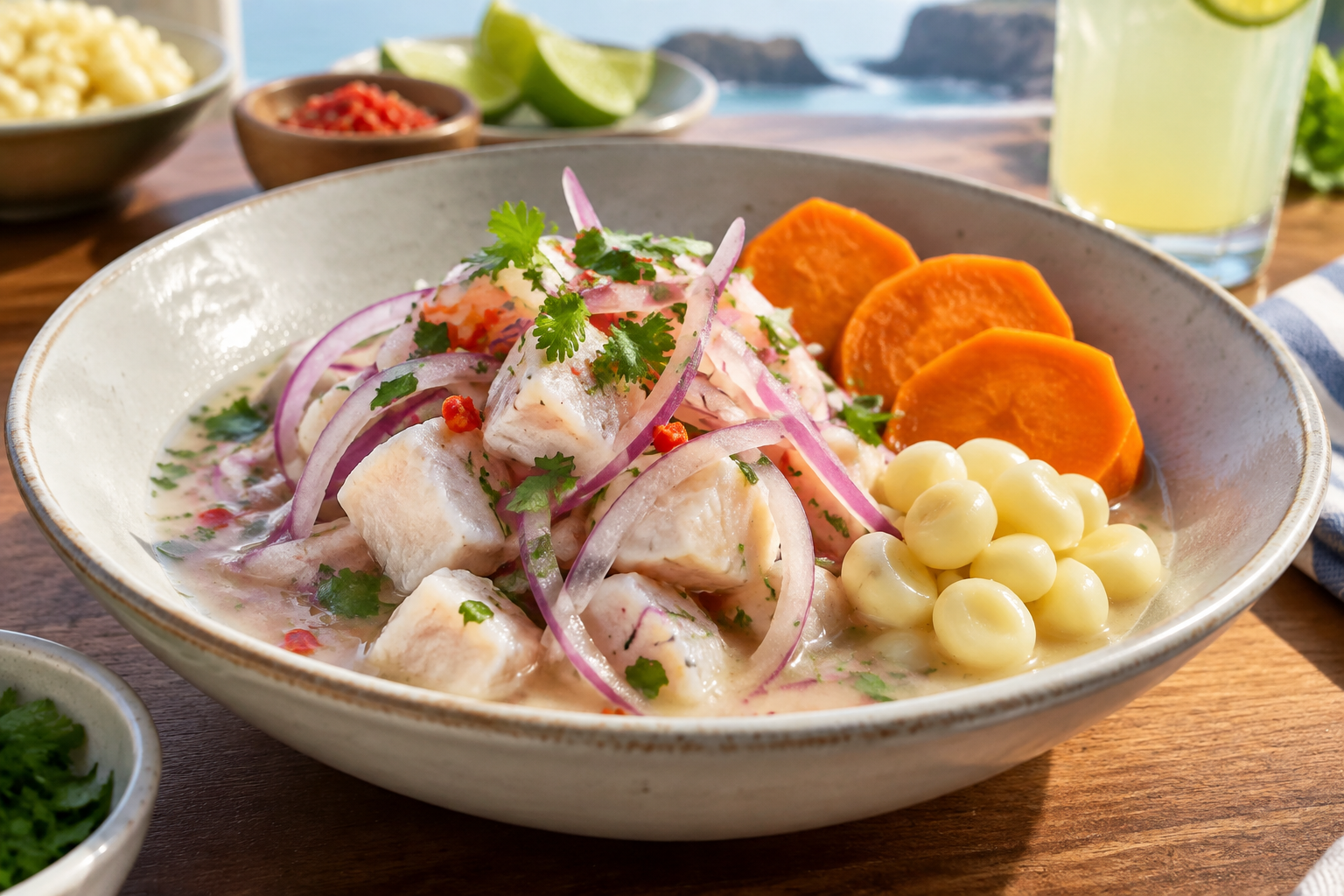
The knife cuts through the red onion with a dry, steady rhythm. A lime lies on the chopping board, glistening with water, and beside it the fish waits in firm, almost translucent pieces. As salt and citrus meet the fish, its surface slowly turns milky white. A cloudy liquid gathers at the bottom of the bowl: tangy, salty and scented with the sea, with chilli that lingers after the first rush of freshness has faded.
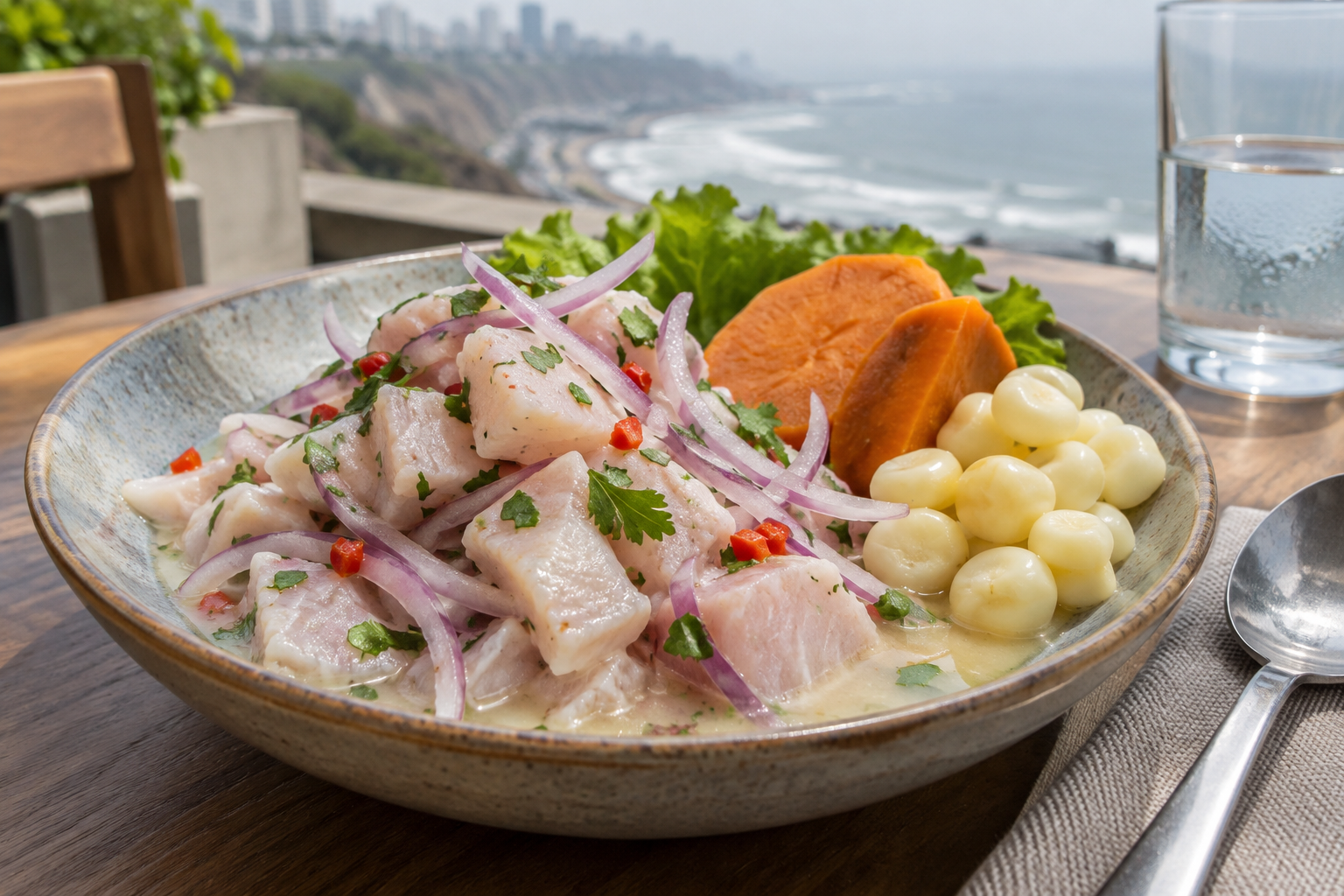
This might be the opening scene of a ceviche lunch in Lima. Not a long marinade left to its own devices, but a few focused minutes between knife and table. The cook tastes, tosses and tastes again. Someone brings out sweet potato and corn. The trick is to be ready to eat when the dish is ready to serve.
Lima sits on the Pacific, but the city is not always the sunlit postcard its coastal setting might suggest. For part of the year, coastal fog wraps it in grey. Against that backdrop, the flavours of ceviche feel almost vividly coloured: the sharpness of citrus, the bite of red onion, the fruitiness of chilli and the mellow sweetness of sweet potato. It is a dish that both cools and invigorates.
At a cevichería, a meal might begin with something crunchy and move on to fish, shellfish, broth and fried dishes. Ceviche is often the centrepiece, but it belongs to a broader culinary language of the sea. One person likes plenty of chilli, another wants extra onion, a third saves the last spoonful of marinade until the end. The sense of togetherness comes not from everyone eating in exactly the same way, but from gathering around the same intensity of flavour.
For home cooks in Sweden, the appeal is easy to understand. A few ingredients can deliver big flavours. But the simplicity is deceptive: with nothing hidden behind slow cooking or browned butter, the quality of the fish, the balance of acidity and careful handling in the kitchen become unusually important. Ceviche rewards care rather than a long list of techniques.
A long history without a definite birth date
It is tempting to give ceviche a clear moment of origin: one people, one stretch of coastline, one tart fruit. The history is more complex. Peru’s coast has ancient fishing traditions, dating back long before the Spanish conquest in the 16th century. Archaeological remains show how central fish and other marine resources were to coastal communities. That, however, is a long way from firm evidence of a recipe resembling today’s ceviche.
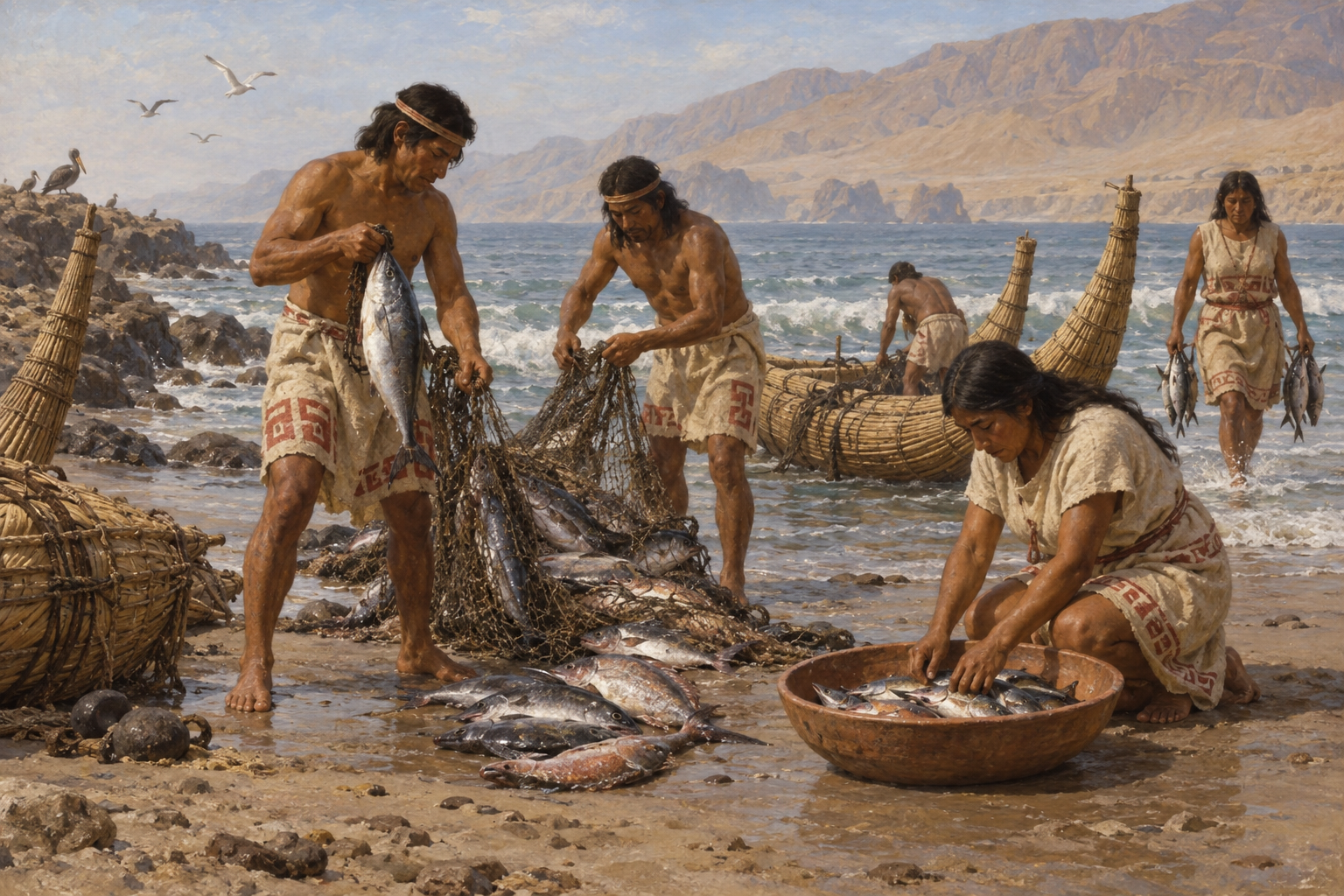
Accounts of the dish’s pre-Columbian roots often mention the Mochica or Moche culture and fish said to have been treated with tart local fruits. Chicha, drinks made from ingredients including maize, also features in origin stories. Such claims need to be handled cautiously. The fact that people ate fish and had access to fermented or acidic foods is not, in itself, proof of an unbroken recipe tradition with specific ingredients.
What is certain is that today’s lime-based ceviche cannot be traced back unchanged to the time before Europeans arrived. Citrus fruits reached the Americas through colonial contact, as did the onion that now features so prominently in the bowl. Chilli, on the other hand, is native to the Americas. In its simplest ingredients, then, the modern dish bears traces of both local produce and momentous historical encounters.
The name, too, has several proposed explanations. It is variously written ceviche, cebiche and seviche, and its etymology is disputed. Choosing one spelling need not mean endorsing a particular origin story. It is more useful to see ceviche as a family of dishes that has changed over time, rather than a fixed original from which all later cooks have strayed.
Tangy fish and shellfish dishes feature in many Latin American cuisines. Ecuador, Mexico and Chile, for example, have their own ceviche traditions, with different accompaniments, textures and ways of handling the ingredients. Peru’s special standing is therefore not about exclusive rights to every dish of fish and citrus. It is about the central place ceviche has earned in the country’s daily life, sense of identity and restaurant culture.
In 2023, UNESCO added the practices and meanings associated with preparing and eating ceviche in Peru to its Representative List of the Intangible Cultural Heritage of Humanity. The distinction matters: the recognition concerns a living cultural practice, not proof of who first squeezed something sour over fish. The knowledge of fishers, growers, sellers, cooks and families is as much a part of the story as the finished plate.
Lima, nikkei and the shorter journey to the table
In Lima, ingredients and people from the coast, highlands and Amazon come together. The capital’s food culture cannot be understood solely as a coastal tradition, even when the sea takes centre stage. Migration within the country has brought different chillies, accompaniments and ideas about flavour. International connections, meanwhile, have also left clear marks on the city’s cooking.
Organised Japanese immigration to Peru began in 1899. From Japanese-Peruvian lives and eating habits emerged the cuisine commonly known as nikkei. It is more than Japanese techniques decorated with Peruvian chilli. It is food shaped by people cooking with what was available around them, preserving some habits and changing others over several generations.
In discussions of ceviche’s evolution, nikkei is often linked to greater attention to the way fish is cut, its texture and its brief contact with acidity. This is an important influence, but not a straightforward invention story. To say that Japanese cooks alone created modern ceviche would erase the knowledge of other cooks and households. Changing tastes and better facilities for handling chilled fish are also part of the picture.
In older methods, some of which are still practised, the fish spends considerably longer in citrus. In many contemporary cevicherías, it is instead tossed together just before serving. The result is a distinct contrast between a lightly altered surface and a succulent centre. The difference is especially noticeable with lean white fish, which can otherwise easily become firm and feel dry when the acid is left to work for a long time.
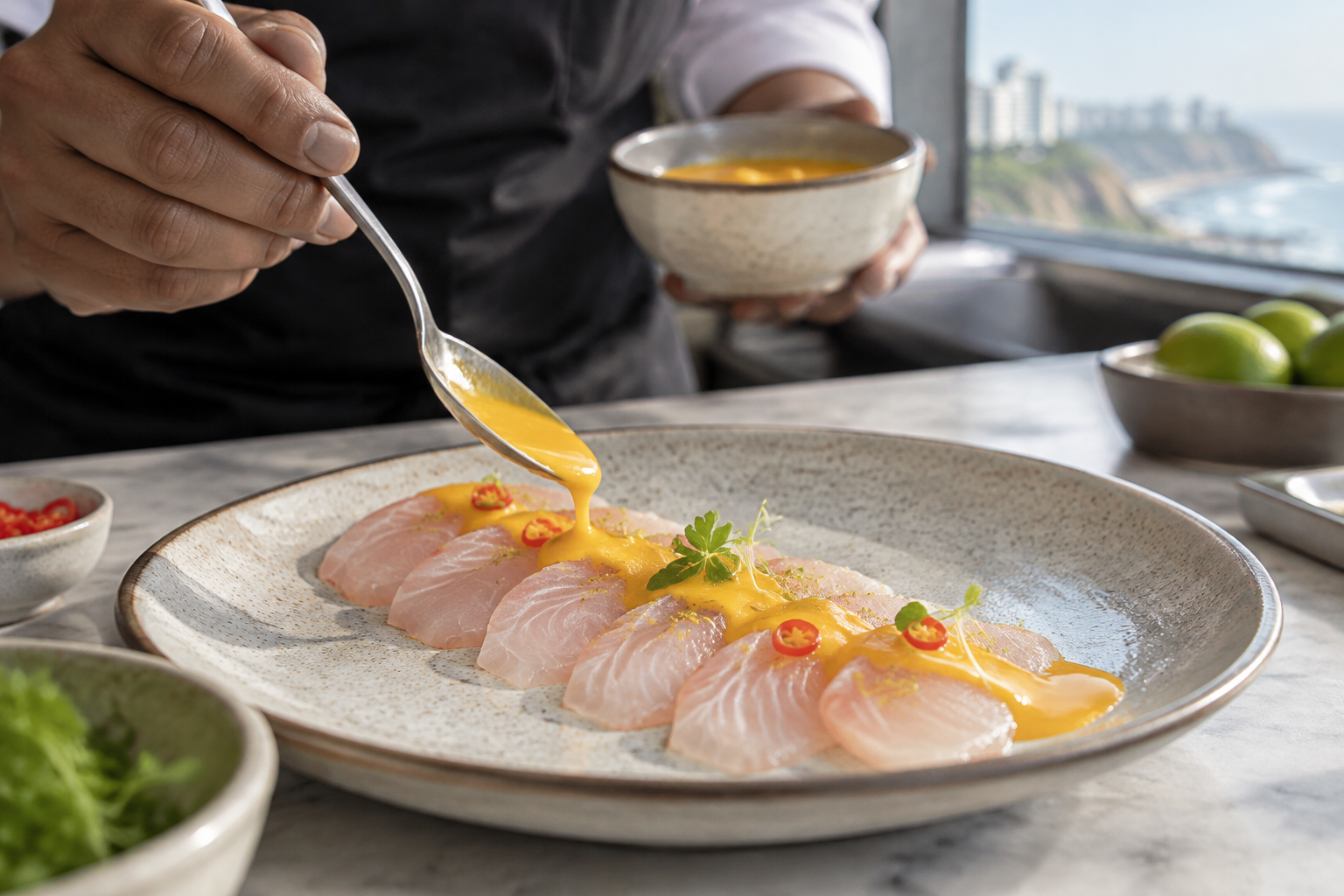
Tiradito helps bring the connection with nikkei into focus. Here, the fish is usually cut into thin slices and dressed with a sauce at serving, often without ceviche’s characteristic mound of red onion. The boundaries are not absolute, but the difference in cutting and presentation shows how the same palette of ingredients can create different experiences. A cube demands chewing; a thin slice can almost glide across the tongue.
Lima’s international recognition as a food city has made ceviche an ambassador for Peru. Yet it is worth looking beyond tasting menus and elaborate plating. The dish also lives at lunch tables, in markets and in the daily work of smaller restaurants. The simple question of which fish is good today matters at least as much as how the plate is photographed.
Fish, lime and chilli – a balance, not a competition
A classic Peruvian fish ceviche often centres on white fish, lime, red onion, chilli and salt. Coriander is common, but quantities and details vary. A short ingredient list does not make the proportions obvious. Too much citrus can make every mouthful taste of nothing but acid. Too much onion crowds out the fish. Too little salt, on the other hand, leaves the acidity feeling thin and isolated.
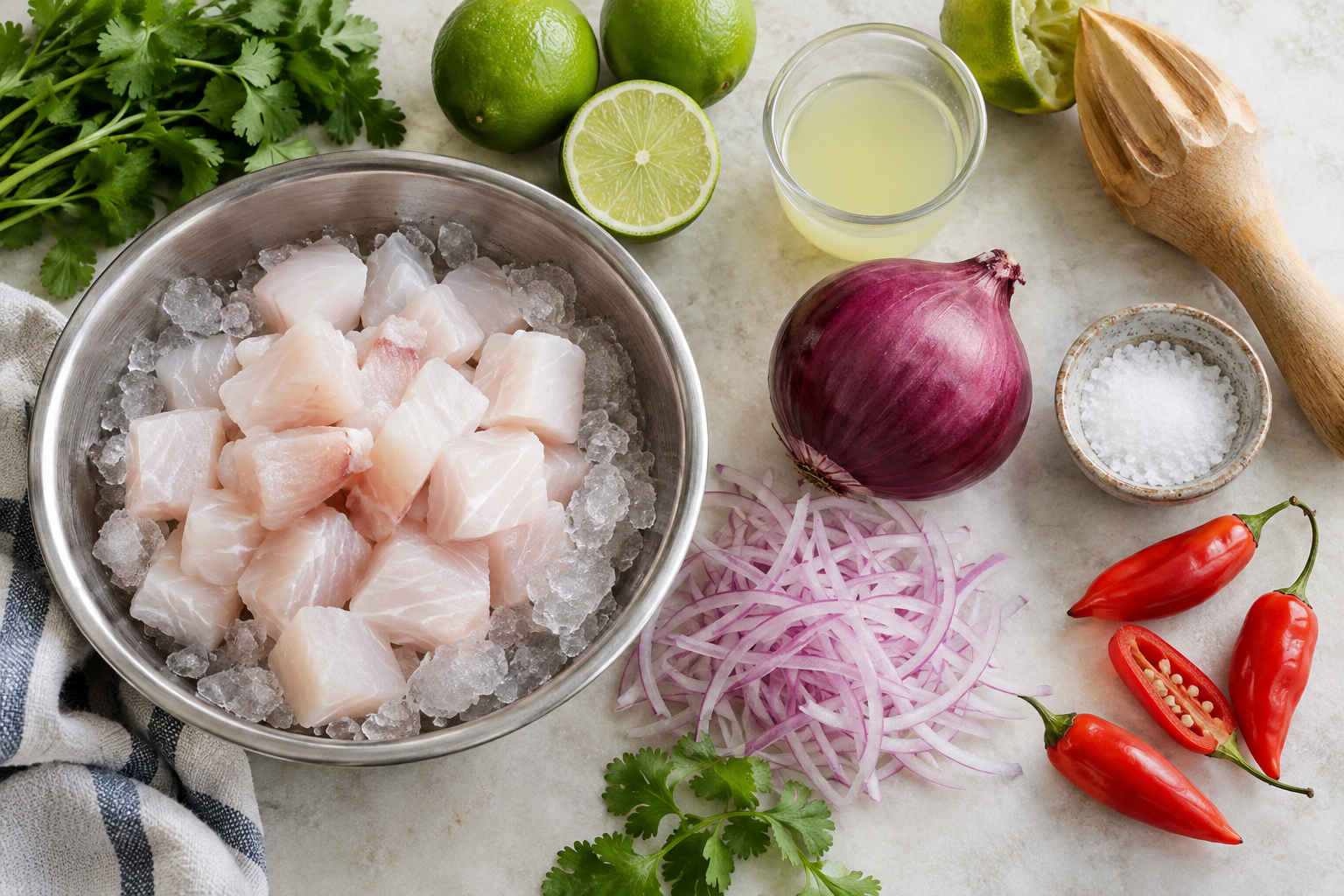
The fish should be firm enough to cut into even pieces. In Peru, different species are used depending on the catch and region; corvina is a name readers often encounter in recipes. Swedish fish names do not always correspond directly to these local market names. Here in Sweden, haddock or cod can work well, provided the fish is suitable for serving raw and has been handled correctly. Choose according to sustainable stocks and availability, rather than simply following a name in a recipe.
Lime should contribute fresh fragrance, not just maximum acidity. The fruit sold in Sweden is often larger than the small limes widely used in Peru, and both juiciness and acidity vary. It is therefore wiser to measure the juice and taste as you go than to rely on a fixed number of fruits. Squeeze gently and avoid wringing out the peel and membranes too hard; this can introduce unwanted bitterness.
Ají is a general term used for chilli. Ají amarillo, the yellow-orange chilli with pronounced fruitiness, is a central ingredient in Peruvian cooking and brings a rounded, sunny note to many sauces. It is not, however, the default chilli in every classic ceviche. Ají limo is particularly closely associated with the dish, with its intense aroma and considerable heat. Rocoto also features in Peruvian ceviche traditions and accompaniments.
For cooks in Sweden, ají amarillo is often easiest to find as a paste in Latin American shops or online. Read the ingredients list: some pastes contain added salt or acid, which affects the balance. A little habanero can provide fruity heat when fresh ají limo is unavailable, but it is not an exact match in flavour. An ordinary red chilli works too, with a different and often milder result.
The red onion is sliced thinly to provide crunch without dominating every mouthful. A brief soak in ice-cold water can soften its raw sharpness; afterwards, it must be drained thoroughly. Coriander is added close to serving for a fresh, green fragrance. Sweet potato does a different job: its mellow sweetness offers a pause between tangy mouthfuls. Corn adds another texture. Peruvian choclo has large kernels and a starchier character than the sweetcorn familiar in Sweden, but the latter is a useful, sweeter alternative.
Leche de tigre and the limits of acidity
Leche de tigre means tiger’s milk. The name refers not to any dairy ingredient but to the pale, cloudy liquid where citrus, fish juices, salt and chilli meet. In its simplest form, it is what remains in the bowl once the ceviche has been mixed. The flavour is concentrated but should still be balanced: the fish’s gentle salinity and savoury depth need to come through the acidity.
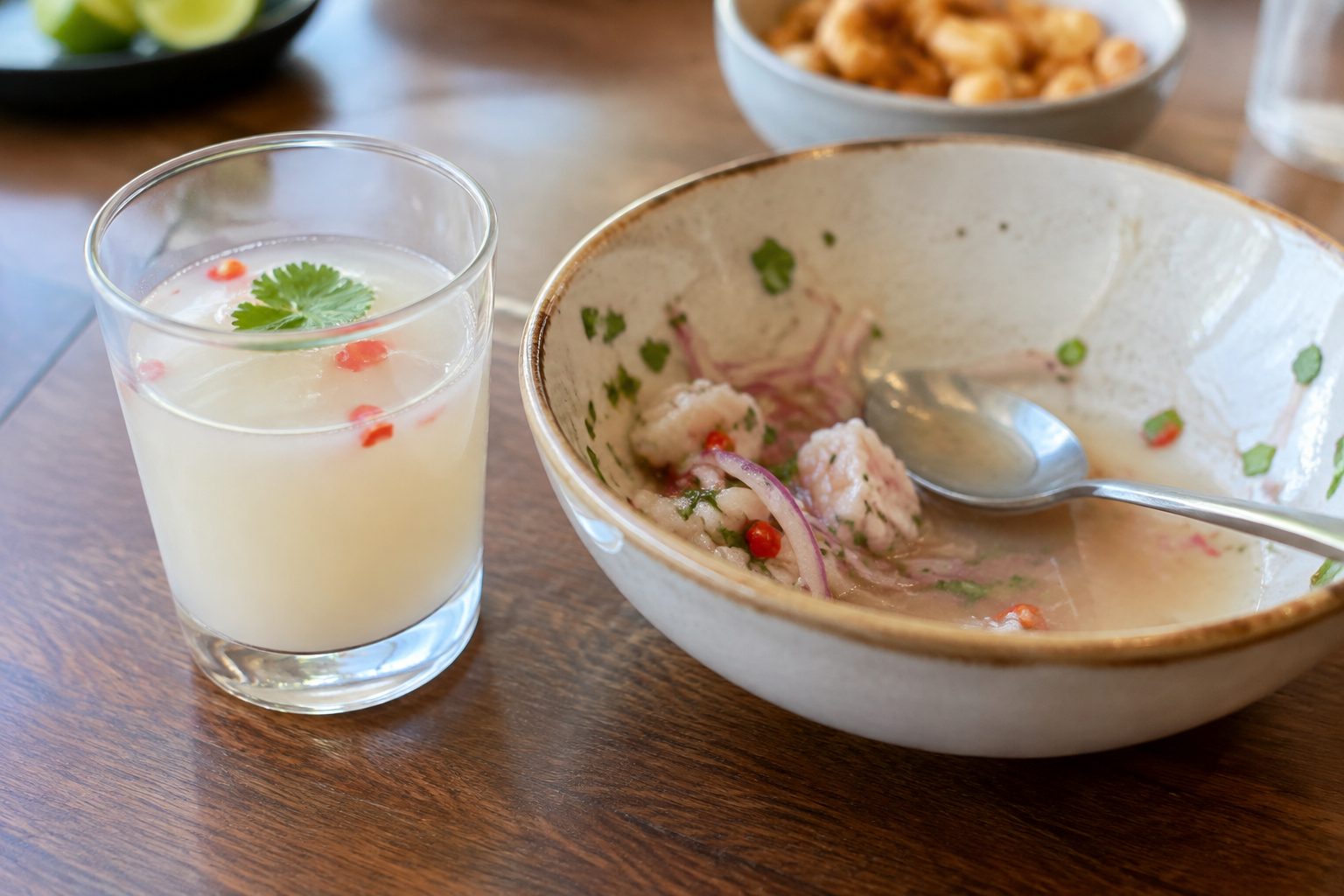
In restaurants, leche de tigre can also be a specially prepared base. Fish stock, small pieces of fish, celery, onion, ginger or garlic may be included, depending on the cook and style. The mixture can be blended and strained to produce a consistent result from portion to portion. There is therefore no contradiction between the liquid that forms naturally in a bowl of ceviche and a carefully developed sauce, but they are not always the same thing.
Sometimes leche de tigre is served separately in a small glass, with chilli, coriander or a piece of fish or shellfish. Stories of its power to cure hangovers or stir desire belong to food culture, not established medical fact. What it can undoubtedly do is awaken the appetite. A small serving goes a long way.
When fish turns white in lime, people often say the acid cooks it. As a kitchen description, this captures a visible change, but it is not the same as heating. Acid changes the structure of proteins, a process called denaturation, affecting both colour and firmness. It does not reliably rid raw fish of parasites or disease-causing bacteria.
For home cooks, safety must therefore come before marinating time. Buy fish from a seller who can tell you whether it is suitable for eating raw and whether any necessary parasite treatment has been carried out. For fish that needs freezing, the Swedish Food Agency’s consumer guidance specifies at least three days at −18°C. Some farmed fish may qualify for exemptions under the right conditions, but this is not something to guess from the appearance of a fillet.
Freezing is no substitute for good hygiene and an unbroken cold chain. Thaw the fish in the fridge, keep it very cold and use clean hands, knives and chopping boards. Do not leave the finished bowl sitting out while the rest of the meal is prepared. For people with weakened immune systems, thoroughly cooked fish is a safer choice. A ceviche-inspired dish made with cooked, rapidly chilled fish can also be delicious, although its texture will be different.
A lunch worth making time for
Ceviche is strongly associated with lunch in Peru. Its connection with the day’s catch and the freshness of the fish has historically made a daytime meal particularly natural. Today, of course, some restaurants serve it in the evening too. The tradition is a pattern, not a rule that every Peruvian meal must follow.
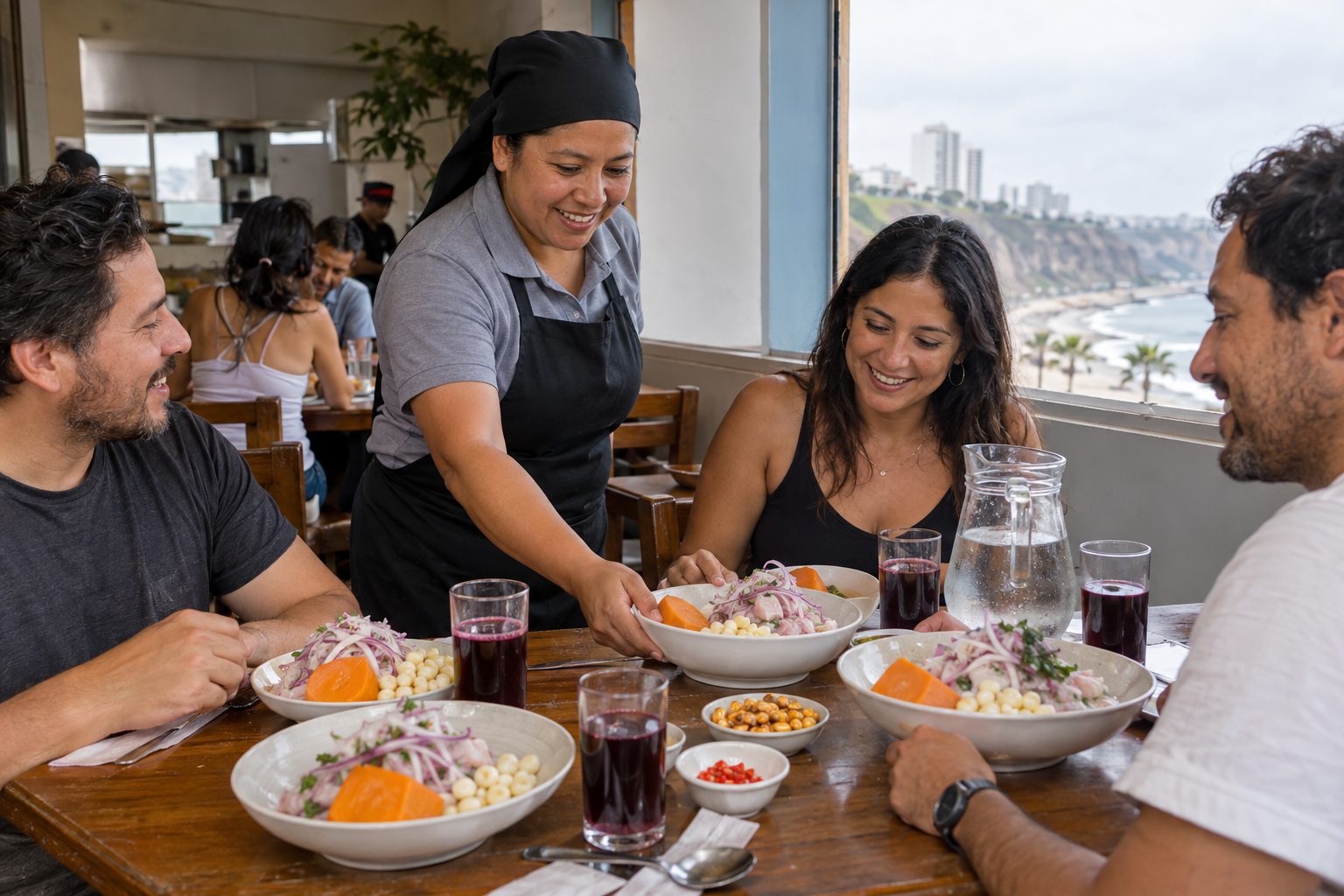
The accompaniments show how carefully flavour is built around the fish. Boiled sweet potato takes the edge off the chilli without extinguishing it. Choclo offers a soft, chewy interlude. Cancha, toasted corn made from varieties with large, crunchy kernels, adds a dry crackle. If it is unavailable, it may be better to leave it out than to pretend that all toasted corn snacks taste alike.
Regional differences extend to the fish, seasonings and accompaniments. In northern Peru, for example, ceviche may be served with cassava or zarandaja beans. Elsewhere in the country, local fish and other ingredients take their place. Calling something a national dish does not mean the whole nation follows a single recipe. That variety is part of its strength.
At a shared table, it is a generous touch to offer extra chilli on the side so everyone can adjust the heat. For a large gathering, however, the fish benefits from being mixed in smaller batches. An enormous bowl making its slow way around the table continues to change in the acid. Two freshly mixed servings often make a better meal than one impressive initial mound.
To drink, chicha morada is a good match: a non-alcoholic purple-corn drink often flavoured with fruit and spices. Served cool and moderately sweet, it provides a gentle contrast to the chilli. A crisp Sauvignon Blanc can meet the citrus, preferably without pronounced oak. Pisco sour belongs to the same Peruvian drinks culture, but it is a strong cocktail rather than a thirst-quencher: choose a small one to start, with water and non-alcoholic drinks on the table.
Getting it right at home
Do not start with the lime. Start with the planning. Decide which fish to use, check how it needs to be handled and arrange any freezing well in advance. Cook the sweet potato and corn before taking a knife to the fish. Chill the serving bowls. With everything else ready, making the ceviche becomes a brief, unhurried task rather than a frantic race.
The recipe below is a classic Peruvian-inspired fish ceviche adapted to ingredients available in Sweden, not a claim to be the only correct version. Ají limo comes with a practical substitute, and ordinary sweetcorn stands in for choclo when the latter is unavailable. The fish spends just a few minutes in citrus. If you prefer a firmer surface, you can wait a little longer, but more time does not mean greater food safety.
The second recipe is a separate, stock-based leche de tigre with ají amarillo. It contains no raw fish and is intended as a flexible addition, not another large dose of acidity that must be poured over the already seasoned ceviche. If you use it with the fish, let it replace some of the lime juice. Always taste first.
When checking the balance, taste a little fish together with the liquid. A marinade tasted on its own may seem too sharp yet work well with fish, sweet potato and corn. If the overall effect is still aggressively acidic, a little cold, unsalted fish stock or water will help more than trying to hide everything with sugar. If it lacks life, first try a small pinch of salt, then more lime.
Finally: cold bowls, warm hospitality and no long waits. Ceviche’s finest quality is not that it calls for a rare ingredient or a particular chef’s touch. It is that it asks us to be present. Mix, taste and call everyone to the table while the fish still has its spring and the coriander smells freshly cut.
Classic fish ceviche with sweet potato and corn
A Peruvian foundation adapted to ingredients available in Sweden, with a brief time in lime to keep the fish succulent. Makes four modest main-course portions. Use fish suitable for serving raw and correctly treated for parasites where necessary. Any freezing and thawing time is additional to the times given.
Ingredients
Method
- 1Plan the handling of the fish in advance. If it needs to be treated for parasites at home, freeze it at −18°C for at least three days, following the Swedish Food Agency’s consumer guidance. Thaw covered in the fridge. Fish that has already been correctly treated does not need to be frozen again.
- 2Peel the sweet potato and cut it into slices about 2 cm thick. Simmer in water for 15–20 minutes, until tender but still holding together. Drain and leave to cool. Cook fresh corn in a separate pan for about 5–8 minutes, or according to the packet instructions, then cut into sections.
- 3Slice the red onion very thinly. Soak in ice-cold water for 5 minutes, then drain and dry or leave to drain thoroughly. Chill four serving bowls.
- 4Gently squeeze the limes and measure the juice. Finely chop the chilli. If using habanero, start with a small amount, as its heat varies greatly. Wash your hands after handling it.
- 5Pat the fish dry with kitchen paper and use a clean, sharp knife to cut it into even pieces about 2 cm across. Keep chilled until ready to mix.
- 6Place the fish in a cold bowl. Toss gently with the salt and a little chilli. Start by adding 1 dl lime juice and mix for about 30 seconds.
- 7Fold in the onion and coriander. Taste a piece of fish with a little liquid and add more lime, chilli or salt as needed. If the acidity is too sharp, dilute with a little of the ice-cold water.
- 8Keep the fish chilled for another 2–4 minutes, until the surface has begun to turn white but the centre is still succulent. This changes the texture but does not make the fish microbiologically safe.
- 9Immediately divide among the chilled bowls, on lettuce leaves if you like, with sweet potato and corn alongside. Spoon over the liquid from the mixing bowl and serve straight away.
- Prepare the accompaniments in advance and refrigerate them if they will not be used soon. Wait to mix the fish until everyone is ready to eat.
- Ají limo can be replaced with a little habanero for fruity heat, or an ordinary red chilli for a different, often milder flavour. Neither substitute is identical to the original.
- Mix only as much ceviche as will be eaten immediately. Do not save the fish’s used marinade to serve later as a drink or sauce.
- For a fully cooked version, cook the fish to a core temperature of 63°C, chill rapidly, then gently toss with the seasonings just before serving.
Leche de tigre with ají amarillo
A stock-based home version without raw fish, inspired by the prepared leche de tigre bases used in contemporary Peruvian cooking. Makes about 3 dl: four small appetiser glasses or a sauce for ceviche. It is not the same as the liquid that forms naturally in fish ceviche.
Ingredients
Method
- 1Make sure the stock is fridge-cold. If using concentrated stock, dilute to a mild broth according to the packet instructions and chill before use; reduce the extra salt accordingly.
- 2Put the stock, lime juice, celery, onion, ginger, garlic and ají amarillo paste in a blender.
- 3Blend for 15–20 seconds until the vegetables are finely broken down. Add the coriander and pulse another two or three times.
- 4Strain through a fine-mesh sieve. Press lightly with a spoon to help the liquid pass through, but do not force through all the vegetable pulp.
- 5Season to taste with salt and more chilli paste if needed. If the flavour is too sharp, add cold stock or water, a tablespoon at a time. The finished liquid should be tangy but also full-flavoured.
- 6Serve immediately, well chilled, in four small glasses, or use as part of the dressing for ceviche. In that case, replace some of the recipe’s lime juice rather than pouring in the entire batch as extra sauce.
- Keep covered in the fridge, ideally at no more than 4°C, and use the same day. If the sauce has been in contact with raw fish, it must be handled in the same way as the raw fish.
- Ají amarillo paste varies in heat, saltiness and acidity. Start cautiously. If it is unavailable, you can use a little fresh chilli, but the flavour will be different.
- Mild vegetable stock makes a vegetarian, ceviche-inspired sauce for ingredients such as hearts of palm or blanched cauliflower, though it will lack the fish’s savoury depth.
What goes in the glass
- CocktailPisco sour, a small servingThe aromas of the grape spirit and the cocktail’s citrus echo the freshness of ceviche, while its sweetness softens the chilli. It is a strong drink: choose a small one as an aperitif rather than a thirst-quencher, and serve water and non-alcoholic drinks alongside.
- Alcohol-freeChicha moradaThis Peruvian purple-corn drink, often made with fruit, cinnamon and cloves, offers a mellow, spiced contrast to the saltiness of the fish and the acidity of the lime. Serve cold and not too sweet, especially if the ceviche is mild.
- WineSauvignon Blanc without pronounced oakFresh acidity meets the lime, while green citrus and herbal notes complement the coriander. Choose a wine with moderate alcohol and keep the chilli balanced, as alcohol can intensify the sensation of heat.
Enjoy alcohol in moderation. Alcohol-free options go just as well with the food.
Sources
- Unesco, Practices and meanings associated with the preparation and consumption of ceviche, an expression of Peruvian traditional cuisine (2023)
- Gastón Acurio, Peru: The Cookbook (2015)
- Martin Morales, Ceviche: Peruvian Kitchen (2013)
- Luiz Hara, Nikkei Cuisine: Japanese Food the South American Way (2015)
- Harold McGee, On Food and Cooking: The Science and Lore of the Kitchen (2004)
- Livsmedelsverket, Fisk och skaldjur – konsumentråd om hantering och parasiter
- Daniel M. Masterson och Sayaka Funada-Classen, The Japanese in Latin America (2004)
Ask questions about "Ceviche – Peru’s Tangy Taste of the Sea". Answers are based on the magazine's own articles.