Flygande Jakob – the party dish that landed in a baking dish
Chicken, banana and peanuts: the story of the 1970s’ most eccentric dinner-party dish.
When Flygande Jakob appeared in Allt om Mat in 1976, Sweden gained a party dish that brought together ready-roasted chicken, cream, chilli sauce and a generous spirit of adventure. Today it is both a nostalgic divider of opinion and an unusually well-balanced bake – provided you keep the sweetness, saltiness and crunch in check.
 By Arvid HolmFood historian · Historic dishes, old cookbooks and eating habits through the ages
Translated from Swedish with AI assistance.
Go to the recipe ↓A dish arrives at the table
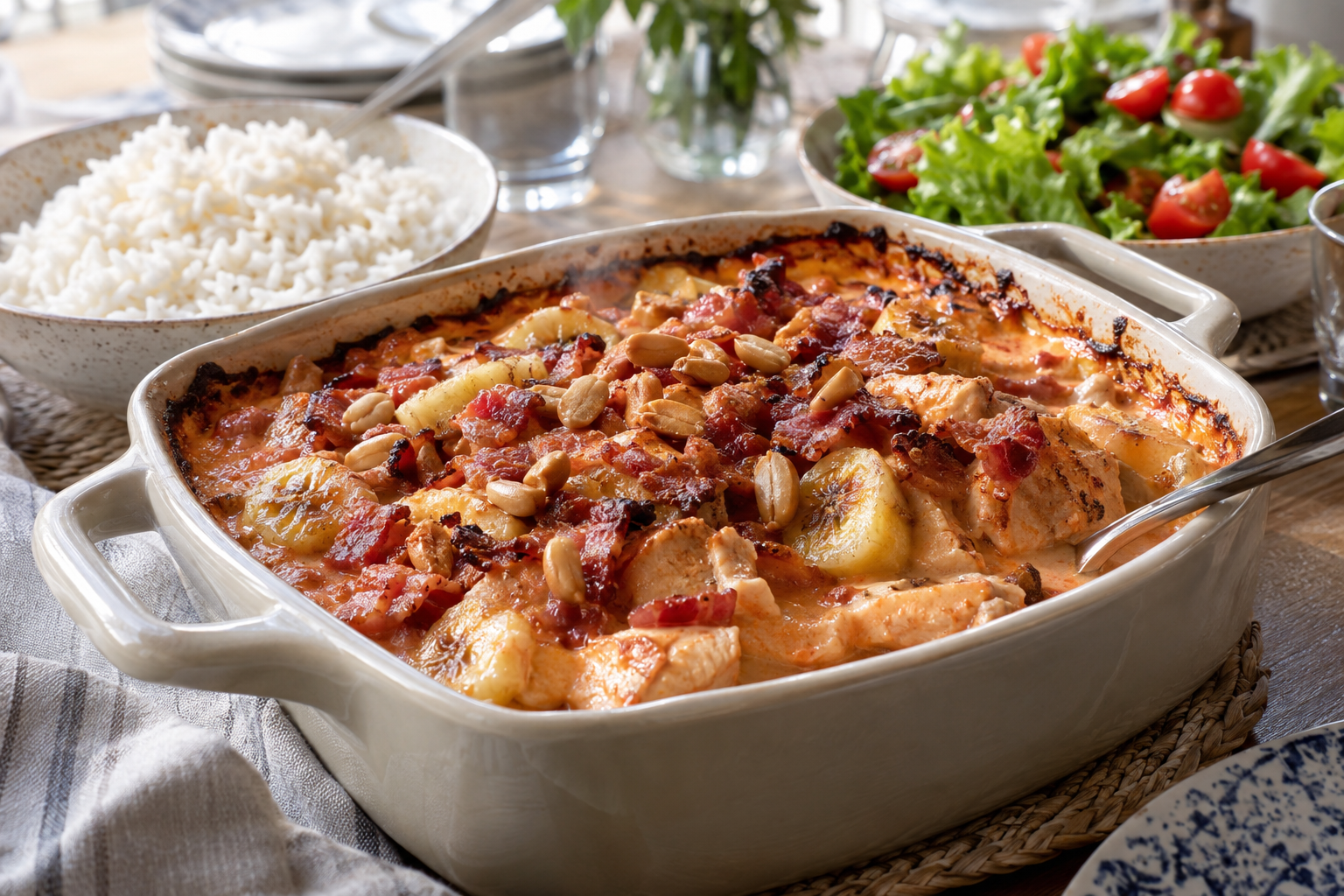
The edges are still sizzling as the baking dish is set on the table. Beneath the rosy cream sauce lie chicken and warm chunks of banana. Bacon glistens on top, and peanuts patter softly as they tumble from the bowl. The rice is steaming. Someone takes a cautious first spoonful; someone else immediately seeks out the largest piece of banana. Flygande Jakob has never been a dish that apologises for itself.
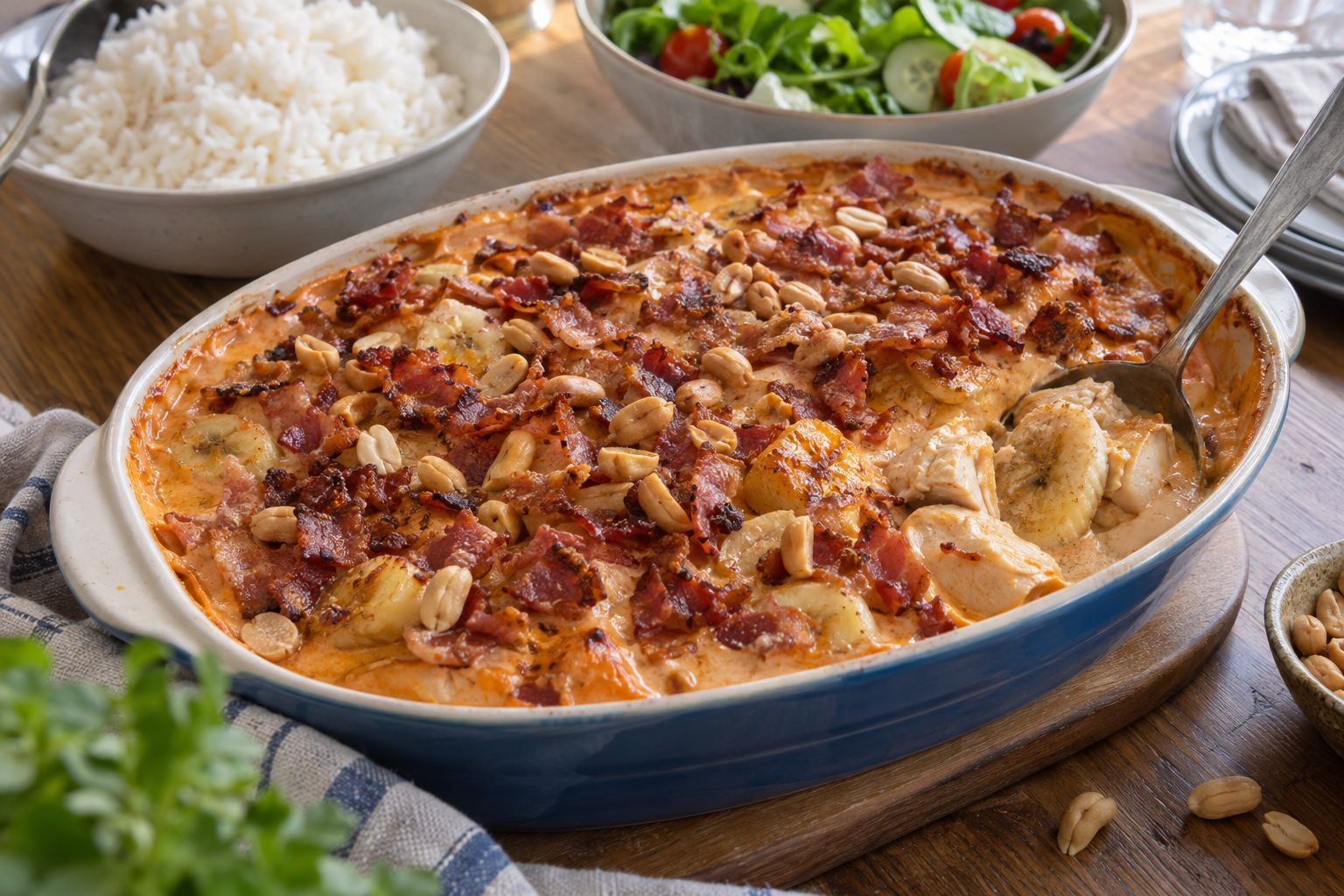
We can picture a Swedish dinner table in the late 1970s: a generous baking dish, a salad and food that can be prepared before the guests ring the doorbell. The scene evokes an era, rather than a documented first dinner. But the dish is real, as is its breakthrough in a magazine that taught many Swedish home cooks to combine practical everyday food with something that felt new and festive.
It is easy to turn it into a joke about a decade of questionable taste. That misses both the pleasure and the craft behind the dish. Here are mild chicken, the softness of cream, the acidity of tomato sauce, the sweetness of banana and two different kinds of saltiness. The bacon is smoky and chewy-crisp, the peanuts dry and brittle. The combination is bold, but hardly random. Even today, a well-made Jakob can silence a conversation about bad taste after the first bite.
An unusually clear birth date
Many dishes come with competing origin stories. Flygande Jakob has a much clearer point of reference: the recipe was published in Allt om Mat in 1976. The magazine credits Ove Jacobsson, who worked in air freight. That also explains the name. It is not, then, the chicken taking a poetic flight, and there is no reason to turn its creator into a pilot.
What can be firmly established is the publication and the attribution. Stories about exactly how the dish was improvised and who first sat around the table have circulated in different versions. They are not needed to understand its significance. A named home cook’s dish made its way into an established food magazine, reaching readers far beyond his own kitchen.
The original’s main features are easy to recognise: ready-roasted chicken, banana, whipped cream mixed with chilli sauce, bacon and peanuts. Italian salad seasoning also belongs to the early version, a detail often lost when the recipe is retold. It is a reminder that this was not simply sweet fruit in cream. Herbs and seasoned salt were also there to give the mild chicken character.
Publication gave the dish a fixed point of reference, but it did not prevent change. Later recipes often use raw chicken breast, fried first; some add curry powder, and the cream may be mixed with crème fraîche. These versions can be delicious, but they are adaptations. When cooking with history in mind, it is worth distinguishing the documented original idea from everything that families and recipe writers have since added.
When convenience became company food
Flygande Jakob belongs to a Sweden where modern food shops, refrigerators and convenient prepared ingredients had transformed the home kitchen. Ready-roasted chicken meant you could start cooking with the most time-consuming work already done. A bottle of chilli sauce supplied both colour and seasoning. The oven took care of the final stage while the host set the table, cooked rice or chatted to guests.
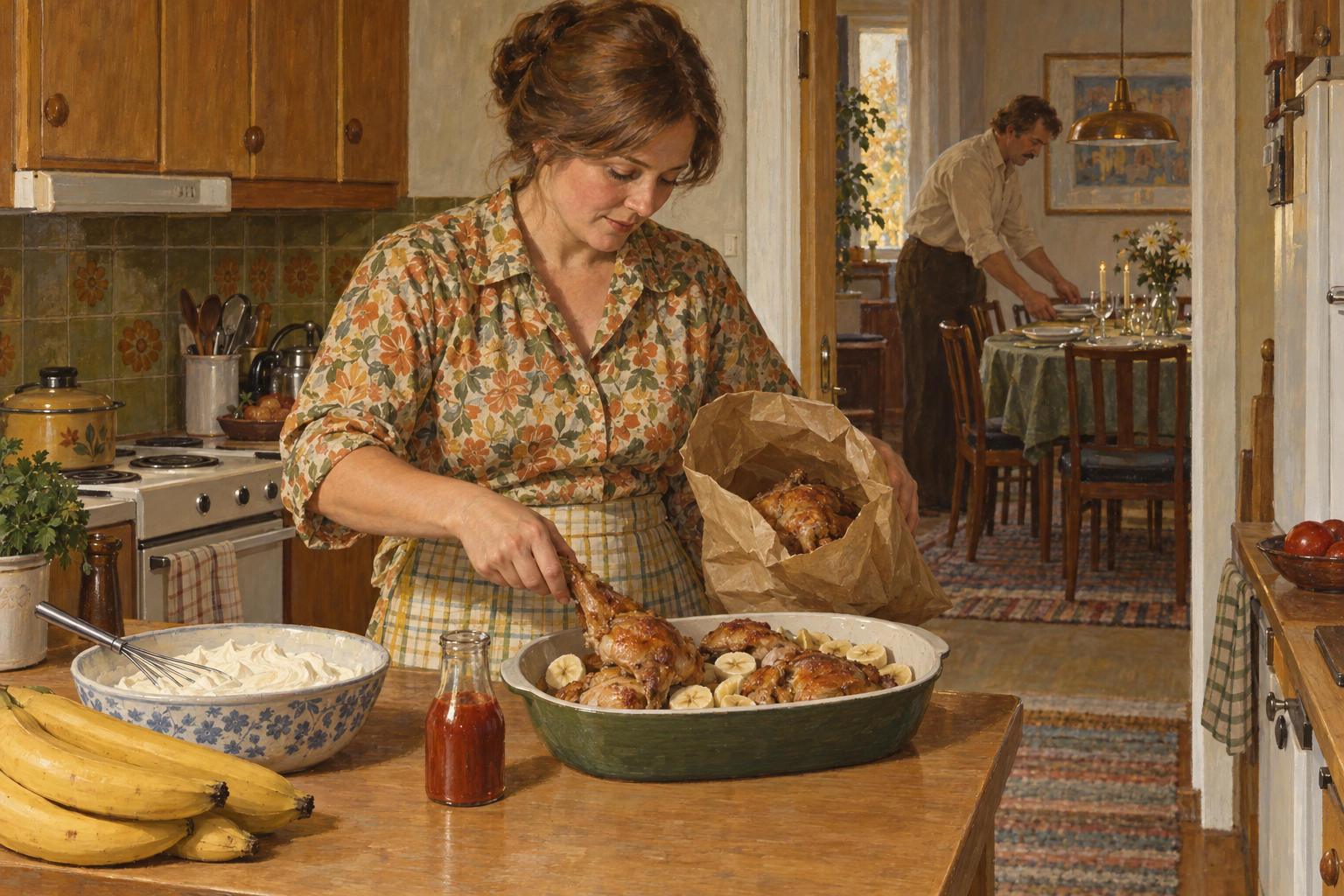
Using ready-cooked food did not have to mean giving up cooking. On the contrary, combining ingredients became a kind of domestic ingenuity: something shop-bought was transformed into a personal dinner-party dish. Flygande Jakob illustrates that idea unusually well. The roast chicken leaves its shop bag and reappears as a bake with sauce, a topping and a name guests will remember.
Bananas were nothing new in Sweden in 1976. Fruit in a hot, savoury main course, however, could suggest variety and international inspiration. Rice, peanuts and a sauce with chilli in its name added to that impression. This does not make Flygande Jakob an imported Asian dish. Rather, it is a clear example of how Swedish home cooks used available ingredients to create their own idea of the new and different.
There is also a practical explanation for its appeal. Almost everything fits in one dish, quantities are easy to scale up, and there is no need for precise last-minute plating. That kind of generosity has a value easily overlooked when the story focuses only on unusual ingredients. The dish made it possible to entertain without spending the whole evening alone at the stove.
The flavour lies in the contrasts
The most important distinction in a modern kitchen concerns the chilli sauce. Here, it means the mild, tomato-based variety sold as chilli sauce in Swedish shops, not a hot chilli sauce such as sriracha, and not sweet chilli sauce. Switching to the latter tips the balance sharply towards sweetness. With a truly hot sauce, the proportions would also be quite wrong. Read the label: tomato should take the lead.
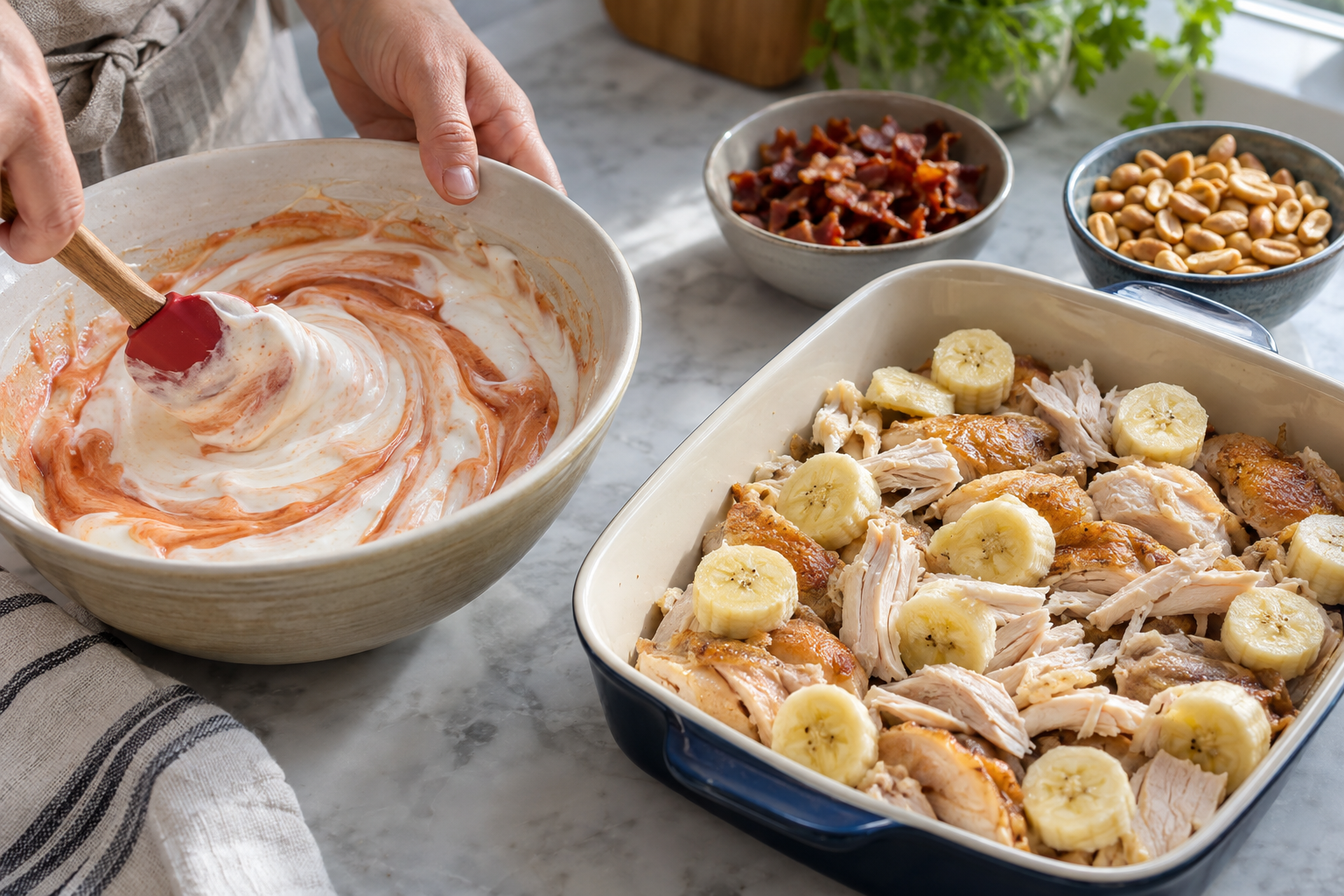
The cream is lightly whipped before being mixed with the sauce. This is part of the original method and makes the mixture airy and easy to spread over the filling. Once heated, it is still a cream sauce, not a lasting soufflé. There is therefore no advantage in whipping it too stiffly. What matters is spreading the sauce over the chicken and not leaving the dish in the oven longer than necessary.
The chicken itself is a common weak point. A ready-roasted bird is already cooked and only needs to be thoroughly heated through. Small shreds of breast meat can dry out before a deep, fridge-cold dish is hot in the centre. Fairly large pieces, ideally a mixture of thigh and breast, give you more leeway. A wide dish helps the heat penetrate without prolonged baking.
The bananas should be yellow and ripe but still firm. Green ones become hard and mealy; overripe ones can disintegrate and make the sweetness overwhelming. Slightly larger pieces allow the banana to retain its identity. It should be a warm, soft presence between bites of chicken, not turn the entire sauce into fruit purée.
Bacon and peanuts work best as a finishing touch. Left in the sauce too long, they lose the very contrast that makes them valuable. Scatter them over the finished bake, preferably with a little extra in bowls alongside. Be cautious with salt: the roast chicken, seasoning blend, bacon and salted nuts already contribute plenty. Tangy tomatoes or a green salad with vinaigrette will do more for the whole dish than another pinch of salt.
From novelty to family memory
Today, Flygande Jakob is as much a dish of memories as a list of ingredients. For anyone who ate it as a child, the scent of warm banana and roast chicken can instantly conjure up a kitchen, a relative or a particular kind of Friday-night dinner. For someone encountering it for the first time, the combination may feel far more experimental than nostalgic. Both readings fit in the same dish.
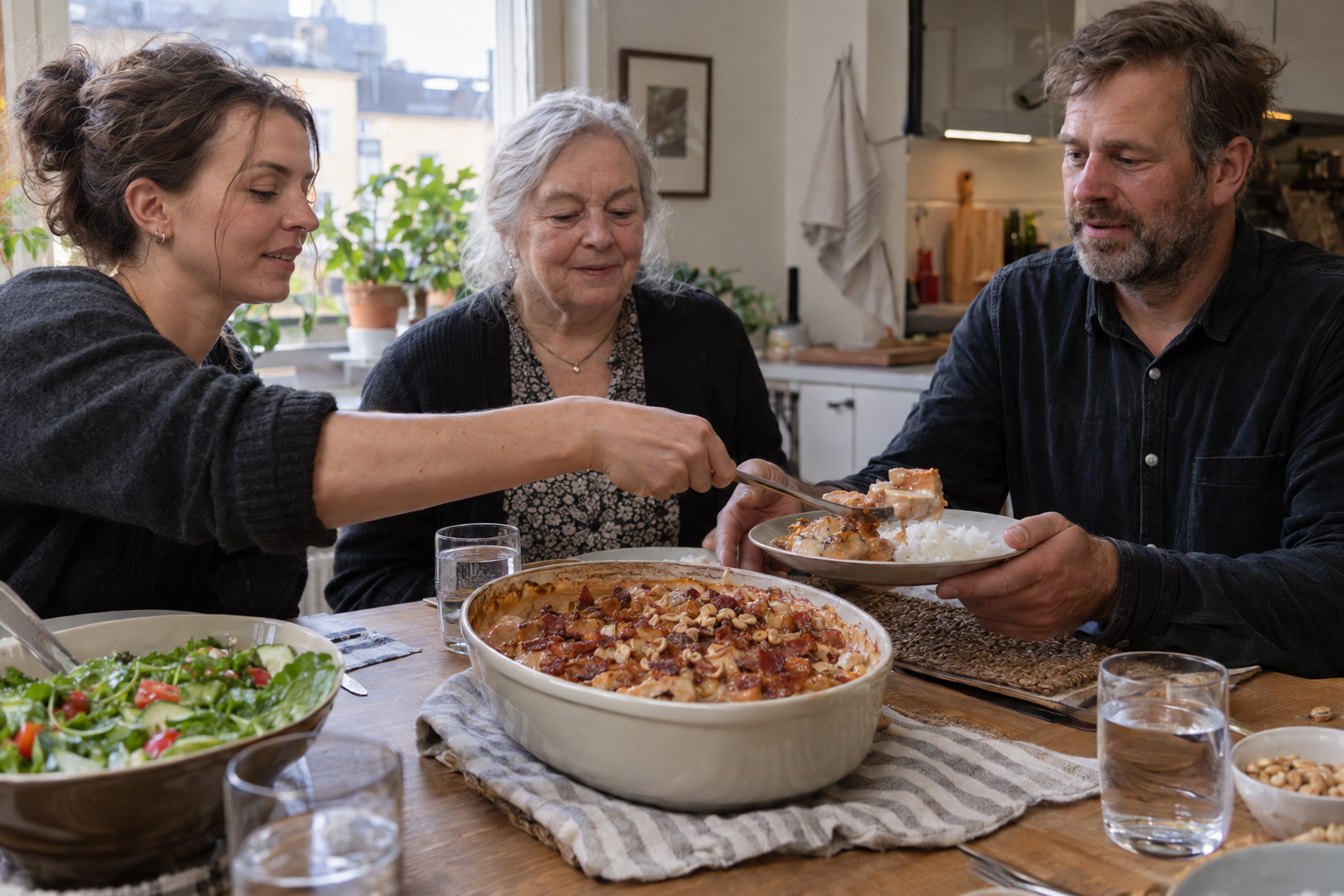
There is no single fixed serving ritual, but rice and salad are common companions. The rice catches the sauce and lets the main dish’s distinctive flavours take centre stage. The salad brings freshness and crunch. At a modern table, it is also wise to mention the peanuts in advance and adapt the entire preparation if there is an allergy, rather than simply removing the topping from one portion.
Family versions are part of the dish’s ongoing life. One person wants more banana; another wants it served on the side. Someone else prefers curry powder or extra heat. There is no need to police every change as a breach of tradition. But the original’s name and date become more meaningful if we also explain what has changed. Food memories can be powerful without being accurate historical sources.
How Jakob lands in today’s kitchen
The recipe here returns the dish to its early essentials: roast chicken, banana and lightly whipped chilli cream, with bacon and peanuts added at the end. The quantities have been adapted to serve four. It is a modern adaptation with clear weights, a temperature and checks for reheating, not a word-for-word copy of the magazine recipe. There are no old measurements to convert; the decilitres of the 1970s are still the ones we use today.
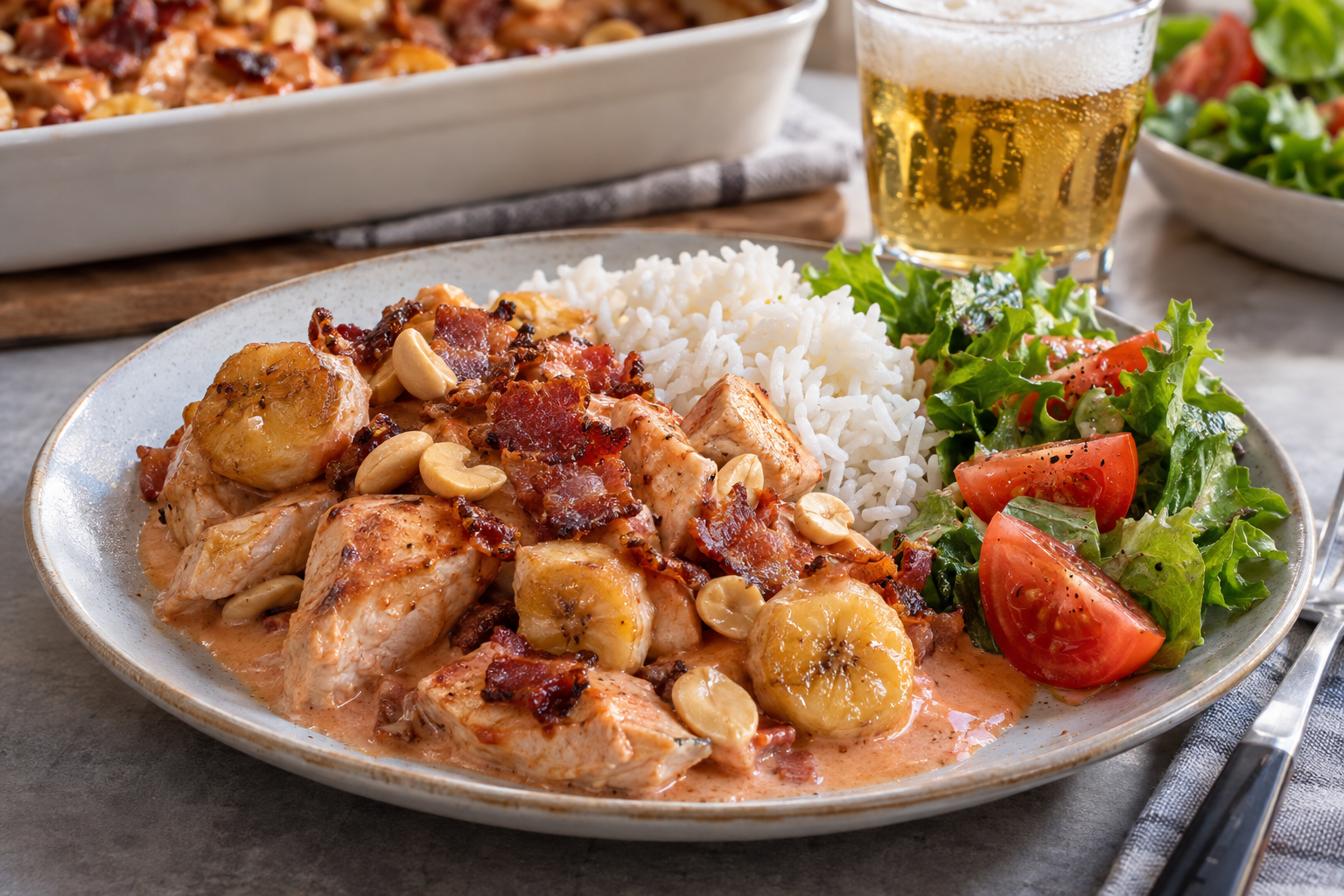
Above all, choose a chicken that tastes good to begin with. Keep the rest of the meal simple and let a tangy salad balance the rich bake. For a drink, choose something refreshing with restrained bitterness, such as lager or a dry, apple-based alcohol-free option. And do bring the whole dish to the table. Flygande Jakob is at its best as food for sharing with guests: easy to divide, hard to mistake for anything else and still quite capable of surprising.
Flygande Jakob with roast chicken
A modern adaptation of the original recipe published in Allt om Mat in 1976. Roast chicken, Italian salad seasoning and lightly whipped chilli cream retain the original’s character; quantities and reheating instructions have been adapted for today’s kitchen.
Ingredients
Method
- 1Preheat the oven to 225 °C, conventional heat. Have ready a wide baking dish, approximately 20 × 30 cm. Cook the rice according to the packet instructions.
- 2Carefully remove all bones and cartilage from the chicken. Weigh out approximately 600 g of meat and cut into bite-sized pieces, about 3–4 cm. Arrange in the dish and sprinkle with the salad seasoning and black pepper.
- 3Peel the bananas and cut into pieces about 2 cm thick, preferably on the diagonal. Arrange between the chicken pieces.
- 4Lightly whip the cream just until fluffy and forming soft peaks. Fold in the chilli sauce. Spread the mixture evenly over the chicken and banana.
- 5Bake on the middle shelf for approximately 20–25 minutes, until lightly coloured on top and the sauce is bubbling near the centre too. Check that the chicken is thoroughly heated through, ideally to at least 70 °C in the centre. Fridge-cold ingredients may need longer; cover loosely with foil if the top starts to darken.
- 6Meanwhile, cut the bacon into strips. Place in a frying pan and fry over a medium heat for approximately 6–8 minutes until crisp. Drain on kitchen paper.
- 7Wash and dry the salad leaves. Cut the tomatoes into pieces and toss with the leaves, oil and vinegar just before serving.
- 8Leave the bake to rest for 3 minutes. Scatter over the bacon and peanuts just before serving so they retain their crunch. Serve with rice and salad.
- If you do not have Italian salad seasoning, use 0.5 tsp dried oregano, 0.5 tsp dried basil and a small pinch of garlic powder. Adjust the salt according to how salty the chicken is.
- To prepare ahead, remove the chicken meat from the bones and fry the bacon in advance. Refrigerate separately. Slice the banana and assemble the dish shortly before cooking.
- Cool leftovers quickly and refrigerate. Eat within 2–3 days and reheat only the amount you intend to serve until piping hot throughout. Cool any leftover rice quickly too.
- For a peanut allergy: omit the peanuts entirely and check the other ingredients and the risk of cross-contact. Toasted pumpkin seeds can provide crunch if tolerated.
What goes in the glass
- BeerPale lager with gentle bitternessBubbles and freshness lighten the cream, while restrained bitterness works better with the banana’s sweetness than a heavily hopped beer.
- WineOff-dry rieslingFresh acidity balances the cream sauce, while a little residual sweetness complements the banana and tomato-based chilli sauce.
- Alcohol-freeSparkling pure apple juice diluted with mineral waterThe apple’s acidity refreshes the palate between bites. Mix roughly equal parts juice and water so the drink does not accentuate the dish’s sweetness too much.
Enjoy alcohol in moderation. Alcohol-free options go just as well with the food.
Sources
- Allt om Mat, Allt om Mat, 1976, originalpubliceringen av Flygande Jakob (1976)
- Nationalencyklopedin, Flygande Jakob
- Charlotte Birnbaum, The World of Swedish Cooking (2008)
- Livsmedelsverket, Förvara maten rätt
Ask questions about "Flygande Jakob – the party dish that landed in a baking dish". Answers are based on the magazine's own articles.