Chicken curry that lets the spices shine
A rich, North Indian-inspired curry – and the art of building flavour without ready-made curry powder.
Onions given time, ginger with a kick and spices blooming in hot oil. This is where a truly good chicken curry begins. We explore what curry actually means and cook a tomato-and-yoghurt-based version for Swedish home kitchens.
 By Priya NilssonReporter · Indian and South Asian cuisine – spices, regional dishes and street food
Translated from Swedish with AI assistance.
Go to the recipe ↓The curry begins before the chicken goes in
First, there is just a little pop. Then the cumin starts sizzling in the oil, and a warm, nutty aroma rises from the pot. The onions go in with considerably more noise. So far, it does not look like much: a few seeds, oil and a heap of chopped onions. Yet this is the moment that determines whether dinner will be a curry with spices in it or one whose flavours have truly come together.
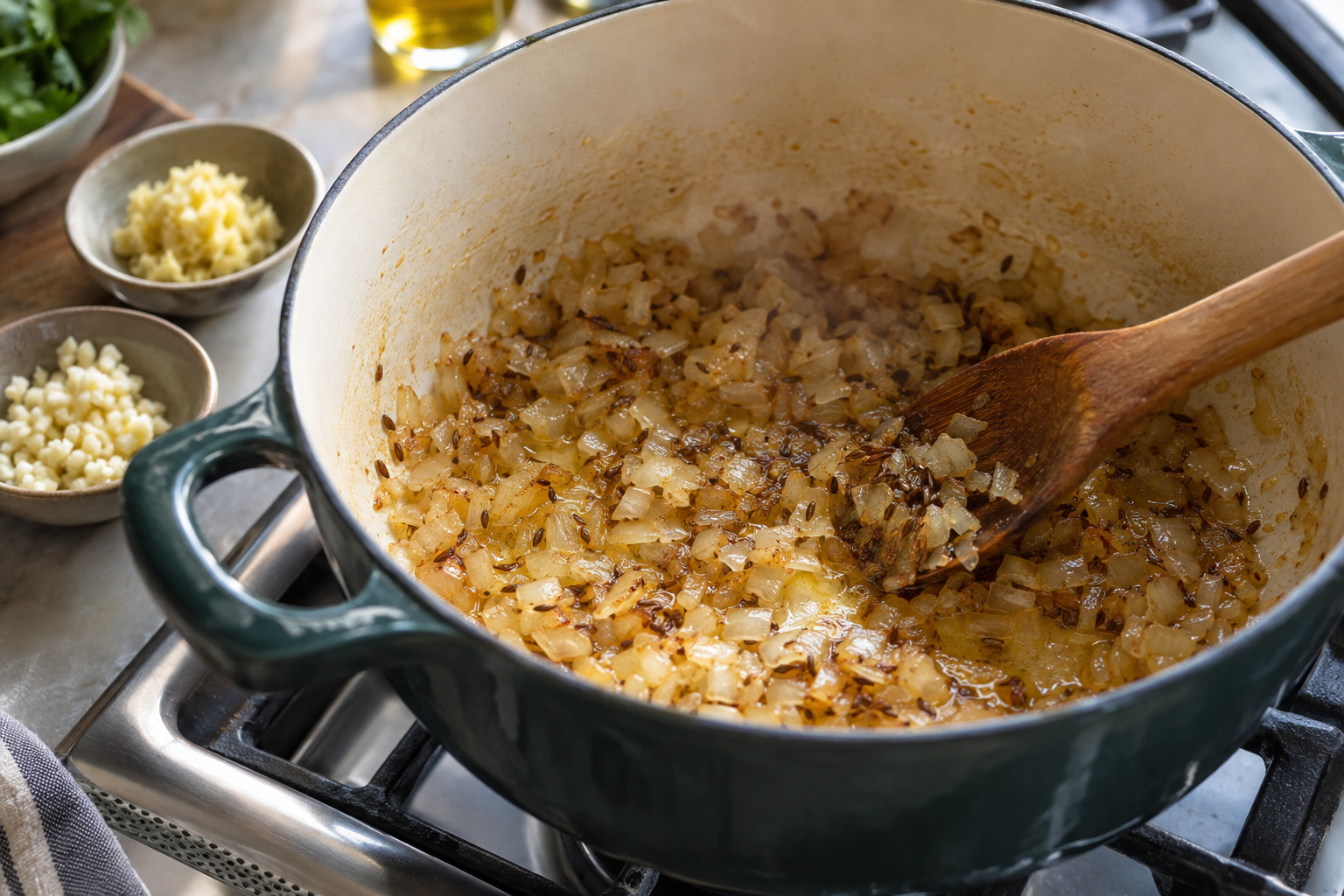
What I like best about this sort of chicken curry is that it calls for attention rather than fancy equipment. The onions need to turn slowly from sharp and white to soft and golden. The ginger and garlic need to lose their raw edge without burning. When the tomatoes go in, the sound changes again: the sizzle becomes a wet bubbling, and suddenly the kitchen smells of dinner.
Our curry has North Indian influences, with onions, tomatoes, yoghurt and garam masala. It is a home-cooking recipe, not a claim to represent all of India or recreate a particular family's dish. Chicken thighs provide juicy meat, yoghurt adds tang, and the sauce gets its richness from thoroughly cooked onions rather than a generous splash of cream.
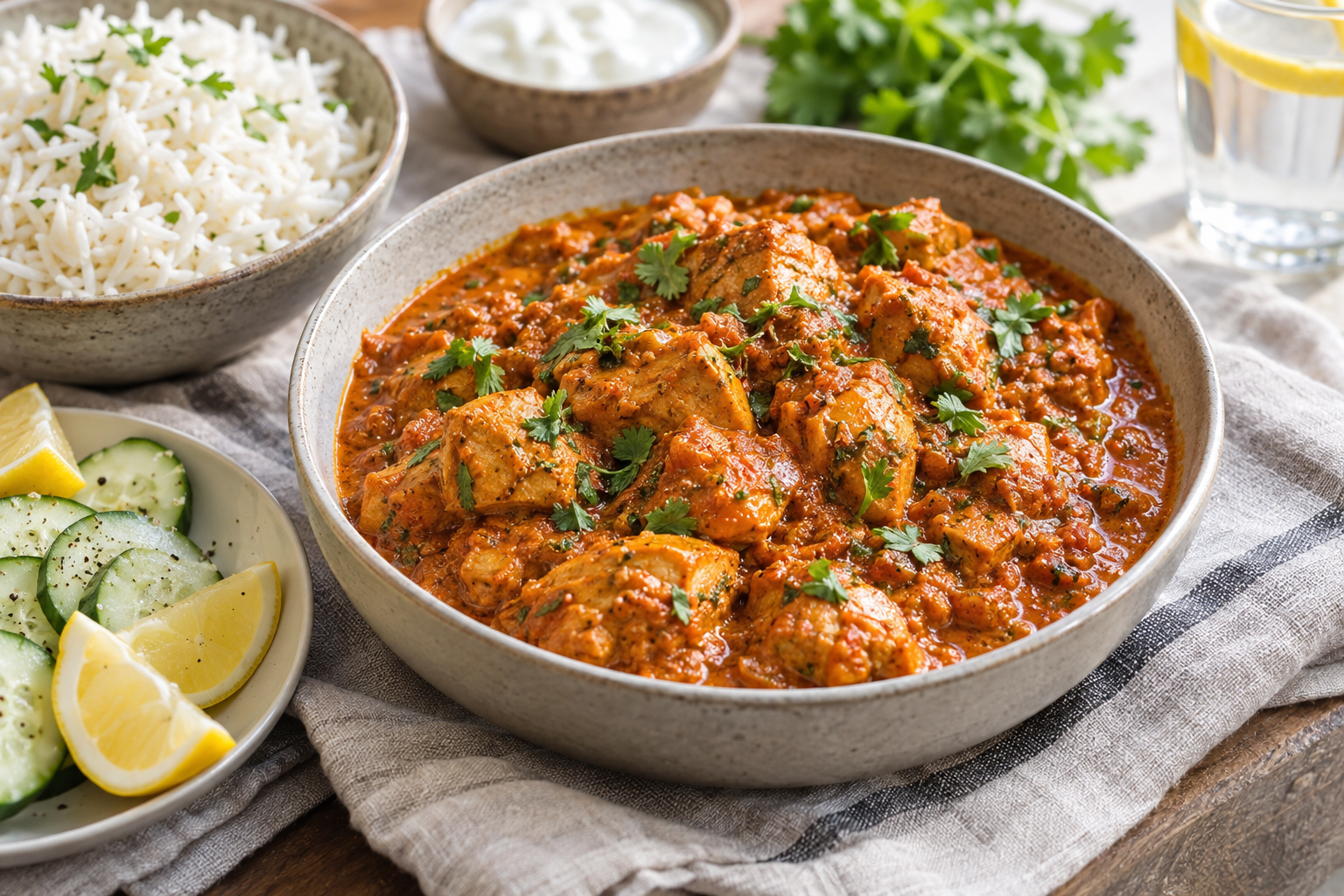
The result is a curry in which you can distinguish the citrusy warmth of coriander seed from the deeper notes of cumin. The chilli is there to bring it to life, not overpower everything else. Serve with rice or bread, something cooling on the side and, ideally, lemon to squeeze over your own portion. It is generous, easy to adapt and just as delicious without all the accompaniments on a restaurant menu.
Curry is an umbrella term, not a single dish
Ask where Indian chicken curry originated, and there is no honest answer naming a single city, cook or year. The subcontinent has many traditions of cooking meat with spices and different kinds of sauces. They have been shaped by local ingredients, religious dietary practices, trade, migration and court kitchens. Today's broad term therefore encompasses dishes with quite different histories.
The English word curry is generally traced to the Tamil kari, a word used for, among other things, a sauce or cooked dish. Through European contact with South Asia, curry gradually acquired a much broader meaning. In British usage, it became an umbrella term for many spiced dishes that had more precise names locally. That history is well documented; treating all Indian food as variations on the same curry, however, is misleading.
During the colonial era, both the word and the idea of standardised curry powders spread further afield. Ready-made blends made it possible to recreate an imagined Indian flavour far from the ingredients and kitchens in which the dishes had developed. They took on lives of their own in other countries' cooking. Swedish yellow curry powder is therefore neither worthless nor forbidden, but nor is it a universal key to India's cuisines.
The ingredients have travelled too. Chillies and tomatoes originated in the Americas and reached South Asia following transatlantic contact, through trading networks in which the Portuguese played an important role. Both seem integral to many Indian dishes today, but they were not always there. Tradition is often a long process of change rather than something untouched.
The chicken curry here belongs to a contemporary, widely recognisable style of cooking with North Indian flavours. It should not be confused with butter chicken, whose sauce and preparation have their own history. Nor is it a korma simply because it contains yoghurt. These names carry distinctions worth preserving, even when we make a simpler everyday version at home.
Flavour is built in layers
Think of the spices as distinct voices, not one loud chorus. Whole cumin seeds meet the fat first, which helps distribute their aromas through the curry. Ground coriander brings a rounded, almost citrus-like freshness. Turmeric contributes earthiness and colour, but too much can make the flavour harsh. Chilli is measured separately, so you can control the heat without toning down the rest of the seasoning.
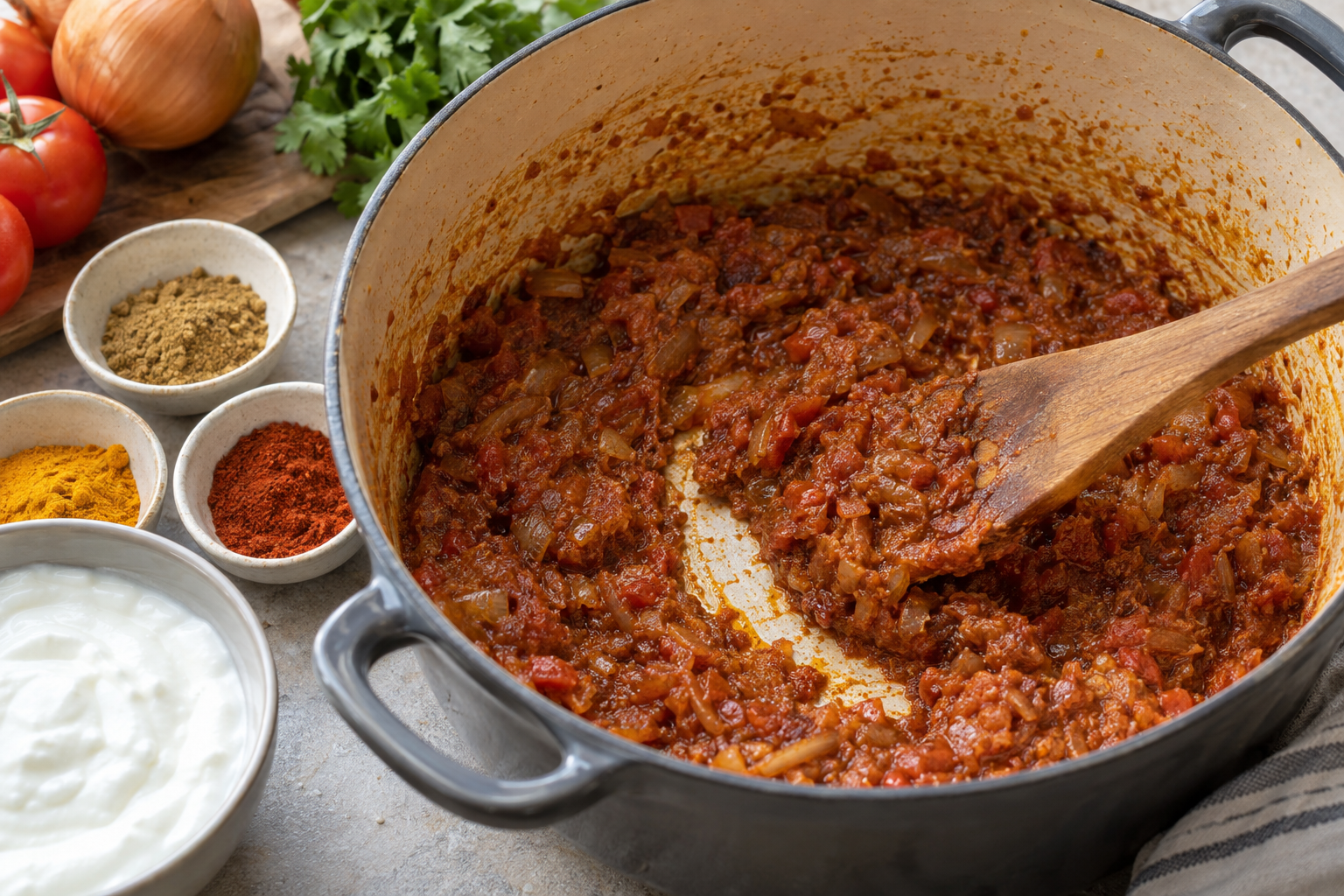
Garam masala roughly means a warming spice blend. Warming here does not mean chilli-hot. The blend might contain cardamom, cinnamon, cloves and black pepper, for example, but its composition varies between regions, households and producers. In our curry, it goes in towards the end, so the more volatile aromas are still noticeable when the food reaches the table. Smell the jar: a tired blend will not become livelier just because it has an impressive name.
Then there are the onions, those rather unassuming flavour builders. They need to turn evenly golden, not merely translucent. Stir often and lower the heat if the edges darken before the rest has softened. A small splash of water can loosen anything sticking to the bottom. The aim is sweetness and depth, not little burnt bits hiding in the sauce.
Cooking spices and aromatics in fat while stirring, often with liquid that is gradually allowed to evaporate, is associated with the technique known as bhunao. It is more than giving a little curry powder a quick fry. As the tomatoes reduce, the base thickens and the ingredients' flavours become more closely integrated. A little glossy fat may appear around the edge, but do not chase large pools of oil: with a moderate amount of fat, the sign can be subtle.
Yoghurt, on the other hand, needs gentle handling. Use a full-fat, plain variety, lower the heat and incorporate it gradually. Vigorous boiling increases the risk of a grainy sauce, especially with low-fat products. Boneless chicken thighs stand up to the simmering that follows better than breast meat. Even so, do not let the curry boil hard or cook longer than the meat needs; being in a sauce does not automatically guarantee juiciness.
Many kitchens, many ways to gather
There is no single North Indian curry and single South Indian curry sitting at opposite ends of a spectrum. The distinctions are far more nuanced. In parts of northern India, combinations of onions, tomatoes, dairy products and aromatic spices are familiar, but not all the food is creamy or mild. Kerala has chicken curries with coconut milk and curry leaves, but other styles too. Goan cooking features, among other things, sour notes and Portuguese influences in certain meat dishes.
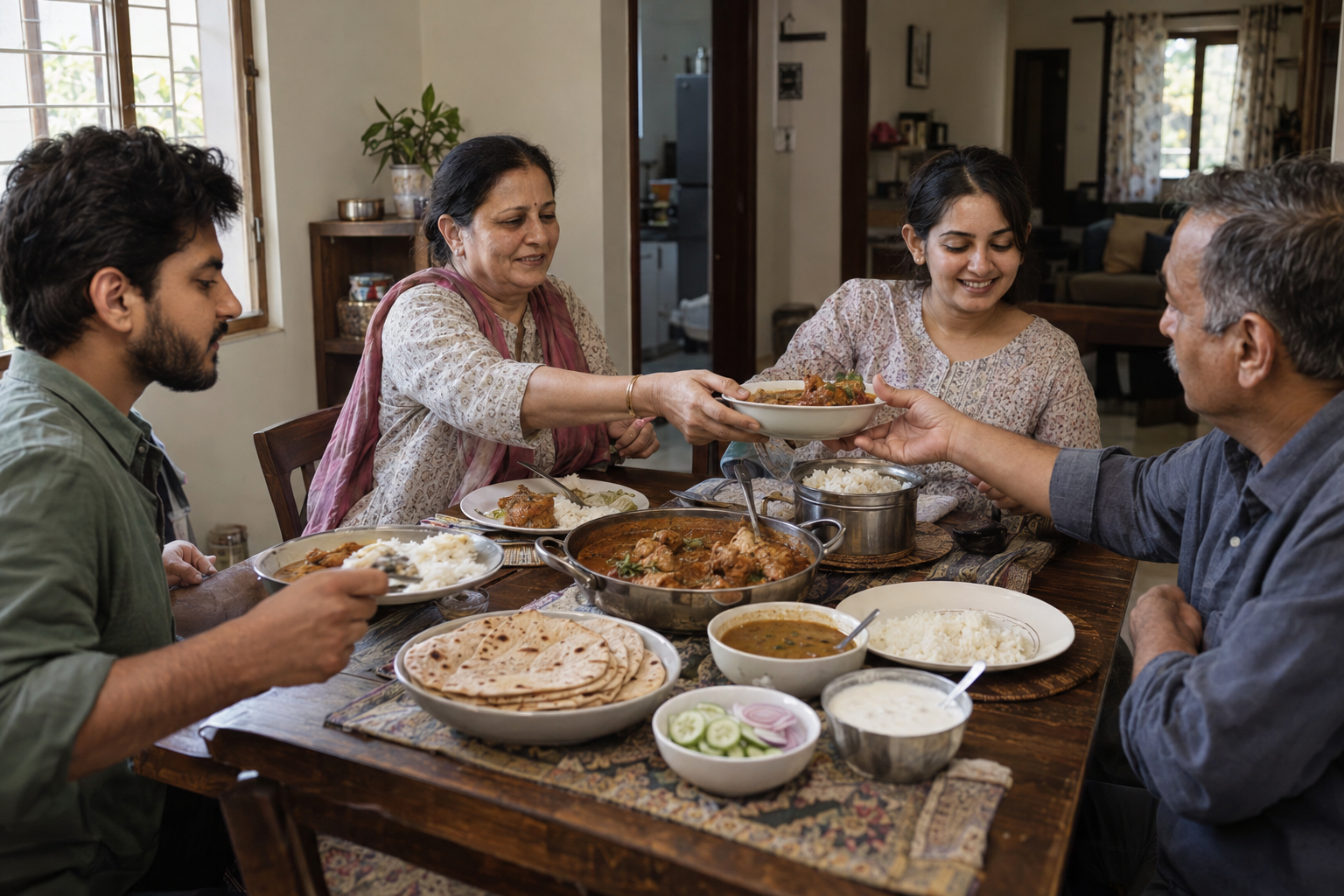
Examples like these help us appreciate the breadth, but should not become new stereotypes. Coconut does not automatically mean South Indian, and garam masala does not make every curry North Indian. Even within the same city, two households may cook their chicken in completely different ways. Availability, finances, family tastes and whoever is at the stove shape the food at least as tangibly as geography does.
Chicken is not a given on every Indian table, either. Vegetarian food traditions are extensive and varied, and the choice to eat meat is influenced by many kinds of beliefs and circumstances. Where chicken is eaten, it can be anything from everyday food to part of a larger weekend meal. It is wiser to talk about a particular dish and its context than about what Indians generally eat.
At the table, I think this curry benefits from a few well-chosen companions. Rice soaks up the sauce; roti or another soft, unsweetened flatbread lets you scoop it up. Cucumber, plain yoghurt and a little lemon bring coolness and acidity. A lentil dish or a simple vegetable can make the meal more substantial without everything having to compete with the same spices. Hospitality need not mean ten bowls, just something delicious to share and plenty of sauce.
How to make it work in a Swedish kitchen
Most of what you need is available in an ordinary Swedish supermarket: boneless chicken thighs, yoghurt, ginger, garlic, tomatoes and the most common spices. Whole cumin seeds and several varieties of garam masala can often be found in South Asian food shops and Swedish online shops selling Indian ingredients. Buy small packets you will use rather than large bags that sit around. Store spices somewhere dark and dry, not above a steaming stove.
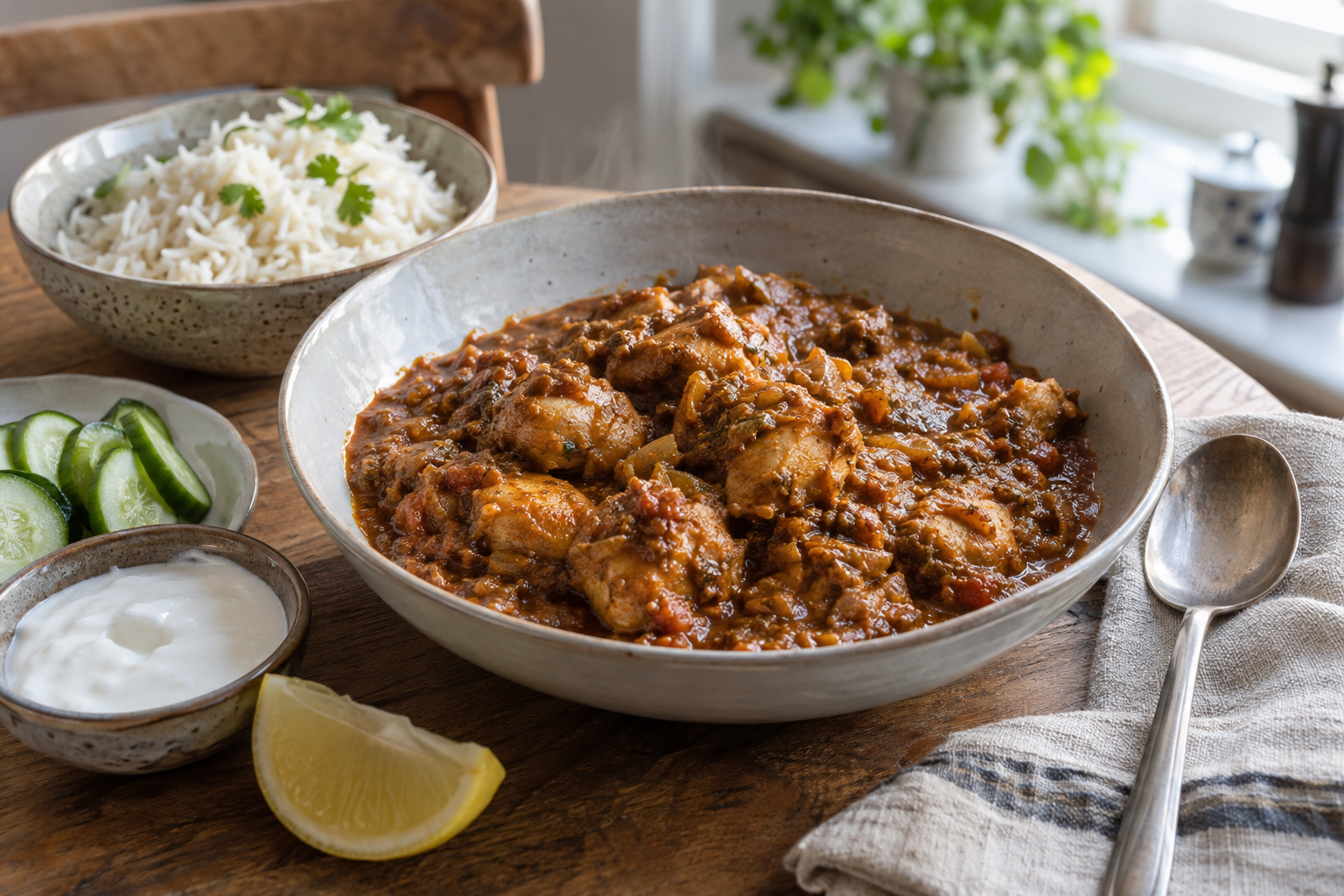
Kashmiri chilli is often used for colour and generally moderate heat, though its strength varies between products. If you cannot find it, mild paprika with a little cayenne pepper works well in this particular recipe. Fresh curry leaves are not needed here. They are an aromatic ingredient in their own right, not leaves from a plant that produces curry powder, and cannot be replaced with a spoonful of that blend.
Choose a roomy, heavy-based pot and set out the spices before you begin. The few seconds between fragrant and burnt pass quickly. Adjust the seasoning only once the chicken is cooked and the sauce has reached the right consistency: salt, acidity and chilli taste different after reduction. The recipe below makes a rich, medium-hot dinner, with scope to make it milder. What matters most is not maximum heat, but that every spoonful reveals more flavour than the first.
Chicken curry with tomato, yoghurt and garam masala
A modern home-cooked version with North Indian influences, not a specific regional classic. Golden onions and reduced tomatoes make a rich sauce. The recipe is mild to medium-hot, depending on the chilli.
Ingredients
Method
- 1Take the measured yoghurt for the sauce out of the fridge as you begin preparing. Finely chop the onions. Grate the garlic and peeled ginger. Cut the chicken into roughly 4 cm pieces on a separate chopping board. Wash your hands and utensils after contact with raw chicken.
- 2Heat the oil in a heavy-based pot over a medium heat. Add the whole cumin seeds and let them sizzle for 20–30 seconds, until fragrant and beginning to change colour. They should not turn black.
- 3Add the onions and fry for 15–20 minutes, until soft and evenly golden. Stir often. Lower the heat if needed and add a tablespoon or so of water if the onions stick before reaching the right colour.
- 4Stir in the ginger and garlic and fry for 1–2 minutes. Add the ground coriander, turmeric, paprika and cayenne pepper along with 2 tbsp of the measured water. Stir for about 30 seconds without letting the spices burn.
- 5Add the tomatoes and salt. Simmer uncovered over a medium heat for 8–12 minutes. Stir regularly until the base has thickened, the raw tomato aroma has mellowed and the surface looks glossy.
- 6Reduce the heat to low. Whisk the yoghurt until smooth in a bowl and stir in a few spoonfuls of the hot tomato base. Then gradually stir the yoghurt mixture into the pot. Do not let the sauce boil vigorously.
- 7Fold in the chicken and the remaining water. Bring to a gentle simmer. Cover and simmer over a low heat for 15 minutes, stirring occasionally.
- 8Meanwhile, cook the rice according to the packet instructions. Slice the cucumber and spoon the yoghurt for serving into a bowl.
- 9Uncover the pot and stir in the garam masala. Simmer for a further 5–10 minutes, until the sauce is nicely thickened and the chicken is cooked through. Use a thermometer to check that one of the largest pieces reaches at least 74 °C in the centre. Add a little water if the sauce becomes too thick.
- 10Season to taste with salt and a little lemon juice if desired. Scatter over the coriander if you like, and serve with rice, cucumber, yoghurt and lemon wedges.
- The paprika and cayenne can be replaced with about 1 tsp Kashmiri chilli powder. Start cautiously: the heat varies between brands.
- Chicken breast works too, but usually needs less simmering time. Check the temperature early so the meat does not dry out.
- Feel free to make the onion and tomato base the day before. Cool quickly, refrigerate and reheat before adding the yoghurt and chicken.
- Cool leftovers quickly in shallow containers and store at about 4 °C. Eat within 2–3 days or freeze. Cool any leftover rice quickly too, and reheat leftovers thoroughly.
What goes in the glass
- Alcohol-freeChilled mango and yoghurt lassiThe tang of yoghurt and mellow sweetness of mango complement the tomato sauce and offer a cooling contrast to the chilli. Add water if you like, so the drink is not too rich.
- BeerPale lager with low to moderate bitternessLively carbonation and light maltiness complement the rich sauce without competing with the spices. An alcohol-free lager in the same style also works well.
- WineOff-dry Riesling with moderate alcoholFresh acidity matches the tomatoes and yoghurt, while a little residual sweetness balances the chilli heat. Choose this rather than a tannic, high-alcohol red wine.
Enjoy alcohol in moderation. Alcohol-free options go just as well with the food.
Sources
- Madhur Jaffrey, An Invitation to Indian Cooking (1973)
- K. T. Achaya, Indian Food: A Historical Companion (1994)
- Lizzie Collingham, Curry: A Tale of Cooks and Conquerors (2006)
- Alan Davidson; tredje upplagan redigerad av Tom Jaine, The Oxford Companion to Food (2014)
Ask questions about "Chicken curry that lets the spices shine". Answers are based on the magazine's own articles.