Pad kra pao – Bangkok on a plate
Holy basil, a hot wok and a crisp-edged egg: how to make this Thai everyday favourite at home.
Garlic sizzles, chilli tickles your nose and the basil goes in just before serving. Pad kra pao is fast food that demands precision – and a dish where the right leaves matter more than a long ingredient list. We follow Bangkok’s beloved everyday dish from the street-food wok to the Swedish kitchen.
 By Mai LindqvistReporter · East and Southeast Asian cuisine – Thailand, Vietnam, Japan, China and Korea
Translated from Swedish with AI assistance.
Go to the recipes (2) ↓A sizzle between orders
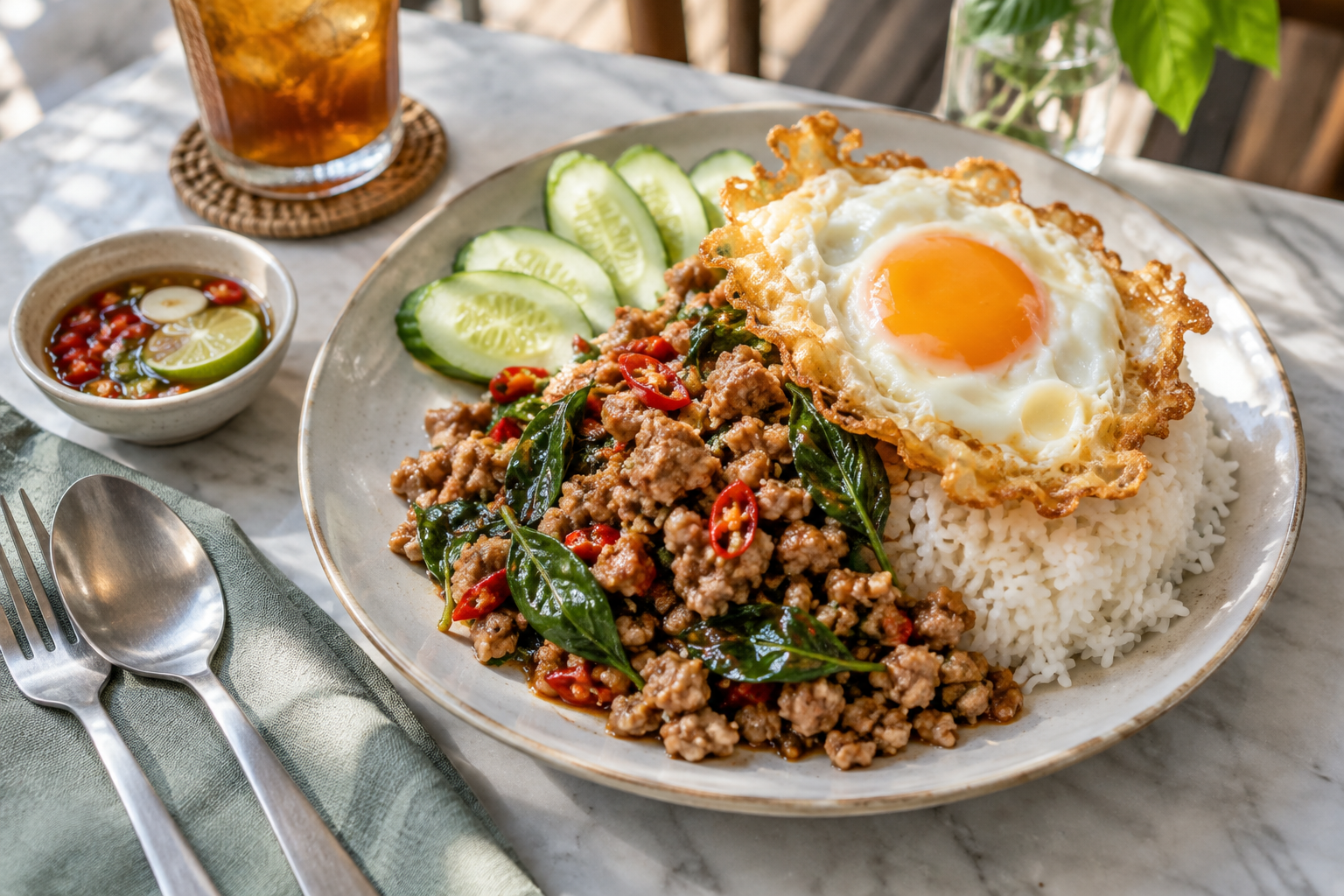
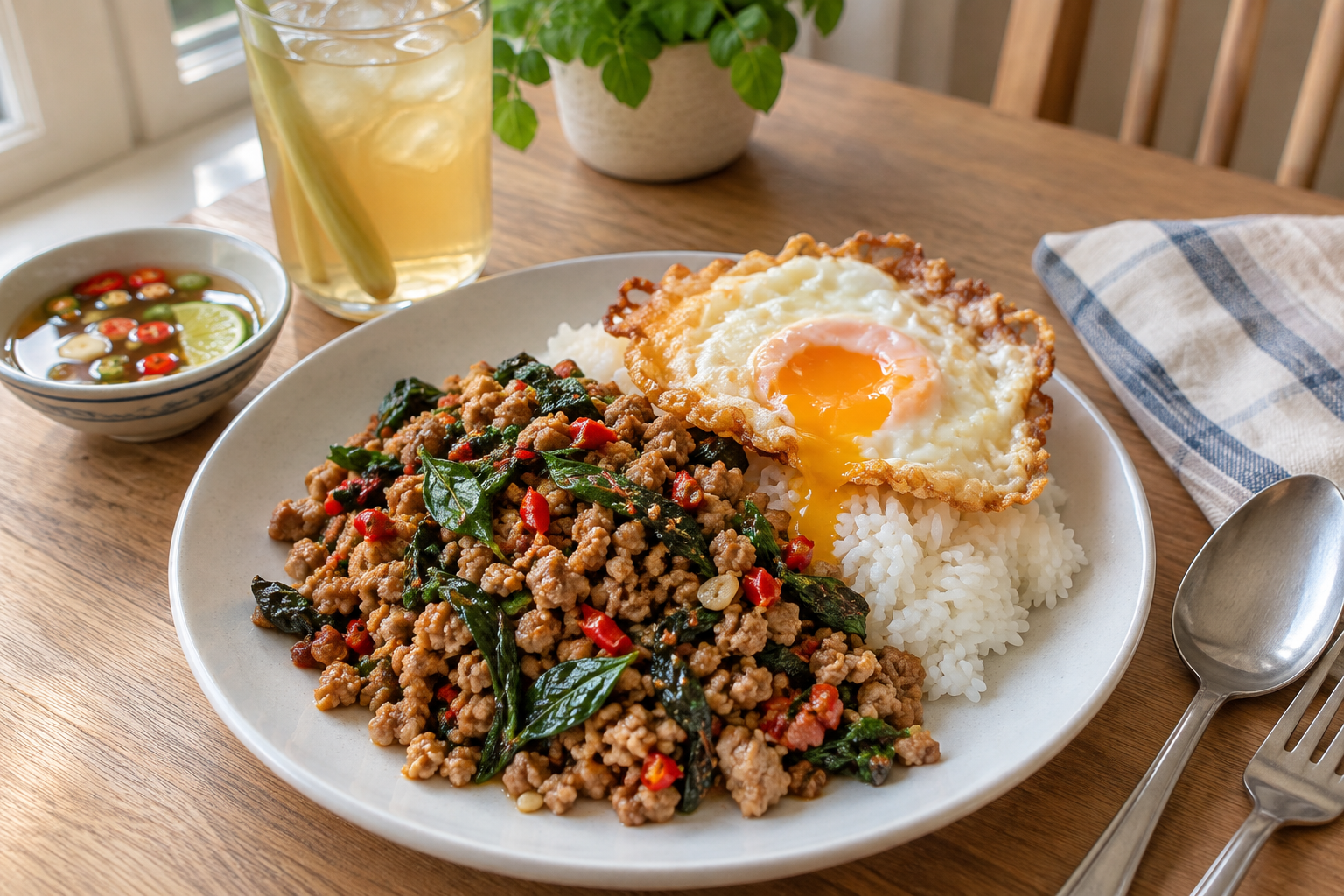
First comes the sound: the short, sharp sizzle as garlic and chilli hit hot oil. Then the smell, so pungent you can almost feel it behind your eyes. The cook tosses in the meat, breaks it up with a spatula and works quickly over the flame. A few splashes of sauce. A handful of leaves. Waiting on the plate are jasmine rice and an egg whose white has puffed into a crisp, golden web around the yolk.
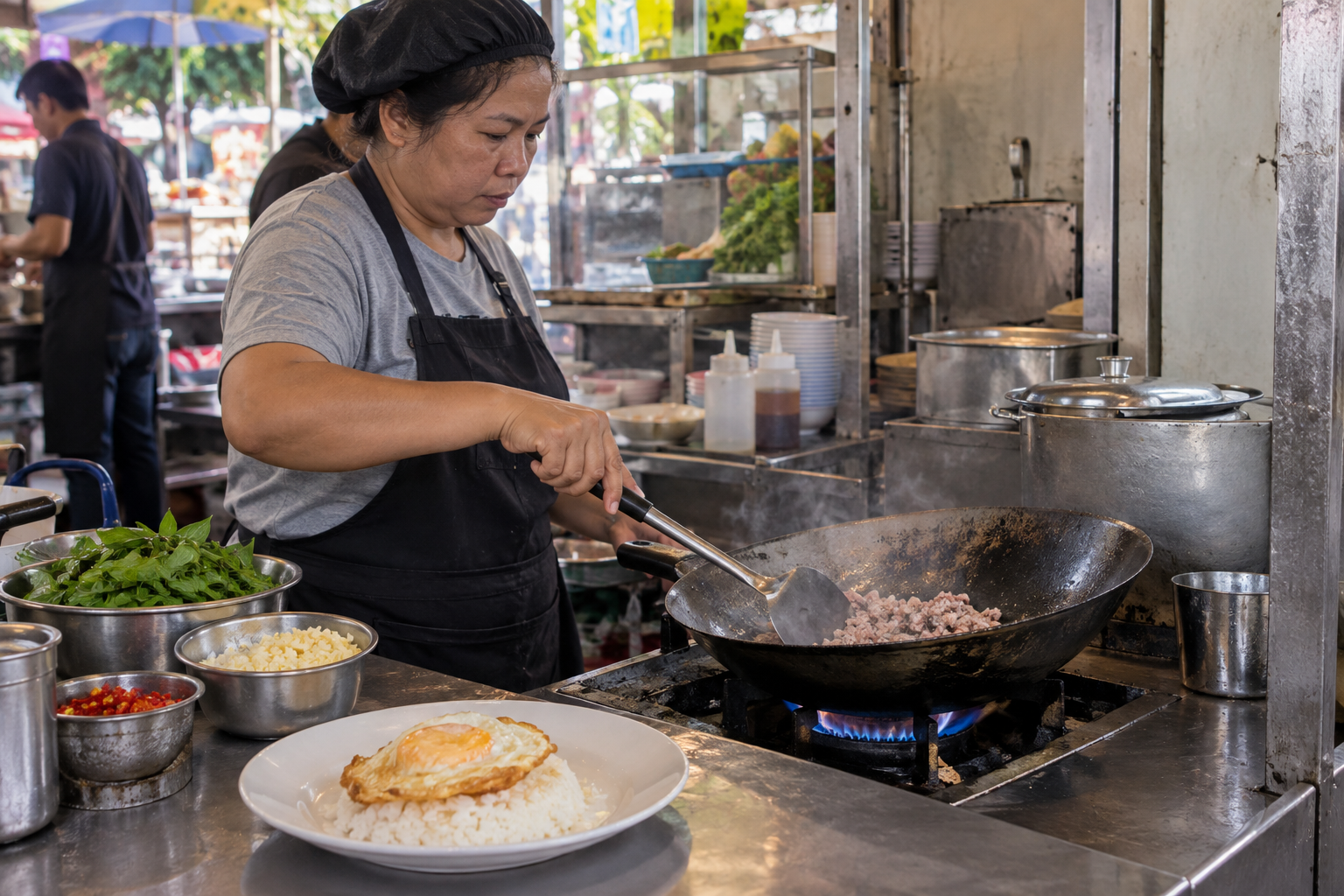
This is how an order of pad kra pao might come together at one of Bangkok’s small cook-to-order kitchens. This is not a dish that needs a lengthy introduction at the table. It should arrive hot, fragrant and full of immediate flavour: salt, chilli heat, the depth of browned meat and basil’s peppery aroma. The yolk can run between the grains of rice; the crunchy white gives you something to bite into.
Pad kra pao, also written as phat kaphrao and pad gaprao, among other spellings, is one of those dishes people turn to when they want something familiar without thinking too hard. That does not mean everyone wants it the same way. Pork or chicken? Coarsely chopped or minced? Plenty of chilli? An egg on top, and how firmly cooked? That small order holds any number of preferences.
For the Swedish home cook, the dish is rewarding, but revealing too. There is no slow-simmered stock to hide behind and no thick sauce to smooth everything over. The difference between an aromatic stir-fry and a pale stew of mince comes down to a few concrete decisions: which basil you buy, how much meat you put in the pan and when the leaves meet the heat.
An everyday classic without a clear birth certificate
The name describes the heart of the dish. Phat refers to stir-frying, while kaphrao is holy basil. The name is therefore not tied to a particular meat. The pork version may be called phat kaphrao mu, the chicken version phat kaphrao kai. Spellings vary when Thai is rendered in the Latin alphabet; here we use pad kra pao.

Bangkok is an obvious place to encounter the dish, but that is not the same as the city having a documented claim to its invention. The cookbook sources used here do not establish an undisputed first cook, restaurant or dated original version. Stories that give the dish a precise birth year should therefore be treated with caution. Its place in everyday Thai cooking today is far clearer than its beginnings.
Stir-frying belongs to a broader historical context. Chinese migration and trade have had a major influence on Thailand’s food, particularly noodle dishes, frying techniques and the use of various soy products. Pad kra pao can be understood against that background, but this context does not prove a simple, direct lineage for this particular dish. Techniques move between cuisines; ingredients, seasonings and eating habits make them local.
Here, holy basil gives the quick stir-fry an unmistakably Thai character. Fish sauce and chilli play their part, as does serving the boldly seasoned meat with rice. Modern recipes often include soy sauce and oyster sauce. Proportions vary, and there are more restrained versions too, where fewer seasonings allow the basil and meat to speak more clearly.
The dish’s spread beyond Thailand has brought further changes. On restaurant menus it sometimes becomes simply “thai basil chicken”, and the basil may be a different species from the one that gives the dish its name. Peppers, onions and other vegetables may play a larger role. The result can be delicious, but to understand the original flavour concept, we need to recognise what has changed rather than pretend that all green leaves and all stir-fry sauces amount to the same thing.
What we are cooking here, then, is a modern everyday dish, not a reconstructed historical original. The recipe card uses minced pork, holy basil and a moderate amount of mixed seasonings. It is a practical home version, with particular care taken over the things easily lost on the journey from a street-food burner to an ordinary Swedish hob.
The basil is not a garnish
The crucial purchase is kaphrao: holy basil, generally listed as Ocimum tenuiflorum, with Ocimum sanctum as a synonym. Its leaves are often duller and more serrated than those of the smooth-leaved basil sold in Swedish herb pots. The scent is peppery and spicy, sometimes with hints of clove. It is particularly noticeable when the leaves warm through in the food.
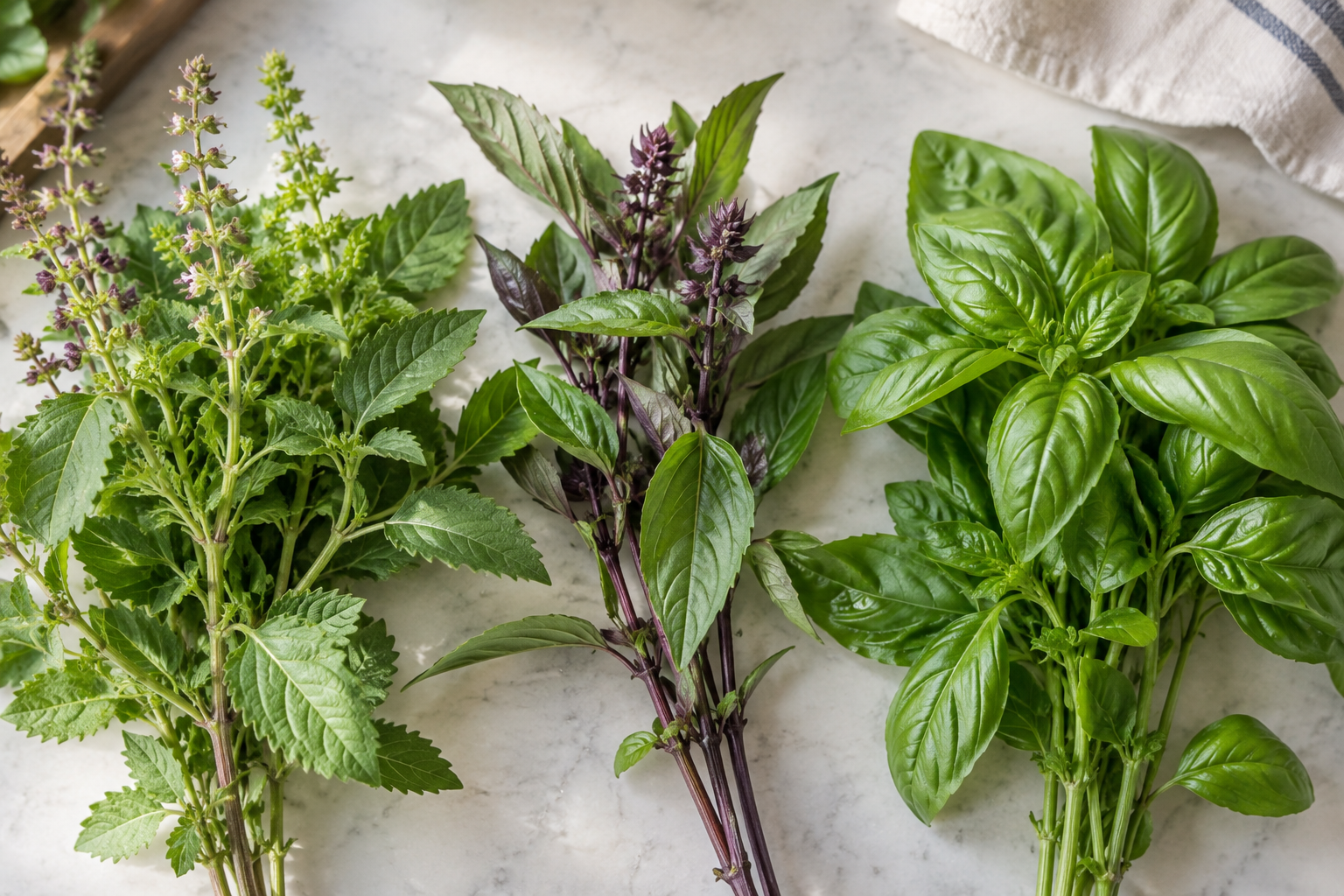
Do not confuse it with horapha, the Thai basil often sold simply as Thai basil. Horapha has a more pronounced sweet anise or liquorice note and often purple stems. It is excellent in many other dishes, but makes a different pad kra pao. Common sweet basil, the kind used for pesto, is a third option with a different aromatic profile.
In Sweden, fresh kaphrao is found mainly in Asian grocery shops that stock Thai ingredients. Ask for holy basil or kaphrao and read the label; the words “Thai basil” are not enough to identify the species. Frozen holy basil can be a useful alternative, although the leaves lose their firmness. It still belongs in a dish where the herb is meant to wilt in the heat rather than sit on top like a crisp salad.
If you can only find horapha, you can absolutely still make dinner. Treat it as an acknowledged substitution, not an ingredient with an identical flavour. Ordinary basil also works in an improvised basil stir-fry, but do not try to recreate kaphrao by adding ground cloves: the concentrated spice can easily take over and lacks the leaves’ green aromas.
Pick the leaves from the thicker stems. Tender tips can go in too. Rinse only if necessary and dry thoroughly, as excess surface water cools the pan and can make the oil spit. The basil should not simmer with the meat from the start. Fold it in at the end, giving it just enough heat to wilt and release its fragrance.
Quantity matters too. A few leaves on top are a garnish, not the dish’s defining flavour. A generous handful for every two portions is a better starting point, but it is worth weighing it the first time: herbs can be packed very loosely or very tightly. In the recipe we use 30 grams of picked leaves for four portions, enough to make their presence felt without overwhelming the meat.
Heat, salt and a sauce that stays in the background
Pad kra pao should not taste like a generic sweet stir-fry sauce with chilli. Salt is its backbone, garlic adds body and chilli cuts through the fried food. A little sugar can round off sharp edges, but the dish need not be distinctly sweet. You should still be able to pick out the basil’s aroma after the first bite.
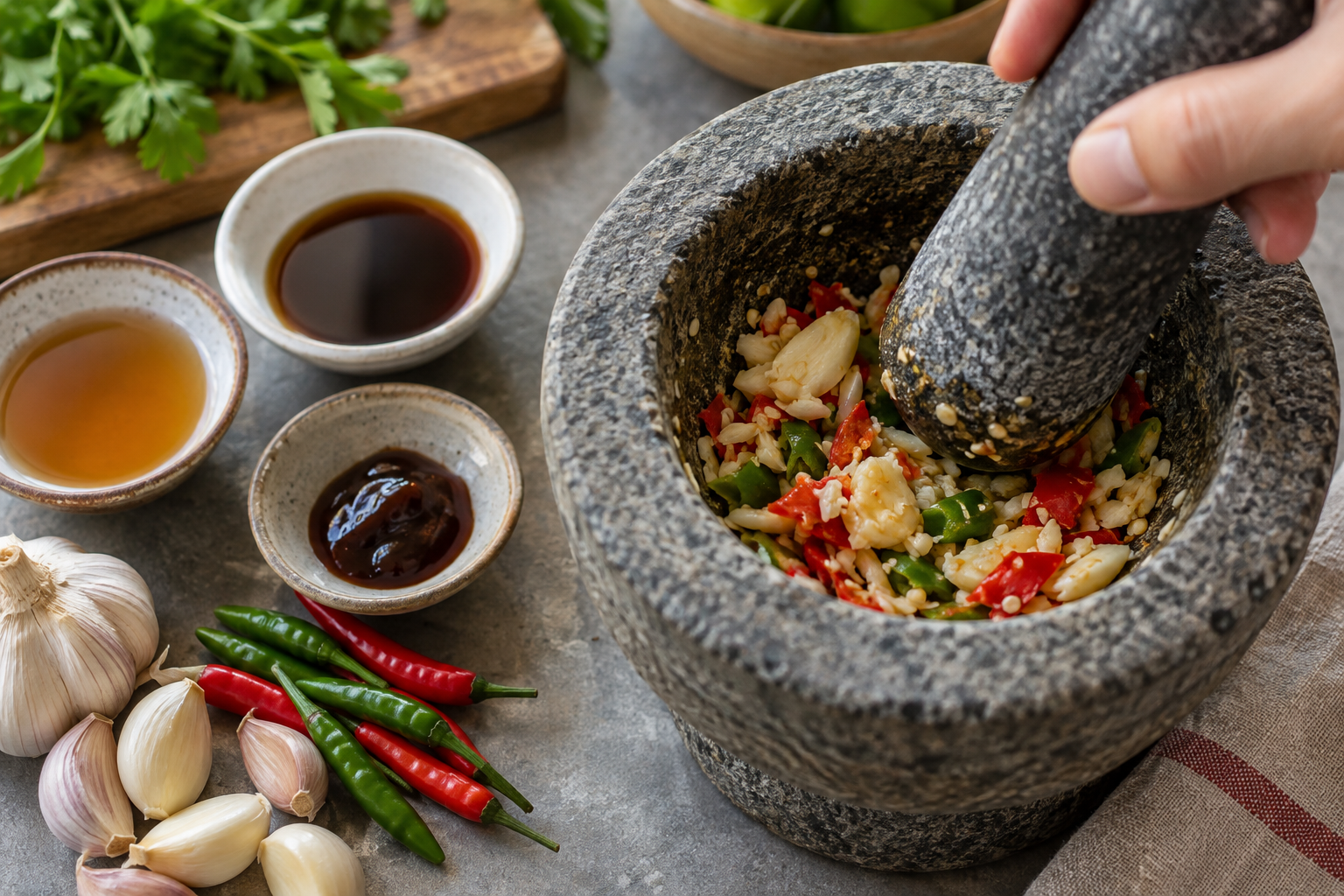
Fish sauce brings both salt and fermented depth. Light soy sauce adds further saltiness and body, while oyster sauce contributes umami, a little sweetness and a lightly binding consistency. It is easy to overdo things when three salty products go into the same bowl. Brands vary too. It is therefore wiser to start cautiously and adjust towards the end than to try to rescue an overly salty stir-fry with more sugar.
Here, light soy sauce means a light Asian soy sauce intended for seasoning, not “light” in the sense of reduced salt. Thai light soy sauce works well. Dark soy sauce is a different product, often used in smaller amounts for colour and sometimes sweetness. It is not needed in our recipe. If you only have Japanese soy sauce, it can serve as a practical substitute, but taste as you go because its character and saltiness differ.
Garlic and chilli work particularly well when coarsely pounded in a mortar. They do not need to become a smooth paste. On the contrary, small, uneven pieces meet the oil in different ways and give a livelier result. Without a mortar, simply chop the ingredients and then crush them with the flat of a knife. The important distinction is between roughly worked ingredients and a large quantity of wet, finely blended purée.
Small Thai chillies can be very hot, and their heat varies. The number in a recipe is therefore a guide, not a guarantee of a particular heat level. Start with fewer if you are unsure. Using some milder red chilli gives you more chilli flesh and colour without the same heat, though it also changes the flavour slightly. Nam pla prik on the table lets anyone who wants it add more bite.
Minced pork is easy to find and stands up well to fast, hot frying. Choose mince that is not extremely lean. Hand-chopped meat gives more distinct pieces and a little more bite; boneless chicken thighs are a juicy alternative to chicken breast. Prawns, squid and other proteins also appear in kaphrao dishes, but need their own cooking times.
Vegetables are a subject that readily stirs strong opinions. Yardlong beans appear in some versions, and restaurant interpretations may contain considerably more vegetables. We leave them out here to make the core flavours clear. This is not a claim that all Thai kitchens cook the same way, but a way of putting meat, chilli, garlic and basil centre stage.
Working the wok – and mastering the egg
High heat matters, but a scorching pan is not the whole answer. The quantity and moisture content of the ingredients determine what happens when they land in it. Put half a kilo of fridge-cold meat into a small pan and the temperature drops quickly. The meat releases liquid and boils before it starts to fry. At that point, how hot the pan was to begin with matters less.
On an ordinary home hob, cooking in two batches is often the simplest improvement. Use a roomy wok suited to your hob or a large frying pan that retains heat well. A flat-bottomed wok needs good contact with an electric hob. A substantial frying pan may therefore work better than a thin wok with a small base. If using non-stick cookware, do not preheat it empty on maximum heat.
Let the meat make contact with the surface before you start turning it constantly. The aim is a little browning, not to make every crumb of mince dry and crunchy. Then work with the spatula, breaking up clumps and allowing the released liquid to evaporate. Add the sauce only once the meat is actually frying. It should sizzle around the pieces and leave them glossy, not form a deep pool.
The garlic is the delicate element. It can turn bitter in moments if the oil is too hot or you stop to look for the next ingredient. Have everything ready: prepared chilli and garlic, measured sauce, picked basil and a serving dish. Switch on the extractor fan before you begin. Chilli in hot oil can be intensely irritating, even for those who love spicy food.
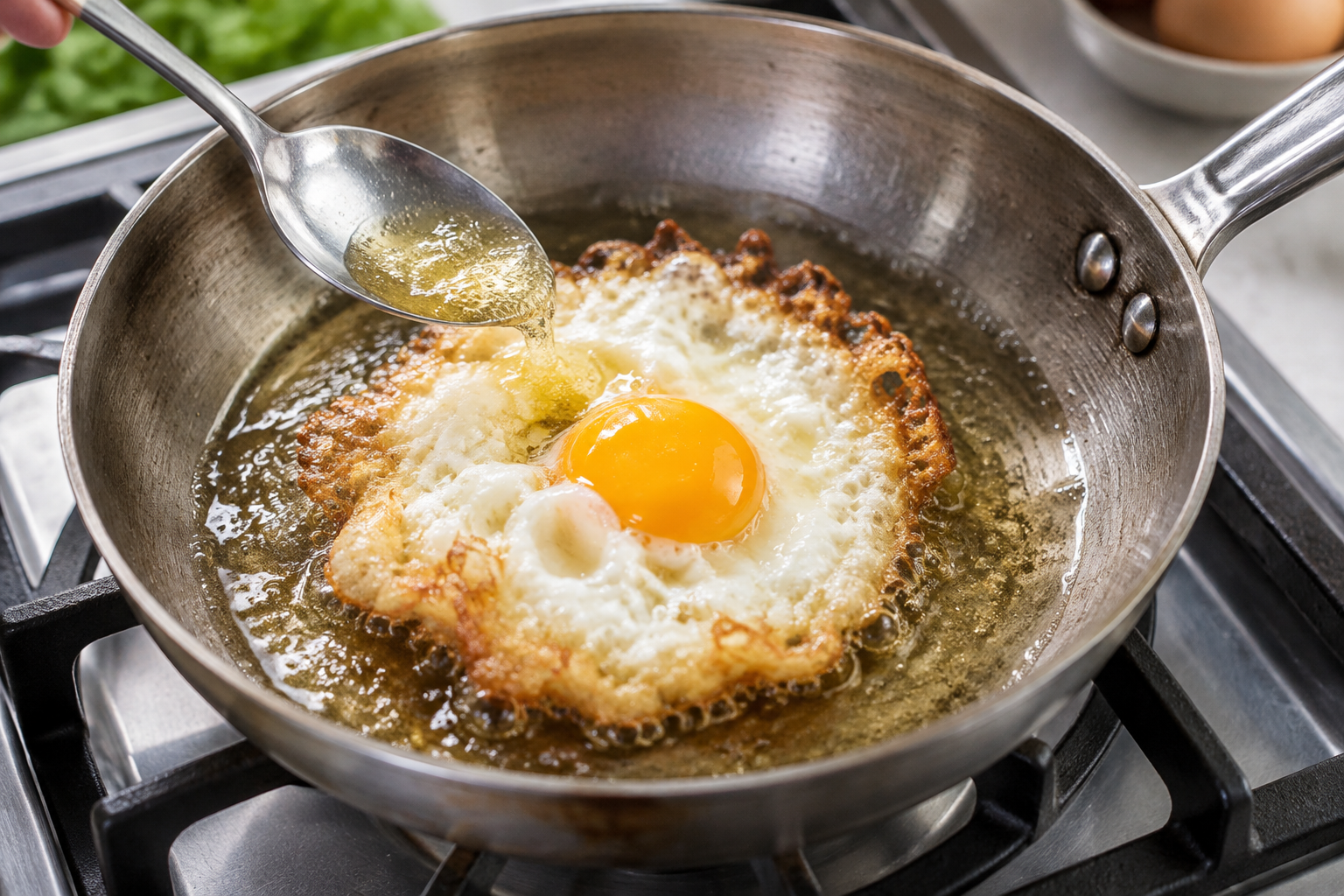
The egg, khai dao, deserves as much attention as the stir-fry. For this plate, an egg fried in plenty of oil is ideal, with bubbling white and brown, crisp edges. Its texture is quite different from an egg gently fried in a little butter. The yolk can be runny, creamy or fully set, as you prefer; crisp edges need not mean raw white.
Crack the egg into a cup first and slide it in close to the surface of the oil. Use a pan with raised sides and keep water away from the hot oil. With a spoon, carefully baste the white with oil so that it sets around the yolk too. The cooked white should not be translucent. Place the egg on the rice or right beside the meat and serve while the edges are still crisp.
One plate, a spoon and room for personal taste
Pad kra pao belongs among dishes often eaten as a complete portion with rice, rather than as a big shared meal for the whole table. It suits a quick lunch, a weeknight dinner or a break between errands. In a cook-to-order kitchen, the customer can specify the meat, heat level and whether to add an egg. That adaptability is part of the dish’s everyday appeal.
Rice does more than bulk out the meal. It softens the salt and chilli, absorbs the sauce and lets you appreciate the basil afresh between more intense mouthfuls. Jasmine rice’s gentle floral fragrance is particularly well suited. Keep it fluffy rather than wet: overly wet rice makes the whole plate soft, especially once the yolk and meat juices run into it.
A spoon and fork are common utensils for a Thai rice dish like this. The fork helps push food onto the spoon. It is practical rather than ceremonial: you can gather rice, meat and a little egg in the same bite. There is no need to present the dish with chopsticks simply because it comes from an Asian cuisine.
Alongside it there may be nam pla prik, fish sauce with sliced chilli, also often called prik nam pla. Lime and garlic are common additions, but there is no single obligatory formula. It is a table condiment, not a sauce to pour generously over an already salty dish. A few drops on the rice or egg may be enough. In our version, lime adds a fresh acidity that complements the rich stir-fry.
To drink, an unsweetened or lightly sweetened lemongrass iced tea works well. Its clean citrus fragrance meets the herbs without competing with them. A pale lager is an alcoholic option for those who want one, but high alcohol and pronounced hop bitterness are not needed here. Water is, of course, a good choice too. The drink should offer a pleasant pause, not drown out the basil.
From Swedish hob to dinner on the table
The smartest way to succeed at home is to think about sequence rather than speed. Start with the rice. Mix the table condiment while it cooks, then do all the chopping. Once the oil is hot, you should not need to measure soy sauce or hunt for a colander. The brief frying time is the culmination of the preparation, not the whole cooking process.
Read the labels too if you are cooking for someone with an allergy or particular dietary requirements. Oyster sauce usually contains molluscs, fish sauce contains fish and soy sauce may contain wheat. Vegetarian mushroom sauces can fulfil the role of oyster sauce, but check the ingredients. A vegetarian version also needs a replacement for the fish sauce, not just the meat.
For a meat-free version, firm tofu and finely chopped mushrooms make a good starting point. Dry the tofu and fry the mushrooms so that their liquid evaporates before adding the sauce. Otherwise, this version can easily become a stew too. Keep the coarsely pounded garlic and chilli, use vegan seasonings and let holy basil provide the same distinctive finishing note.
The recipe below serves four and is fried in two batches. It takes a little longer than tipping everything into one pan, but gives you better control. If you have two frying pans, you can fry the eggs as the meat finishes cooking; otherwise, cook them first and keep them briefly on a warm plate. Make it a priority to add the basil close to serving time.
Finally, taste the meat with a little rice, not just straight from the pan. A dish that seems intense on its own may be just right on the plate. If it needs more salt, the table condiment is there. If it needs more heat, everyone can add chilli. But the basil must already be there: warm, peppery and impossible to mistake for mere decoration.
Pad kra pao with pork, crisp fried eggs and jasmine rice
A modern home version cooked in two batches to suit an ordinary Swedish hob. Holy basil gives the dish its characteristic aroma. The recipe delivers a definite but adjustable chilli kick; the heat of individual chillies varies considerably.
Ingredients
Method
- 1Rinse the rice in cold water and drain. Cook using the quantity of water and cooking time stated on the packet. Leave to rest, covered, for about 10 minutes after cooking, then gently fluff with a fork.
- 2Coarsely pound the garlic and chilli in a mortar, or roughly chop and crush with the flat of a knife. Wash your hands and utensils after handling the chilli. Rinse the basil leaves if necessary and dry thoroughly.
- 3Mix together the fish sauce, light soy sauce, oyster sauce, sugar and 2 tbsp water. Divide the mince, chilli-garlic mixture, sauce and basil into two equal batches.
- 4Cook the eggs first if you only have one pan. Heat the egg-frying oil in a small frying pan with raised sides over a medium-high to high heat; it should shimmer but not smoke. Crack an egg into a cup and carefully slide it in close to the surface of the oil.
- 5Fry each egg for about 1–2 minutes for a soft yolk, longer for a firm one. Carefully spoon a little hot oil over the white until it is completely opaque and the edges are golden. Lift out with a slotted spoon and place on a warm plate. Repeat with the remaining eggs. Never leave the hot oil unattended.
- 6Heat a roomy wok or frying pan over a medium-high to high heat. Add 1 tbsp oil and half the chilli-garlic mixture. Stir-fry for 10–20 seconds, until fragrant but before the garlic darkens.
- 7Immediately add 300 g mince and spread it out. Leave to brown for about 45 seconds. Then break it up with the spatula and fry for another 3–5 minutes, until cooked through and any released liquid has evaporated. Lower the heat slightly if the garlic is in danger of burning.
- 8Pour in half the sauce and toss for 30–60 seconds. The meat should be glossy with a little moisture remaining, not swimming in sauce. Add no more than a tablespoon of extra water if it has become dry. Fold in half the basil for about 15–30 seconds, just until the leaves wilt. Transfer to a warm serving dish.
- 9Repeat with the remaining oil, chilli-garlic mixture, mince, sauce and basil. If anything has burnt onto the pan, carefully wipe it out before starting again.
- 10Divide the rice, meat and eggs between four plates. Add cucumber on the side and serve immediately with nam pla prik in a small bowl. Let everyone add the condiment sparingly.
- No holy basil? Use frozen kaphrao according to the packet instructions, or substitute the same weight of Thai basil, horapha. The latter gives a sweeter anise note and is not identical in flavour.
- Chicken version: replace the minced pork with 600 g finely chopped boneless chicken thighs or minced chicken. Cook all the way through; a thermometer should read 74 °C in the chicken.
- Vegetarian: use 400 g firm tofu and 300 g finely chopped mushrooms. Fry the mushrooms until their liquid has evaporated and brown the tofu in batches. Replace the oyster sauce with a vegan mushroom-based stir-fry sauce and the fish sauce with vegan fish sauce or a carefully measured amount of extra soy sauce.
- Cool leftovers quickly in shallow containers and refrigerate at about 4 °C. Ideally eat within 1–2 days and reheat thoroughly. It is worth frying fresh eggs; rice should not be left at room temperature for long.
Nam pla prik with lime
A simple, salty and fiery table condiment made with fish sauce and chilli. Lime and garlic add freshness and extra aroma. Use a few drops at a time, especially with an already well-seasoned pad kra pao.
Ingredients
Method
- 1Set out a clean small bowl or glass jar. Rinse the chillies and remove the stems.
- 2Cut the chillies into very thin rings. Keep the seeds if you like; for a milder condiment, the most reliable approach is to reduce the total amount of chilli.
- 3Peel the garlic and slice it as thinly as you can. Add to the bowl with the chilli.
- 4Add the fish sauce and lime juice. Stir and leave to stand for about 5 minutes while the rest of the meal finishes cooking.
- 5Taste a few drops on a little rice. Adjust with a little more lime if you would like more acidity. Serve in the bowl with a small spoon so everyone can add their own.
- You can mix the fish sauce and chilli ahead of time, but add the lime and garlic close to serving for the freshest aroma.
- Keep covered in the fridge and ideally use within 2–3 days. Make small batches rather than topping up an old bowl.
- For a vegetarian table condiment, use vegan fish sauce. Light soy sauce and lime are delicious too, but taste different.
What goes in the glass
- Alcohol-freeLight lemongrass iced teaA lightly brewed black tea with lemongrass, served cool and unsweetened or lightly sweetened, offers a fresh, aromatic pause between chilli, salt and fried egg. Avoid over-steeped tea, whose astringency can easily take over.
- BeerPale lager with moderate bitternessGentle maltiness complements the browned meat and the egg’s crisp edges, while carbonation provides a refreshing contrast to the fat. Choose moderate bitterness and alcohol rather than a bold, hop-dominated style.
- Alcohol-freeAlcohol-free pale lagerOffers the same gentle malt note and bubbly contrast to the oil-fried egg white, without alcohol. A dry, mildly bitter version keeps the basil’s spicy aroma centre stage.
Enjoy alcohol in moderation. Alcohol-free options go just as well with the food.
Sources
- David Thompson, Thai Street Food (2010)
- David Thompson, Thai Food (2002)
- Leela Punyaratabandhu, Simple Thai Food: Classic Recipes from the Thai Home Kitchen (2014)
- Pailin Chongchitnant, Hot Thai Kitchen: Demystifying Thai Cuisine with Authentic Recipes to Make at Home (2016)
- Royal Botanic Gardens, Kew, Plants of the World Online: Ocimum tenuiflorum L.
Ask questions about "Pad kra pao – Bangkok on a plate". Answers are based on the magazine's own articles.