Ramen – from the docks to the noodle bar
Chinese roots, Japanese precision and a world of broth
It begins not with the noodles, but with the interplay: the depth of the broth, the saltiness of the tare, the fragrance of the fat and that first springy bite. We follow ramen from Yokohama’s Chinatown through Tokyo’s noodle kitchens and post-war hunger to today’s global bars – and make shoyu ramen with chashu and marinated eggs.
 By Mai LindqvistReporter · East and Southeast Asian cuisine – Thailand, Vietnam, Japan, China and Korea
Translated from Swedish with AI assistance.
Go to the recipe ↓A bowl that won’t wait
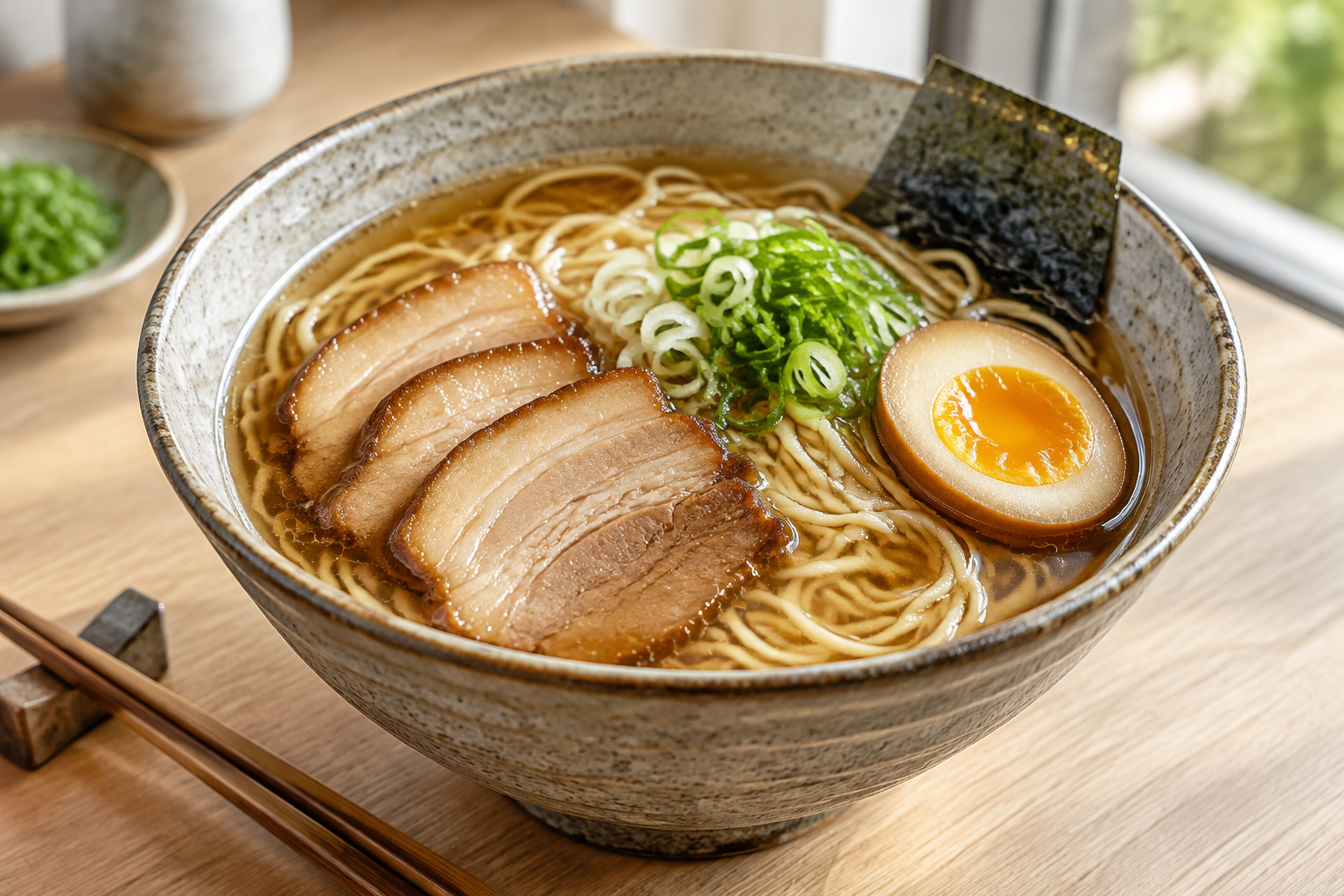
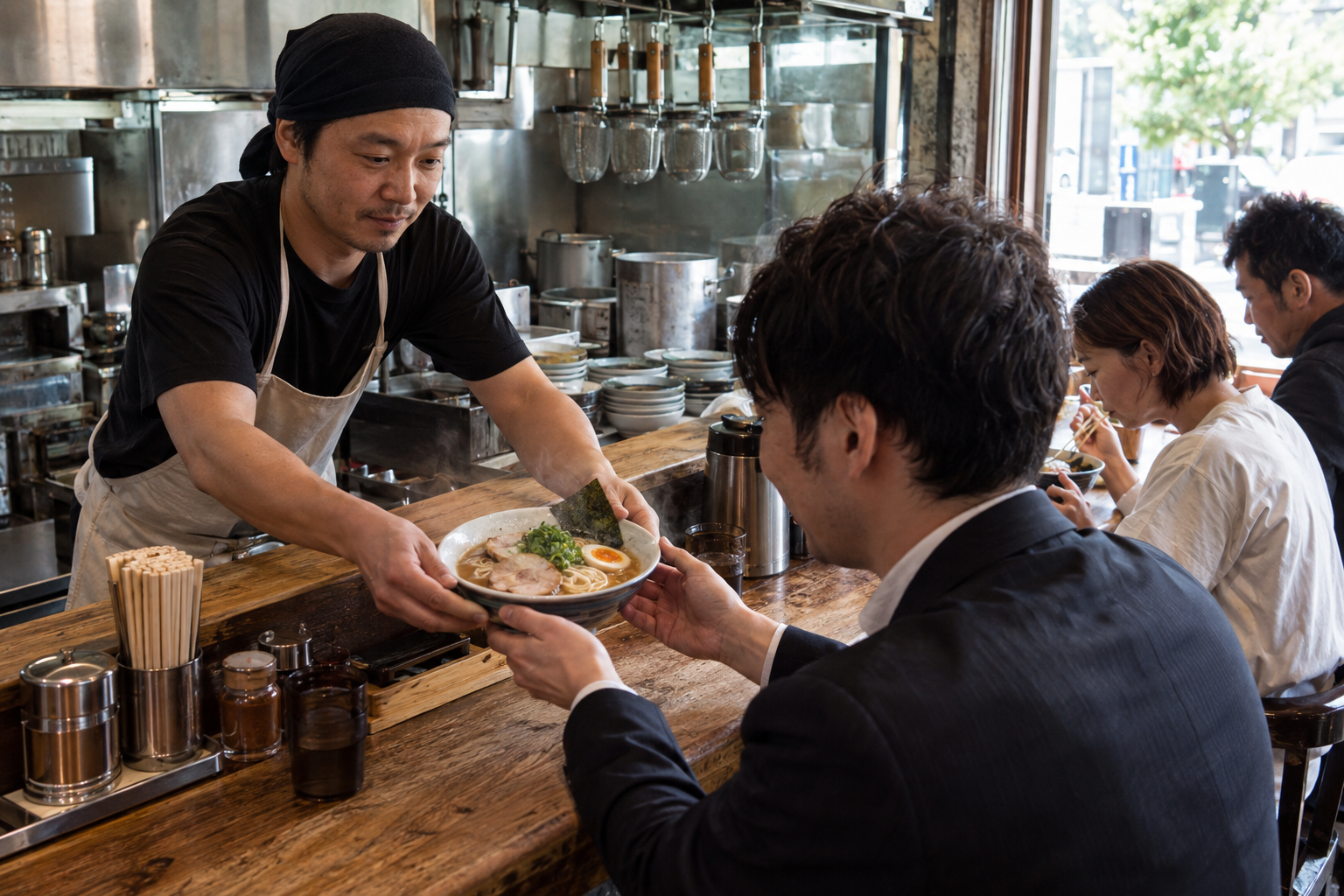
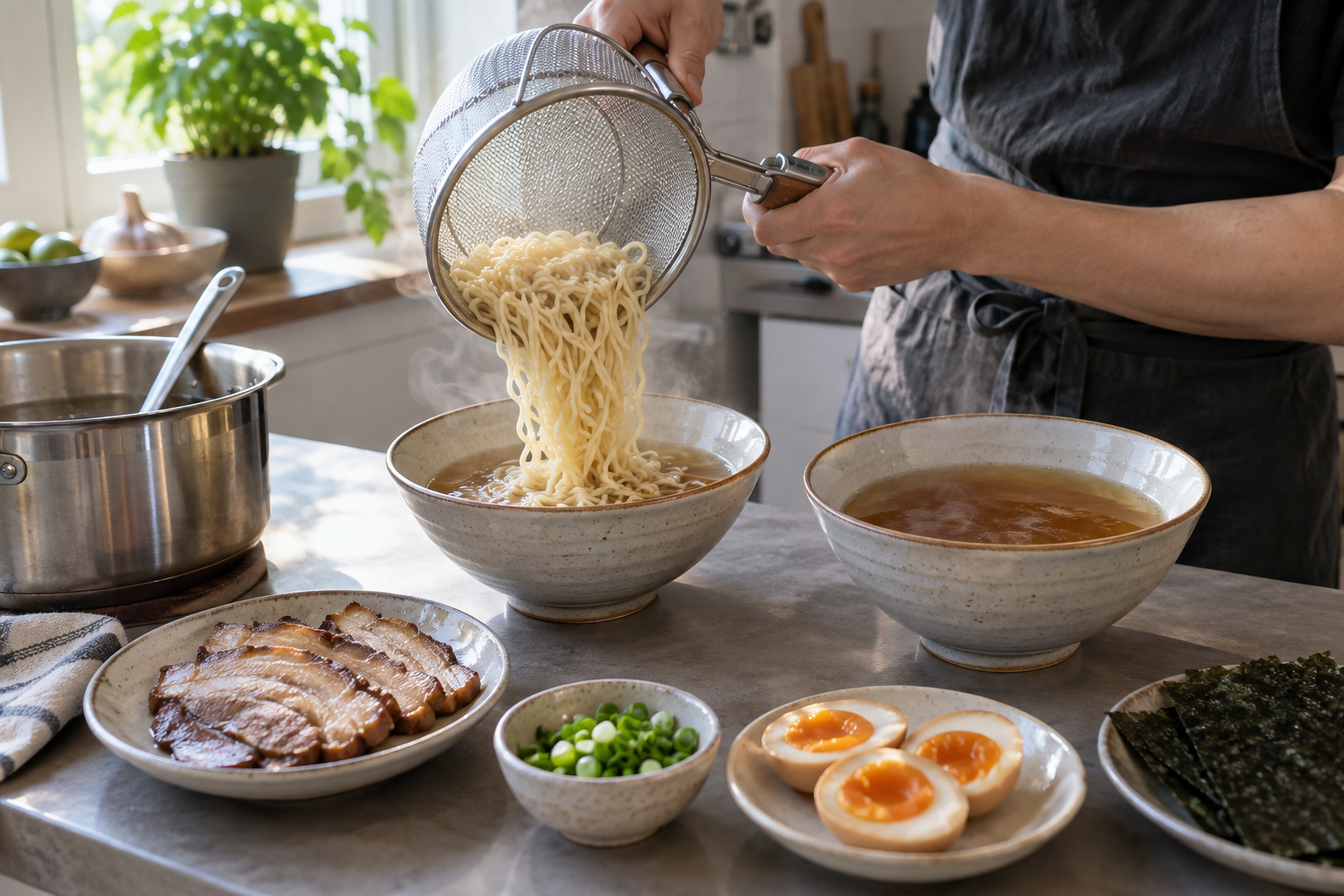
The noodle strainer strikes the rim of the pot with a short, metallic tap. The water is shaken off, the noodles slide into the bowl, and a couple of quick movements with chopsticks arrange them in the broth. Pork, spring onions and a halved egg go on top. The scent of soy sauce, ginger and warm fat rises from the surface. Now the clock starts ticking: the noodles keep softening, the sheet of nori soaks up soup and the broth begins to cool.
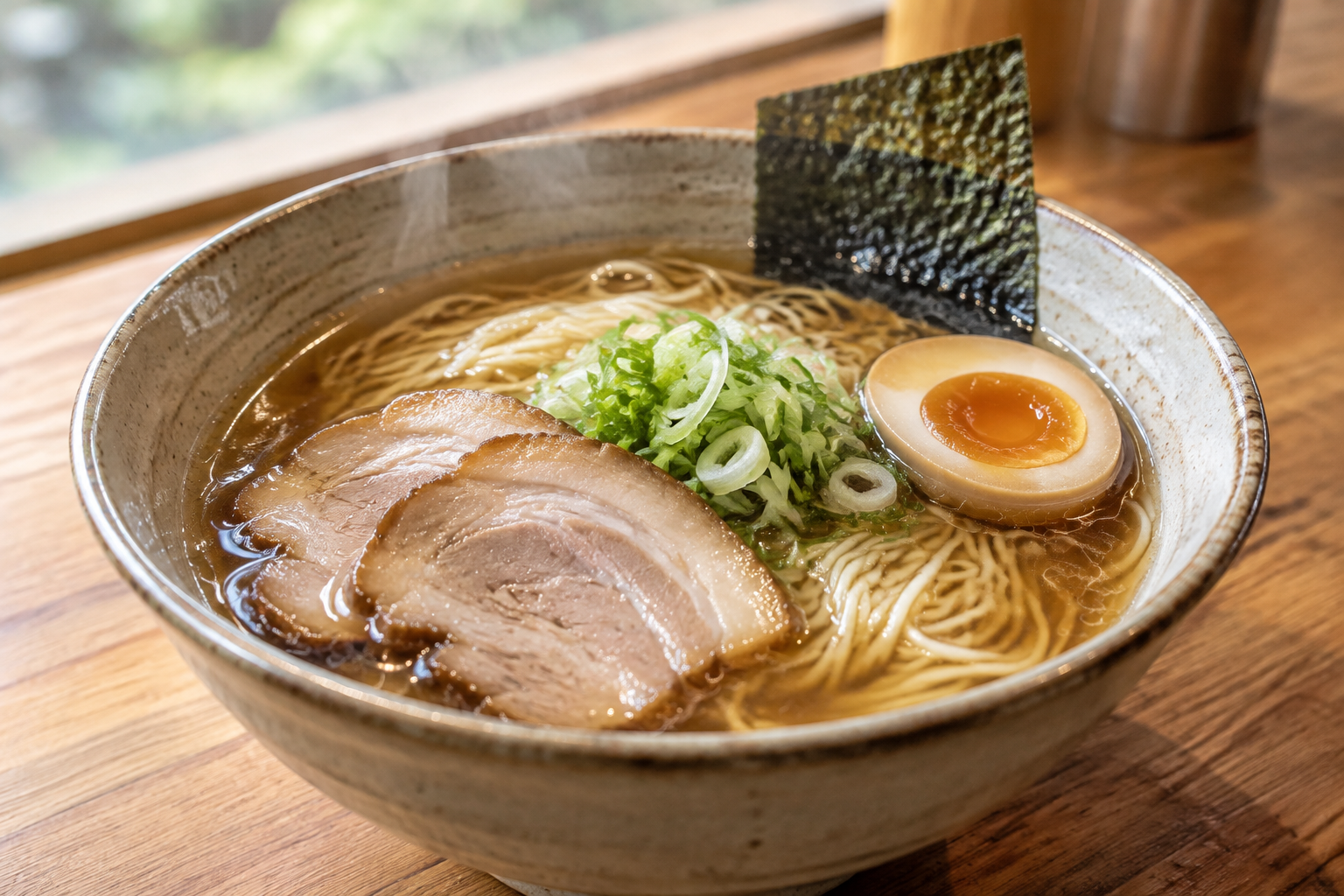
This is the fundamental rhythm of the ramen bar, as easy to understand at a counter in Tokyo as in Gothenburg. Much of the work happens long before serving. The encounter between noodle and broth, however, should be brief. A good bowl is not a stew that happens to contain pasta, but several carefully prepared elements assembled just as someone is ready to eat.
Start by tasting a spoonful of broth. Notice how the saltiness draws together the richness of the chicken or pork, how the fat carries the aromas and how the noodles offer resistance. Ramen need not be heavy, milky or overloaded to make an impression. A clear shoyu ramen can be just as intense as a long-simmered tonkotsu, yet speak in a different voice.
Calling ramen a Japanese noodle soup is correct, but incomplete. The dish carries Chinese culinary traditions, Japanese restaurant customs, the migration of port cities and changes in the post-war food supply. Later come industrial instant noodles, regional pride and an international restaurant culture where every detail can become a speciality in its own right. The road to today’s bowl is anything but straight. It crosses countries, social classes and different ideas about what modern food should be.
The ports, the Chinese kitchens and a famous date
When Yokohama opened to international trade in 1859, a city emerged where foreign merchants, sailors and workers needed both housing and food. Chinese residents established businesses, including places to eat, and the area that became the city’s Chinatown developed around these networks. Noodle soups were among the Chinese dishes Japanese diners could encounter in the port city’s restaurants.
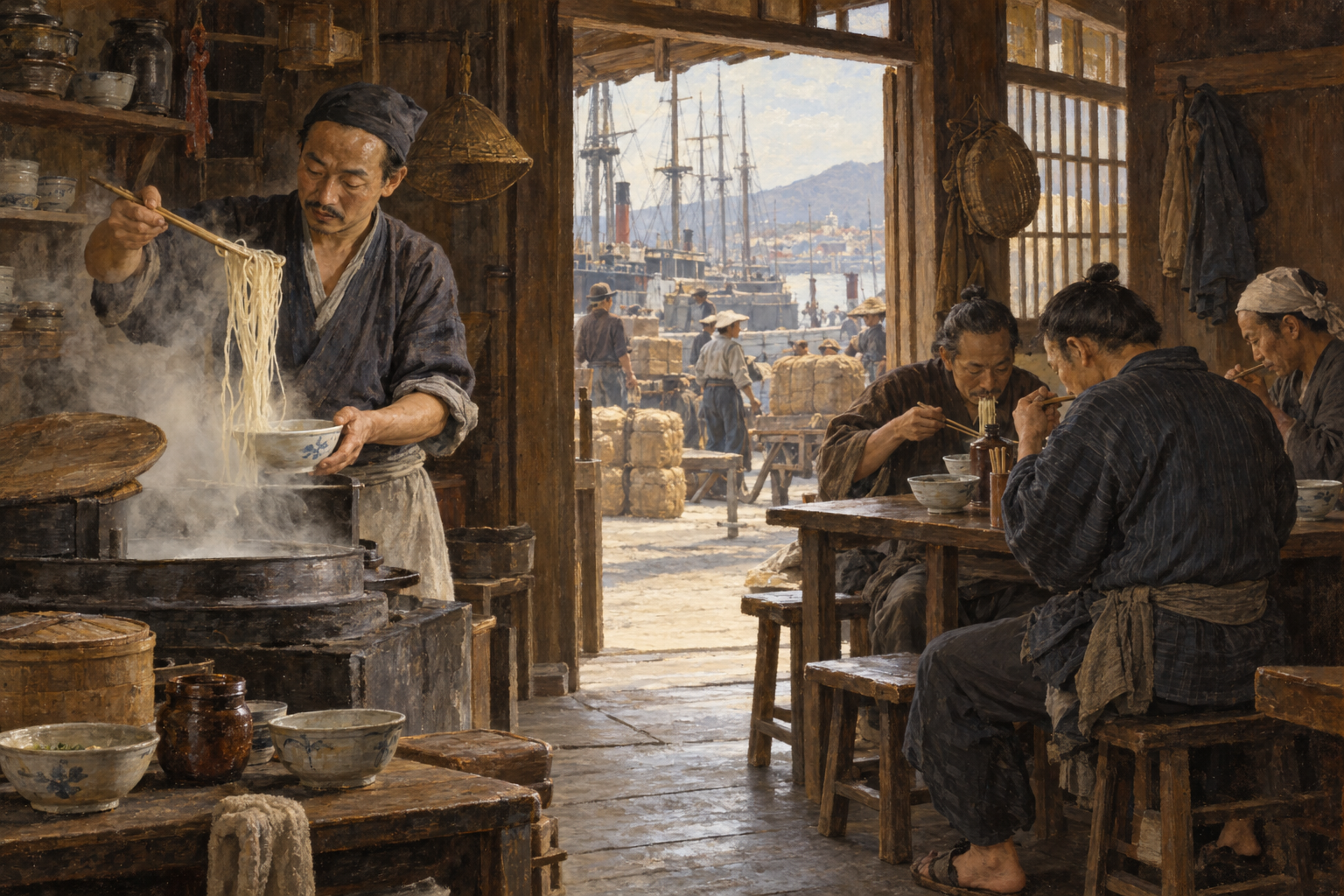
But Yokohama should not be cast as the sole inventor. Other ports and cities, including Kobe and Nagasaki, were also meeting points for Chinese and Japanese food cultures. What later came to be called ramen took shape gradually. There is no reliably documented moment when someone set down the first bowl and thereby invented the entire category.
Older stories about the 17th-century feudal lord Tokugawa Mitsukuni eating Chinese noodles often surface in ramen histories. Interesting though these early noodle meals may be, they tell us very little about how the modern restaurant dish emerged. Someone eating a related kind of noodle several hundred years earlier is not the same as an unbroken tradition leading to today’s ramen bar.
A more useful landmark is 1910. That was when Rai-Rai Ken opened in Asakusa in Tokyo, a busy entertainment and shopping district. The restaurant, which employed Chinese chefs, is often highlighted as an important force in popularising Chinese-inspired noodles among Japanese diners. It was not necessarily the first to serve noodle soup, but it became a notable part of the dish’s urban breakthrough.
Here we also catch sight of the history of its names. Terms such as shina soba signalled the connection to China. The word Shina later acquired strongly derogatory and colonial associations and is not a neutral modern name for the country. In today’s food vocabulary, terms such as chūka soba, roughly meaning Chinese noodles, appear alongside ramen instead. Despite the word soba, these are usually wheat noodles, not the buckwheat noodles many Swedes associate with the name.
The precise linguistic route taken by the word ramen is also debated. It is often linked to Chinese noodle terms, particularly lāmiàn, but that does not mean Japanese ramen noodles are generally hand-pulled. Most are made by rolling or sheeting a dough and then cutting it. The name, technique and dish have not always developed in step.
From workers’ food to the instant noodle revolution
In the early 20th century, Chinese-inspired noodle soup became part of Japan’s growing urban culture. Restaurants and itinerant vendors could offer a hot, filling meal that suited people short of time and money. Noodles, broth and a limited number of toppings could be served quickly. Ramen thus became bound up with work, movement and an everyday life increasingly lived outside the home.
The Second World War and defeat in 1945 shattered the food supply. Post-war cities faced shortages, rationing and black markets where food was both sold and cooked. Noodles became part of this precarious food supply. Later, the availability of American wheat and changes in Japan’s food system helped give wheat-based foods a larger role.
It is still too simple to say that American flour created ramen. The dish already existed and had found an audience. Rather, the post-war years changed the conditions for its spread. As the economy grew, people moved to cities and more of them ate out, ramen fitted the bill: hot, quick, relatively inexpensive and endlessly adaptable.
The next clear milestone is 1958. That year, Momofuku Ando and the company that became known as Nissin launched Chicken Ramen in Japan. The noodles were precooked and dried by frying, allowing them to rehydrate quickly in hot water. The manufacturer describes the product as the world’s first instant noodles. The crucial step was not inventing noodle soup, but making it shelf-stable and easy to prepare without a pot of broth on the stove.
Cup Noodles arrived in 1971, with packaging that doubled as a cooking and serving vessel. This made the noodle meal even easier to carry between workplaces, student rooms and suitcases. Instant noodles and restaurant ramen have developed side by side ever since. One relies on industrial standardisation; the other can make much of each bowl’s local and personal character.
The contrast is less absolute than it seems. Both are about accessibility, satisfying hunger and a flavour experience with immediate appeal. Today, ramen can be found everywhere from modest lunch spots to ambitious specialist restaurants far beyond Japan. When the dish is presented as fine dining, it is worth remembering its other life: as quick everyday food for people who needed to eat and move on.
Four names – but not four watertight categories
Shoyu, shio, miso and tonkotsu often appear on menus as four equivalent choices. Practical, but a little misleading. The first three primarily describe the seasoning: soy sauce, salt and fermented soybean paste respectively. Tonkotsu, by contrast, describes a broth made from pork bones. A tonkotsu can therefore also be seasoned with shoyu or shio.
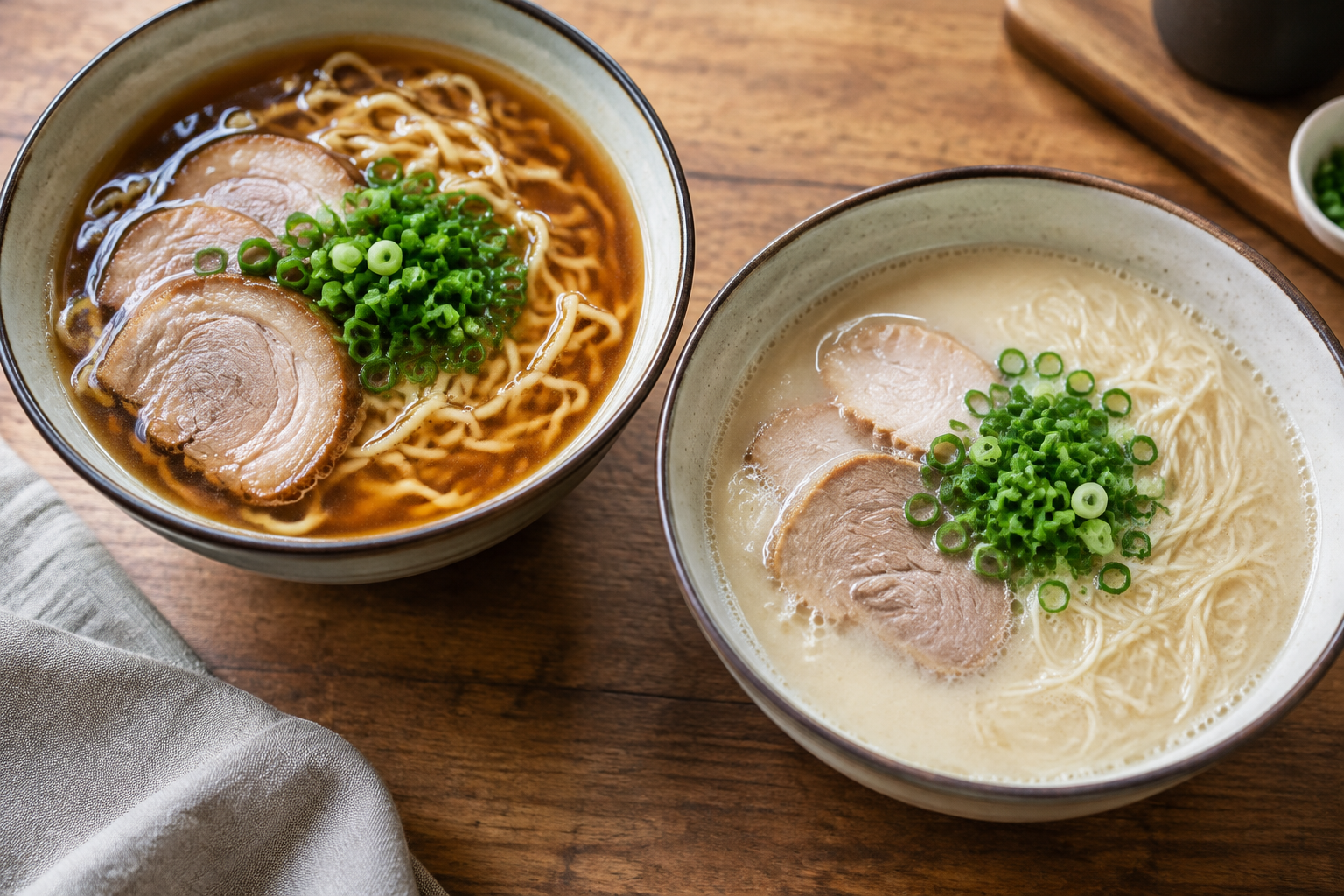
Shoyu ramen is strongly associated with Tokyo and older forms of the city’s chūka soba. The broth may be based on chicken, pork, fish or combinations of these. Soy sauce adds saltiness, fragrance and colour, but a darker soup need not be more intense than a pale one. That depends on both the broth and the amount of seasoning. A good shoyu should taste of more than soy sauce alone: the meat’s gentle sweetness and aromas must still come through.
Shio ramen uses salt as its main seasoning base and is often associated with Hakodate on Hokkaido. It is frequently served with a relatively clear broth, but shio is no guarantee of transparency or low fat content. Without soy sauce’s distinctive aroma, the broth’s own character becomes particularly apparent. Chicken, dried fish and shellfish can take centre stage.
Miso ramen has a strong connection to Sapporo, where it developed in the post-war years, with the 1950s an important period. Miso’s fermented, roasted and sometimes fruity notes add depth. In many Sapporo-inspired kitchens, vegetables and other ingredients are stir-fried in a wok before the broth is added. The wok’s sizzling heat then becomes part of the dish’s aroma, not merely a way to cook the toppings. Sweetcorn and butter do feature, but they do not define all miso ramen.
Tonkotsu is particularly associated with Kyushu, including Kurume and the Hakata area of Fukuoka. Vigorous boiling disperses fat and other components into fine particles in the liquid, while long cooking helps extract gelatin from connective tissue. The result can be an opaque, creamy broth with no added cream. Hakata-style ramen is often served with thin, straight noodles, and in many places diners can order extra noodles, kaedama, for the soup remaining in their bowl.
The regional landscape extends far beyond these names. Kitakata is known for relatively broad, wavy noodles; in other cities, dried anchovies, pork fat or particular soy sauce blends take the lead. Regional labels are useful signposts, not unbreakable rules. Restaurants borrow, combine and break with conventions all the time.
Broth, tare, fat and noodles
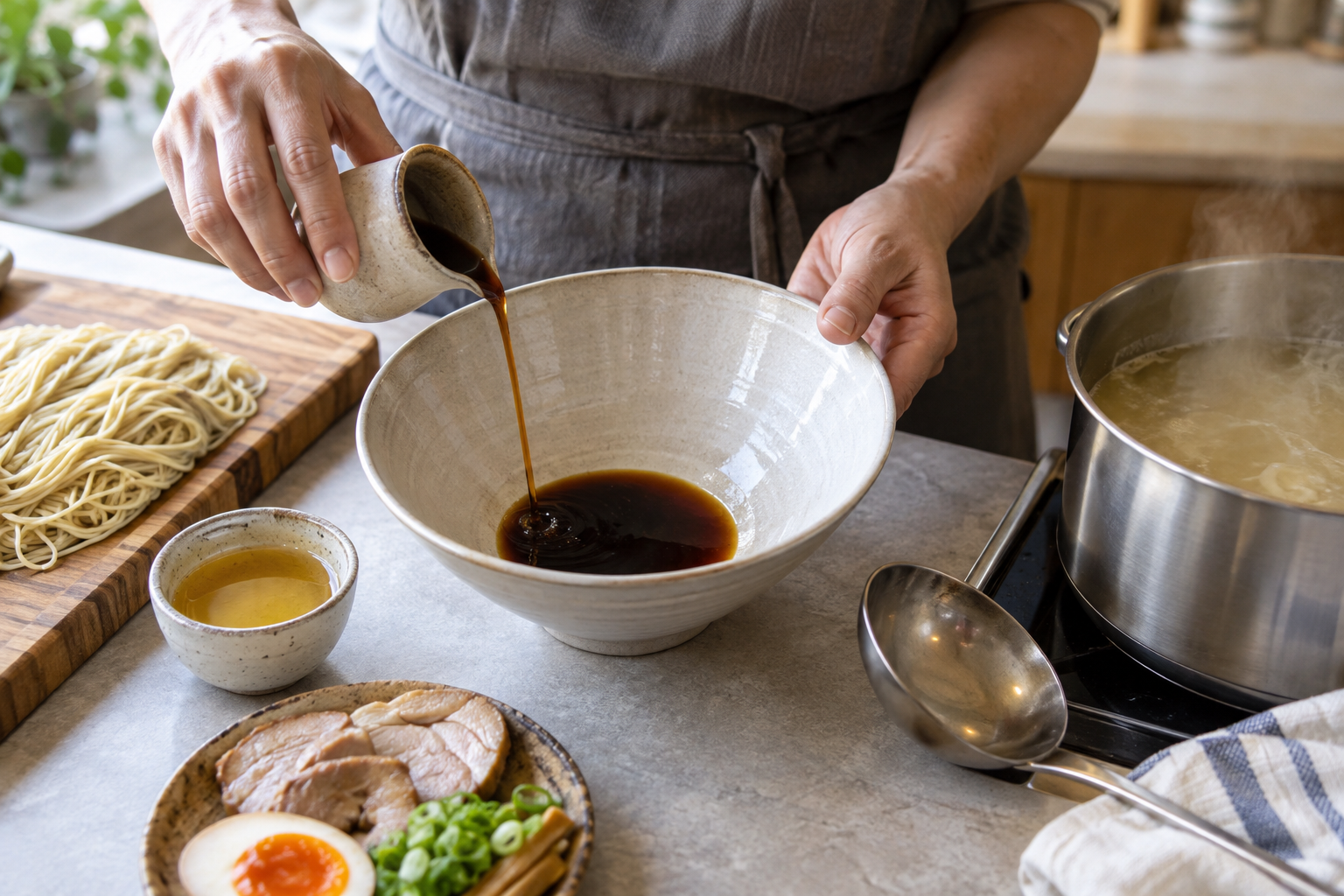
For the home cook, ramen becomes easier to understand when the bowl is broken down into building blocks. The broth provides body and a foundation of flavour. Tare is the concentrated seasoning that supplies, above all, saltiness and character. Fat carries fragrance and affects mouthfeel. Noodles provide structure, and toppings create variety between mouthfuls. Cooking everything together from the start means losing the ability to control the balance.
Chicken makes a rewarding base for a clear shoyu ramen. Wings contribute both flavour and gelatin. Let them simmer gently rather than boil vigorously; this makes it easier to keep the broth clear. Skim off the foam at the start, but do not confuse clarity with quality in general. Cloudiness is undesirable in some styles and the very goal in others.
Kombu and dried shiitake can broaden the flavour. The glutamate in kombu works with flavour compounds in mushrooms and meat to heighten the sense of umami. That does not mean every conceivable umami-rich ingredient should go in at once. Too many mushrooms can make the broth taste like mushroom soup, while plenty of dried fish can shift the whole dish’s centre of gravity. Decide what should lead and what should stay in the background.
Tare makes precision possible. In our recipe, it consists of Japanese soy sauce, mirin and a little sugar, warmed together. It goes into each serving bowl before the broth. This allows you to taste a small amount of soup and adjust it before the noodles go in. Soy sauces vary widely in saltiness; a specified tablespoon is a starting point, not a promise of perfect balance.
Ideally, use regular Japanese soy sauce, often called koikuchi. Chinese dark soy sauce is not a direct substitute: it can add too much colour and a different flavour profile. Mirin contributes sweetness and aroma. Anyone wishing to avoid alcohol can use a product labelled alcohol-free, or water and a little extra sugar. Brief heating does not reliably make regular mirin alcohol-free.
The fat need not be complicated. A small amount of chicken fat lifted from the chilled broth goes a long way. A neutral oil gently infused with spring onion is another option. Toasted sesame oil, on the other hand, is very assertive and can easily overwhelm a delicate shoyu. Start sparingly.
Ramen noodles owe their distinctive springiness partly to kansui, an alkaline ingredient that affects the dough’s structure, flavour and colour. Their yellow hue therefore does not necessarily come from eggs. Buy fresh, frozen or dried ramen noodles and follow their specific cooking time. Ordinary wheat noodles will work in a pinch, but give a different experience. Always cook them separately: starch from the noodle water should not dictate the consistency of the broth.
The pork, the egg and life at the counter
The name chashu is related to Chinese char siu, but the common Japanese ramen version is often simmered or braised rather than cooked using the Cantonese grilling or roasting technique. Pork belly gives tender meat and generous layers of fat. Pork collar works too, with a meatier character. The meat can be rolled and tied, but a flat piece is easier to cook evenly at home.
Cooking should soften the connective tissue without making the meat fall apart. After that, the fridge becomes an important tool: cold chashu can be cut into thin, neat slices. At serving time, gently warm the slices in a little broth. Putting fridge-cold pork straight on top of the soup is an easy way to lower the temperature of the entire meal.
Ajitsuke tamago, often shortened to ajitama, means seasoned egg. In ramen, it commonly has a soft or creamy yolk and a white that has taken on saltiness and colour from the marinade. The exact texture varies. The egg’s size, starting temperature and cooking time matter more than any supposedly universal number of minutes. It is worth cooking a test egg if you are feeding guests and want a particular yolk consistency.
The marinade need not be strong to work. A diluted mixture gives more control, especially overnight. Too long in concentrated soy sauce can make the white firm and excessively salty. For hygiene reasons, our recipe uses a separate egg marinade, not liquid that has been in contact with raw pork. Marinate in the fridge and treat the eggs as a chilled food, even when they are sitting in soy sauce.
At a Japanese ramen bar, the meal is often informal and fairly quick. In many places, diners buy a ticket from a machine and hand it to the staff, but there are plenty of other service formats. The familiar slurping is accepted and common; it is not a compulsory test of good manners. More important is eating while the noodles still have their intended texture.
At home, the meal can certainly be sociable, but do not leave ramen standing around like a buffet. Set out drinks, chopsticks and spoons first. Beer’s carbonation can lighten the richness of the pork, while green tea offers a fresh, gently astringent contrast. Sake works too, particularly a food-friendly junmai, but alcohol is not needed to do the bowl justice. Lightly brewed, chilled green tea is an excellent first choice.
Making it work in a Swedish kitchen
The sensible route at home is not to try to imitate a noodle bar with several pots simmering for days. Choose a clear style and prepare its elements well. This recipe is a home-friendly shoyu ramen with chicken broth, a simple aromatic oil, braised pork and marinated egg. It is not a reconstruction of Rai-Rai Ken’s bowl and makes no claim to represent all of Tokyo’s ramen kitchens.
Ideally, make the broth, chashu and eggs the day before. The hands-on time is considerably shorter than the total cooking time, since the broth and meat can simmer simultaneously. Cool them in smaller, shallow containers so the food does not sit lukewarm in large pots. The next day, you can lift the fat from the broth, slice the meat and remove the eggs from their marinade. What first looked like a restaurant project becomes a manageable assembly job.
Chicken wings, pork belly, eggs, ginger and spring onions are available in ordinary Swedish supermarkets. Japanese soy sauce is also easy to find. Kombu, dried shiitake and good ramen noodles are more often found in Asian shops or online. If you cannot find kombu, leave it out; nori is not an equivalent broth ingredient. Save nori for serving, where its sea-scented aroma and delicate texture come into their own.
The most common mistake at home is not too little cooking time, but poor balance. An unsalted broth can be excellent yet taste flat before the tare is added. A shop-bought broth, by contrast, may already be so salty that a normal amount of tare is too much. So taste the broth and tare together, in the same proportions as in the finished bowl. Judge them at serving temperature too, not just when the liquid is lukewarm.
Then arrange everything like a small serving line: warm bowls, hot broth, measured tare, warm pork, halved eggs and sliced spring onions. Cook the noodles last and drain them thoroughly. If your pan is small, two bowls at a time are better than four portions of tangled noodles. When the first bowl is ready, someone should already be at the table. Ramen rewards patience in the preparation – and decisiveness at the finish.
Shoyu ramen with chashu and ajitsuke tamago
A home-friendly ramen with clear chicken broth, soy tare, tender pork belly and marinated egg. Ideally, prepare it the day before. The timings include active preparation and approximate cooking time, but not 6–12 hours of marinating and chilling. The broth and pork cook simultaneously. Use unsalted, not cured, pork belly.
Ingredients
Method
- 1Start with the broth. Put the kombu and shiitake in 25 dl cold water in a large pot and leave for 30 minutes. Add the chicken wings and heat slowly. Lift out the kombu just before the water begins to simmer.
- 2Skim the surface during the first 15 minutes. Add the ginger and spring onions. Simmer very gently, at around 90–95 °C, with the lid slightly ajar for 2.5–3 hours. Top up with a little water if the wings begin to emerge above the surface. Strain without pressing the solids. You need about 16 dl for serving; dilute with water or reduce gently to the right amount. Do not add salt.
- 3Meanwhile, cook the chashu: brown the broad sides of the pork in 1 tsp oil in a small pot over a medium-high heat, for about 6–8 minutes in total. Add the soy sauce, mirin, sugar, water, ginger and garlic. The liquid should come at least halfway up the meat. Cover and simmer over a low heat for 2–2.5 hours. Turn every 30 minutes and add water as needed. The meat is ready when a skewer slides in with little resistance.
- 4Transfer the meat to a shallow container with a little of the cooking liquid. Cool quickly, ideally by placing the container in a cold-water bath, then refrigerate. If preparing the day before, cool the broth quickly in smaller containers too. Store at around 4 °C. Chashu is easiest to slice when cold.
- 5Make the eggs: dissolve 2 tsp sugar in 1.5 dl water and 0.5 dl soy sauce. Carefully lower the eggs into boiling water and simmer gently for 6.5–7 minutes for creamy yolks. Transfer straight to iced water for 10 minutes, then peel carefully. Place in a small container with the marinade, cover and refrigerate for 6–12 hours. Turn occasionally if the eggs are not fully submerged.
- 6Make the tare: heat 1 dl soy sauce, 2 tbsp mirin and 1 tsp sugar in a small saucepan. Simmer for 1 minute, until the sugar has dissolved. Set aside. Note that this brief heating does not make the mirin alcohol-free.
- 7Make the aromatic oil: put 2 tbsp rapeseed oil and the roughly chopped spring onion in a small saucepan. Heat over a low to medium-low heat for 5–8 minutes, until the onion has softened and is just beginning to colour. Do not let it burn. Strain out the onion.
- 8Before serving: heat the broth thoroughly. Cut the chashu into thin slices and warm them gently in a separate saucepan with a ladleful of broth for 3–5 minutes, until hot all the way through. Remove the eggs from the marinade and halve them. Slice the spring onions and prepare the nori.
- 9Preheat four large bowls with hot water, then pour it out. Start with 1.5 tbsp tare and 1 tsp aromatic oil per bowl. Add about 4 dl hot broth and taste. Increase the tare a little at a time if needed; the amount required depends on the saltiness of the soy sauce.
- 10Cook the noodles in plenty of unsalted water for the time stated on the packet, often 1–3 minutes for fresh noodles. Consider cooking two portions at a time if the pot is small. Drain thoroughly, add immediately to the broth and loosen with chopsticks. Top with warm chashu, egg, spring onions and nori. Serve immediately.
- Alcohol-free: replace the mirin in the chashu with 0.5 dl water and 2 tsp extra sugar. In the tare, replace the mirin with 2 tbsp water and 1 tsp extra sugar. Taste and adjust, as mirin products vary in sweetness.
- Shortcut: use 16 dl good unsalted chicken broth and simmer with ginger and shiitake for 20–30 minutes. If the broth is already salted, the amount of tare must be reduced considerably.
- Storage: use the marinated eggs within 2 days and discard the egg marinade. Broth and chashu will normally keep for 3–4 days at around 4 °C if cooled quickly; freeze any spare portions if you like. Store the noodles separately.
- Freeze leftover chashu in slices with a little cooking liquid. Broth and tare can also be frozen separately. The fully cooked chicken from the broth can be picked off the bones and used in dishes such as fried rice.
What goes in the glass
- BeerJapanese pale lager or another crisp lager with moderate bitternessCarbonation and a clean, lightly malty flavour contrast with the richness of the pork belly without competing with the soy sauce’s aromas. Choose moderate bitterness to accompany the umami-rich broth.
- WineJunmai sake, lightly chilledSake is a fermented rice drink, not a grape wine. A food-friendly junmai with gentle acidity and body complements pork, mushrooms and soy sauce without needing sweetness in the bowl. Serve in small quantities.
- TeaSencha, gently brewedFresh green aromas and light astringency provide a lovely contrast to fat and saltiness. Brew at around 70–80 °C according to the tea’s instructions; overly hot water and long steeping can add unnecessary bitterness.
- Alcohol-freeChilled, unsweetened green teaLightly brewed green tea, chilled after brewing, brings freshness without extra sweetness. Serve cool rather than ice-cold, so its gentle aromas still come through alongside the broth.
Enjoy alcohol in moderation. Alcohol-free options go just as well with the food.
Sources
- George Solt, The Untold History of Ramen: How Political Crisis in Japan Spawned a Global Food Craze (2014)
- Barak Kushner, Slurp! A Social and Culinary History of Ramen—Japan's Favorite Noodle Soup (2012)
- Shin-Yokohama Ramen Museum, Ramen
- CUPNOODLES MUSEUM, CUPNOODLES MUSEUM
- Tadashi Ono och Harris Salat, Japanese Soul Cooking (2013)
- Harold McGee, On Food and Cooking: The Science and Lore of the Kitchen (2004)
Ask questions about "Ramen – from the docks to the noodle bar". Answers are based on the magazine's own articles.