Tokaj – gold, acidity and patience
From dry furmint to Aszú and Eszencia: a guide to Hungary’s great wine landscape
Apricot jam, saffron and honey – but also an acidity that lifts everything. Tokaj is far more than sweet dessert wine. We follow the mist along the Bodrog, explain puttonyos and find the food that does justice to both dry and sweet Tokaj wines.
 By Jonas EkDrinks editor · Wine, beer, spirits, coffee, tea and non-alcoholic drinks – and how to pair them with food
Translated from Swedish with AI assistance.
Go to the recipe ↓A small glass, a vast landscape
It begins with the colour. A small glass on a dinner table, a wine that catches the light somewhere between gold and amber. The aromas arrive in layers: apricot jam, honey, orange peel, perhaps saffron and dried pineapple. The first sip is sweet and concentrated. Then comes the acidity, giving direction and energy to what might otherwise have felt heavy. A good Tokaj wine does not simply taste sweet. It brings that sweetness to life.
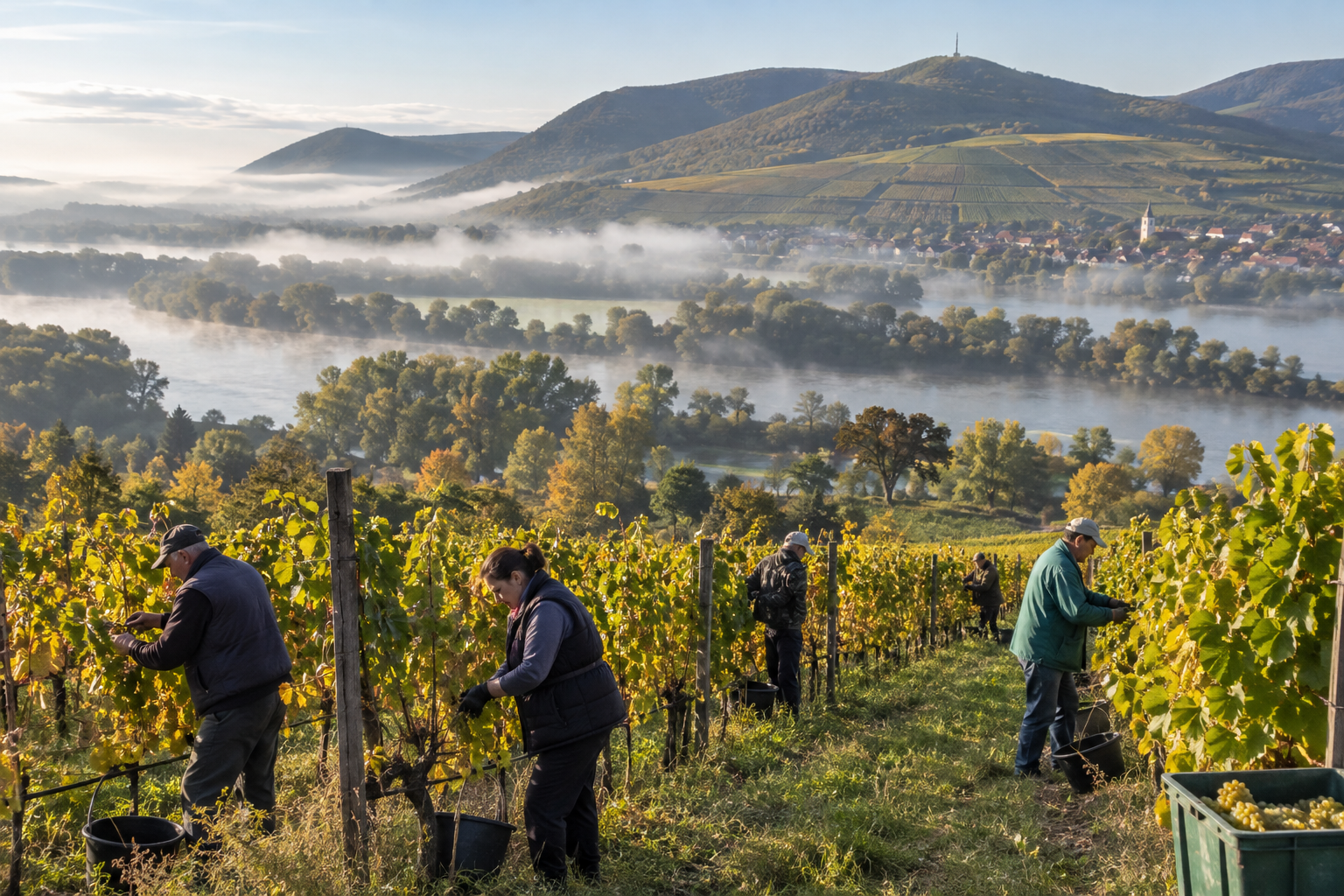
To understand the glass, we need to trace it back to north-eastern Hungary. In Tokaj-Hegyalja, vineyards sit on hills with volcanic bedrock, covered in places by loess. The Bodrog and Tisza meet at the town of Tokaj. In favourable autumns, moisture from the rivers and surrounding wetlands helps create misty mornings, while drier, sunnier spells allow the grapes to dry out.
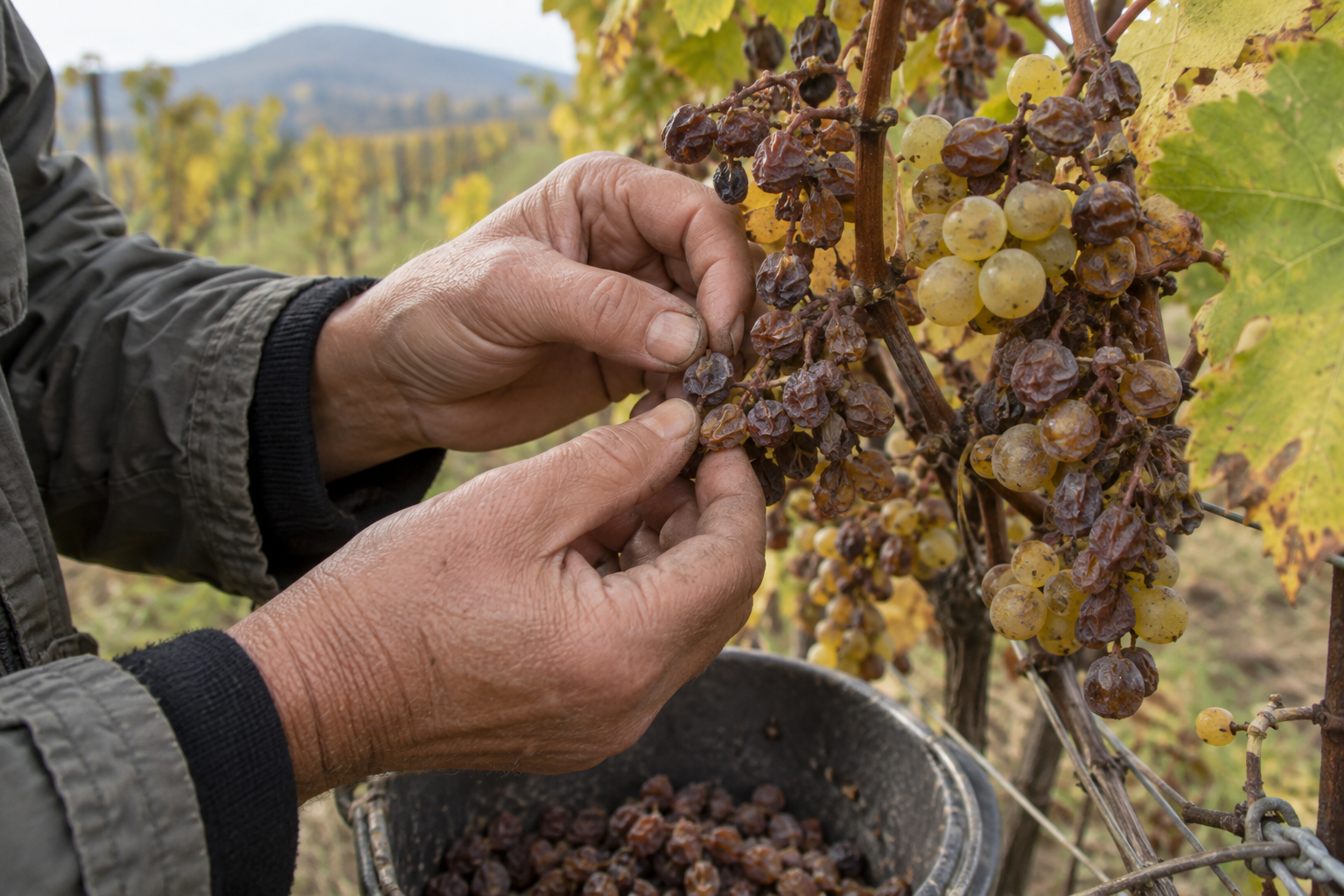
That alternation is crucial. Under the right conditions, the fungus Botrytis cinerea can produce noble rot: the grape skins are affected, water evaporates and the contents of each berry become concentrated as its aromas change. If the weather stays wet instead, the same fungus can cause destructive grey rot. Behind the romance, then, lies a rather nerve-racking form of farming.
In the vineyard, pickers must distinguish the right berries from the wrong ones. For Aszú, the shrivelled, noble-rotted berries are selected individually, often over several passes during harvest. It takes hands, judgement and time. When a small glass costs more than a larger glass of everyday wine, that is part of the explanation.
But you might like to begin your visit to Tokaj with something quite different: a dry furmint, pale straw-yellow, with apple, pear and citrus. It reveals the region’s other face. Tokaj is the place; tokaji means roughly “from Tokaj”. The Swedish term tokajer is often used for the sweet wines, but the region’s wine world is considerably broader than that.
Royal tables, old borders and a new beginning
Tokaj’s sweet wines were sought after long before today’s dessert-wine category existed. Aszú is documented in the 16th century. The oft-repeated story that the priest Máté Szepsi Laczkó created the first Aszú wine in the 17th century should therefore be treated as an origin story, not a firm date of invention. The technique emerged within a wine-growing culture; it needs no single inventor to be remarkable.

The Rákóczi family owned extensive estates and had strong ties to the area. Wine played a part in aristocratic finances, formal hospitality and diplomacy. Ferenc II Rákóczi is particularly associated with spreading Tokaj’s reputation at European courts. Trading links to the north, not least with Poland, were also important. This was not an isolated local speciality, but a commodity capable of carrying both prestige and political hopes.
The phrase vinum regum, rex vinorum – the wine of kings, the king of wines – is often attributed to Louis XIV. It certainly suits a golden wine at a splendid table. The attribution itself, however, is uncertain. Better to enjoy the motto as part of the history of Tokaj’s reputation than present it as a verified royal quotation.
Tokaj is among the world’s oldest formally demarcated wine regions. Vineyard classifications were documented during the 1730s, and a royal decree in 1737 regulated the region’s boundaries. Vineyard classification and geographical demarcation are different things, however. Tokaj is a very early and important example of both, but the phrase “the world’s first wine region” oversimplifies a history in which other European areas also had early regulations.
During the communist era, production was shaped by state coordination, large volumes and export markets with priorities different from those of today’s origin-focused wine scene. That does not mean every wine was poor or that winemaking skills disappeared. Individual vineyard sites and growers’ independence did, however, receive less attention. The name Tokaji Kereskedőház belongs to the continuation of that state trading tradition, but the company bearing that name was established in 1993, after the change of regime. It should therefore not be used without explanation as the company name for the entire communist period. The business is now called Grand Tokaj.
After 1989–1990, private ventures, revived estates and foreign investment opened up new possibilities. Royal Tokaji was founded in 1990; other projects followed. The change was not just about money, but also about putting vineyard sites, meticulous selection and individual expression back at the centre.
In 2002, Tokaj’s historic wine landscape was inscribed on the UNESCO World Heritage List. The recognition applies to a cultural landscape: its vineyards, communities, cellars and long-standing wine traditions together. The protected Hungarian designation of origin must also be distinguished from the smaller wine region on the Slovak side of today’s border. Historic landscapes and modern national borders do not always coincide.
The grapes, the mist and the slow work of the cellar
Furmint is Tokaj’s most important grape. Its great asset is acidity, but it can also deliver concentration, structure and clear differences between growing sites. In dry form, it can lean towards green apple, pear, citrus and sometimes quince. Ageing and winemaking bring other nuances. A wine smelling of stone or having a mineral quality does not, however, mean that volcanic bedrock has literally dissolved into flavour in the glass.
Hárslevelű, whose name refers to linden leaves, often contributes floral notes, softer fruit and honey-like aromas. Sárgamuskotály is yellow muscat, internationally known as Muscat Blanc à Petits Grains, and can bring pronounced floral and grapey notes. Zéta is a more modern crossing, valued among other things for its early ripening and susceptibility to noble rot. Other varieties are permitted too, but these four provide a useful first map of the region’s grapes.
Not all sweet Tokaj wines are made by treating the same sort of raisin-like berries in the same way. For Aszú, specially selected aszú berries are gathered. With so little water left in them, they cannot be handled like an ordinary harvest of juicy wine grapes. Instead, the berries macerate in must, fermenting must or wine, allowing sugar, flavour and other compounds to be extracted. The choice of liquid and working method influences the result.
Pressing, fermentation and ageing follow. Oak barrels are an important part of the Aszú tradition, but using barrels need not mean that a wine should taste of vanilla or toasted wood. They can also allow gradual oxygen exposure and development. In a balanced Tokaj wine, the wood plays a supporting role, not the lead.
The region’s old, cool cellars are famous for the dark mould coating their walls. Cellar mould is part of the environment and is often described as noble mould, but it is not the same thing as noble rot on the grapes. The walls do not make the wine’s apricot aromas. Their practical context is a humid, stable ageing environment where wine can develop slowly.
In a young sweet wine, apricot, citrus and honey may dominate. With age, the colour can deepen from gold to amber, and the aromas take on notes of dried fruit, nuts, tea and spice. Marzipan and saffron are useful tasting terms, not added ingredients. Not every bottle displays the full aromatic range, and a dark colour is not in itself proof of quality. Age, oxygen exposure, style and storage all play a part.
From dry furmint to Eszencia – reading the label correctly
Tokaj’s styles do not form a simple ladder on which more sugar automatically means better wine. A dry furmint with pan-fried fish may be a better choice than an expensive Aszú. Start, then, by asking how you plan to serve the wine, rather than which designation sounds most exclusive.
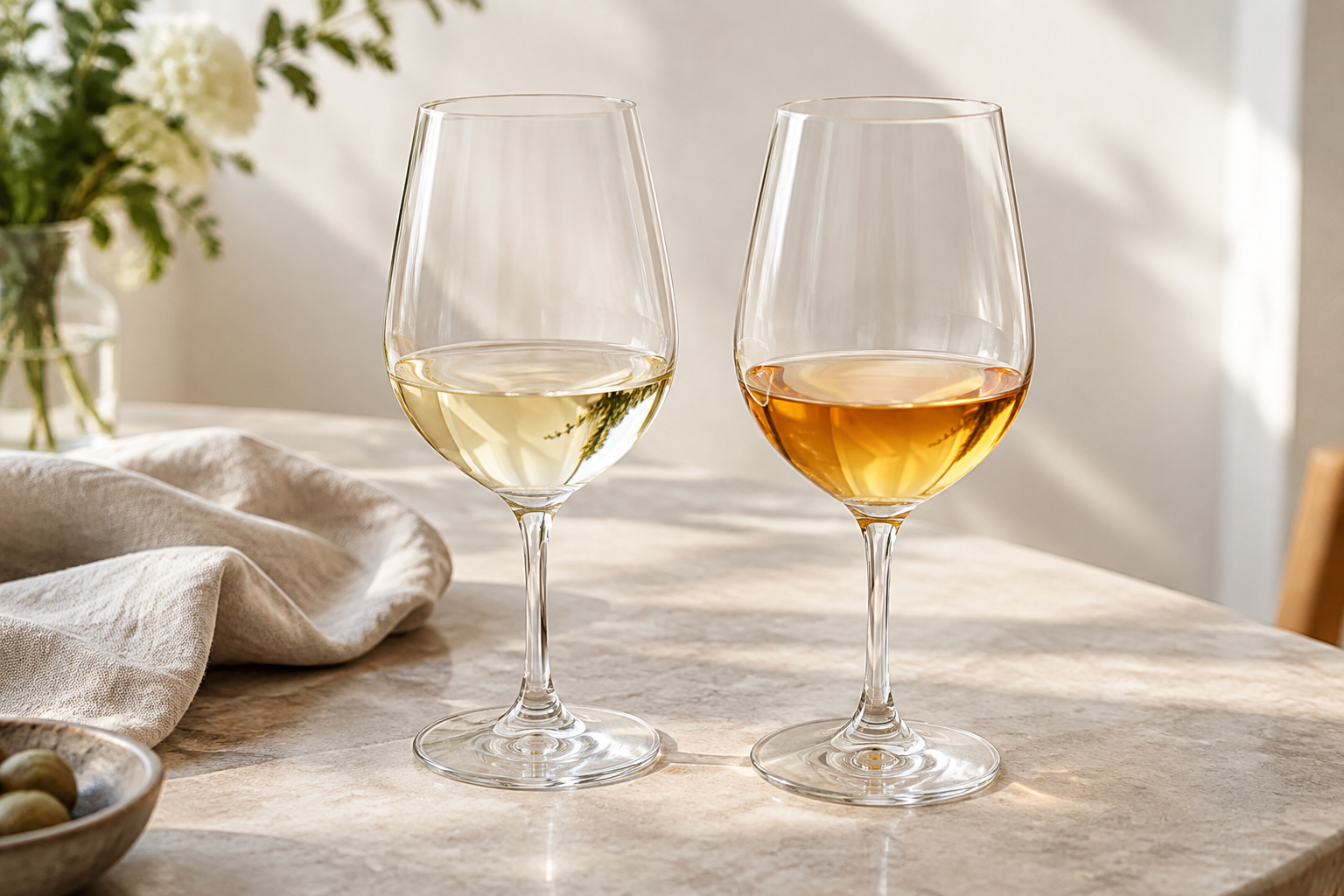
Dry furmint is often the easiest introduction for those who usually drink dry white wines. Styles range from light, stainless-steel freshness to more concentrated, barrel-fermented wines with ageing potential. Dry does not mean short on aromas: ripe pear and yellow fruit can be present even without obvious residual sweetness. Furmint became particularly important to the region’s modern development of dry wines around the turn of the millennium, although dry wines were no new invention.
Szamorodni is made from harvested grapes that may include both healthy and noble-rotted berries, without the separate selection of each aszú berry required for Aszú. The name has Polish origins and is usually rendered roughly as “as it grows”. Then read the little word that determines the experience: száraz means dry, édes means sweet.
Dry szamorodni can be nutty, yeasty and oxidative in character, sometimes aged beneath a veil of yeast. It may bring to mind other biologically or oxidatively aged wines without being a copy of them. Sweet szamorodni often offers honey, dried fruit and botrytis spice in a form that can be more approachable than Aszú. But styles vary, and the name alone does not tell you how sweet the wine tastes.
Late harvest is another way into Tokaj’s sweet wines. The grapes are picked late; the role played by noble rot varies. These wines are often fruitier and less shaped by long ageing than classic Aszú, but the category encompasses several expressions. Late harvest is not simply a new label for the same production method as Aszú.
Tokaji Aszú is based on separately selected noble-rotted berries. Here we encounter the word puttonyos. Historically, a puttony was a carrying container, often said to hold around 25 kilos of aszú berries. The number of these additions was measured in relation to a 136-litre gönci barrel. It is a useful historical illustration, but not an exact instruction for how every modern wine is made.
On today’s labels, puttonyos refers to sugar levels, not a requirement to carry a certain number of baskets to a barrel. 5 puttonyos means at least 120 grams of residual sugar per litre, while 6 puttonyos means at least 150 grams per litre. For Aszú under the rules applying from the 2013 harvest, the minimum is 120 grams per litre, and a puttonyos indication does not always have to appear on the label. Older bottles with three or four puttonyos belong to previous regulations; that does not make them mislabelled.
The number, then, does not tell you everything about quality, nor exactly how sweet the wine will seem. Acidity, concentration, temperature and maturity influence the balance. Two wines with the same sugar content can feel strikingly different in the mouth.
Eszencia is something other than a stronger version of ordinary dessert wine. It is made from the extraordinarily sugar-rich juice that slowly drains from gathered aszú berries under their own weight. Fermentation proceeds very slowly, and the alcohol level is usually very low. The texture can be syrupy, but acidity is crucial here too. It is rare, precious and often tasted in very small quantities. Eszencia should not be confused with the older designation Aszú Eszencia, which referred to a different category.
Food that makes the gold shine
With dry furmint, my first thoughts turn to fish and shellfish. Its acidity cuts through butter sauces, mayonnaise and browned crusts, while the fruit meets the sweetness of prawns and scallops, for example. A fuller-bodied furmint with a gentle oak influence can also work with chicken in paprika sauce. Here, paprika contributes sweet spice rather than fiery heat; with plenty of chilli, a taut, dry wine becomes a less obvious choice.
Sweet Tokaj wine is famous alongside goose liver or foie gras. The logic is simple: sweetness meets saltiness, acidity cuts through the rich texture, and the wine’s aromatic depth stands up to the intensity of the food. For anyone avoiding foie gras for ethical or other reasons, there is no need to try to recreate that particular ingredient. A rich mushroom terrine with a little fruit compote offers a different pairing to explore in its own right.
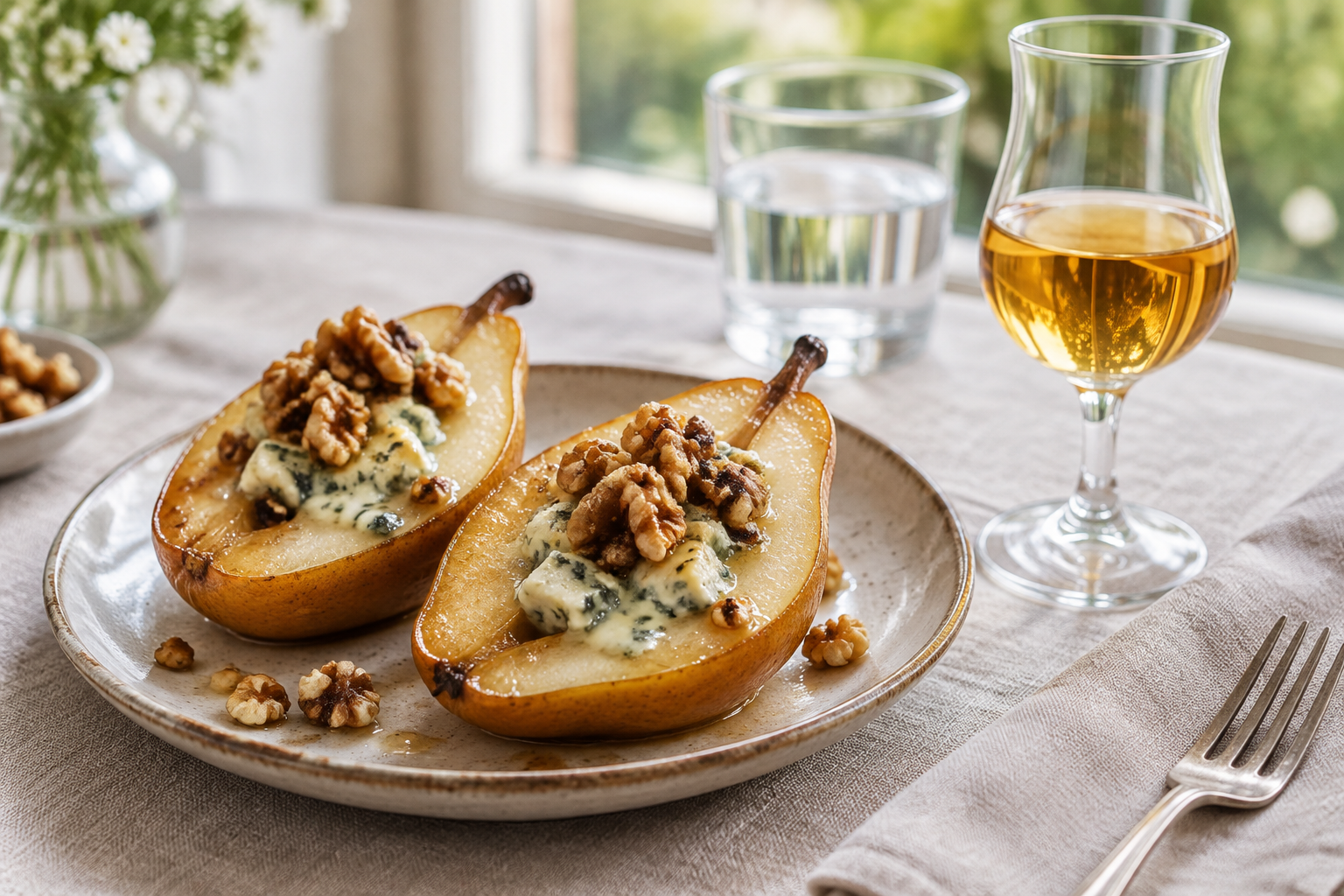
Blue cheese is often an easier and equally compelling match. Roquefort brings sharp saltiness and a powerful blue character, Stilton a rounder, crumbly richness, and gorgonzola a creamy introduction. The wine’s sweetness softens the impression of the cheese’s saltiness and sharpness. Its acidity keeps the next bite inviting. Try serving the cheese without an overly sweet jam first, so the interplay comes through more clearly.
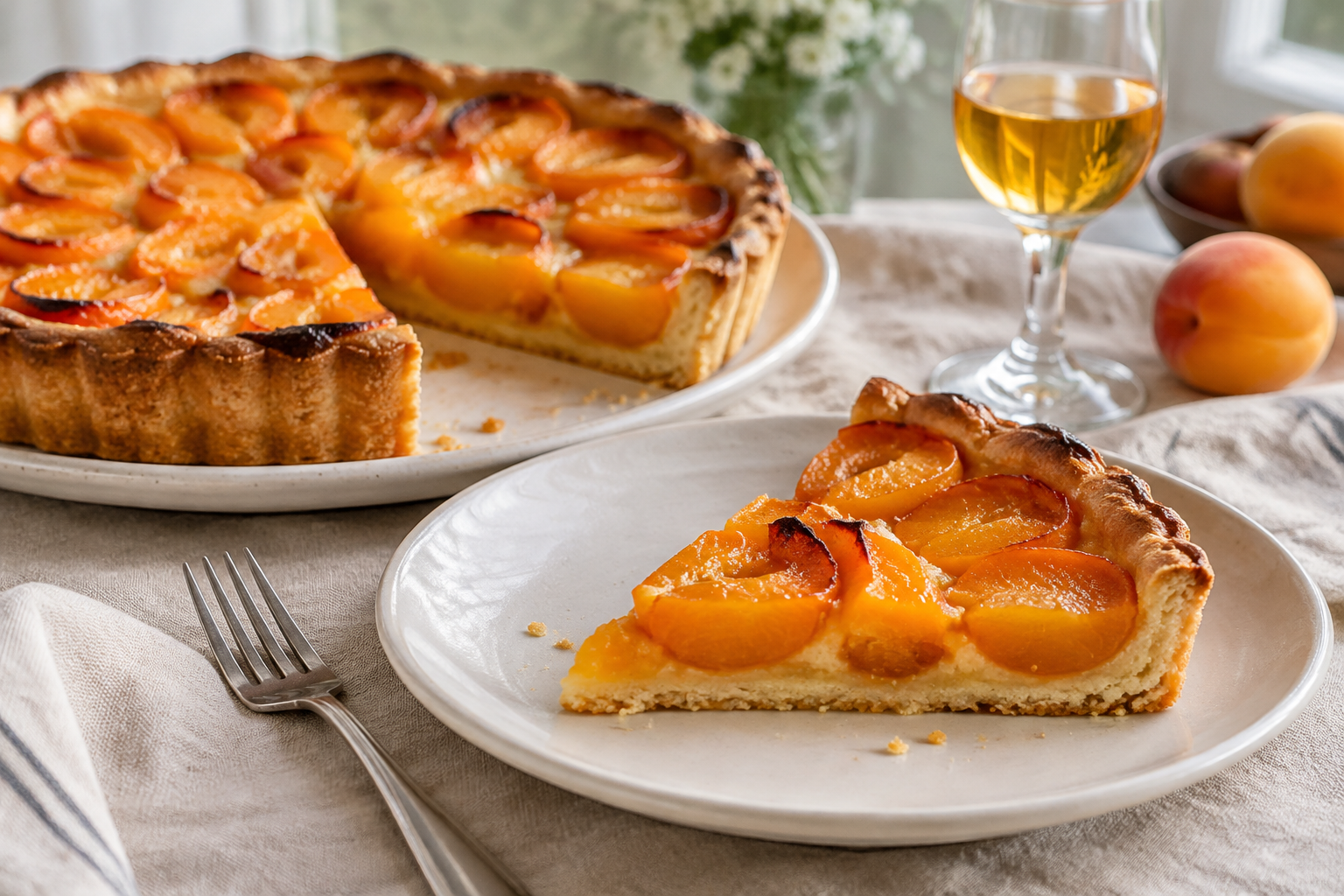
Among desserts, apricot tart is almost an aromatic shortcut into the glass. Baked fruit and the wine’s apricot notes dovetail, while buttery pastry provides contrast. Apple pie also works, especially with moderate sweetness and a restrained hand with the cinnamon. With crème brûlée, the wine meets both creaminess and a caramelised crust. A useful rule of thumb is that the dessert wine should taste at least as sweet as the dessert, or it risks seeming thin or unexpectedly tart.
Hungary’s pastries offer further possibilities. Rigó Jancsi, with chocolate and cream, calls for more thought: very bitter cocoa can make the pairing feel harsh, so try a small piece with a mature, concentrated Aszú. Flódni, the layered pastry associated with Hungarian-Jewish baking traditions, offers apple, walnuts, poppy seeds and plums to work with. These have lovely points of connection with a mature wine’s fruity, nutty depth, though recipes vary in sweetness.
Tokaj wine makes a lovely small finale to dinner, an accompaniment to a cheeseboard, or a drink for Christmas and other celebrations. It need not become a separate dessert course: a small glass, a piece of cheese and a few toasted nuts are enough. Drink moderately, and make alcohol-free options just as thoughtfully chosen.
A good alcohol-free alternative with pears and blue cheese is a fresh, completely alcohol-free sparkling drink based on pressed apple juice, with pronounced acidity. With a sweeter dessert, choose a fuller-bodied pressed apple juice and serve it well chilled. It does not imitate Aszú’s concentration or botrytis aromas, but fulfils a similar role through fruit, freshness and sweetness. Water belongs on the table too.
Bottles to look for – prices checked on 27 October 2026
Prices were checked against systembolaget.se on 27 October 2026. Prices, vintages and availability may change after that date – always check the product page before buying.
Systembolaget currently lists 25 wines from Tokaj, from dry furmint and sparkling wines to Aszú and Eszencia. Here is a selection, arranged from dry to sweet. The “permanent range” is available to buy in shops or order, “available to order” means delivery to your home or a shop, and the “temporary range” is available in limited quantities while stocks last.
Dry and sparkling
- Furling Dry Furmint 2024 – dry, 750 ml, 99 SEK, no. 215701, permanent range. The least expensive way to get to know furmint; Systembolaget describes yellow apples, pear, minerals, herbs and lime.
- Sauska Tokaji Furmint 2022 – dry, 750 ml, 129 SEK, no. 205501, available to order. A clear introduction to the region’s dry side, with yellow apples, pear, honey and citrus in Systembolaget’s description.
- Mandolás Oremus 2023 – dry furmint, 750 ml, 269 SEK, no. 9210001, temporary range in limited quantities. An interesting comparison with a simpler dry wine, revealing differences in structure and winemaking.
- Tokaj-Hétszőlő Pezsgő Brut 2021 – sparkling, 750 ml, 249 SEK, no. 9222101. Proof that Tokaj can sparkle too; Systembolaget mentions green apples, gooseberries, white flowers and biscuits.
Sweet
- Grand Tokaj Szamorodni 2021 – sweet, 500 ml, 169 SEK, no. 468202, permanent range. Systembolaget lists dried pineapple, honey, saffron, grilled lemon and apricot – a profile to try with baked fruit or blue cheese.
- St Stephan’s Crown Tokaji Aszú 5 Puttonyos 2021 – 500 ml, 199 SEK, no. 1290502, permanent range. Sultanas, apricot jam, marzipan and orange, according to Systembolaget; a good match for the cheeseboard and fruit desserts.
- Château Dereszla Tokaji Aszú 5 Puttonyos 2019 – 500 ml, 229 SEK, no. 290102, permanent range. The description highlights oak, apricot jam, honey, dried pineapple and nougat.
- Oremus Tokaji Aszú 5 Puttonyos 2017 – 500 ml, 659 SEK, no. 9531002, temporary range in limited quantities. For those wanting to explore another producer and an older vintage, rather than simply a higher number on the label.
- Royal Tokaji Szt. Tamás Aszú 6 Puttonyos 2018 – 500 ml, 799 SEK, no. 9438602, temporary range in limited quantities. The vineyard name Szt. Tamás adds a sense of site; six puttonyos indicates sweetness, not a universal quality score.
- Royal Tokaji Essencia 2009 – 375 ml, 6 157 SEK, no. 9414202, temporary range in limited quantities. The extreme end: almost entirely concentrated must, around 2 per cent alcohol, and a bottle to open for life’s greatest occasions.
The tasting terms above are Systembolaget’s own descriptions; the temporary-range wines have not yet been tasted by Systembolaget. For a first comparison, a dry furmint and a sweet szamorodni or Aszú will take you a long way. Try them with food on different occasions – you do not need a large line-up to understand the region’s breadth.
Getting it right at home: cool wine, small glasses and just enough sweetness
Start at around 8–12 °C. The cooler end often suits fresher, lighter wines, while more complex, mature wines benefit from approaching the warmer end. An ice-cold sweet wine can seem muted; one that is too warm may feel broader and sweeter than you would like. Pour a little and let it develop in the glass as you hold it, rather than chasing an exact temperature all evening.
Choose a smaller tulip-shaped white-wine glass with room for the aromas, rather than a very narrow liqueur glass. Small servings, perhaps around 5–6 cl of sweet wine, go a long way. Do not fill the glass to the rim. The space above the wine helps you distinguish fresh orange, dried fruit and the spicier notes.
Treat opened dry furmint like any other white wine: reseal it and refrigerate. Sweet Aszú wines often keep longer after opening, sometimes several weeks in the fridge, but this varies with the wine, its age and the amount of air left in the bottle. Taste and smell it; a firm shelf-life guarantee is not appropriate here. Unopened bottles are best kept somewhere dark and cool, at a steady temperature.
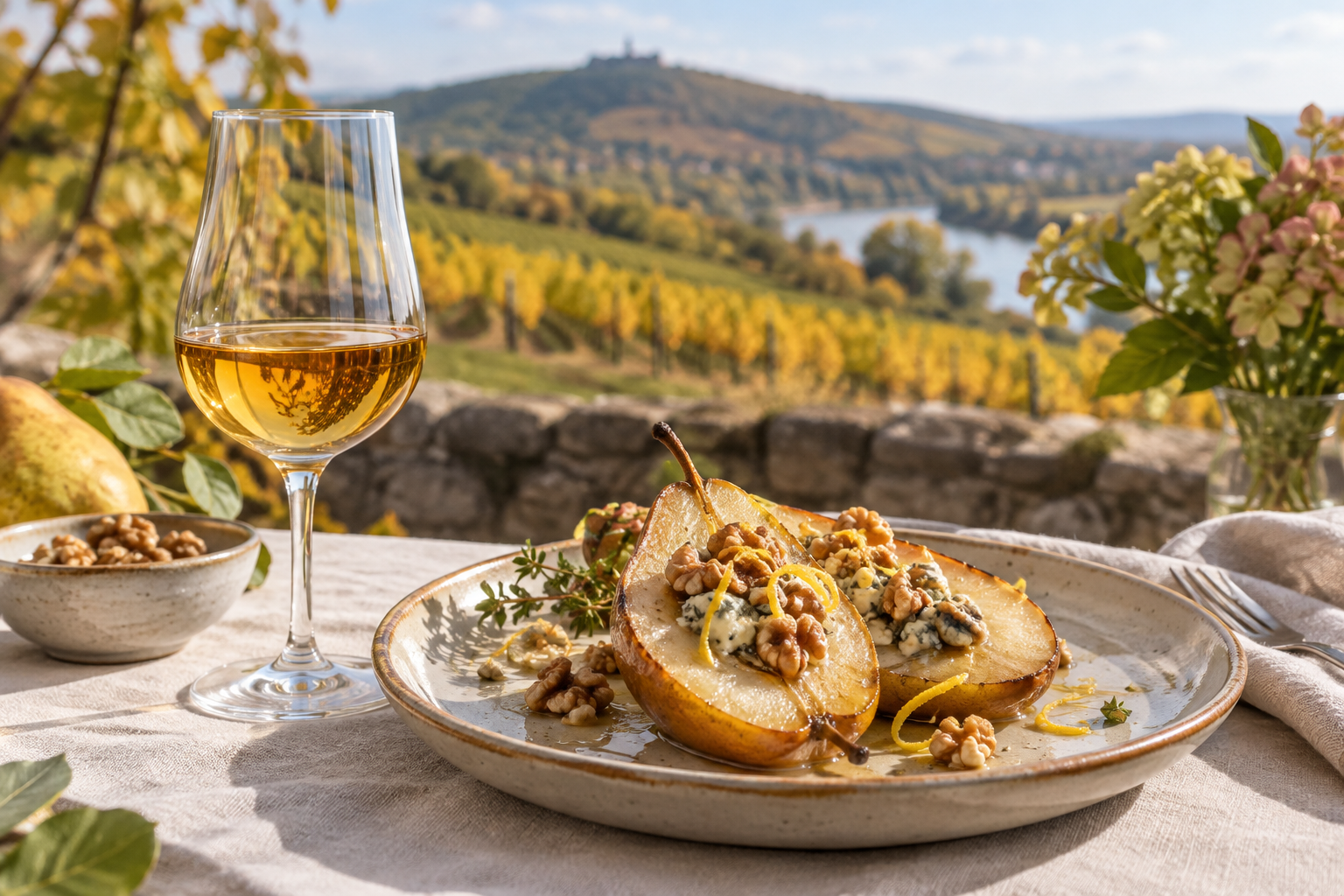
The recipe below sits somewhere between cheese course and dessert. The pears are baked until tender but still holding their shape, filled with blue cheese and topped with walnuts. Honey is kept to a minimum so the wine can provide some of the sweetness. It is easy to make with ingredients from Swedish shops and makes the principle behind the pairing almost unmistakable: fruit meets fruit, saltiness meets sweetness, acidity meets fat.
Serve the pears warm, not piping hot, and try a bite before taking a small sip. Tokaj’s greatness then becomes less abstract. It lies neither in the royal quotation, nor the price tag, nor the number of puttonyos. It lies in the balance that makes you want to return to both plate and glass.
Baked pears with blue cheese, walnuts and lemon
A simple dish halfway between a cheese course and dessert, designed for sweet szamorodni or Tokaji Aszú. This is a modern pairing, not a reconstruction of a traditional Hungarian dish. A little honey leaves room for the wine’s sweetness; lemon and pear keep the combination fresh.
Ingredients
Method
- 1Preheat the oven to 200 °C, conventional heat. Choose a baking dish that holds eight pear halves cut-side up without overlapping.
- 2Wash the pears and halve them lengthways. Leave the skins on. Scoop out the cores with a teaspoon to make a small hollow in each half. If necessary, cut a thin slice from the underside so the pears sit steadily.
- 3Grease the dish with a little of the butter. Add the pears, brush the cut surfaces with lemon juice and pour the water into the bottom of the dish. Dot the remaining butter over the pears and drizzle with the honey.
- 4Bake in the centre of the oven for 18–22 minutes. Baste once with the liquid in the dish. The pears should begin to soften but still offer slight resistance when pierced with a small knife.
- 5Crumble the cheese and divide it between the hollows. Scatter over the walnuts. Bake for a further 7–10 minutes, until the cheese has melted and the nuts are lightly browned. Cover loosely with foil if the nuts darken too quickly.
- 6Check that the pears are soft enough to eat with a spoon or dessert fork. Very firm pears may need a few extra minutes; add a splash of water if the dish looks likely to dry out.
- 7Leave to rest for 5–10 minutes. Serve two pear halves per person and spoon over a little of the cooking juices. Finish with the lemon zest and black pepper. Serve warm with a small glass of sweet Tokaj wine or an alcohol-free sparkling drink based on pressed apple juice.
- To get ahead, bake the pears without the cheese and nuts a few hours before serving. Refrigerate, warm gently, then finish with the filling.
- Choose a milder blue cheese for a lighter sweet szamorodni and a more strongly flavoured cheese for a concentrated Aszú. Check that the cheese is made with vegetarian rennet if the dish needs to be vegetarian.
- For anyone with a nut allergy, replace the walnuts with pumpkin seeds. Do not add more honey until you have tasted the pears with the drink.
- Keep leftovers covered in the fridge and eat within two days. Reheat gently in the oven; the pears will become softer when reheated.
What goes with the glass
- FoodButter-fried fish or chicken in a mild paprika sauce with dry furmintFurmint’s acidity cuts through butter and creaminess. Its fruit meets the sweetness of the paprika, while a fuller-bodied wine stands up to browned crusts and sauce. Keep the chilli heat moderate.
- FoodRoquefort, Stilton or baked pears with blue cheese with sweet szamorodni and AszúSweetness rounds off saltiness and the sharpness of the blue cheese, acidity balances its richness, and the pears echo the wine’s fruit. An alcohol-free sparkling drink based on tart pressed apple juice also works with the same dish.
- FoodApricot tart, apple pie or crème brûlée with Tokaji AszúThe wine’s apricot, honey and citrus notes meet baked fruit and caramel. Choose a moderately sweet dessert so the wine does not seem thin or sour by comparison.
- FoodFlódni with mature Tokaji AszúApple, walnuts, poppy seeds and plums connect with the mature wine’s dried-fruit and nutty nuances. A small portion lets both pastry and wine retain their balance.
Sources
- Julia Harding, Jancis Robinson och Tara Q. Thomas, red., The Oxford Companion to Wine, fifth edition (2023)
- UNESCO World Heritage Centre, Tokaj Wine Region Historic Cultural Landscape (2002)
- Europeiska kommissionen, eAmbrosia – EU:s register över geografiska beteckningar, produktspecifikation för Tokaj/Tokaji
- Royal Tokaji, Royal Tokaji – producentens information om historia, vingårdar och vinstilar
- Grand Tokaj, Grand Tokaj – producentens företagshistorik och vininformation
- Tempos Vega Sicilia, Oremus – producentinformation
- Systembolaget, Produktsökning och produktinformation för Tokajviner; kontrollpunkt för artikelunderlagets ej verifierade oktoberpriser 2026
Ask questions about "Tokaj – gold, acidity and patience". Answers are based on the magazine's own articles.