Jerk – Jamaica’s Spiced Fire
From the Maroons’ mountains to the grills of Boston Bay: the smoke, allspice and heat that bring people together over food.
Scotch bonnet tingles in the nose, allspice releases its warm fragrance and chicken skin sizzles over the embers. But jerk is more than a fiery marinade. It is a Jamaican food tradition rooted in the island’s Indigenous history, Maroon resistance and the art of cooking over a slow fire. We follow its flavours to the table – and cook jerk chicken with rice and peas in a Swedish kitchen.
 By Sofia HaddadReporter · Middle East, Africa and Latin America – mezze, tagine, injera, mole and much more
Translated from Swedish with AI assistance.
Go to the recipes (2) ↓Where smoke meets sea air
Imagine a grill spot at Boston Bay on Jamaica’s north-east coast. Sea air drifts between the trees, but close to the food, smoke takes charge. Fat hits the embers with a brief hiss. Someone lifts a lid, turns the meat and releases a thick, spicy cloud: thyme, roasted onion, chilli and the curiously familiar warmth of allspice. To a Swedish nose, it smells almost like Christmas, but here it takes on a whole new life.
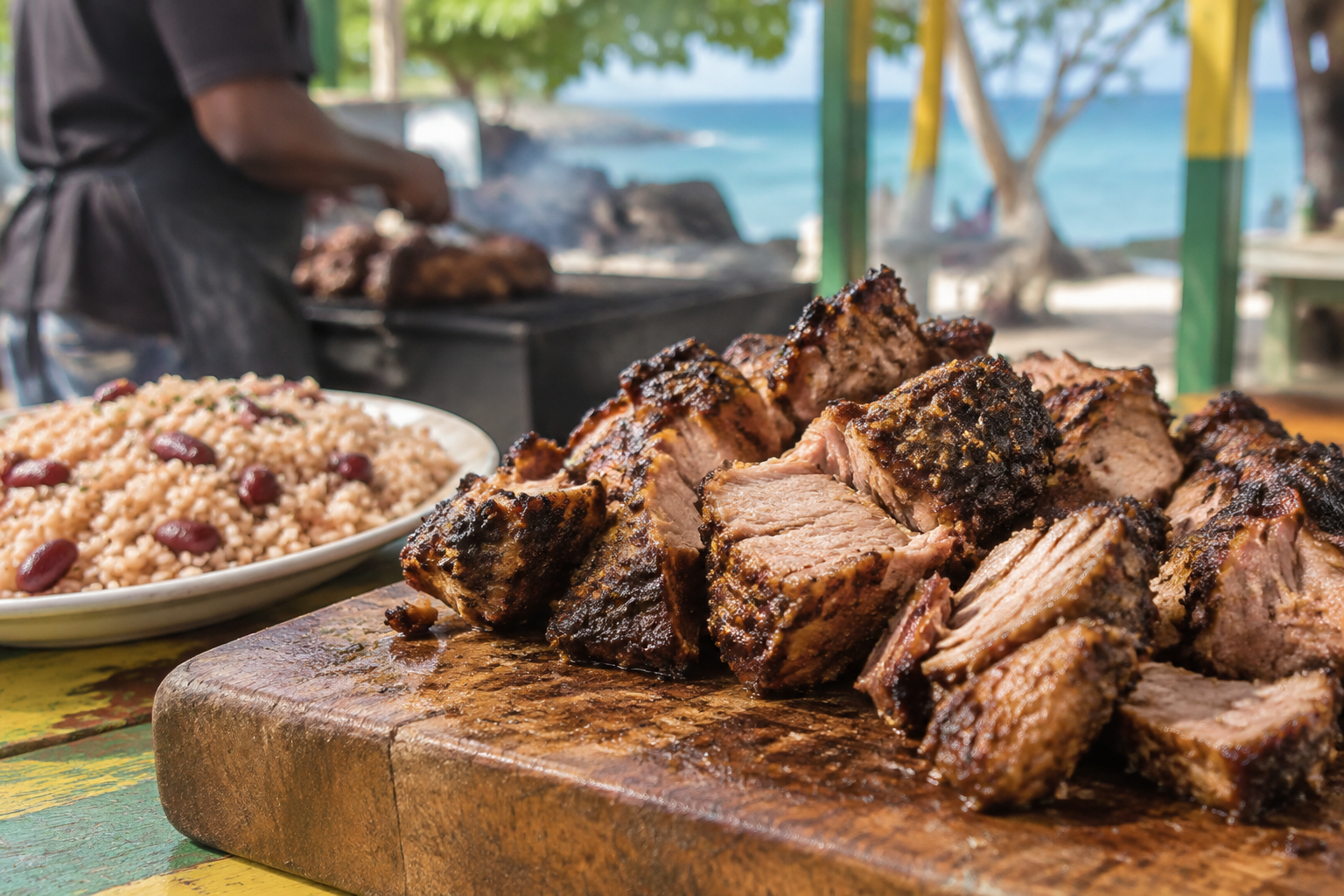
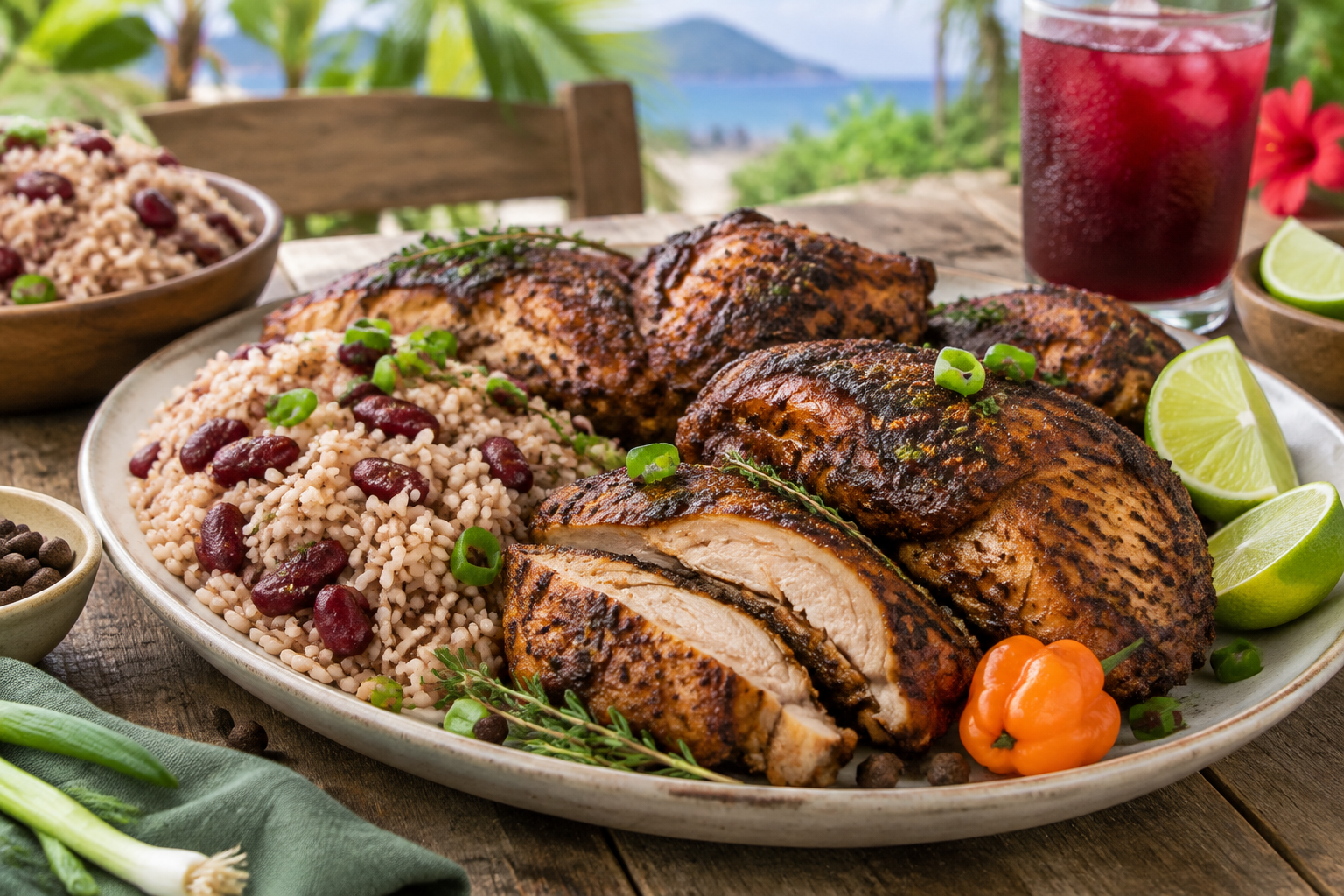
On the chopping board, grilled meat becomes pieces made for sharing. The surface is dark and uneven, with crisp edges and patches where the spice paste has roasted deeply. Inside, the meat is juicy. First come salt and smoke, then the chilli’s fruitiness, and finally the lingering heat. A spoonful of rice and peas, rice cooked with beans and coconut milk, softens the next mouthful without blunting the flavour.
Boston Bay, in the parish of Portland, is one of the places most closely associated with today’s jerk culture. Here, jerk is not simply something to order but a craft that people travel to experience. Yet the food reaches far beyond this coast: to roadsides, yards, restaurants and Jamaican family homes elsewhere in the world.
The first thing to understand, then, is simple: jerk is not the name of a single jar of spices. The word describes a way of seasoning and cooking, the seasoning itself and the food that results. Chicken is one of its most widespread forms today, but pork has a central place in the story. The second point matters just as much: plenty of chilli does not automatically make a dish jerk. The interplay of spices, time, smoke and fire is what counts.
A history of survival – with gaps we must allow to remain
Jerk is often described as an encounter between Jamaica’s Indigenous heritage and the African experiences that enslaved people brought to the island. The Taíno and other related Indigenous Caribbean peoples used wooden frames and fire to cook and dry food. The wider Caribbean history of these methods is also connected to the word barbacoa. This provides important background to the region’s grilling traditions, but not a surviving original recipe for today’s jerk chicken.
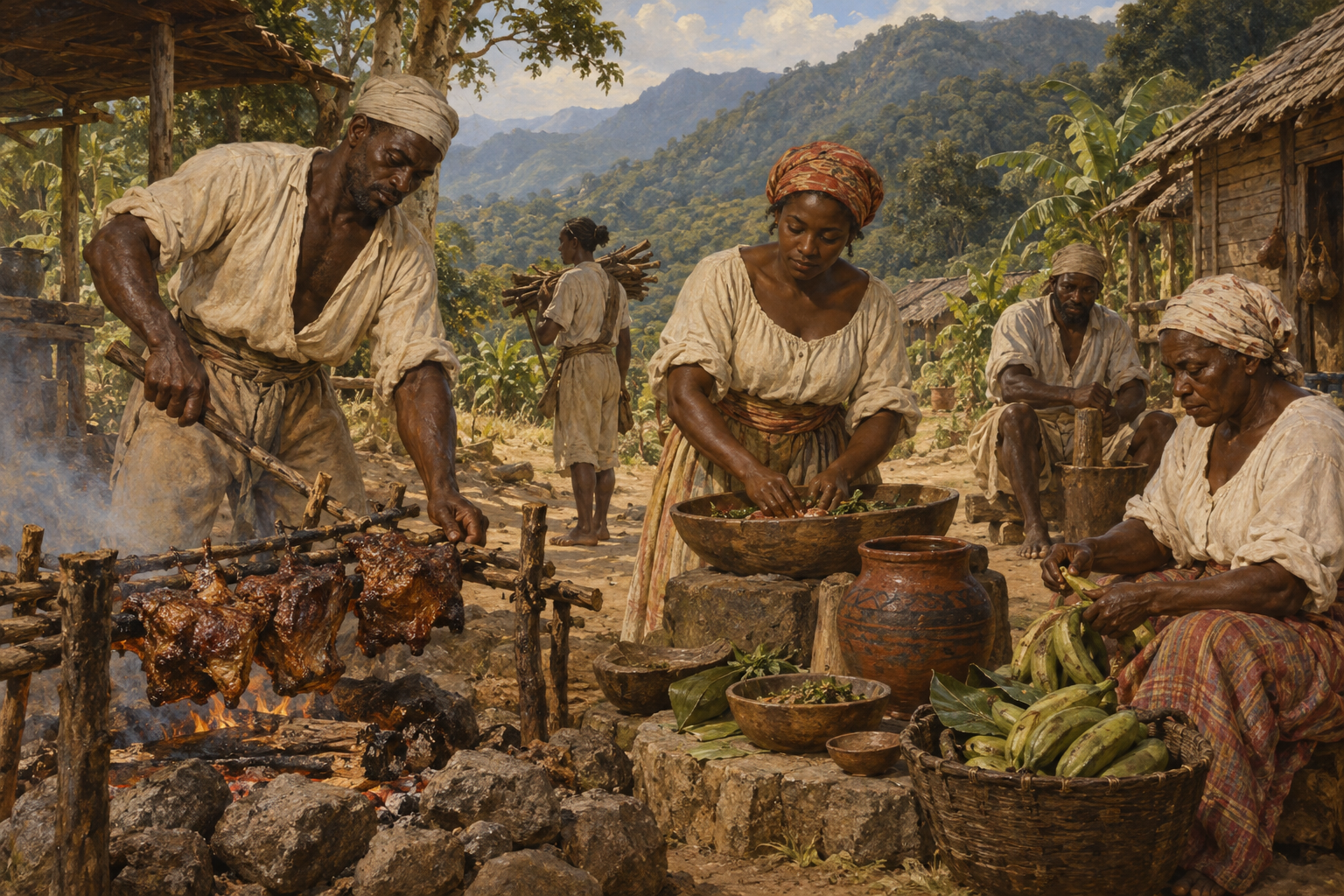
After Spanish colonisation and England’s conquest of Jamaica in 1655, communities of people who had escaped slavery grew and took new forms. The Maroons built independent communities in remote parts of the island and defended them against colonial power. Their history encompasses warfare and resistance, but also farming, trade, family life, language and knowledge of the landscape.
Food writing strongly associates jerk with these Maroon communities, particularly with the preparation of wild boar and feral pigs. Meat had to be preserved, seasoned and cooked using the resources available. Local aromatic plants and knowledge of smoking and fire became part of a food culture that developed under harsh conditions. This is a more credible picture than the idea that someone invented a fully formed marinade on one particular day.
One frequently retold story holds that the Maroons cooked meat in hidden pits so that smoke would not reveal their positions. It fits the narrative of survival and resistance, but the details vary and should not be treated as a fully documented explanation for all jerk. The Maroons’ central place in the tradition’s history is far more certain than any individual account of how their fires were built.
The word’s journey is uncertain too. A common etymological explanation links jerk to the Spanish charqui, itself derived from a Quechua word for dried meat. This suggests a possible linguistic connection, not that Jamaican jerk and Andean dried meat are the same dish. The history of the name and the history of the cooking method must be kept separate.
There is, then, no firm birth date or single inventor to name. Taíno heritage and Maroon contributions are central, but today’s jerk has evolved through change. It also includes ingredients that reached the Caribbean through colonial trade routes. Acknowledging this does not make the tradition any less Jamaican. It shows how people created something of their own in a landscape shaped by both coercion and agency.
Two spices carry much of its identity
Allspice is one of jerk’s most distinctive flavours. In Jamaica, it is usually called pimento. It is not the same as paprika, nor is it a blend of pepper, cloves and cinnamon, although its fragrance may bring all of these to mind. The spice consists of dried, unripe berries from the Pimenta dioica tree, native to tropical parts of the Americas and the Caribbean.
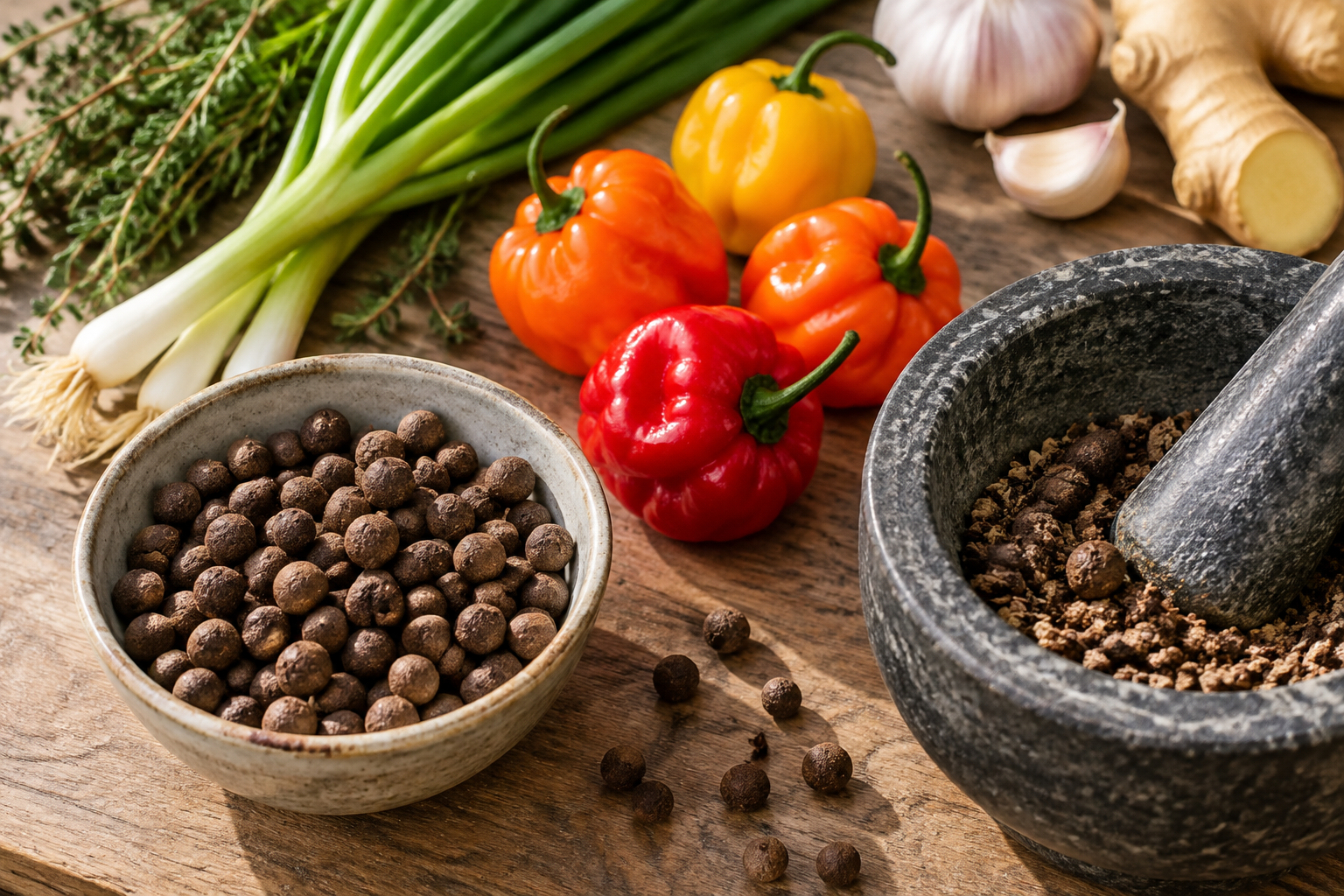
For Swedish home cooks, this offers a welcome shortcut: it is already stocked in ordinary supermarkets. But an old jar at the back of the cupboard will not do the ingredient justice. Whole berries, gently toasted and then crushed in a mortar or ground, offer a broader, more nuanced fragrance. They should simply become aromatic in the pan, not dark and burnt. Ready-ground allspice works too, particularly from a freshly opened jar.
The other key ingredient is scotch bonnet, a very hot chilli with a distinctly fruity aroma. It is closely related to habanero, making that a useful substitute when scotch bonnet is unavailable. This resemblance does not mean they always taste identical. Colour, variety and ripeness affect both, as do growing conditions. Look first for a fruity chilli, not simply the hottest one you can find.
Heat varies considerably from one chilli to another. Much of a chilli’s capsaicin is found in the pale inner tissue where the seeds are attached, rather than in the seeds themselves. Removing this tissue can reduce the heat, but offers no precise control. Consider wearing gloves, avoid touching your eyes, and rinse your knife and chopping board thoroughly. Start cautiously if you do not know your chilli.
Around these two principal flavours comes a green, aromatic layer of spring onions and thyme, often joined by garlic and ginger. Black pepper can sharpen the flavour, while small amounts of cinnamon or nutmeg reinforce allspice’s warm notes. Acidity may come from vinegar or citrus. Salt is needed to bring the whole mixture to life; a little sugar can round it out, but should not turn it into a sticky glaze.
There is no single spice list followed by every Jamaican cook. Fresh spice pastes, dry blends and family recipes exist side by side. Soy sauce appears in modern versions, adding both saltiness and colour, but should not be presented as a timeless necessity. In the recipe here, allspice, thyme, spring onions and chilli lead the way. The spice paste should taste rich and intense, not merely sweet or hot.
Fire is an ingredient, not a performance
You can mix a convincing jerk marinade in minutes. Cooking the food well requires more attention. The onions, herbs and any sugar in the spice paste can burn long before a large piece of chicken is cooked. A blackened surface is therefore no proof of success. The aim is roasted spice and juicy meat, not a bitter crust around a raw centre.
Pimento wood is strongly associated with traditional Jamaican jerk, both as aromatic firewood and in grilling arrangements where the meat rests over wood. The connection between the spice berries and the tree’s smoke creates a particular harmony of flavour. But it would be misleading to suggest that every jerk vendor uses exactly the same wood, construction and temperature. A living craft allows for variation.
The familiar grills made from converted oil drums belong to the modern street scene. Their rounded bodies and lids make it possible to combine the direct heat of the embers with more enclosed heat and smoke. The oil drum is therefore not an object from jerk’s earliest history, but a later tool that has become closely associated with the food. Its shape is recognisable; the expertise still lies with the person tending the fire.
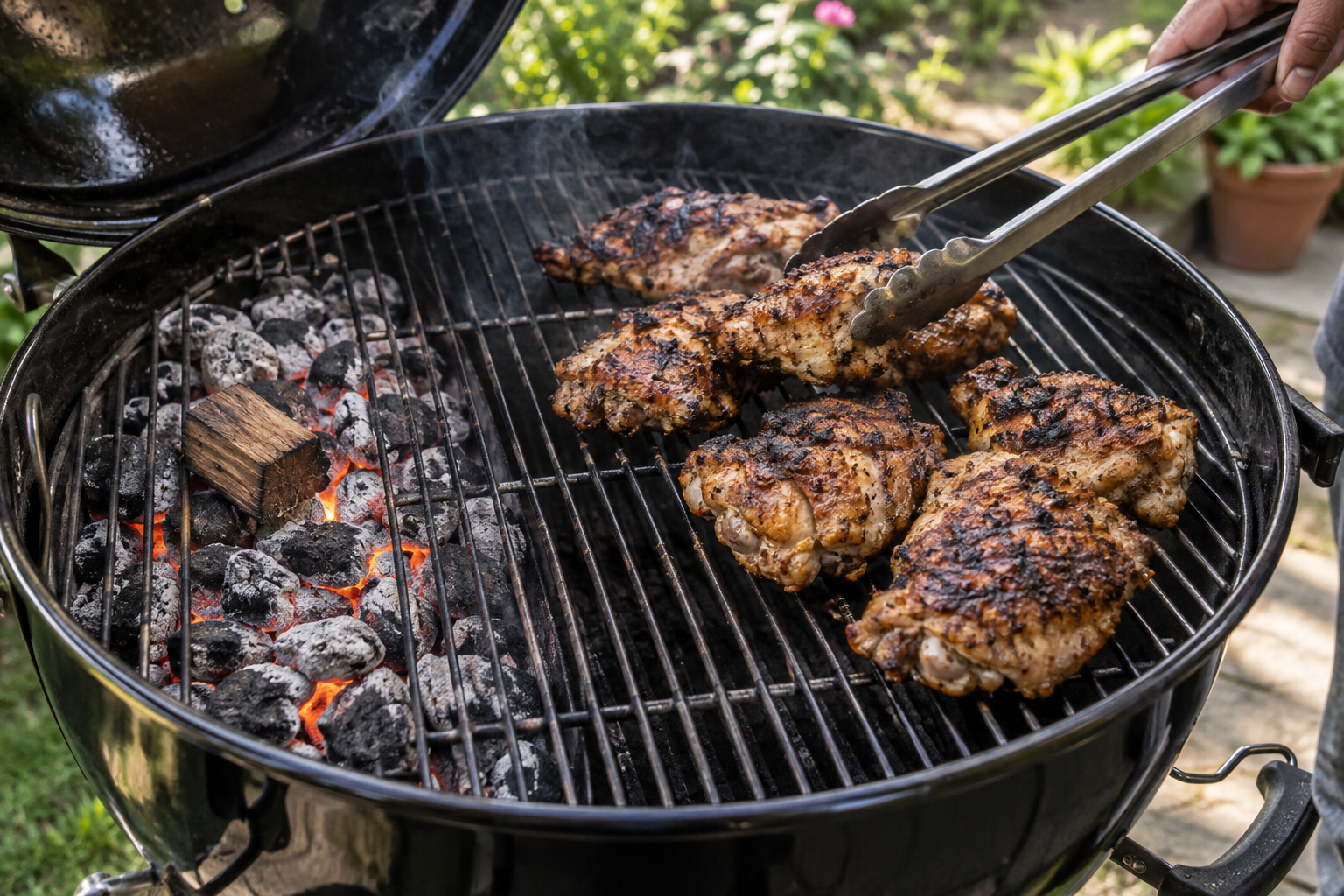
At home, a barbecue with a lid is the most useful starting point. Banking the embers on one side gives you two zones: a gentler one where the chicken cooks through, and a hotter one where the skin can take on its final colour. The lid retains heat and some smoke, while the vents help you control combustion. Resist lifting it constantly out of impatience. Each time you do, you change the environment around the food.
If pimento wood is unavailable, it is better to use a small amount of wood intended for food smoking, such as applewood, than to chase a perfect substitute that does not exist. The flavour will be different, but the method works. Never use treated timber or unidentified types of wood, and do not build cooking equipment from a drum whose previous contents are unknown. An ordinary kettle barbecue is a much safer tool.
An oven works too. Here, honesty is needed: the result will be jerk-seasoned chicken with a roasted surface, but without the full character of wood smoke. It is still a delicious dinner. A brief finish under the grill can add colour, but cannot replace smoke. Do not let the pursuit of restaurant-style results dry out the chicken; a thermometer is more useful than another quarter of an hour at high heat.
Boston Bay and the many faces of jerk today
Boston Bay is especially famous for jerk and strongly associated with jerk pork. It can rightly be described as an important centre of the tradition, but not simply as its historically documented birthplace. The distinction matters. A place can refine a dish, bring it to wider attention and become famous for it without being where its entire earlier history began.
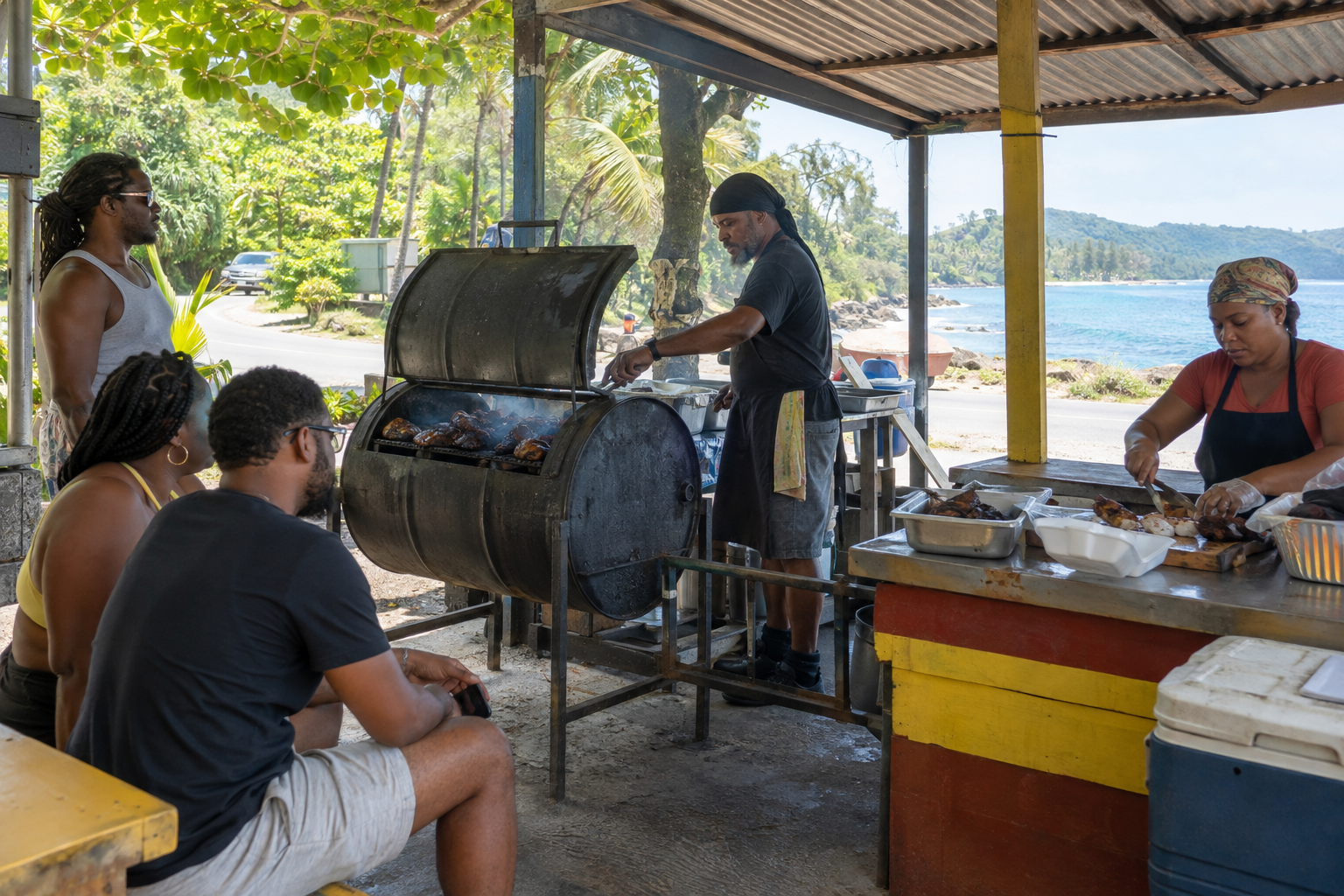
Meanwhile, chicken has made jerk accessible in many settings. Skin-on leg pieces stand up to slower cooking, offering both juicy meat and plenty of surface for the spices. Fish and other ingredients feature too. In contemporary kitchens, the seasoning is used for mushrooms and vegetables, for example, with different cooking times and sometimes less acidity. Such versions can be well made without needing to be presented as ancient.
Jamaican migration has also given jerk a home in places including Britain and North America. There, the method encounters different fuels, ingredient supplies, climates and cooking regulations. Ready-made spice pastes and dry blends make the flavour accessible far from Jamaica. They can be practical, but a label does not tell the whole story: some blends are dominated by salt and sugar, while others leave more room for allspice, herbs and chilli.
When jerk becomes a generic flavour label on everything from snacks to fast food, the technique and history risk disappearing. You do not need to draw a hard boundary around every new dish to recognise the problem. It is enough to be clear about what you are making: a Jamaican cooking method, a home version adapted to Swedish conditions, or a new dish inspired by the seasoning.
Respect at the stove need be neither solemn nor stiff. It can mean learning why allspice matters, acknowledging the food’s Jamaican context and not reducing Maroon history to colourful background. Then cooking with care, listening to those who know the tradition, and making the food good enough that someone wants another helping.
Around the table, it takes more than heat
Jerk suits a meal served on generous platters, where everyone can find their own balance. A piece of chicken, some rice, something crisp and perhaps extra pepper sauce for those who want it. There is no requirement for everyone to eat the same level of heat. On the contrary, the meal becomes more welcoming when the basic seasoning has character without excluding half the company.
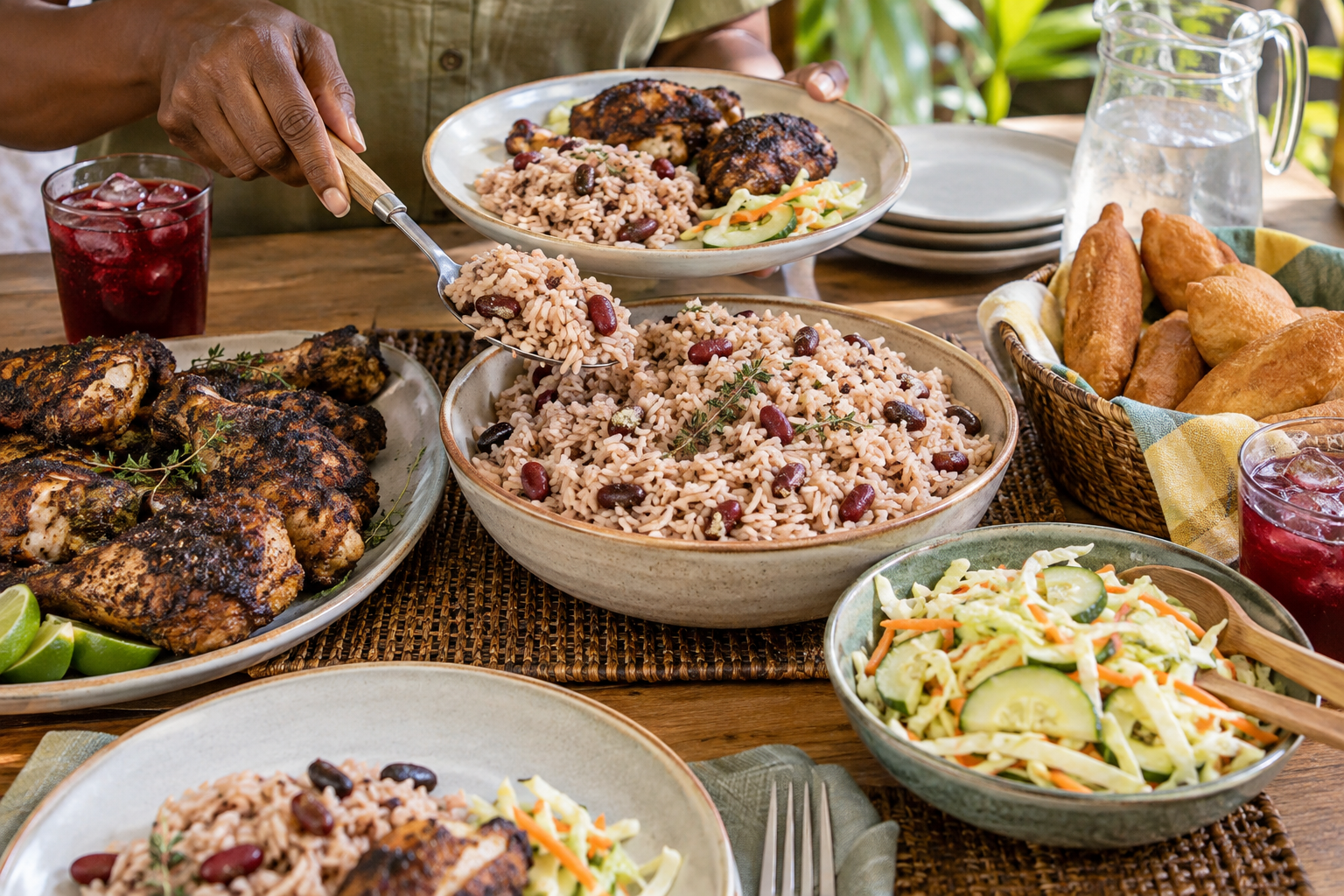
Rice and peas is a natural companion to many Jamaican meals and has a particular place at Sunday dinner. The name can easily mislead a Swedish reader: peas here need not mean green peas. Red kidney beans are common, but pigeon peas, also known as gungo peas, are used too. The gungo peas version is associated with Christmas, among other occasions. Coconut milk, thyme and spring onions flavour the rice and pulses.
Unlike the chopped chilli in jerk paste, the chilli in the rice pot can be added whole. The aim is to lend aroma and a more restrained heat, provided the fruit remains intact. If it splits, the heat can increase noticeably. For a very mild accompaniment, it is fine to leave chilli out of the rice altogether and let the chicken provide the warmth.
Festival, lightly sweet fried dough fingers that often contain cornmeal, and breadfruit are other well-known companions to jerk. But dinner need not become a display of how many side dishes you can make. Two well-prepared dishes and a simple cabbage, cucumber or tomato salad go a long way. Something cool and crisp does as much for the meal as another sauce.
To drink, a light, refreshing Jamaican-style lager works well, of the kind many associate with Red Stripe. Ginger beer is an alcohol-free option, but check the label, as products with similar names can have different alcohol contents. Another possibility is sorrel: the Jamaican hibiscus drink, often flavoured with ginger and spices. It has strong Christmas associations and can be made entirely alcohol-free; here, the name does not refer to the sorrel plant familiar in Sweden.
Rum also belongs to Jamaica’s drinks culture, but need not take centre stage at the meal. For those who wish, a small measure of rum served with plenty of soda water and ice can be a modest optional extra. A high alcohol content can intensify the sensation of chilli heat. Water and a thoughtfully chosen alcohol-free alternative should always have an equally natural place on the table.
Bringing the flavour home
Start with bone-in, skin-on chicken thighs. They are more forgiving than breast fillets, which can easily dry out before the spice paste takes on a good colour. Buy fresh thyme, check the fragrance of your allspice and look for scotch bonnet in shops stocking Caribbean or African ingredients. If it is unavailable, habanero is a reasonable choice. Nobody needs to wait for a special delivery to cook dinner.
It is worth planning a day ahead, though. A few hours in spice paste adds flavour; an overnight marinade makes it easier to fit both seasoning and cooking into everyday life. Marinate in the fridge. Chicken should not be rinsed, as splashes can spread bacteria, and marinade that has been in contact with raw poultry should not be used as a cold table sauce. If you want extra spice paste to serve, set it aside before adding the chicken.
Rice and peas requires a different kind of patience. Rinse the rice, keep the simmer low and leave the lid on. Too much liquid and enthusiastic stirring can easily produce heavy rice with broken grains. Canned beans are a practical adaptation in the recipe here; dried beans offer the chance to use their cooking liquid, but must first be cooked thoroughly in a separate pan. The richness of the coconut milk should carry the grains, not turn them into porridge.
The recipes that follow are modern home versions, not reconstructions of Maroon cooking. The chicken can be barbecued or oven-roasted, while the rice cooks on the hob. Once everything is ready, let the chicken rest briefly before bringing it to the table. Spoon out the fluffy rice, set out something cool to drink and let your guests begin. Jerk does not need a heat endurance contest. It needs balance, care and people who want to share the food.
Jerk chicken on the barbecue or in the oven
A modern home version with allspice, thyme and fruity chilli. A barbecue with a lid offers the best chance of smoky flavour; the oven produces a delicious roasted version. The timings are for large bone-in chicken thighs. Allow 4–12 hours for marinating in addition to the preparation time.
Ingredients
Method
- 1Toast the allspice and black pepper in a dry frying pan over a medium heat for 1–2 minutes, until fragrant. Shake the pan and avoid burning the spices. Leave to cool, then grind finely or crush in a mortar.
- 2Put on gloves and remove the chilli stalk. Remove some of the pale inner tissue if you would like a milder result. Start with half a chilli if you are unsure.
- 3Blend the spices with the remaining jerk paste ingredients to a coarse paste. Scrape down the sides as needed. Taste before the paste comes into contact with raw chicken, adding more chilli if you wish.
- 4Pat the chicken dry with kitchen paper without rinsing it. Gently loosen the skin where possible and spread a little paste underneath, then coat the pieces with the rest. Place in a covered dish and marinate in the fridge for 4–12 hours.
- 5For the barbecue: create two heat zones with the embers on one side, aiming for 180–200 °C under the lid. If using, add a small amount of wood intended for food smoking, following the product instructions. For the oven: preheat to 200 °C conventional heat.
- 6Let any thick clumps of paste drip off, leaving a thin coating. On the barbecue, place the chicken skin-side up over indirect heat and close the lid. In the oven, place it skin-side up on a rack over a roasting tin with a little water in the bottom.
- 7Cook for about 40–55 minutes. On the barbecue, rotate the pieces as needed to cook them evenly. Start checking the internal temperature after 35 minutes; the size of the pieces will affect the timing.
- 8If needed, give the skin more colour over direct heat for 1–3 minutes, watching constantly. In the oven, you can use the grill at 225–250 °C for 2–4 minutes. Move the chicken away from the heat immediately if the spice paste starts to turn black.
- 9Check that the chicken reaches at least 75 °C in the thickest part of the meat, without the thermometer touching the bone. Rest for 5–10 minutes. Serve with lime wedges and rice and peas.
- Ready-ground allspice works: use about 1 tbsp and skip toasting it.
- For milder chicken, use less scotch bonnet or habanero. Removing the seeds alone does not guarantee a mild flavour.
- If you want extra jerk paste to serve, set it aside before it comes into contact with raw chicken. Leftover raw chicken marinade should not be served cold.
- Cool leftovers quickly and refrigerate, ideally at 4 °C. Eat within 2–3 days or freeze.
Rice and peas with coconut milk
Jamaican rice with kidney beans, coconut milk, thyme and spring onions. Canned beans make this home version quicker. The whole chilli is optional and should be handled carefully so that it does not split.
Ingredients
Method
- 1Rinse the rice in several changes of cold water until the water is much clearer. Drain thoroughly in a sieve. Rinse and drain the beans too.
- 2Pour the coconut milk and water into a heavy-based saucepan with a tight-fitting lid. Add the spring onions, garlic, thyme and salt. Stir and simmer gently for 3 minutes.
- 3Stir in the rice and beans. Place the whole chilli on top, if using. It should be undamaged, with its stalk intact; do not pierce it.
- 4Bring just back to a simmer. Cover, reduce the heat to its lowest setting and cook for about 15–18 minutes, or according to the rice’s cooking time. Avoid stirring or lifting the lid during cooking.
- 5Check quickly towards the end. If the rice is still hard and the pan is dry, add 2–3 tbsp hot water and cook for a few more minutes, covered.
- 6Remove the pan from the heat and leave to stand with the lid on for 10 minutes. Then carefully lift out the chilli and thyme stalks.
- 7Gently fluff the rice with a fork without crushing the beans. Taste and add a little more salt if needed, then serve hot.
- Cooked pigeon peas, also known as gungo peas, can replace the kidney beans in the same drained quantity.
- Leave out the chilli entirely if you want a mild side dish. Even a whole chilli can add some heat, particularly if its skin is damaged.
- Different rice varieties absorb different amounts of liquid. Choose one with a cooking time of about 15–20 minutes and keep a little hot water ready for adjustments.
- Cool leftover rice quickly in a shallow container and refrigerate. Ideally, eat it the next day and reheat until piping hot throughout.
What goes in the glass
- BeerJamaican-style pale lagerA light Red Stripe-style lager has subtle bitterness and gentle maltiness that leave room for the allspice and smoke. Serve well chilled; choose an alcohol-free lager if you prefer.
- Alcohol-freeSorrel with hibiscus and gingerThe tartness of hibiscus contrasts with the chicken skin and coconut rice, while a little sweetness softens the chilli. Choose a version made entirely without rum or wine.
- Alcohol-freeAlcohol-free ginger beer with limeGinger’s aroma complements the jerk paste, while lime adds freshness. Choose a moderately gingery version if the food is very hot, and check that the drink is labelled alcohol-free.
- SpiritsA small rum with plenty of soda and iceThe fruity notes of Jamaican rum can complement roasted spices, but a high alcohol content can easily intensify chilli heat. For those choosing alcohol: keep the measure small, dilute generously and serve water alongside.
Enjoy alcohol in moderation. Alcohol-free options go just as well with the food.
Sources
- Helen Willinsky, Jerk from Jamaica: Barbecue Caribbean Style (2007)
- Alan Davidson; tredje upplagan redigerad av Tom Jaine, The Oxford Companion to Food (2014)
- Karla Gottlieb, The Mother of Us All: A History of Queen Nanny, Leader of the Windward Jamaican Maroons (2000)
- John DeMers, The Food of Jamaica: Authentic Recipes from the Jewel of the Caribbean (1998)
- UNESCO, Maroon heritage of Moore Town (2008)
- Encyclopaedia Britannica, Allspice
- Centers for Disease Control and Prevention, Four Steps to Food Safety
Ask questions about "Jerk – Jamaica’s Spiced Fire". Answers are based on the magazine's own articles.