Jollof – West Africa’s Pride in Rice
From Senegambia’s rice tables to Nigeria’s party pots: a story of tomatoes, patience and that coveted bottom layer.
Red rice, the warm scent of peppers and a pot with enough to go around. Jollof brings West Africa together as naturally as it sparks friendly arguments over who cooks it best. We explore the dish’s contested history, get to know Nigerian party jollof and cook a generous platter with sweet fried plantain.
 By Sofia HaddadReporter · Middle East, Africa and Latin America – mezze, tagine, injera, mole and much more
Translated from Swedish with AI assistance.
Go to the recipes (2) ↓The party starts under the lid
First comes the sizzle. Onion meets hot oil, tomato purée darkens, and the scent of sweet peppers, chilli and thyme fills the kitchen. Then comes the rice. The red contents of the pot are stirred, the lid goes on, and the work changes character: from lively frying to quiet, determined patience. This is when you have to resist the urge to keep peeking.
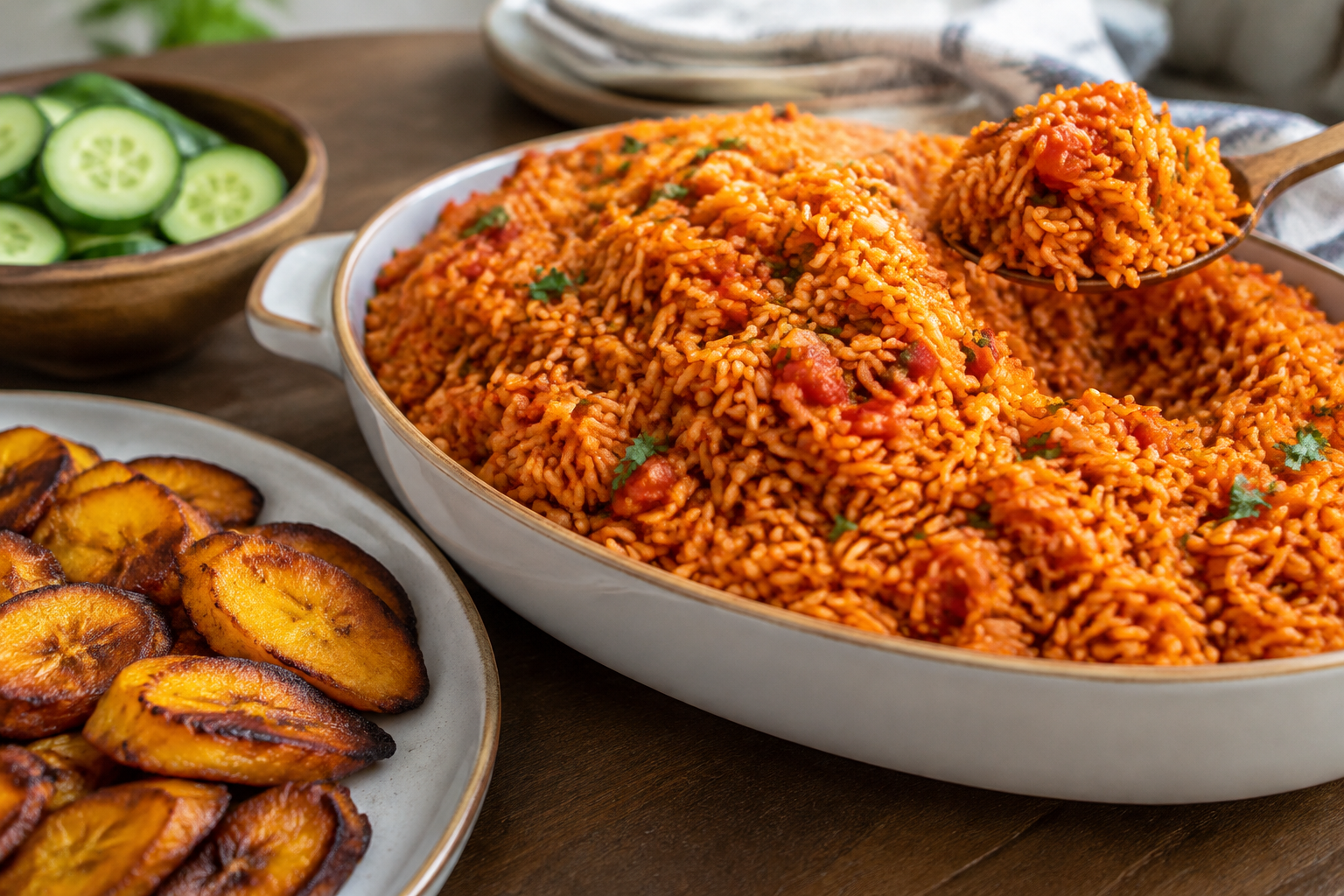
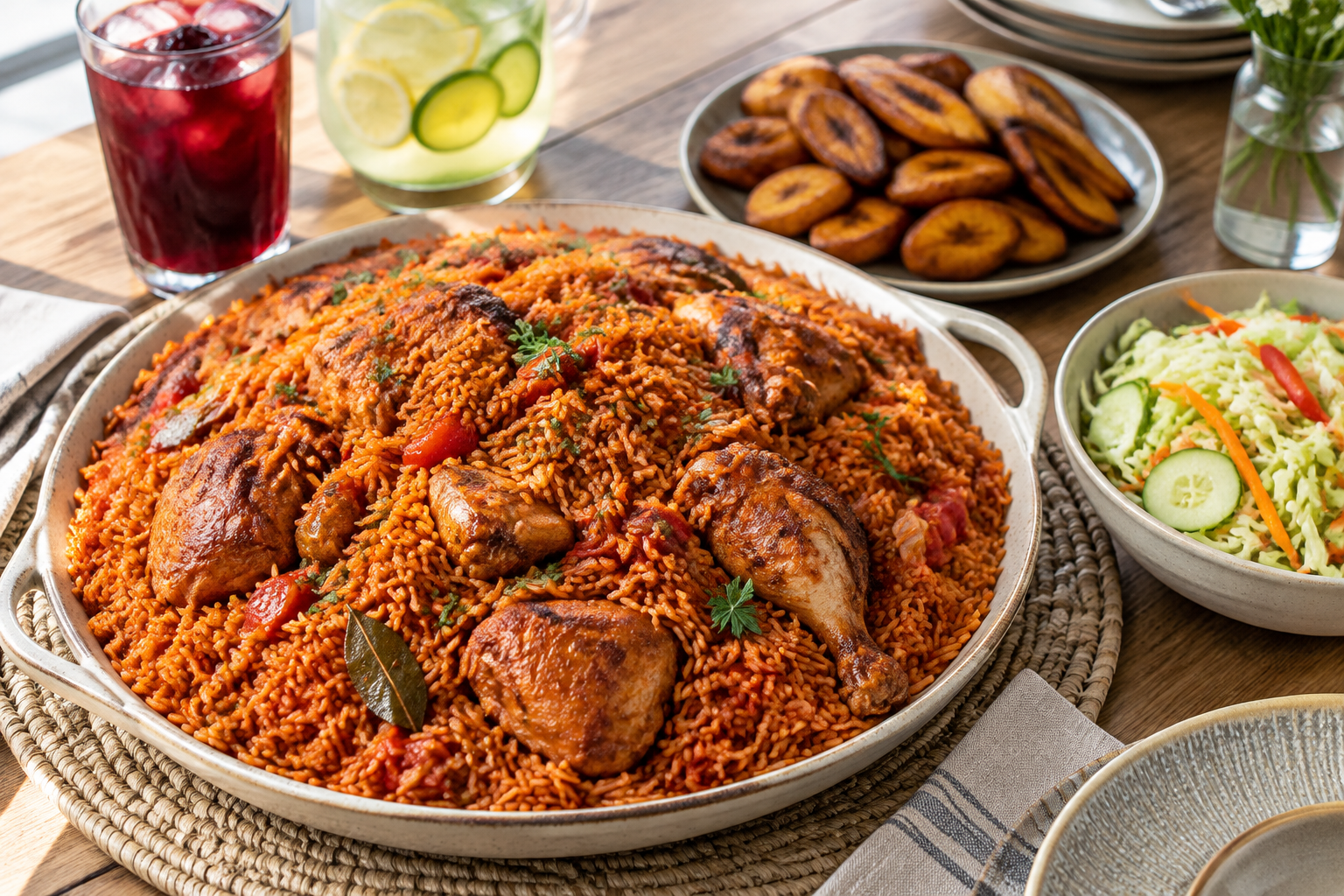
A platter of fried plantain waits on the table, its edges deep golden brown. Someone slices cucumber; someone brings out glasses. When the rice is finally lifted from the pot, steam rises between the grains, and the aroma promises something quite different from boiled rice with tomato sauce. Here, the rice has cooked within the flavour itself. The tomato, stock and spices have become part of it.
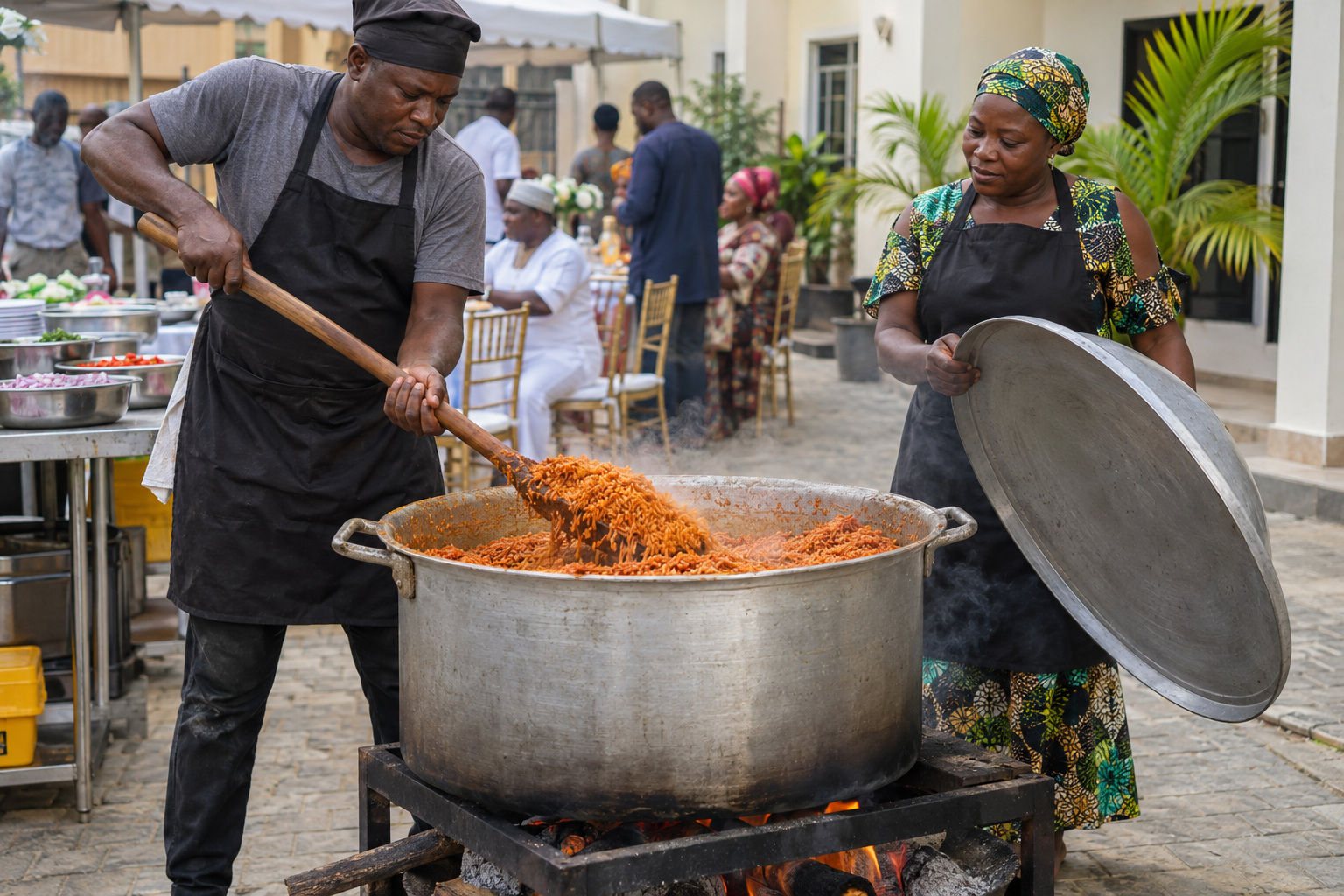
Jollof can be the centrepiece of an everyday dinner, but in Nigeria it also has an undisputed place at weddings, birthdays and big celebrations. Party jollof is more than a bigger batch. The term is associated with rice that has a distinct, concentrated tomato flavour, separate grains and often a smoky note from cooking in large pots over a fire. At home, you can come close to both the texture and the depth, even if wishing will never turn a hob into a wood fire.
Then there is the bottom. Once the lovely rice has been served, negotiations begin over the lightly toasted layer clinging to the base, often called bottom pot. For those who love it, this is not a kitchen mishap but an extra dish hidden beneath the first. Yet the line between toasted and burnt is real. Nobody wins a jollof competition by serving charcoal.
A name from Senegambia, a history with many branches
The history of jollof often leads westwards across the map, to Senegambia and the cultural and linguistic heartland of the Wolof people. The name is generally linked to Wolof or Jolof, terms also associated with historical states in the region. The earlier Jolof Empire’s period of power is generally dated to roughly the 14th–16th centuries, with later political successors. But here we need to distinguish between the history of a name and a fully formed recipe.

That connection does not mean today’s tomato-red jollof can be documented as an unchanged dish from a medieval royal kitchen. Tomatoes come from the Americas and spread to Africa following transatlantic contact from the late 15th century onwards. The chillies that now give many West African dishes their heat also originated in the Americas. Today’s jollof thus brings together older rice traditions and ingredients that arrived later.
Rice’s African history, in turn, is far older than that of tomatoes. West Africa has its own domesticated rice species, Oryza glaberrima, and long-standing traditions of growing and cooking rice. Asian rice, Oryza sativa, also has a long history in the region and dominates much of the rice trade that supplies today’s home cooks. It is therefore misleading to describe jollof simply as a foreign ingredient that suddenly landed in an African pot. Knowledge of rice, water, steam and communal meals already existed in many local settings.
One important relative is Senegal’s ceebu jën, also written thieboudienne: rice with fish, usually accompanied by vegetables and a flavourful cooking base. There are both red and paler versions. In 2021, the knowledge and traditions associated with ceebu jën were inscribed on UNESCO’s Representative List of the Intangible Cultural Heritage of Humanity. UNESCO’s description links the dish’s origins to fishing communities on the island of Saint-Louis.
Ceebu jën is often described as jollof’s predecessor. That is a useful starting point, but not a complete family tree with verified dates for every branch. The precise connections between different rice dishes, their names and the routes by which they spread are harder to establish than many quick origin stories suggest. A named inventor or a single decisive journey would make the story easier to tell, but not necessarily more truthful.
It is more reasonable to see a family of rice dishes that evolved through regional contact, trade and the movement of people. Along West African coasts and between cities, ingredients and methods changed hands. Today, jollof is cooked in Nigeria, Ghana, Sierra Leone, Liberia and Gambia, among other countries, with variations that do not stop at national borders. A country’s version is rarely just one version.
Nigeria versus Ghana – with the serving spoon making the case
Ask who makes the best jollof, and a conversation about dinner can quickly become an international contest. The so-called jollof wars, chiefly between Nigeria and Ghana, play out through friendly teasing, on social media, in cooking competitions and around dinner tables. The rice’s variety, colour, aroma and ability to stay fluffy can be scrutinised with a precision otherwise reserved for decisive football goals.
The fun works because the dish means something. People defending their rice are often also defending the taste of a family celebration, a parent’s kitchen or a city where they once lived. At the same time, the joke should not be confused with an objective ranking. Nigeria and Ghana are large, diverse food cultures, and two pots from the same neighbourhood can differ considerably.
One common difference concerns the rice. Many Nigerian recipes use long-grain parboiled rice, which stands up to cooking in sauce and retains its firmness. In many Ghanaian kitchens, fragrant jasmine rice is preferred. This is a useful comparison, not a rule: both availability and personal taste influence the choice. The fragrance of jasmine rice and the firmer structure of parboiled rice offer different experiences, and the amount of liquid must be adjusted accordingly.
A blended base of tomato, red pepper, onion and hot chilli is common in Nigerian jollof. Tomato purée deepens the colour and flavour. Dried thyme, bay leaves, stock and mild curry powder often feature, though the proportions vary. Meat may be cooked separately and its stock used for the rice; other versions rely on vegetable stock. There is plenty of room for a family’s own signature.
Party jollof has a special appeal. In large celebration pots, generous seasoning, oil, steam and heat from the fire come together. Smokiness is a much-loved characteristic, but the flavour also comes from a properly cooked sauce. If the tomato base is thin and raw, trying to burn in a party atmosphere at the end will not help.
Our recipe follows a Nigerian style, using long-grain parboiled rice. It is a practical choice for a Swedish home kitchen and a good route to distinct, flavour-packed grains. That does not make it the definitive recipe for Nigeria. Anyone who grew up with a different pot has every reason to want to change something.
The sauce must be ready before the rice goes in
Jollof is not difficult because its techniques are advanced. The challenge is knowing when each stage is complete. The most important judgement comes before the rice even reaches the pot: has the tomato and pepper base cooked and fried for long enough?
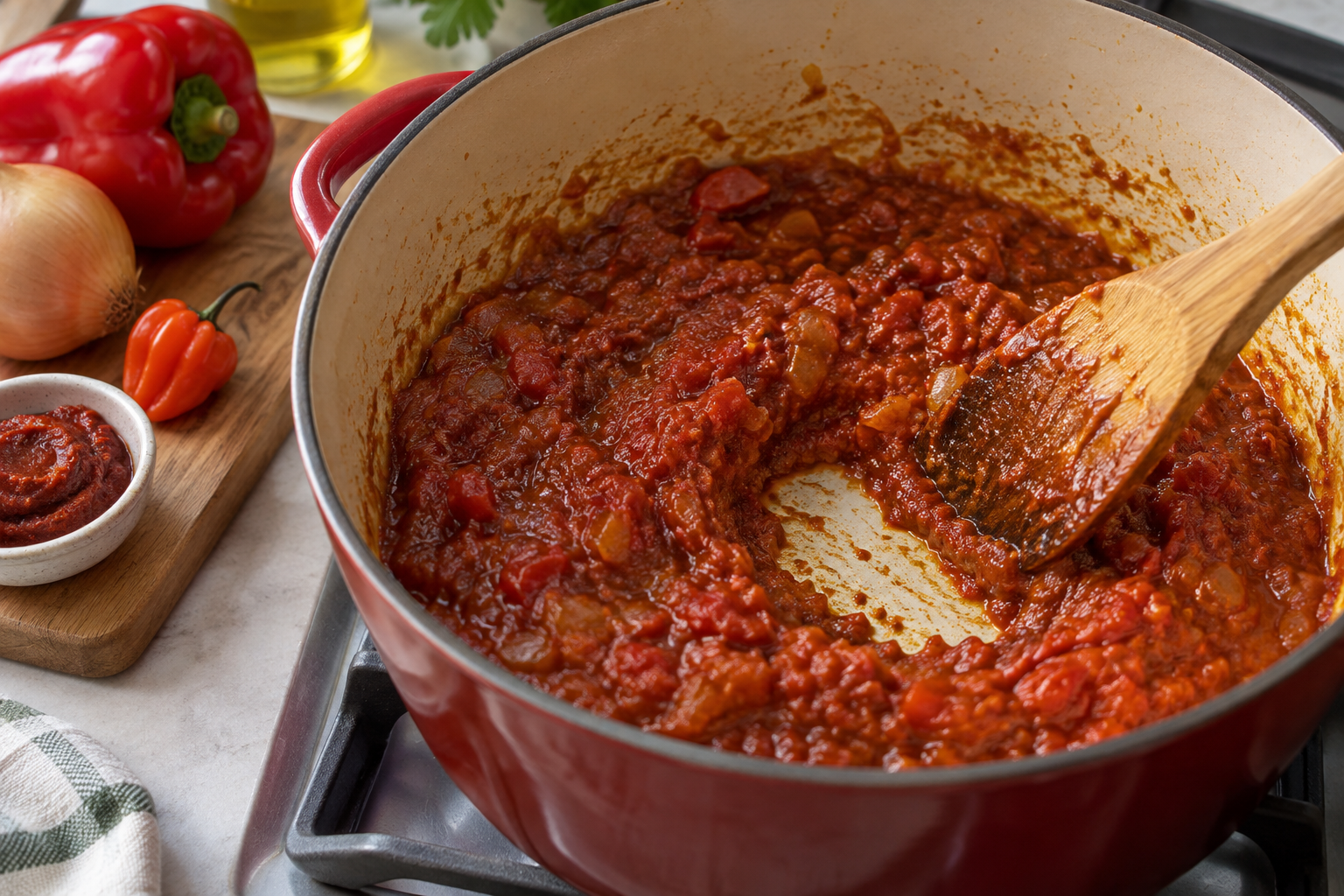
A freshly blended mixture contains a great deal of water. It smells fresh and a little raw, and if the rice is added too soon, it ends up cooking in a thin vegetable soup. Reducing the mixture first, then frying it with onion, oil and tomato purée, gives it a fuller flavour. The colour deepens, the bubbles become heavier, and the sauce begins to behave more like a cohesive mass than a juice.
The oil matters both for frying and for distributing flavour around the rice. There is no need to make the dish greasy, but drastically reducing the amount will affect the result. Small beads of oil around the edges of the sauce can be a sign that much of the water has evaporated. They are not, however, an exact gauge; tomatoes and peppers vary in water content, and different pots allow liquid to evaporate at different rates.
Chilli contributes more than heat. Scotch bonnet has a fruity, floral aroma that works particularly well with the acidity of tomatoes and the sweetness of peppers. In Sweden, habanero is often easier to find and works as a substitute, although its flavour is not identical. Start cautiously if you are not used to it. Removing the pale membranes reduces much of the heat, but individual chillies vary enormously. Wash your hands thoroughly afterwards and avoid touching your eyes.
Curry powder in this pot is a spice blend, not a claim that the food is Indian. Such blends have become everyday ingredients in many Nigerian kitchens through historical trading and cultural contacts. A mild blend containing, for example, coriander seed, turmeric and cumin works well here. Ingredients vary between brands, so choose a balanced blend rather than a very hot, salty one. Thyme lends its dry, herbal note; bay leaves add quiet aromatic depth.
Stock cubes and stock powders are common in contemporary cooking and should not be treated as cheating. Their salt content does vary considerably, though. Taste the base before adding extra salt. It should be well seasoned, since the rice will mellow the overall flavour, but it need not taste like seawater for the finished dish to have punch.
Rice, steam and the art of leaving the lid alone
Once the rice goes in, a different kind of cooking begins. Now the grains must absorb flavour and liquid without the bottom burning before the centre is done. A heavy pot with a tight-fitting lid makes a big difference. An overly thin pot creates fierce hot spots; a loose lid lets the essential steam escape into the kitchen.
Rinse the rice to remove loose surface starch, then drain it. Our recipe uses parboiled rice with a standard cooking time, not quick-cook rice. Parboiled means the rice has been heat-treated in its husk before husking and polishing; it is not the same as ready-cooked rice that only needs reheating. The process helps the grains hold their shape during cooking.
The liquid in the sauce also counts as cooking liquid. You cannot simply take the usual amount of water for white rice and pour it over a wet tomato base without a second thought. The recipe gives a starting amount and a reserve of hot water. That combination is safer than promising that every rice variety and every hob will behave exactly alike.
Low heat and a tight-fitting lid allow the steam to do the work. Opening the pot repeatedly releases heat and moisture, making it easy to mistake rice that is not yet cooked for rice that needs much more water. Add too much at that point, and the bottom turns mushy while you are still trying to cook the grains on top.
Any adjustment should be small: a few tablespoons of hot water, gently distributed, followed by more time under the lid. Avoid stirring as though making risotto. One gentle turn can help if the pot cooks unevenly, but repeated vigorous stirring breaks the grains and lifts rice stuck to the bottom.
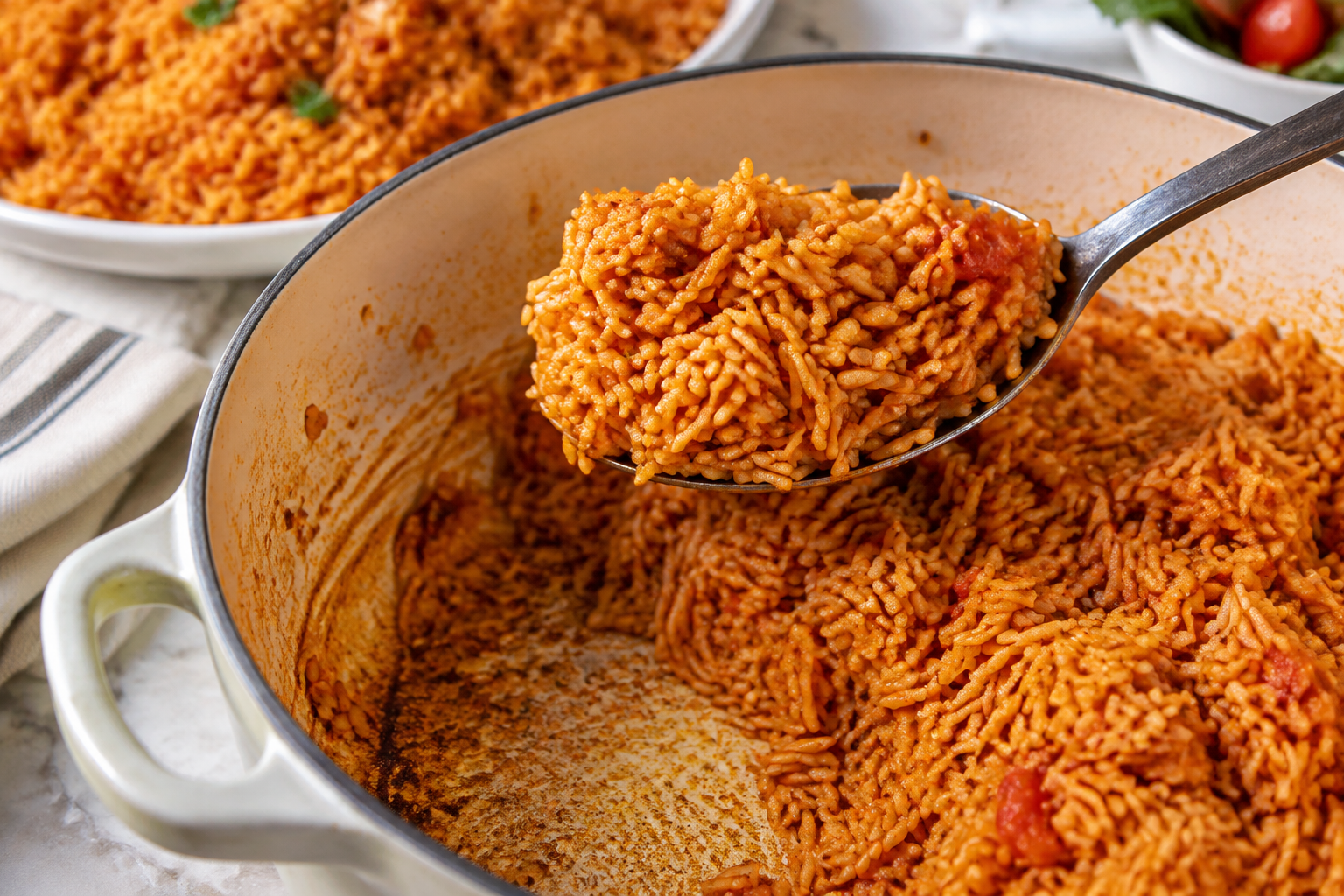
The coveted bottom layer forms when moisture close to the hot pot diminishes and the rice begins to toast. Smoke from a fire and a toasted bottom are two different things, however. At home, you can achieve the latter without the former. Do not try to fill the kitchen with smoke to recreate an outdoor celebration, and do not use a badly burnt layer as a seasoning. Once the rice is cooked, resting it under the lid matters more than a dramatic final blast of heat. Then lift out the fluffy rice and inspect the bottom separately.
A platter with room for more
Jollof can be served with grilled or fried chicken, meat, fish, beans or vegetables. Cabbage salads and other crisp salads provide a cooling contrast to the hot rice. The arrangement varies between countries, occasions and households; there is no single compulsory set of accompaniments that makes the meal count.
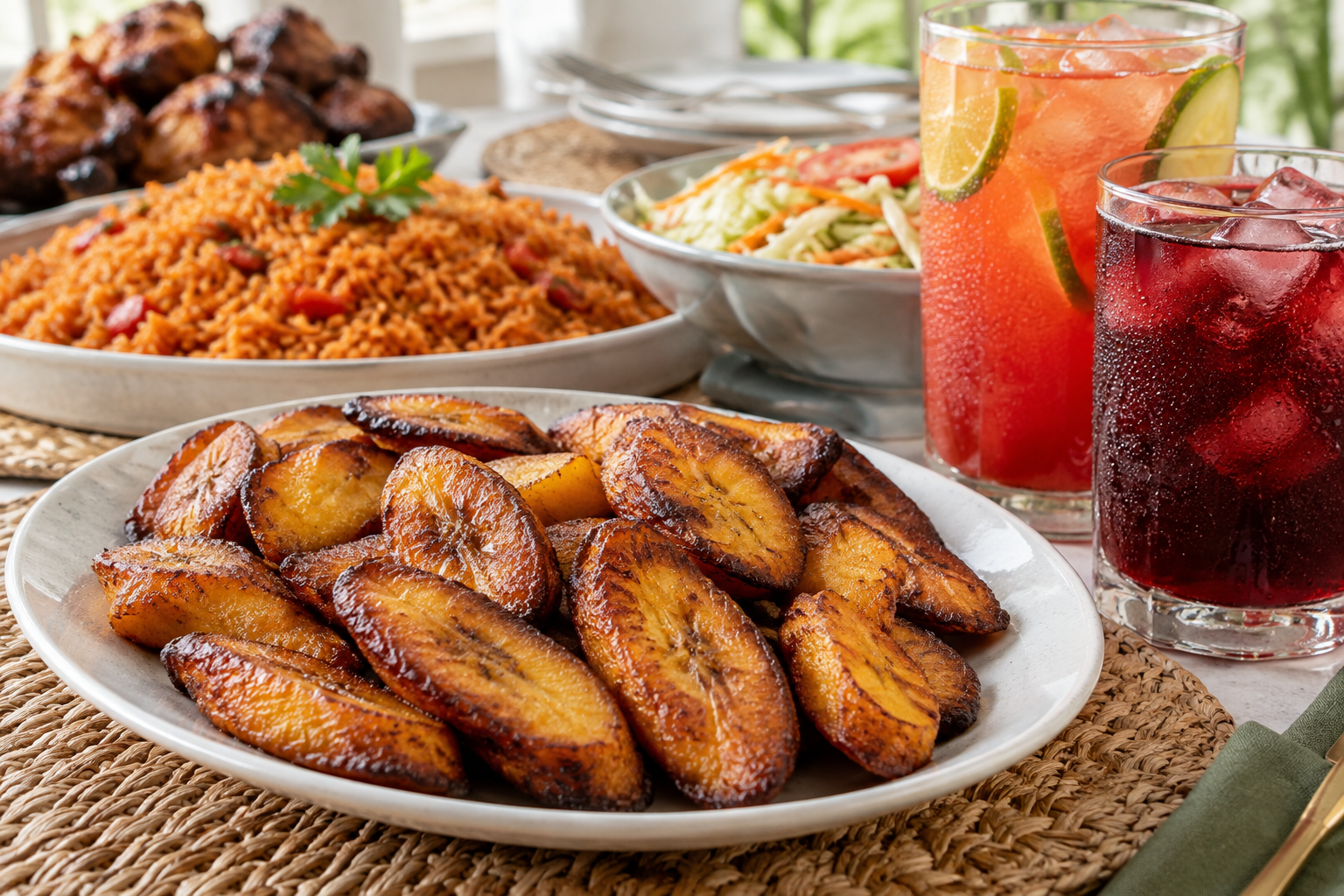
Plantain is nevertheless a particularly lovely companion. In Sweden, it is often sold as matbanan, or cooking banana, but that name does not tell you which stage of ripeness to choose. For sweet fried plantain, you need ripe fruit with yellow skin and plenty of dark spots. Green plantains are firmer and starchier and give a different result. Very dark skin does not necessarily mean the fruit has spoiled, but the flesh should still be sound and firm enough to slice.
In the pan, ripe plantain develops soft centres and browned edges. Its sweetness rounds out the chilli, while a little salt keeps the accompaniment from feeling like dessert. In Nigeria, fried ripe plantain is often called dodo. It is worth frying while the rice rests, so both reach the table at their best: the rice fluffy, the plantain warm and glossy.
Chapman, a drink strongly associated with Nigeria, goes well with the meal. Many versions combine citrus soft drinks, a sweet red ingredient and citrus fruit, often with cucumber. When it is promised as alcohol-free, the important thing is to check the bitters too. Ordinary aromatic cocktail bitters often contain alcohol, even if only a few drops are used. Here, we choose alcohol-free bitters or leave them out entirely. Plenty of ice and squeezed lime make the drink refreshing enough to complement the food without letting sweetness take over.
Bissap, a hibiscus drink enjoyed under various names in several West African countries, offers a different kind of refreshment. Its red colour may suggest sweetness, but the natural tartness of hibiscus is the whole point. Lightly sweetened and well chilled, it cuts beautifully through the oil in the rice and the sweetness of the plantain. For those who prefer beer, a pale lager with moderate bitterness is an easy choice; intense bitterness can make the chilli feel more aggressive.
Making it work in a Swedish kitchen
Start by reading the rice packet and choosing the right type of rice, not just the right colour of packaging. Long-grain parboiled rice is available in ordinary supermarkets. Plantain and Scotch bonnet can often be found in well-stocked African or international food shops; habanero is a useful chilli alternative. If plantain is unavailable, roasted sweet potato makes a tasty accompaniment, though it will not, of course, be dodo. Ordinary dessert bananas soften much faster and are not a direct substitute.
Tinned tomatoes make the recipe less dependent on the Swedish tomato season. The peppers contribute sweetness and body even in the middle of winter. Choose a heavy-based pot of roughly four litres with a genuinely tight-fitting lid. Four portions do not require the enormous pots of a party kitchen, but the same principle applies: enough surface area for the sauce to reduce, followed by gentle cooking with the steam kept inside.
The tomato and pepper base can easily be made ahead. This spreads out the work and lets you concentrate on the rice as your guests’ arrival approaches. Do not, however, double the batch in the same pot without reconsidering the method. A deeper quantity cooks differently, and it is often easier to use two pots than to rescue one that is overfilled.
Look after the leftovers, too. Cooked rice should not sit lukewarm for hours. Cool it quickly in shallow containers, refrigerate, and reheat only the amount you plan to eat until piping hot throughout. Freeze in portions if the rice will not be eaten soon.
Finally: use your nose, your ears and your patience. The sauce should go from raw to rich, the lively boil to a quiet simmer. Serve on a large platter if you like, pass the accompaniments around the table, and save the discussion of which country makes the best jollof until everyone has been fed. The debate tends to be friendlier that way. The bottom layer, however, may need negotiations of its own.
Nigerian Jollof for the Home Kitchen
A Nigerian-inspired celebration pot with a concentrated tomato and pepper base, thyme and separate grains of rice. The recipe is adapted for a Swedish hob and long-grain parboiled rice with a packet cooking time of around 20 minutes. It makes four generous portions with accompaniments, without attempting to imitate wood smoke by burning the rice.
Ingredients
Method
- 1Deseed the peppers and chop them and the onion for the base. Blend with the tomatoes and chilli to a fairly smooth purée. Avoid adding water if possible. Handle the chilli carefully and wash your hands and utensils afterwards.
- 2Pour the purée into a wide saucepan. Bring to the boil, then simmer uncovered over a medium heat for 15–25 minutes, until noticeably thicker and reduced to about 6 dl. Stir occasionally, more frequently towards the end.
- 3Rinse the rice in several changes of cold water and drain thoroughly in a sieve. Heat the oil in a heavy-based pot of about 4 litres with a tight-fitting lid.
- 4Fry the sliced onion over a medium heat for 7–9 minutes until soft and lightly golden. Stir in the tomato purée and fry for another 3–4 minutes, stirring. The purée should darken slightly but not turn black.
- 5Carefully add the reduced base; it may splatter. Stir in the curry powder, thyme, bay leaves and black pepper. Fry and simmer over a medium-low heat for 12–15 minutes. Stir frequently along the bottom. The base should be rich and thick, and small beads of oil may appear around the edge.
- 6Pour in 4.5 dl hot stock and gently loosen any browned, but not burnt, tomato from the bottom. Season to taste with salt. Add the rice and stir to distribute everything evenly. Bring to the boil and let it bubble gently for 1–2 minutes.
- 7Cover and turn the heat to low. Cook for 25 minutes without lifting the lid. If the lid does not fit tightly, place a sheet of aluminium foil between the pot and lid; fold in the edges so the foil cannot reach the heat source.
- 8Check a couple of grains from the centre of the pot. If the rice is still hard and the pot seems dry, distribute 0.5 dl hot water over the surface. If necessary, gently turn the rice just once from the edges towards the centre without scraping the bottom. Cover and continue cooking over a low heat for 5–10 minutes. Repeat with a little of the reserved water only if needed.
- 9When the grains are tender but still have some bite, remove the pot from the heat and leave to rest, covered, for 10 minutes. Remove the bay leaves and fluff gently with a fork or wide serving spoon.
- 10Transfer the rice to a serving dish without scraping up the bottom layer. If the bottom is golden to dark brown and smells toasted, it can be served separately. Leave any black or bitterly burnt rice in the pot. Serve with plantain and, if you like, cabbage salad, beans, chicken or fish.
- Rice varieties differ. Start with the stated amount of liquid and adjust in small increments; substituting jasmine rice will not necessarily work with the same amount of water or cooking time.
- Feel free to make the tomato base the day before. Cool quickly and refrigerate. Reheat before continuing with the recipe.
- Using vegetable stock makes the rice vegan. Serve with black-eyed beans and a fresh cabbage salad, for example, for a more complete meal.
- Cool leftovers quickly in shallow containers and store at around 4 °C. Ideally, eat the next day or freeze. Reheat until the rice is piping hot throughout.
Dodo – Fried Ripe Plantain
Soft, sweet flesh and browned edges make fried plantain a lovely companion to jollof. Choose yellow plantains with plenty of black spots, not firm green ones.
Ingredients
Method
- 1Trim the ends off the plantains. Make a shallow slit along the skin and peel it away with your fingers, carefully using a knife to help if needed.
- 2Cut the flesh diagonally into slices about 1 cm thick. Gently pat away any surface moisture with kitchen paper to prevent the oil from splattering.
- 3Heat the oil in a frying pan over a medium heat. Aim for about 170 °C if using a thermometer. A test slice should start bubbling immediately without darkening within seconds.
- 4Add a single layer of slices with a little space between them. Fry for 2–4 minutes on the first side until golden brown underneath. Work in two or three batches so the temperature does not drop too much.
- 5Turn with tongs and fry the other side for 2–3 minutes. Lower the heat if the slices darken before the centres have softened; very ripe plantain browns more quickly.
- 6Lift onto a plate lined with kitchen paper or a wire rack. Salt lightly while warm and serve with the rice as soon as possible.
- Ripeness determines the flavour. Leave green plantains to ripen at room temperature until the skin turns yellow and develops dark spots.
- For an oven version: toss the slices with 2 tbsp oil and bake on baking parchment at 220 °C in a conventional oven for about 20–25 minutes. Turn halfway through; the browning will be less even, but the result is delicious.
- Plantain is best freshly fried. Reheat any leftovers in the oven at 200 °C for about 8–10 minutes.
What goes in the glass
- Alcohol-freeAlcohol-Free ChapmanA refreshing version with orange soft drink, lemon-lime soft drink, a little grenadine, squeezed lime, cucumber and plenty of ice complements the rice’s deep tomato flavour and chilli. Choose explicitly alcohol-free bitters or leave them out entirely; ordinary cocktail bitters often contain alcohol. Go easy on the grenadine so the drink does not become too sweet.
- BeerPale Lager with Moderate BitternessLight maltiness complements the toasted rice bottom and the plantain’s browned surface, while carbonation refreshes between bites. Moderate bitterness is more pleasant with chilli than a heavily hopped style. Alcohol-free pale lager also works well.
- Alcohol-freeBissap – Chilled Hibiscus DrinkThe bright acidity of hibiscus balances the oil in the rice and the sweetness of the plantain. Serve lightly sweetened, perhaps with a hint of ginger or mint, allowing both the tartness and floral notes to shine.
Enjoy alcohol in moderation. Alcohol-free options go just as well with the food.
Sources
- Unesco, Ceebu Jën, a culinary art of Senegal (2021)
- Alan Davidson; tredje upplagan redigerad av Tom Jaine, The Oxford Companion to Food (2014)
- James C. McCann, Stirring the Pot: A History of African Cuisine (2009)
- Zoe Adjonyoh, Zoe's Ghana Kitchen (2017)
- Lopè Ariyo, Hibiscus (2017)
- Livsmedelsverket, Bacillus cereus
Ask questions about "Jollof – West Africa’s Pride in Rice". Answers are based on the magazine's own articles.