Tagine – Morocco’s Slow-Simmered Stew
On the gentle warmth of earthenware, the saltiness of preserved lemon and food that keeps people lingering at the table.
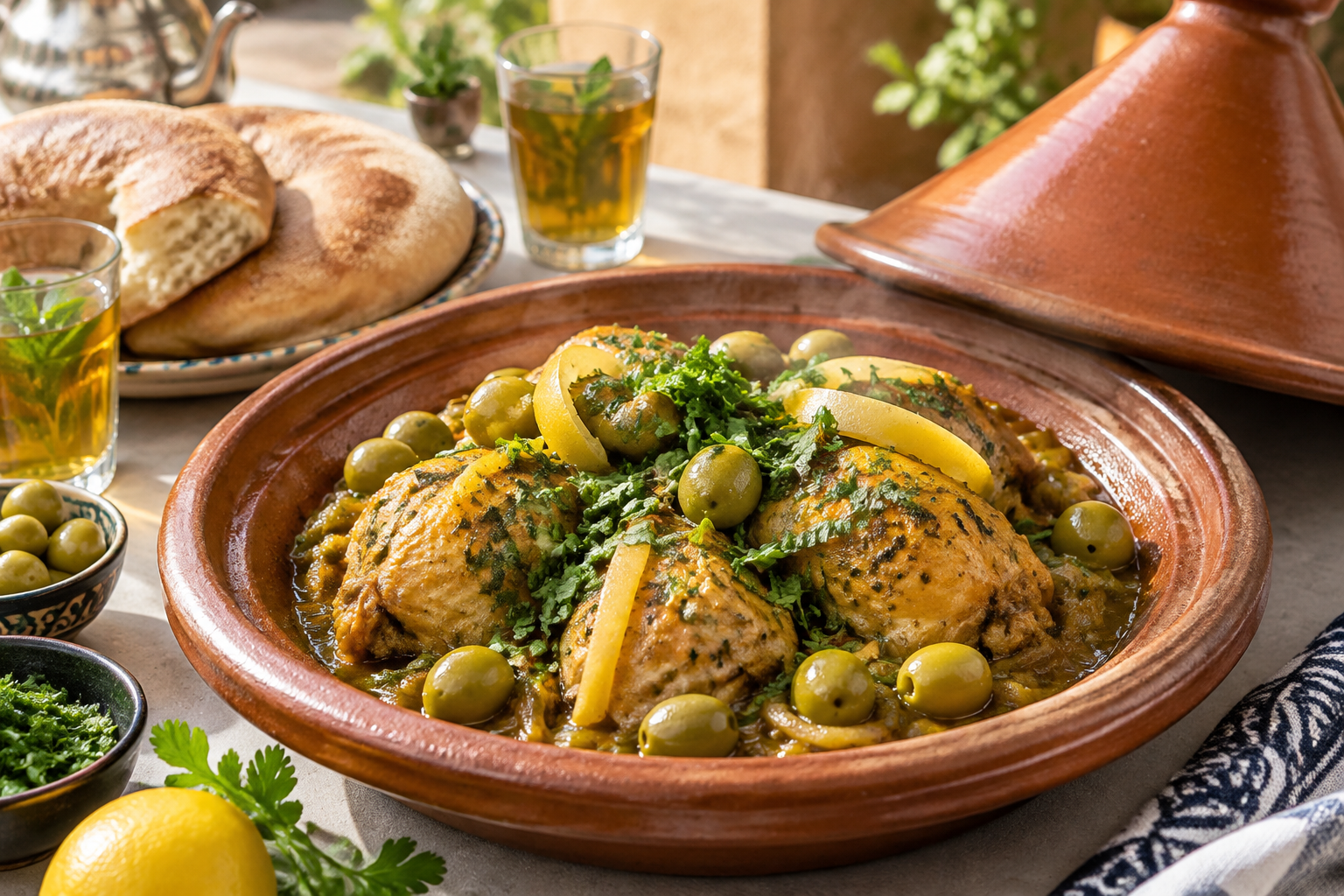
Beneath the conical lid, chicken, olives and preserved lemon meet in a fragrant cycle of steam. Tagine is both a cooking vessel and a dish, deeply rooted in Morocco’s Amazigh food culture and taking countless forms from coast to interior. We bring it into the home kitchen – where an ordinary heavy-based pot can do the job too.
 By Sofia HaddadReporter · Middle East, Africa and Latin America – mezze, tagine, injera, mole and much more
Translated from Swedish with AI assistance.
Go to the recipes (2) ↓When the lid is lifted
At first, there is just a gentle bubbling. Then the conical lid is lifted and the fragrance fills the air: ginger, softened onion, warm olive oil and lemon with a deeper, rounder note than freshly squeezed juice. The chicken rests in a glossy, golden sauce. The olives are warm right through to their stones. Someone breaks off a piece of bread and waits a moment before dipping it into the sauce.
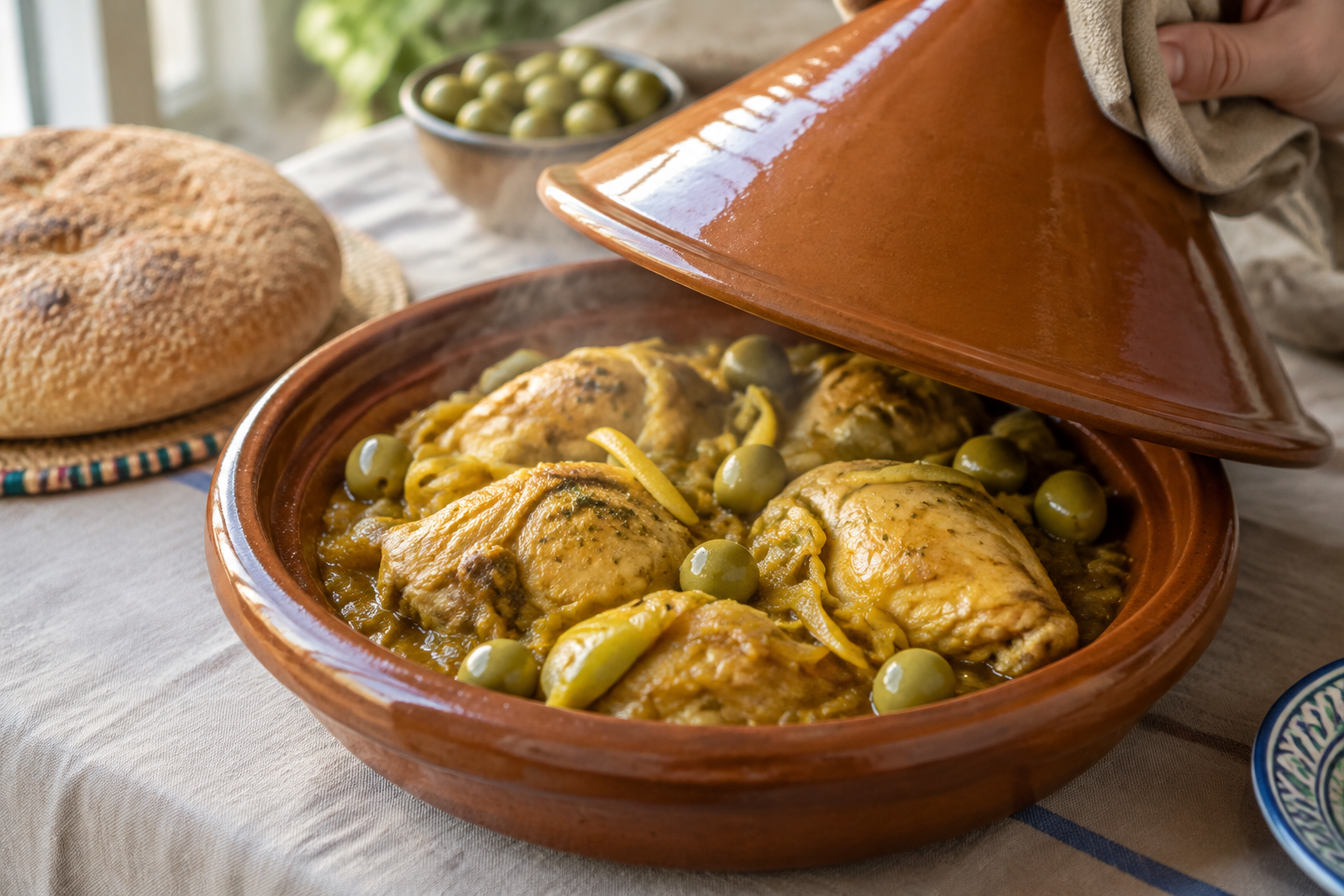
It is a good introduction to the world of tagine. No fierce heat, no piece of meat that must be turned at precisely the right second, but a slow interplay of ingredients, moisture and warmth. Cooking a tagine does not mean leaving everything to chance. It means learning how little needs to happen at any one time.
In Morocco, tagine means both the vessel and the food cooked in it. The low, round base keeps the ingredients together in a fairly shallow layer; the tall lid gives steam room to rise and condense. Once the food is ready, the same vessel can be carried to the table. Cooking and serving go hand in hand, and guests gather around a shared centrepiece.
But that familiar silhouette is no guarantee of a particular flavour. A tagine might contain fish, lamb, beef, chicken or vegetables. It may be bright with lemon and herbs, warm with ginger and pepper, or sweeter with prunes and apricots. What these dishes share is more a way of building a meal: gentle cooking, a concentrated sauce and ingredients allowed to flavour one another.
Chicken with preserved lemon and olives is one of the clearest introductions. There is no reason to mask the flavours here. The lemon should make its presence felt without turning the dish sour. The olives should bring saltiness without dominating. The onions should almost cease to be onions, becoming instead the soft body of the sauce.
Clay, Amazigh roots and many paths to the pot
Tagine is firmly rooted in Morocco and in the broader food culture of North Africa. The earthenware vessel is particularly associated with Amazigh traditions, cultures often referred to as Berber in older literature. Yet Amazigh is not the name of a single, uniform people with a single cuisine. Languages, landscapes, livelihoods and eating habits differ across North Africa.
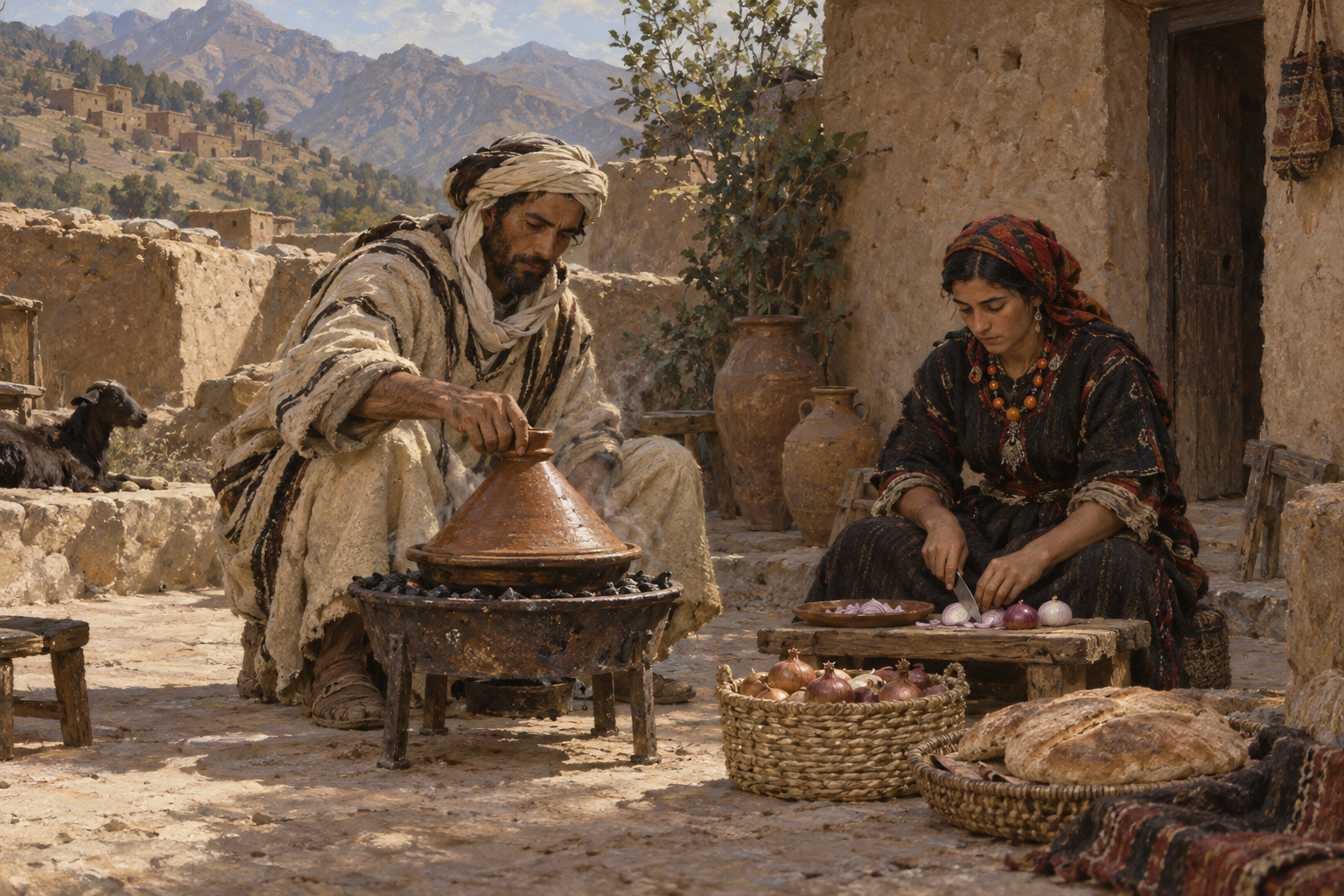
It is therefore wise to distinguish between deep cultural roots and a precise story of invention. There is no reliable date for when the Moroccan tagine acquired its now-familiar shape. Claims of a lone inventor or a single place of origin tell us more about our desire for neat stories than about how domestic techniques tend to develop.
Cooking in clay is far older than the dish found on Moroccan restaurant menus today. The shapes of vessels and ways of cooking have changed over a long period. Moroccan food, meanwhile, has been shaped by Amazigh, Arab, Andalusian and Jewish traditions, as well as by trade and connections south across the Sahara and north across the Mediterranean. It is rarely possible to isolate a finished dish and assign each ingredient an unambiguous certificate of cultural ownership.
What emerges from Paula Wolfert’s extensive accounts of Moroccan food is precisely this variety: different households, cities and regions have their own ways of combining ingredients and tending the pot. Claudia Roden’s recipes and cultural histories likewise reveal a cuisine that is both locally rooted and shaped by migration. Their books are better guides than a simplified account of an unchanging national dish.
The practical value of the earthenware vessel is easier to describe than the moment of its birth. It lends itself to slow cooking over moderate heat, and a well-fitting lid helps limit moisture loss. That does not mean a tagine is a closed system that never needs water. How much moisture remains depends on the vessel, the lid, the heat and the ingredients.
Today, metal pots, pressure cookers and modern cookers are also used in Moroccan kitchens. Sometimes food is cooked in one vessel and served in another. That makes the meal no less authentic. Tradition also means knowing how to make everyday life work, not simply remaining faithful to a particular material.
What the conical lid actually does
An earthenware tagine needs gentle handling. The material is sensitive to sudden changes in temperature, and not every vessel sold as a tagine is intended for use on the hob. Beautifully painted pottery may be a serving dish rather than a cooking pot. Check that the vessel is suitable for contact with food and for the heat source you intend to use.
Follow the manufacturer’s instructions for preparing it, too. Some unglazed vessels need soaking or other treatment before their first use; others should not be treated this way. A heat diffuser may be needed on some hobs. A traditional earthenware vessel will not work directly on induction unless it has been specially designed to do so.
During cooking, steam rises from the food. Some condenses on the cooler surfaces of the lid and runs back down. This process helps keep the environment moist, but the conical lid should not be credited with magical powers. The right temperature and a sensible amount of liquid are still crucial.
The most common mistake at home is to add water as though making soup. Chicken, onions and many vegetables release moisture of their own. Too much added water produces a thin sauce that needs lengthy reduction afterwards, while the meat risks overcooking. Start with a little instead, and check during cooking that the base has not dried out.
The second mistake is using too much heat. A tagine should simmer, not rattle beneath its lid. Vigorous boiling can dry out the meat, make the onions catch and, at worst, damage a delicate earthenware vessel. Never place hot earthenware on a cold or wet surface, or pour fridge-cold liquid into a heated vessel.
For Swedish home kitchens, a shallow, heavy-based pot with a tight-fitting lid is an excellent alternative. It does not create exactly the same cooking environment, but it lets you work with the same principles. An enamelled cast-iron casserole is particularly easy to manage. What matters is not how your kitchen looks, but that the chicken becomes tender and the sauce flavourful without anything burning on the bottom.
The spices, the lemon and the aged butter
Ras el hanout is perhaps the spice blend most closely associated with Morocco beyond its borders. Its name is usually rendered roughly as the shop’s finest or best blend. That is a useful way to understand the idea: a spice merchant’s own composition, rather than a standard formula with a fixed number of ingredients.
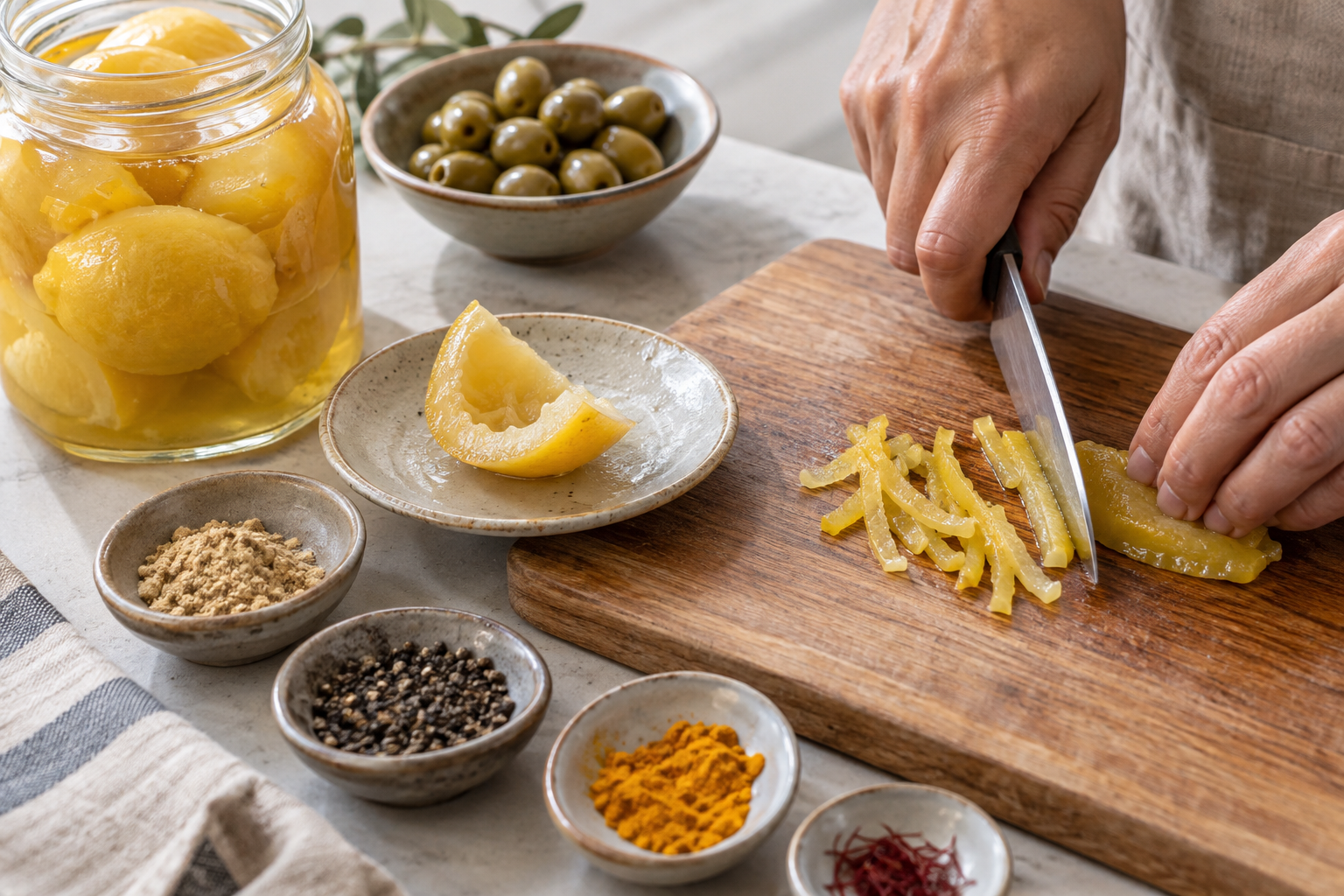
Ginger, black pepper, cinnamon, turmeric and cardamom may feature, along with other aromatic spices. Blends vary between merchants, producers and households. Some are distinctly floral, others peppery or sweetly warming. Read the ingredients and smell the blend before seasoning. A large spoonful of a powerful mixture can change the dish more than you intended.
But ras el hanout is not an essential ingredient in every tagine. Chicken with preserved lemon and olives often has greater clarity with fewer spices. In our recipe, ginger and black pepper provide warmth, turmeric adds colour and a little saffron lends its distinctive aroma. Anyone expecting fiery chilli heat may be surprised: spice is not the same thing as heat.
Preserved lemon builds flavour in a different way. The lemons are left to mature with salt and lemon juice, softening the peel and changing its character. There is still a family resemblance to the sharp freshness of fresh lemon, but it is joined by saltiness and a fuller citrus aroma. It is primarily the peel you are after.
The amount of flesh used varies. For a home version that is easy to control, it is wise to start with rinsed, thinly sliced peel. The flesh and preserving liquid can be very salty. Together with the olives, they make it easy to oversalt the dish if a stock cube and ordinary salt are added at the outset as well.
Fresh lemon is therefore not a direct substitute. It brings acidity but lacks the flavour and texture of the matured peel. If you have no preserved lemon, a little finely grated fresh zest and a judicious splash of juice can make a delicious, bright stew, but the result will be different. Better to say so than to promise the same flavour in five minutes.
Smen is another part of Morocco’s flavour landscape. It is a salted, aged butter, often with a pronounced fermented character; methods of production vary. Its flavour can lean towards mature cheese and be very intense. Small amounts are used in couscous and certain stews, among other dishes. Smen is not simply another name for ordinary butter or ghee, and it is not needed in this tagine. If you would like to try it, start with a small amount from a reliable producer.
From Atlantic fish to the fruit and meat of the interior
Exploring regional tagines is rewarding, as long as the map is not drawn too neatly. Dishes travel with people, and one family’s version may differ more from their neighbour’s than from a relative’s in another city. Even so, the availability of ingredients influences what goes into the pot.
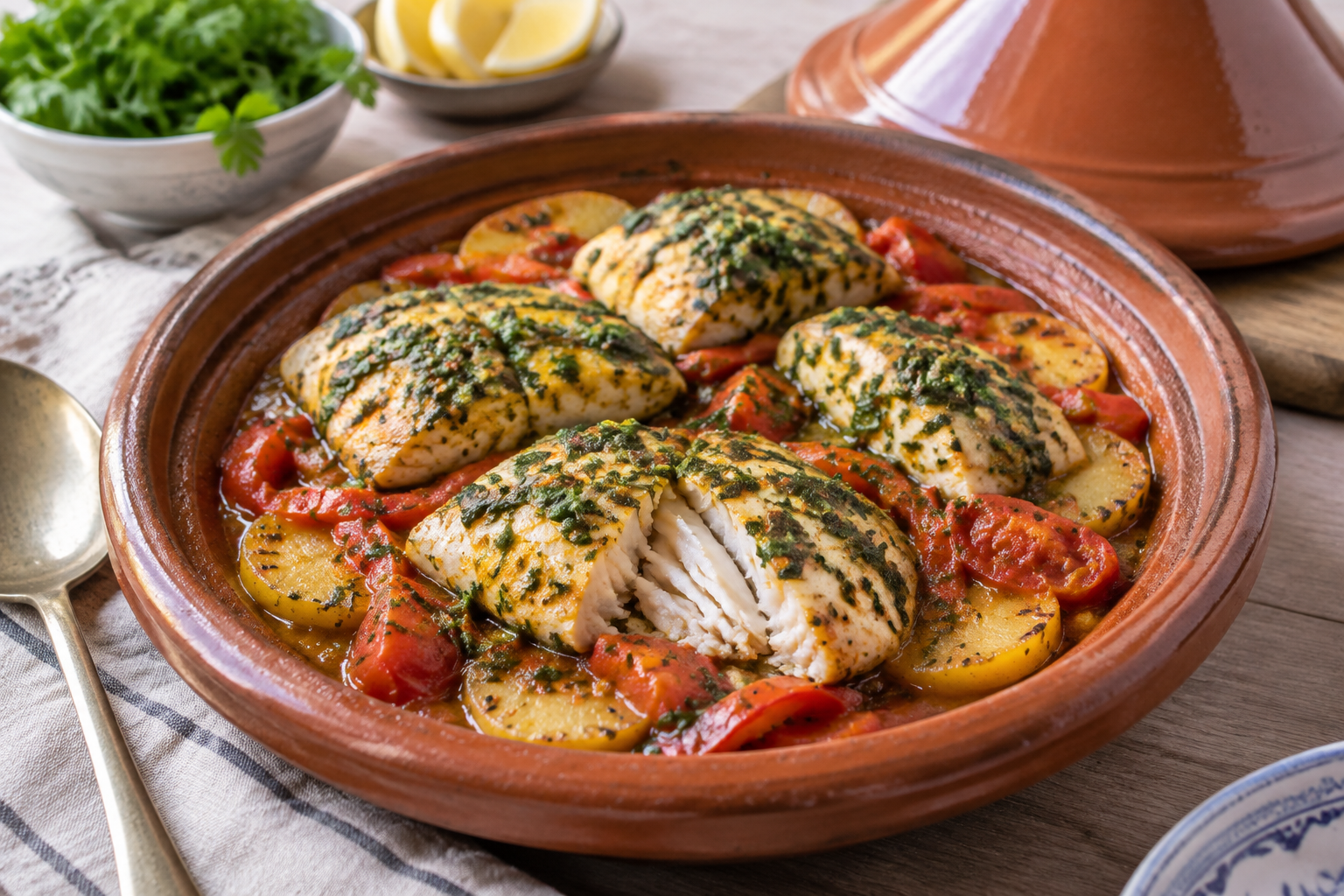
Along the coasts, fish is a natural part of the repertoire. Fish tagines may be flavoured with chermoula, a herb-rich mixture often containing coriander, parsley, garlic, cumin, paprika and lemon. Chermoula varies too. It serves both as a marinade and as seasoning during cooking, and the fish may be joined by tomatoes, peppers and potatoes, for example.
Fish also shows why slow food does not always mean a long cooking time. The vegetables may need a head start, with the fish added later to keep it succulent. Earthenware does not make an ingredient immune to overcooking. The same applies to small meatballs in tomato sauce, sometimes finished with eggs: they call for a different rhythm from a tougher cut of meat that needs time to soften.
Lamb or beef with prunes, apricots or other fruit demonstrates Moroccan cooking’s skilful balance of savoury and sweet. Cinnamon and sometimes honey amplify the fruit’s aroma, while meat juices and onions keep the dish anchored in savoury flavours. Toasted almonds or sesame seeds can provide a dry, nutty contrast to the glossy sauce.
It is tempting to call all such combinations celebration food, but here too the context varies. More expensive meat, nuts and carefully arranged garnishes can signal hospitality and special occasions; simpler stews belong to everyday life. Vegetable tagines can be built around what the season offers, such as carrots, peas, potatoes, courgettes or artichokes. The ingredients’ different cooking times should guide their placement and the order in which they are added.
Chicken with lemon and olives moves between home kitchens, feasts and restaurant tables. Here too, there are several approaches. Some cooks brown the bird first; others start with the chicken, onions and spices together. In some versions, the chicken is browned in the oven towards the end. Our recipe takes a simple route without deep browning, allowing the light, fragrant sauce to take centre stage.
Bread with the stew, couscous on Fridays and tea afterwards
When the tagine reaches the table, bread is more than an accompaniment. Moroccan khobz, often a round loaf with a substantial crust, helps scoop up the sauce and small pieces of food. In many settings, people eat from the shared dish with their right hand, keeping to the area in front of them. But family habits vary, and cutlery is also part of meals today.
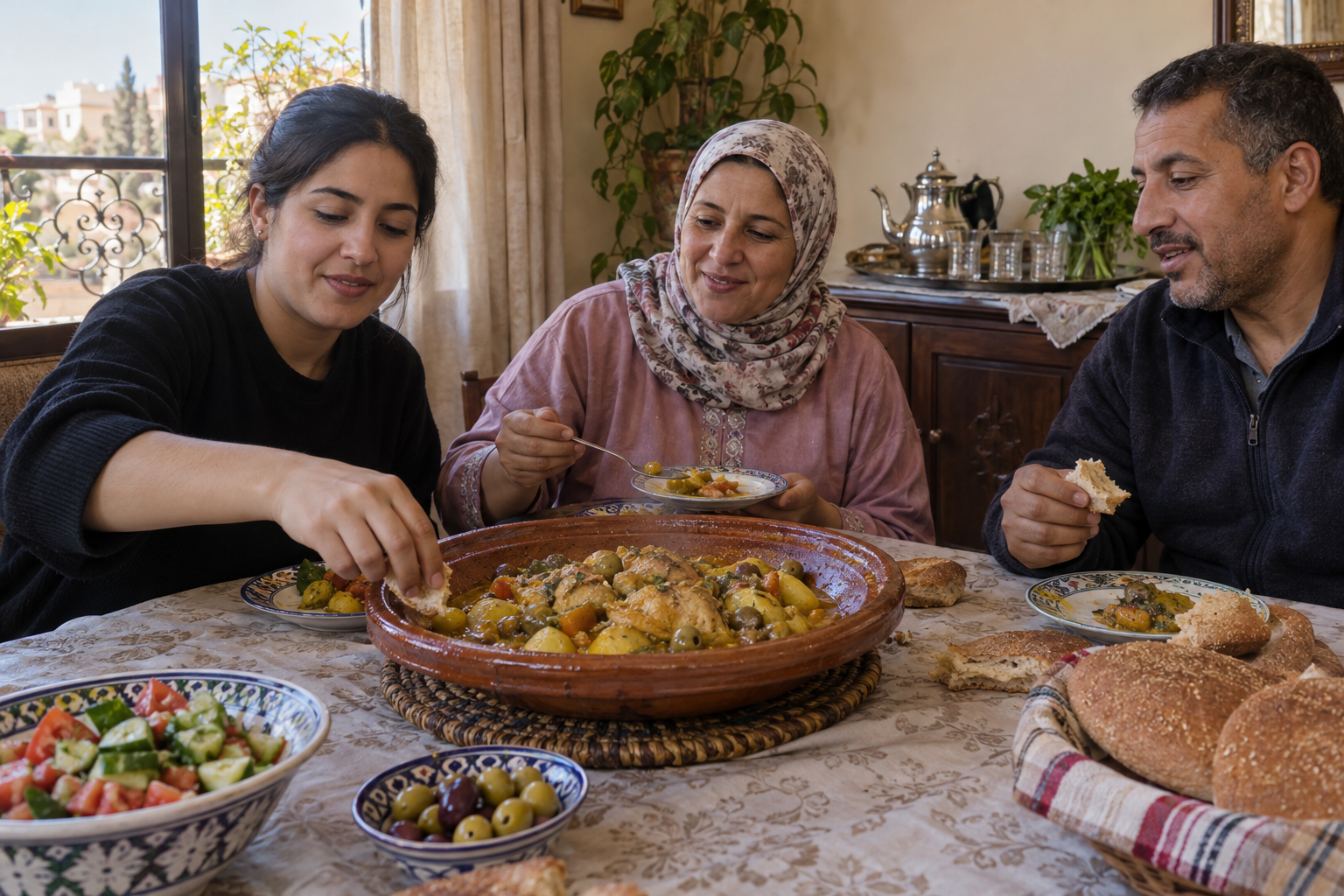
For a guest, paying attention is better than memorising a set of rules. Watch what your host does, take small portions at a time and let sharing be the point. A communal vessel does not mean everyone has to eat in the same way. At a Swedish table, serving on plates and using bread to mop up the last of the sauce works just as well.
Couscous has a different, though closely related, place in the culture of the table. Friday couscous is a widespread tradition in Morocco, often linked to the family gathering for the day’s main meal and Friday prayers. It is not a rule everyone follows, but it is a distinct social rhythm. The steamed couscous is then served as a complete dish in its own right, with broth, vegetables and often meat.
It is therefore misleading to think of couscous as the inevitable base for every tagine. Bread is a common companion to the stew. If you would like to serve couscous at home, it is delicious and practical, but the distinction is worth understanding. In 2020, the knowledge and traditions surrounding couscous were added to UNESCO’s Representative List of the Intangible Cultural Heritage of Humanity following a joint nomination by Algeria, Mauritania, Morocco and Tunisia. It is a shared cultural heritage, not an exclusively national side dish.
Then comes the tea, perhaps after the meal, perhaps as a welcome long before the food is ready. Moroccan mint tea is usually made with green tea, often gunpowder, fresh mint and sugar. The green tea matters: this is not simply mint steeped in hot water. Its astringency supports the herb’s cool fragrance and the sweetness.
The high pour from the teapot, the small glasses and the host’s care can lend the serving a ceremonial air. But there is no single national tea ceremony with identical rules in every home. Mint varieties, sweetness, strength and the use of other herbs all vary. The famous story of three glasses, each with its own symbolic meaning, appears in different forms across North Africa and should not be presented as a rule for every Moroccan table.
At home, you can make the tea less sweet and serve sugar on the side. Water with mint and cucumber also works well with the chicken tagine itself. For those choosing wine, a fresh, dry rosé or a light, soft red can work, but alcohol is by no means a given at a Moroccan meal. The alcohol-free option need never feel like an afterthought.
Making it work in a Swedish home kitchen
Start with bone-in chicken pieces, preferably thighs or drumsticks. They stand up to gentle simmering better than breast fillets and bring more flavour to the sauce. You may want to remove the skin if you do not plan to brown or oven-roast the chicken; in a covered pot, it becomes soft rather than crisp. Then give the onions enough time. They should become part of the sauce, not remain as little pieces with a raw bite.
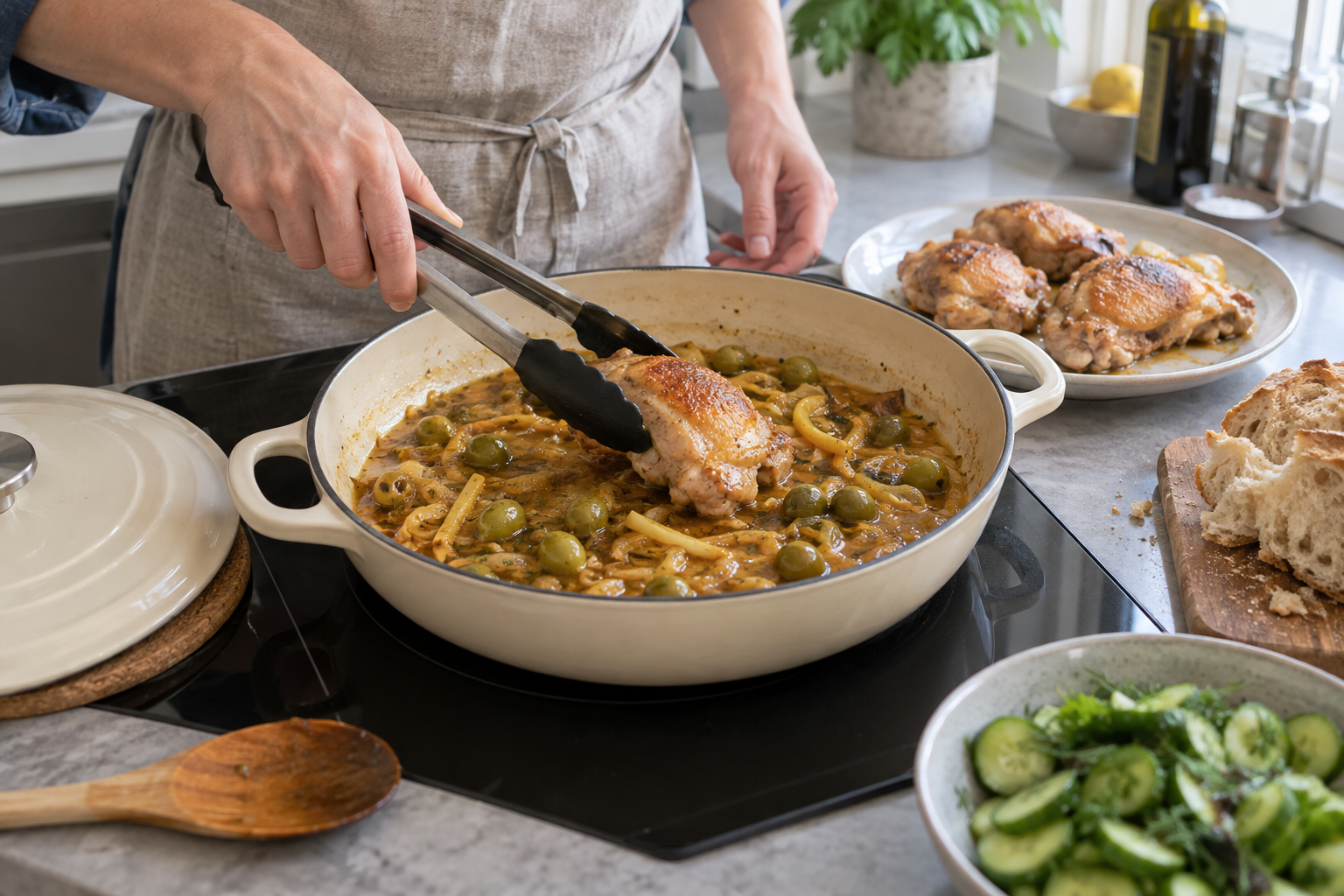
Choose green olives you enjoy eating as they are. Olives with stones often hold their shape well, while pitted ones are easier at the table. Rinse very salty olives and taste the lemon before adding it to the pot. That simple taste test tells you more than an exact measurement can when brands differ.
Preserved lemons are available in many shops stocking North African or Middle Eastern foods, as well as well-stocked supermarkets. Making your own takes planning. The recipe below is a refrigerated home version, not a preserving method for storage at room temperature. Buy a jar for tonight’s dinner and let the next batch mature in the fridge.
When the chicken is ready, the sauce should be mellow and cohesive, not watery. If it is too thin, lift out the meat and reduce the liquid briefly with the lid off. Return the chicken, only then taste for salt, and let the stew rest for a few minutes. It is a small pause that makes serving more relaxed and the flavours easier to appreciate.
Set out bread, something fresh and crisp, and a drink that does not compete with the lemon. You do not need to recreate an entire country’s food culture in one evening. Start by understanding one pot of food, treating the ingredients well and giving those at the table time to linger.
Chicken Tagine with Preserved Lemon and Green Olives
A home-kitchen version of a well-known Moroccan combination, with ginger, saffron and softened onions. This recipe is written for a heavy-based pot; if you use an earthenware vessel, it must be suitable for your hob and handled according to the manufacturer’s instructions.
Ingredients
Method
- 1Finely chop the onions and garlic. Chop the coriander and parsley, reserving a few leaves for serving. Remove the chicken skin if you like. Pat the chicken dry with kitchen paper; do not rinse raw chicken.
- 2Steep the saffron in 0.5 dl of the measured water, lukewarm, for about 10 minutes. Meanwhile, warm the olive oil in a heavy-based pot over a medium-low heat. Add the onions and soften for 8–10 minutes without letting them take on much colour.
- 3Stir in the garlic, ginger, turmeric and black pepper. Cook gently for about 30 seconds. Add the saffron water and the remaining 2 dl water before the spices have a chance to burn.
- 4Add the chicken and chopped herbs. Turn the chicken in the onion mixture and arrange the pieces as evenly as possible. The liquid does not need to cover the meat. Do not add salt yet.
- 5Bring just to a simmer, cover and lower the heat. Simmer very gently for 35 minutes. Turn the pieces once and check that there is still liquid in the bottom of the pot. Add a few tablespoons of warm water if needed.
- 6Remove the flesh and pips from the preserved lemon. Briefly rinse the peel, taste a small piece and cut the rest into thin strips. Rinse the olives if they are very salty.
- 7Scatter the olives and about two-thirds of the lemon peel into the pot. Cover and simmer for a further 10–20 minutes, until the chicken is tender and cooked all the way through. Check with a thermometer in the thickest part, without touching the bone; aim for about 82 °C for thighs and drumsticks.
- 8If the sauce is thin, lift out the chicken and simmer the sauce uncovered for 5–10 minutes. It should thicken slightly without becoming dry. Return the chicken and taste, adding more lemon peel and a little salt if needed.
- 9Leave to rest off the heat for 5 minutes. Scatter over the reserved herb leaves and serve with bread. Let your guests know if the olives contain stones.
- No preserved lemon at home? Use a little finely grated lemon zest and add fresh lemon juice to taste at the end. The flavour will be different, but the stew will still be delicious.
- This is a good dish to make the day before. Cool quickly, keep covered in the fridge at about 4 °C and eat within 2–3 days. Reheat until hot all the way through.
- For a plant-based interpretation, use 500 g potatoes, 400 g carrots and 400 g cooked, drained chickpeas. Simmer the vegetables until tender, adding the chickpeas, lemon and olives towards the end.
Refrigerated Preserved Lemons
Over time, salt and lemon juice soften the peel and develop its characteristic mature citrus aroma. Makes one jar of about 7.5 dl, enough for roughly 12 uses in cooking. Allow 4–6 weeks for maturing in addition to the preparation time. This is a refrigerated home version, not a shelf-stable preserve.
Ingredients
Method
- 1Thoroughly wash a glass jar of about 7.5 dl and an acid-resistant lid, preferably in a dishwasher on a hot cycle. Use clean utensils and a clean glass preserving weight if you have one.
- 2Scrub the lemons thoroughly under running water. Discard any fruit with mould or damage. Trim off the very ends without removing much flesh.
- 3Cut the lemons into wedges. Toss with the salt in a clean bowl and leave for about 10 minutes so they begin to release their juice.
- 4Pack the wedges tightly into the jar, pressing gently with a clean spoon. Add all the salt and juice from the bowl. Leave about 2 cm of space below the rim.
- 5Pour in lemon juice until the lemons are completely covered. Do not top up with water. If needed, add a clean glass weight to keep the peel submerged, then put on the lid.
- 6Place the jar straight into the fridge, at about 4 °C. Check the following day that the lemons are still covered and top up with more lemon juice if needed. Leave to mature for 4–6 weeks, until the peel is soft; thick-skinned lemons may take longer.
- 7Remove lemon pieces with clean utensils. Briefly rinse the peel and use a little at a time in stews, dressings and sauces. Keep refrigerated with the lemons submerged, and preferably use within 3 months of preparation. Discard the entire contents if you notice mould, sliminess or an unusual unpleasant smell.
- Small, thin-skinned lemons soften more evenly. The number that will fit and the amount of extra juice needed vary with the size of the fruit.
- Do not salt the finished dish until the lemon and any olives have been added.
- Use a tested preserving method from a reliable source if you want to make lemons for storage anywhere other than the fridge.
What goes in the glass
- TeaMoroccan Mint Tea with Green TeaThe mint’s cool fragrance complements the coriander and lemon, while the green tea’s gentle astringency contrasts with the mellow sauce. Serve after the meal if you like; adjust the sweetness and offer sugar separately.
- WineDry, Fresh Rosé with No Pronounced OakFresh acidity and subtle berry notes suit the lemon, olives and chicken without overpowering the saffron. Choose a wine with moderate alcohol and serve chilled.
- WineLight, Soft GamayGentle tannins and juicy fruit work better with the lemon’s acidity and the olives’ saltiness than a powerful, tannic wine. Serve lightly chilled.
- Alcohol-freeSparkling Water with Mint and CucumberThe bubbles refresh the palate between bites, and the delicate flavours leave room for the preserved lemon. Avoid adding lots of extra lemon juice: the stew already has its own citrus character.
Enjoy alcohol in moderation. Alcohol-free options go just as well with the food.
Sources
- Paula Wolfert, The Food of Morocco (2011)
- Paula Wolfert, Couscous and Other Good Food from Morocco (1973)
- Claudia Roden, Arabesque: A Taste of Morocco, Turkey, and Lebanon (2005)
- Alan Davidson; tredje upplagan redigerad av Tom Jaine, The Oxford Companion to Food (2014)
- UNESCO, Knowledge, know-how and practices pertaining to the production and consumption of couscous (2020)
Ask questions about "Tagine – Morocco’s Slow-Simmered Stew". Answers are based on the magazine's own articles.